Maine Fall Turkey Harvest Numbers
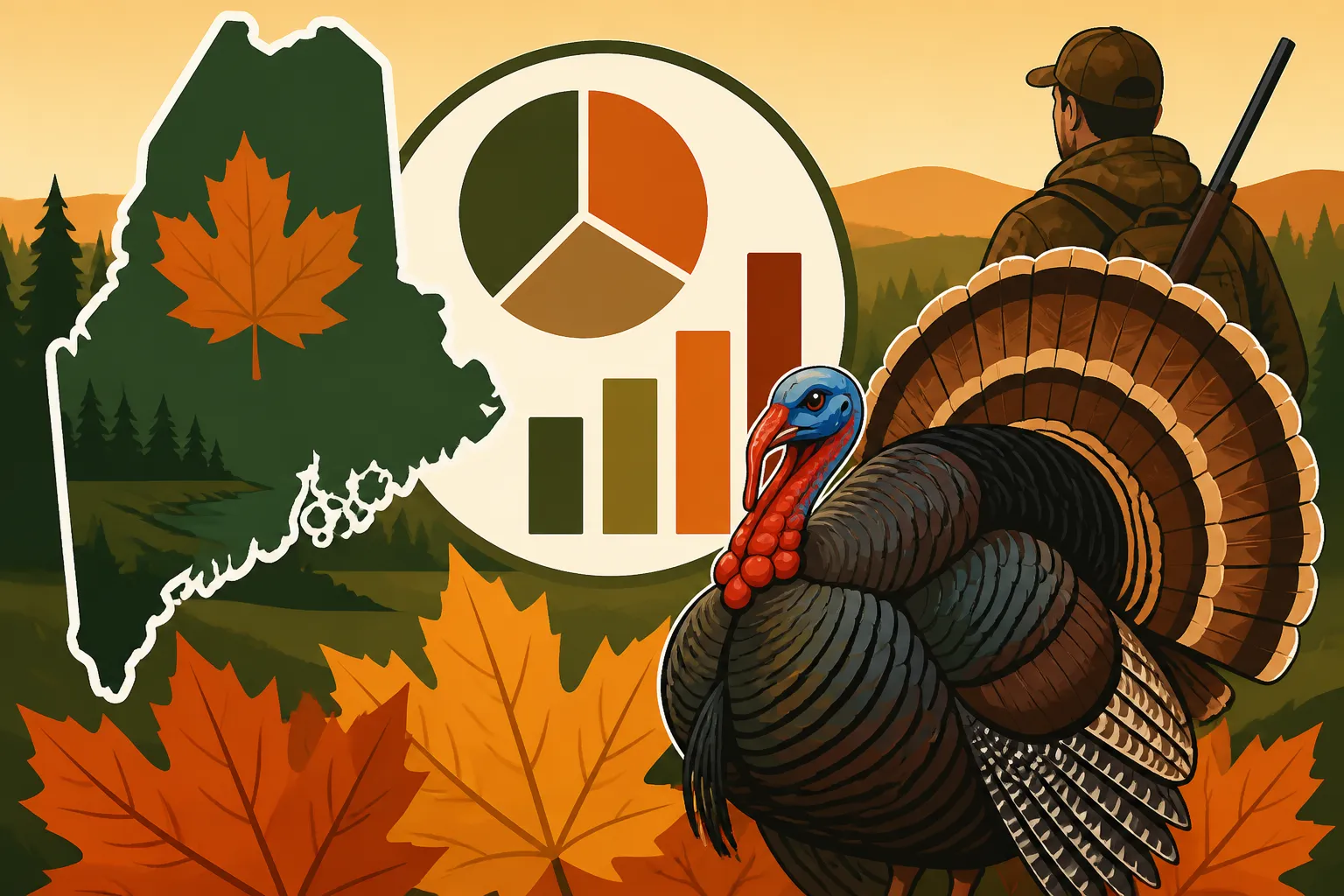
When you're gearing up for a fall turkey hunt in Maine, it's easy to get caught up in the excitement of breaking up a flock or calling a wary old hen. But serious hunters know that understanding the past performance of the fall season, especially the harvest numbers, can significantly influence your strategy. This guide dives deep into Maine's fall turkey harvest data, helping you make sense of the statistics so you can plan a more successful hunt.
The Lay of the Land: Maine's Fall Turkey Hunting Framework
Fall turkey hunting in Maine is a distinctly different experience from the spring season. While spring is all about gobblers and breeding behavior, the fall is often centered around flocks, food sources, and the dispersal of young birds. This difference in season intent naturally leads to different management strategies and, consequently, unique harvest dynamics that every hunter should understand.
Understanding Fall Turkey Regulations and WMDs
Maine's fall turkey season is structured with specific regulations that vary significantly by Wildlife Management District (WMD). Unlike the consistent bag limit across the state in spring, fall limits can range quite a bit. You might find yourself in a WMD where you're only allowed to harvest one bird, while a neighboring district could allow a generous five-bird limit. This WMD-specific approach is crucial because it directly impacts the potential harvest and reflects the population health and management goals for turkeys in that particular area. Knowing these local rules, like those for Hunting a Five-Bird Fall Turkey WMD, is your first step. It's not just about finding a turkey; it's about understanding how many you could take and where. These regulations are designed to sustain healthy turkey populations while still offering ample hunting opportunities.
The flexibility of the fall season, often allowing for the harvest of either sex, also contributes to different hunting pressure and success rates compared to the spring. Hens and jakes (young males) are fair game in the fall, which means hunters aren't solely focused on locating mature gobblers. This broader target pool can make for a more accessible hunt for many, but it also influences the overall harvest composition. Checking the most current Maine Fall Turkey Permit Rules is always a must before you even think about heading afield, as these rules often dictate your season-long strategy.
The Broader Context of Maine's Turkey Management
Maine's turkey population wasn't always as robust as it is today. In fact, wild turkeys were extirpated from the state for a long time before successful reintroduction efforts began in the 1970s. This history of restoration means that the state's turkey management is very proactive, constantly monitoring populations to ensure their continued health and expansion. Fall harvest numbers are a critical piece of this puzzle, offering wildlife biologists insights into the overall population density, reproductive success from the previous spring, and how hunting pressure is affecting different WMDs.
The data gathered from fall harvests helps managers fine-tune future season lengths, bag limits, and even consider opening or closing WMDs to hunting, such as Which WMDs Close to Fall Turkey Hunting. It's a testament to good wildlife management that we have the robust fall seasons we enjoy today. These numbers are a reflection of careful planning and the resilience of the wild turkey itself. Understanding this broader context helps you appreciate that when you check in your bird, you're not just reporting a successful hunt; you're contributing to a larger dataset that informs conservation efforts for years to come.
Diving Deep into Fall Turkey Harvest Data
For many hunters, the fall turkey season is about putting meat in the freezer and enjoying the autumn woods. But for those who like to dig a little deeper, the harvest data provides fascinating insights into population trends and optimal hunting strategies. It's like having a secret playbook for future hunts, if you know how to read it.
Where to Find and Interpret Harvest Statistics
The Maine Department of Inland Fisheries and Wildlife (MDIFW) is the primary source for official harvest statistics. They compile annual reports that detail total harvests, success rates, and often break it down by WMD. These reports are usually accessible through their website, sometimes within their annual hunting law booklets or dedicated species pages. Navigating these government sites can sometimes feel a bit like a treasure hunt, but the information is gold.
Beyond official state sources, platforms like GoHunt often aggregate and visualize this data in user-friendly ways. These tools can help you quickly compare harvest numbers across different WMDs or see trends over several years. When you're looking at these numbers, don't just fixate on the highest total harvest. Consider the effort involved. Did a WMD have high harvest numbers because there are simply more hunters there, or because the success rate per hunter was genuinely higher? Also, look for consistent patterns. A WMD that consistently produces good numbers year after year might be a more reliable bet than one that had a single banner year due to unusual circumstances. This long-term perspective is crucial when planning your hunt, whether you're trying Hunting a Five-Bird Fall Turkey WMD or a single-bird zone.
Key Metrics: What the Numbers Really Tell You
When you're sifting through harvest reports, you'll encounter a few key metrics. The most obvious is the total number of turkeys harvested. This gives you an overall picture of how many birds were taken statewide or within a specific WMD. However, this number alone doesn't tell the whole story.
Another vital metric is the hunter success rate. This is often presented as a percentage – the number of hunters who successfully harvested a bird compared to the total number of hunters who purchased a permit for that season. A high total harvest with a low success rate might indicate high hunting pressure, meaning lots of hunters were out, but fewer actually filled their tags. Conversely, a moderate total harvest with a high success rate could point to areas where turkeys are plentiful and accessible, even if fewer people are hunting them.
You might also find data broken down by sex and age class (e.g., adult hens, jakes). This information is incredibly valuable for understanding the health of the population. A high number of jakes in the fall harvest can indicate a successful hatch from the previous spring, hinting at a robust and growing turkey population. A very low number of jakes, on the other hand, might suggest a poor nesting season or high poult mortality, which could impact future hunting seasons. Comparing current data to historical trends, perhaps even looking at Maine Turkey Population Trends over a decade, helps put the current season's performance into perspective.
| WMD Category | Typical Fall Bag Limit | Primary Focus | Harvest Implications |
|---|---|---|---|
| High Density | Up to 5 birds | Population control, recreational opportunity | Higher total harvest, good success rates |
| Moderate Density | 1-2 birds | Sustained population growth, moderate harvest | Moderate total harvest, variable success |
| Low Density/Closed | 0-1 bird | Population recovery, limited hunting pressure | Low or no harvest, challenging hunt |
Factors That Shape Maine's Fall Turkey Harvest
Harvest numbers don't just appear out of nowhere; they are the result of a complex interplay of natural and human factors. Understanding these influences can give you an edge in the field, helping you anticipate where birds might be and what strategies could work best.
Ecological Influences on Turkey Populations
The health of Maine's turkey population, and by extension, its fall harvest numbers, is deeply tied to ecological factors. One of the most significant is reproduction and poult survival from the preceding spring. A mild winter followed by a warm, dry spring often leads to a successful hatch and high poult survival, meaning more young birds will be available in the fall. Conversely, a harsh winter with deep snow, followed by a cold, wet spring, can decimate poult numbers, resulting in fewer turkeys for hunters later that year. You can often glean insights from Maine Turkey Brood Survey Results which predict fall numbers.
Food availability also plays a massive role. Turkeys are opportunistic eaters, and their movements are heavily influenced by the presence of mast crops (acorns, beechnuts), wild berries, and agricultural fields. In years with an abundant mast crop, turkeys might be more dispersed across the woods, making them harder to concentrate. In lean years, they'll often gather in areas with reliable food sources, like agricultural fields or specific stands of oaks, which can sometimes make them easier to locate for hunters. These patterns affect not only where the turkeys are, but also how robust their body condition is leading into the hunting season.
Hunter Behavior and Methodologies
Beyond the turkeys themselves, hunter behavior significantly impacts fall harvest numbers. The total number of hunters participating in the fall season is a direct factor. More hunters generally mean more opportunities for harvest, assuming the population can sustain the pressure. However, increased pressure can also make birds warier, potentially lowering individual hunter success rates.
The hunting methods employed in the fall are also critical. Unlike spring, where calling mature gobblers is king, fall hunting often involves different tactics. Breaking up a flock and calling individual birds back to you, as detailed in Calling a Fall Turkey Flock Apart, is a classic and highly effective fall strategy. Still-hunting, ambushing birds along travel corridors, or patterning them in relation to food sources are other common approaches. The proficiency of hunters in these methods directly translates to success rates. If hunters aren't adapting their tactics to the fall patterns of turkeys, their harvest numbers will likely suffer, even if birds are present.
Weather during the fall season is another variable that impacts hunter effort. A string of warm, sunny days might see more hunters in the woods, while cold, rainy, or snowy conditions can keep some at home. This fluctuation in effort can lead to variances in weekly harvest numbers, even within a single season. The more dedicated hunter, willing to brave less-than-ideal conditions, might find themselves with less competition and more success.
Applying Harvest Insights to Your Autumn Hunt
So, you've read through the data, looked at the trends, and understand the factors at play. Now, how do you translate all that information into a more successful and enjoyable fall turkey hunt? It’s about leveraging the knowledge to make informed decisions before and during your time afield.
Strategizing Based on Past Performance
Analyzing past fall turkey harvest numbers can be an incredibly powerful tool for planning your upcoming hunt. If you notice certain WMDs consistently show higher harvest numbers or better success rates, these are often good places to start your scouting. It doesn't guarantee success, but it gives you a statistical advantage. For instance, if you see that a particular region has a consistent harvest, it might indicate a stable, healthy population that's less prone to dramatic year-to-year swings. This can be especially useful for non-residents or hunters traveling from afar, as it helps narrow down potential areas.
Don't just look at statewide averages; dive into the WMD-specific data. Some WMDs might be known for higher overall turkey populations, while others might have lower populations but also less hunting pressure, potentially leading to a higher individual success rate for those who put in the effort. For example, some districts might consistently produce strong numbers for Hunting Maine's Generous Fall Turkey Season. If you're using a tool like GoHunt, you can often filter this data by specific WMDs or even over multiple seasons to identify consistent hotspots. This allows you to prioritize your scouting efforts and focus on areas with the highest probability of success.
Beyond the Numbers: The Full Fall Turkey Experience
While harvest numbers are a fantastic guide, it's crucial to remember that they are just one piece of the puzzle. Hunting is about more than just filling a tag; it's about the experience, the challenge, and connecting with nature. A WMD might have lower harvest numbers, but it could offer a more wilderness-like experience, fewer fellow hunters, or simply be closer to home. Sometimes, the quality of the hunt outweighs the statistical probability of success.
Fall turkey hunting also offers a unique opportunity to scout for other species, like deer, as you're in the woods. The sign you find from turkeys – dusting bowls, scratchings, roost trees – can also tell you a lot about the health of the entire forest ecosystem. Moreover, the tactics you use, like Breaking Up a Fall Turkey Flock, require patience, stealth, and a deep understanding of turkey behavior that's incredibly rewarding. Even if the numbers aren't sky-high, the chance to chase these intelligent birds through the vibrant autumn woods of Maine is a prize in itself.
Ultimately, fall turkey harvest numbers are a valuable resource that can inform your decisions, enhance your planning, and even deepen your appreciation for wildlife management. Use them wisely, but never let them overshadow the true joy of being a hunter in Maine's beautiful fall landscape.
Disclaimer
This article is for general informational purposes only and does not constitute professional advice. Laws, prices and regulations vary by location and change over time. Consult a qualified professional for guidance on your specific situation.