Maine Moose Antler Records
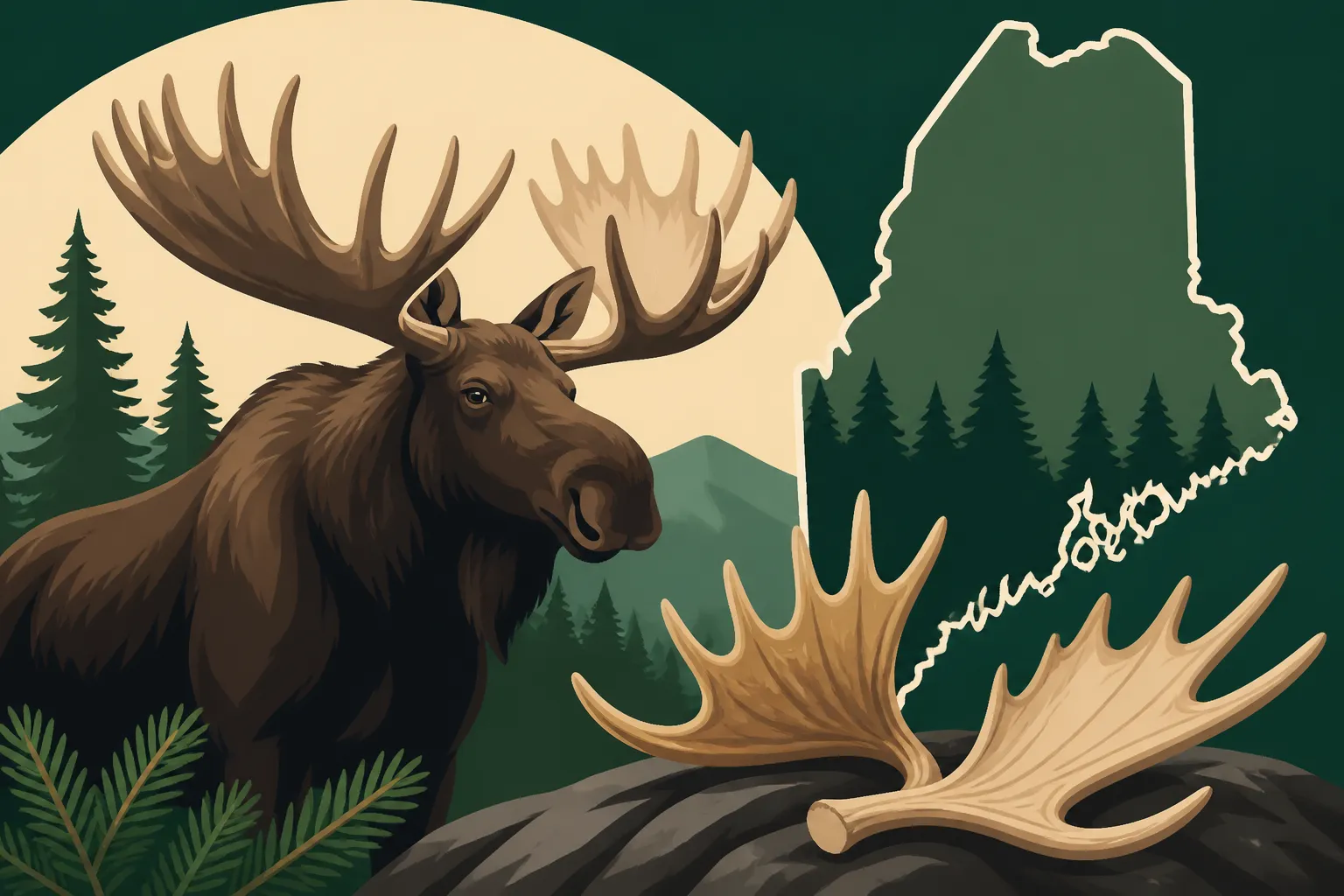
The dream of spotting a truly massive Maine moose, one whose antlers stretch impossibly wide and heavy, is a powerful draw for many hunters. We've all seen those photographs, haven't we? The ones that make you gasp and wonder if such a creature really roams our woods. This guide isn't just about admiring those giants; it's about understanding what makes a moose an "antler record" in Maine and how those legendary racks are measured, giving you a clearer picture of what it takes to pursue such an incredible animal.
The Allure of Maine's Record Moose
There's something uniquely captivating about the sheer size and majesty of a bull moose, especially when those antlers begin to spread into an impressive crown. For many, simply drawing a tag in the Maine Moose Lottery Application Process is a lifelong goal, but for a select few, the ultimate prize is a bull whose rack puts him in the record books. Maine has a reputation for producing some truly enormous moose, and that's not just folklore; it's backed by a history of impressive entries into official scoring systems.
What Makes a Moose Rack "Record-Book" Material?
When hunters talk about "record-book" moose, they're generally referring to animals that meet the minimum scoring criteria established by organizations like the Boone and Crockett Club or the Pope and Young Club. These are the universally recognized standards for measuring the size and quality of big game trophies. It’s not just about how wide the antlers are, though that certainly helps, but a comprehensive evaluation of their mass, points, and overall symmetry or unique characteristics.
The pursuit of a record-book moose isn't just about ego; it's a testament to the hunter's skill, perseverance, and often, a little bit of luck. It signifies an animal that has lived a long, healthy life, benefiting from prime habitat, and managing to avoid predators and other hunters for years. To harvest such a bull is to connect with one of Maine's most iconic and magnificent creatures at its absolute peak. It’s a moment that transcends the hunt itself, becoming a deep appreciation for the wild places these animals call home.
The Prestige of the Boone and Crockett Club
The Boone and Crockett Club, founded by Theodore Roosevelt in 1887, sets the gold standard for North American big game records. Their scoring system is meticulous, designed to fairly compare trophies from across the continent. When a Maine moose is officially scored and meets the minimum entry requirements for Boone and Crockett, it's a significant achievement that places that animal in an elite category.
These records highlight not only exceptional individual animals but also reflect the health and quality of Maine's moose population and its habitat. While most hunters who draw a permit are simply thrilled to fill their Maine Moose Permit Cost for Residents and get some meat in the freezer, the presence of these record-class animals shows that Maine continues to produce world-class opportunities. The data gathered from these records can also provide valuable insights into regional differences in antler growth and overall herd dynamics, which game biologists can leverage in their management strategies.
Understanding Moose Antler Scoring
Scoring a moose rack is a detailed process that goes beyond simply throwing a tape measure across the widest point. It involves a series of precise measurements that account for various aspects of the antlers, from their width and palm length to the circumference of the beams and the number of points. It’s designed to be a standardized, objective method to compare one incredible trophy against another.
Typical Versus Non-Typical Scoring
The first crucial distinction in antler scoring is whether a rack is classified as "typical" or "non-typical." This separation is fundamental to how the overall score is calculated and how the moose will be ranked in the record books.
- Typical Racks: A typical rack is characterized by its symmetry. The goal is for both sides of the antler to be as similar as possible in shape, number of points, and mass. When scoring a typical rack, any abnormal points (those that don't mirror on the opposite side or grow in unusual directions) are deducted from the gross score to arrive at a net score that emphasizes symmetry. Hunters often aspire to a clean, symmetrical typical rack because it represents the ideal form for a bull moose. It's a classic, majestic look that showcases a bull in its prime.
- Non-Typical Racks: Non-typical racks are celebrated for their unique and often wild deviations from symmetry. These might include extra points, drop tines, or unusual palm configurations that don't have a matching counterpart on the other side. Instead of deducting these abnormal points, they are added to the overall score, making the non-typical category a place where truly unique and character-rich racks can shine. While less common, a non-typical record-book moose is often even more awe-inspiring because of its sheer mass and incredible, distinctive appearance. It’s a testament to the individual journey and development of that particular bull, making each one truly one-of-a-kind.
Key Measurements for Moose Antlers
Regardless of whether a moose is typical or non-typical, the scoring process involves several key measurements. Scorers use a flexible steel tape and calipers to get precise figures, all recorded to the nearest one-eighth of an inch. Understanding these measurements helps appreciate the complexity of a high-scoring rack.
Here's a breakdown of the primary components measured:
| Measurement Category | Description | Importance for Score |
|---|---|---|
| Spread | Outside spread: Widest distance between the main beams. | Contributes to overall size, but not directly added to score. |
| Points | Number of measurable points on each antler, excluding abnormal points for typical. | Directly adds to the score; more points generally mean higher score. |
| Palm Length | Length of the widest part of the palm from beam to tip. | Measures the extent of the paddle, adds significant length. |
| Palm Width | Widest measurement across the palm. | Contributes to mass and overall impressiveness. |
| Beam Circumference | Circumference taken at the smallest point between the burr and the first point. | Indicates the thickness and robustness of the antler. |
| Abnormal Points | Points that do not match symmetrically or grow unusually (for typical racks). | Deducted for typical, added for non-typical. |
These measurements are carefully taken by certified scorers who undergo rigorous training to ensure consistency. It's not uncommon for a moose to dry out and shrink slightly after being harvested, so a mandatory drying period—typically 60 days—is required before an official score can be finalized. This helps ensure fair and consistent measurements, avoiding any score inflation from fresh, undried antlers. The process is thorough, and it's why a certified score is so highly regarded. If you're fortunate enough to harvest a large bull, considering an official score can be a way to truly honor its magnificent proportions. You might use mapping applications like GoHunt to mark your harvest location and plan your extraction routes to preserve the antlers in the best possible condition for scoring later.
Factors Influencing Antler Size
While a little luck always plays a role in hunting, the impressive antlers on a Maine moose aren't just random occurrences. They are the result of a complex interplay of several crucial factors that allow a bull to reach its full genetic potential. Understanding these elements can help hunters identify areas more likely to produce larger moose, though nothing is ever guaranteed in the wild.
Age of the Bull
Without a doubt, age is the most significant factor determining a bull moose's antler size. Moose, like most antlered animals, don't grow their largest racks until they reach a certain level of maturity. A young bull, say two or three years old, might have small, spade-like antlers or even just spikes. As he ages, his body dedicates more resources to antler growth.
Bulls generally reach their prime antler growth between 6 to 10 years old, sometimes even older. During these peak years, they've achieved maximum body size and are at their physical strongest, able to invest substantial energy and nutrients into developing impressive racks. After a bull passes its prime, typically around 12-14 years old, antler size can sometimes begin to decline, though a very old bull might still carry a respectable, albeit possibly less symmetrical, rack. This is why when you're Hunting a Drawn Moose Zone in the North Woods, targeting mature bulls is often the best strategy for a larger rack.
Genetics and Nutrition
Beyond age, a bull's genetic predisposition plays a critical role. Just like humans, some moose are simply genetically wired to grow bigger, wider, or heavier antlers than others. This genetic potential is passed down through generations, meaning certain regions or even specific family lines of moose might consistently produce larger-antlered animals.
However, even the best genetics can't overcome poor nutrition. A moose needs an abundance of high-quality forage rich in minerals, particularly calcium and phosphorus, to grow a truly massive rack. Maine's vast forests and wetlands, with their diverse plant life, provide excellent Moose Habitat in the North Woods. Areas with abundant aquatic vegetation, young browse, and mineral-rich soils tend to support healthier moose populations capable of growing impressive antlers. Conversely, areas that have been over-browsed or have suffered from harsh winters with limited food sources might see smaller average antler sizes, even among mature bulls. The overall health of the ecosystem directly correlates to the trophy potential of its game animals.
Habitat Quality and Stressors
The overall quality of a moose's habitat encompasses both the availability of food and water, as well as protection from stressors. A bull living in an area with reliable food sources, ample cover for security, and minimal disturbance will be healthier and more capable of growing larger antlers than one constantly under stress. Stressors can include high predator pressure, frequent human disturbance (though moose are generally more tolerant than deer), or competition for resources with other moose.
Maine's large tracts of undeveloped wilderness, particularly in the northern reaches, provide ideal conditions for moose to thrive without constant pressure. However, even within these prime areas, localized conditions can vary. For example, a severe winter with deep snow can be a major stressor, forcing moose to expend more energy simply to survive, diverting resources away from antler development. This can impact the size and quality of antlers grown in the subsequent spring and summer. Additionally, the increasing problem of Why Winter Ticks Are Killing Maine Moose Calves can indirectly affect the overall health of the herd and, consequently, the resources available for antler growth in surviving animals. Healthy, low-stress environments are key to producing those truly magnificent antler records.
Realistic Expectations and How to Pursue a Giant
Let's be honest, drawing a Maine moose permit is a privilege, and harvesting any moose is a monumental success. The vast majority of hunters who fill their tag will be incredibly happy with a solid, mature bull, regardless of whether it makes the record books. The pursuit of a record-book moose is indeed a long shot, but it's not entirely impossible. It requires a combination of strategic planning, understanding moose behavior, and often, a hefty dose of patience and persistence.
Odds of a Record-Book Moose
The reality is that very few moose harvested each year in Maine will qualify for Boone and Crockett or Pope and Young record books. While Maine's Maine Moose Population Estimate is healthy and the state produces some truly big animals, a record-book entry typically requires a specific combination of age, genetics, and prime conditions that just aren't common for every bull. For example, a typical Boone and Crockett moose needs a net score over 170 points, and a non-typical needs over 195 points. These are very high bars.
It’s probably safe to say that for every few hundred moose harvested in Maine, perhaps one or two might approach these minimums. Don't let this discourage you, though. The hunt itself, the immersion in the vastness of the North Woods, and the chance to connect with one of North America's largest game animals is the real trophy. If a giant happens to step out, consider it the cherry on top of an already incredible experience. Remember, even if you don't chase a record, simply learning to identify a mature bull by its antlers and body size is a valuable skill for any hunter.
Scouting for Big Bulls
If chasing a truly giant bull is your goal, dedicated pre-season scouting is paramount. This isn't just a casual walk in the woods; it's a deep dive into understanding the terrain, identifying prime feeding and bedding areas, and searching for sign of mature animals. Look for large tracks, heavily browsed areas, and massive rub lines on trees that indicate a big bull has been active. Areas with varied terrain, including swamps, recent clear-cuts with dense regrowth, and proximity to water sources, are often prime locations.
Modern mapping tools, like those found in applications such as GoHunt, can be invaluable for this kind of scouting. You can identify potential hot spots, analyze topography, and even look for historical harvest data in specific zones. Pay attention to natural travel corridors, funnels between different habitat types, and areas with mineral licks or abundant aquatic vegetation, which moose adore. Don't be afraid to put boots on the ground long before the season opens, looking for shed antlers which can give you clues about the size of bulls in a particular area. When Packing for a North Woods Moose Hunt, remember to include scouting gear in your preparations if you plan an early trip.
Hunting Strategies for Mature Moose
Once you've done your homework and found promising areas, your hunting strategy shifts to focus on encountering those mature bulls. Moose can be surprisingly elusive for their size, especially the older, wiser ones.
- Patience and Stealth: Unlike deer, moose are often less skittish and might allow for closer approaches, but older bulls are still wary. Moving slowly, paying attention to wind direction, and being observant are key. Still-hunting through dense cover, especially in the early mornings and late evenings, can be effective.
- Calling: Calling a Bull Moose in Late September during the rut is one of the most exciting and effective ways to bring a big bull within range. Mimicking a cow's plaintive moans or a bull's grunts can often provoke a response from an interested or territorial bull. Sometimes, crashing brush or rubbing a paddle on a tree can simulate a rival bull, drawing in a dominant male.
- Focus on Remote Areas: Larger bulls often inhabit more remote, less pressured areas. This means being willing to venture deeper into the wilderness, away from roads and easily accessible trails. This often involves more physical exertion, but it can pay off.
- Know Your Zone: Every Wildlife Management District (WMD) in Maine has unique characteristics. Some are known for higher moose densities, while others might have lower densities but a higher average antler size. Research your specific WMD, talk to local guides, and understand the general trends in that area.
Ultimately, harvesting a record-book moose is about maximizing your odds through diligent preparation and effective hunting strategies, while always cherishing the experience of being in Maine's incredible outdoors. Even if the antlers don't measure up to official records, the memory of a successful hunt in the Maine woods will be a lifelong trophy.
Disclaimer
This article is for general informational purposes only and does not constitute professional advice. Laws, prices and regulations vary by location and change over time. Consult a qualified professional for guidance on your specific situation.