Maine Whitetail Color Phase Rarities
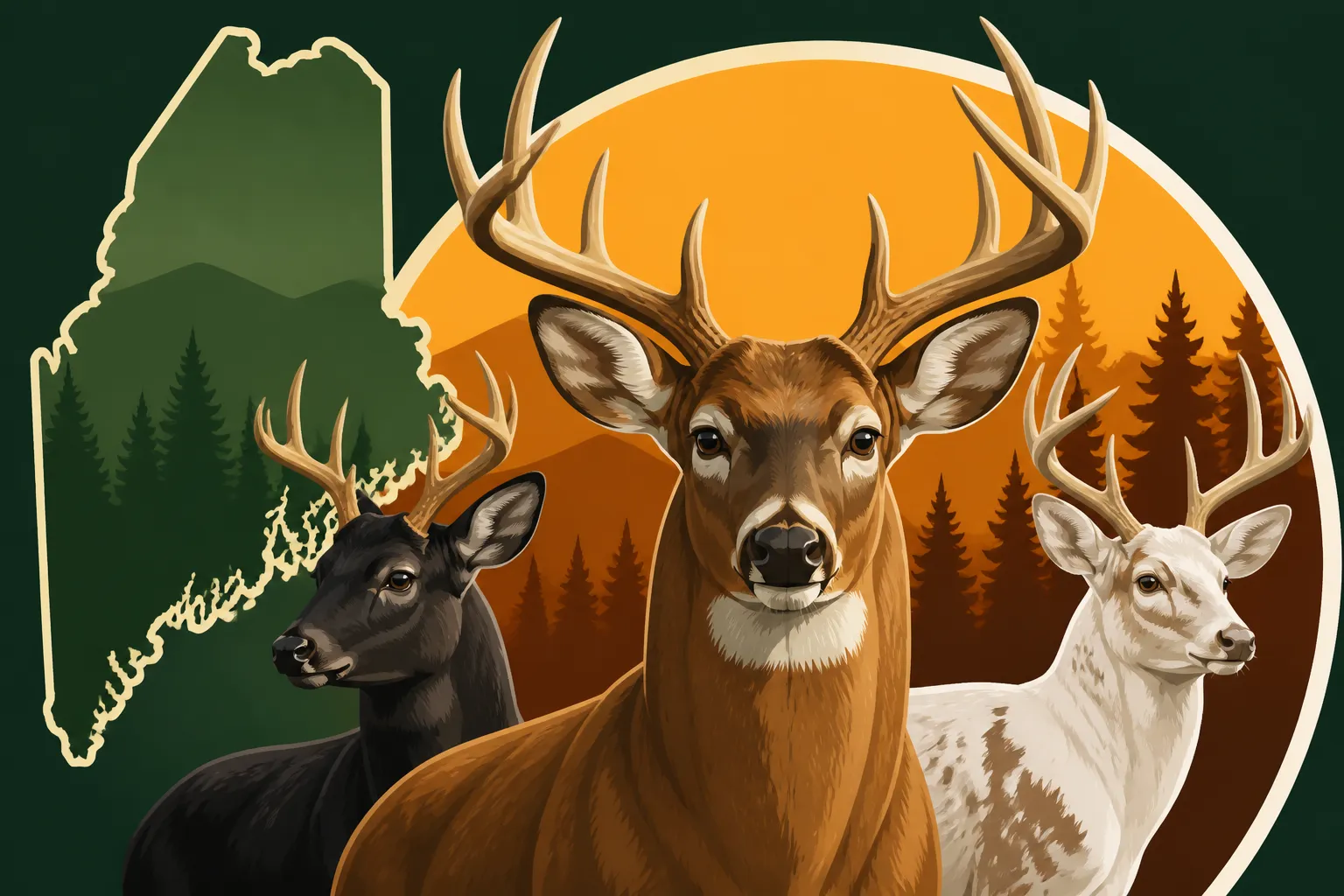
Catching a glimpse of an unusual coat in the dense evergreen thickets of Maine can instantly turn an ordinary morning in the woods into a once-in-a-lifetime encounter. Spotting a piebald, albino, leucistic, or melanistic deer leaves many woodsmen wondering about the odds, genetics, and regulations surrounding these animals. This guide breaks down Maine whitetail color phase rarities, their biological traits, state hunting laws, and practical scouting strategies.
Genetics and Biology of Unique Maine Whitetail Coats
Understanding how color phase anomalies occur requires a look at deer genetics. The standard summer reddish-brown coat and winter grey-brown coat of White-Tailed Deer Across Maine are governed by specific melanin pigments. Melanocytes produce two primary types of pigment: eumelanin, which creates dark brown and black tones, and pheomelanin, which creates reddish and yellow hues. When genetic mutations interrupt, overexpress, or suppress these pigment pathways, striking color variations emerge across the population.
While these traits make an animal stand out visually, they are rarely simple coat variations. Genetic mutations that affect melanin often carry underlying physiological consequences. In the wild, where camouflage and physical durability determine whether an animal survives a brutal North Woods winter, color phase deer face distinct biological challenges.
Piebald Whitetails and Associated Skeletal Anomalies
Piebaldism is the most common color phase rarity encountered in the Northeast, though it still occurs in less than one percent of the total population. Piebald deer carry a recessive genetic trait that causes an uneven distribution of melanocytes during embryonic development. This results in a distinctive patchiness—large splotches of pure white hair mixed with normal brown markings, giving the animal a calico or pinto appearance.
Unlike pure white deer, piebald whitetails frequently display a suite of physical deformities alongside their unique coats. Geneticists refer to this as a pleiotropic condition, where a single mutated gene influences multiple seemingly unrelated anatomical traits. Hunters who harvest or photograph piebalds often notice:
- Overarching Spine Conditions: Kyphosis (a bowed or humped back) or lordosis (swayback) are extremely common in piebald individuals.
- Shorter Legs: The long bones in the legs may fail to extend fully, resulting in a low-slung, stocky build.
- Deformed Hooves: Elongated, overgrown, or asymmetrical hooves (sometimes referred to as “slipper foot”) can hinder mobility.
- Underdeveloped Jaws: Shortened lower jaws (brachygnathia) can make foraging and chewing coarse winter browse difficult.
Despite these physical hurdles, piebald deer in mild environments can live full lives. However, in regions where deep snow and heavy winter predation force deer to traverse rugged terrain, severe skeletal anomalies significantly reduce an individual’s life expectancy.
Albino Versus Leucistic Whitetails
True albino deer and leucistic deer are often confused, but they are genetically distinct conditions. An albino whitetail possesses a total absence of melanin production due to a mutation in the gene responsible for the enzyme tyrosinase. Without this enzyme, the body cannot produce any pigment whatsoever. As a result, an albino deer features a stark, snow-white coat, a pink nose, pink skin around the eyes and ears, and pale pink or blue-tinted eyes caused by blood vessels showing through unpigmented irises. True albinism is extraordinarily rare, occurring in roughly one out of every 30,000 to 100,000 deer. Albino animals frequently suffer from severe visual impairment, as melanin is essential for proper retinal development, leaving them highly vulnerable to predators.
Leucism, on the other hand, is a partial loss of pigmentation. A leucistic deer produces melanin, but the pigment fails to deposit properly in the hair follicles. This results in a completely or mostly white coat, but the eyes, nose, hooves, and inner ears retain normal dark pigmentation. Because their eyesight remains normal and they lack the severe physiological issues of true albinos, leucistic deer generally fare better in the wild. When tracking animals in dense cover or evaluating trail camera photos, digital mapping tools like GoHunt can help you plot terrain usage and bedding areas to understand how these highly visible deer survive despite lacking natural camouflage.
Melanistic Whitetails and Dark Coat Expressions
At the opposite end of the pigment spectrum lies melanism—the overproduction of eumelanin. Melanistic whitetails are considered the rarest of all color phases, with some wildlife biologists estimating their occurrence at less than one in a million. A melanistic deer appears dark chocolate brown, charcoal, or velvet black across its entire body, sometimes retaining subtle grey tones around the face and throat patch.
Unlike piebalds and albinos, melanistic deer do not suffer from structural deformities, visual impairments, or skin sensitivities. In fact, their dark coats can provide superior concealment in dark timber, damp cedar swamps, and heavy late-season softwoods. While melanism is slightly more prevalent in localized pockets of central Texas, confirmed sightings in Northern New England remain exceptionally rare, making any encounter in Maine a historic event for a hunter or naturalist.
Scouting, Range, and Legal Rules in Maine
When encountering a rare color phase deer, hunters must weigh both legal guidelines and practical woodcraft. The rules governing unique whitetail harvests vary widely across North America, making it critical to know the precise state framework before pulling the trigger.
In many states, albino or leucistic deer are protected by strict conservation statutes. In Maine, however, legal considerations revolve primarily around standard harvest tags, permit requirements, and regional management goals rather than coat color alone.
Maine Game Laws on Color Phase Deer
Under current Maine hunting regulations, color phase deer—including albino, piebald, leucistic, and melanistic whitetails—are completely legal to harvest during open hunting seasons, provided the hunter possesses a valid license and the appropriate permit for the specific Wildlife Management District (WMD). Maine law does not grant special protected status to white or dark deer.
However, all standard big game rules apply without exception:
- Antler Restrictions and Tags: To harvest a buck with an unusual coat, it must meet the legal definition of an antlered deer (antlers three inches or longer) unless you hold a valid antlerless permit for that WMD.
- Season Compliance: The animal must be taken with a legal firearm, bow, or muzzleloader during the appropriate established season window.
- Registration Mandates: Rare color phase deer must follow standard tagging and checking procedures. Reviewing Maine Deer Registration Requirements ensures you understand the timeline and paperwork needed after a successful harvest.
Before targeting a specific animal, always verify local town ordinances or private land restrictions, as some municipalities or private landowners maintain personal rules protecting white deer on their property.
E-Scouting and Trail Camera Strategy for Rare Deer
Locating and patterning a color phase deer requires a strategic scouting approach. Because white deer lack natural camouflage, they adapt their behavior to avoid open areas during daylight hours. They frequently select bedding sites inside heavy, dark overhead canopy, such as mature spruce-fir stands or dense cedar bottoms, where their bright coats are shielded from overhead and long-range predators.
To map these micro-habitats without pushing deer out of the area, serious woodsmen rely on e-scouting tools. Utilizing GoHunt allows you to analyze aerial imagery, slope aspects, and canopy density to pinpoint thick timber blocks where an off-color deer might feel secure. Look for transition zones where heavy cover meets agricultural fields or early-successional logging cuts.
When hanging trail cameras for a known piebald or leucistic deer, consider the following tactical adjustments:
- Height and Angle: Set cameras slightly higher (six to seven feet) angled downward. A bright white coat reflecting a standard infrared flash at close range can easily wash out camera images into a solid white blur.
- Low-Impact Placements: Place cameras on major travel corridors leading out of thick bedding areas rather than deep inside the sanctuary. Color phase deer, particularly piebalds with physical limitations, often use old skid trails or easy terrain breaks to minimize physical exertion.
- Scent Control: Because these deer are often hyper-vigilant due to heightened predator pressure, keep camera visits to an absolute minimum.
When analyzing terrain near agricultural edges, cross-referencing topographic maps on GoHunt with local logging schedules helps identify quiet sanctuaries where a pressured deer might hide during daylight hours.
Predation Risk and Winter Survival Factors
The lifespan of a color phase deer in Maine is heavily dictated by geography and winter severity. In southern and coastal WMDs, where winter snow depths are moderate and coyotes are managed, piebalds and leucistic deer can reach maturity. However, in the vast timber tracts of northern Maine, natural selection operates ruthlessly.
In big woods environments, natural camouflage is a primary survival tool. A white or piebald deer standing against dark green hemlock or dark mud stands out instantly to coyotes, bobcats, and bears. During early autumn, before snow covers the ground, leucistic deer are visible from hundreds of yards away. Conversely, once heavy snowpacks blanket the North Woods, a white coat offers temporary concealment, but by late winter, deer consolidate into cedar yards where dense overhead cover keeps ground conditions dark and shadowed.
Furthermore, if a piebald deer suffers from shortened limbs or overgrown hooves, its ability to navigate deep, crusted snow is severely compromised. When snow depth exceeds 18 inches, deer must yard up and break trail through deep drifts to reach birch and maple browse. A piebald buck with joint deformities will burn precious energy reserves far faster than healthy deer, making it an easy target for predator packs or winter starvation. Understanding Where Maine Bucks Bed in Big Timber gives insight into how these compromised animals select sheltered micro-climates to survive harsh weather.
Comparing Whitetail Color Phase Characteristics
To better understand how these distinct genetic variations compare, it is helpful to examine their underlying causes, physical features, and biological impacts side by side.
| Color Phase | Estimated Odds | Primary Genetic Cause | Eye Color | Common Physical Anomalies | Maine Legal Status |
|---|---|---|---|---|---|
| Piebald | 1 in 100 to 1 in 1,000 | Recessive genetic mutation affecting melanocytes | Normal dark brown | Swayback, short legs, overgrown hooves, bowed jaw | Legal with valid tag/permit |
| Leucistic | 1 in 20,000 to 1 in 30,000 | Partial loss of pigmentation; blocked hair follicle deposition | Normal dark brown | None (standard physical build) | Legal with valid tag/permit |
| Albino | 1 in 30,000 to 1 in 100,000 | Complete tyrosinase deficiency; no melanin production | Pink or pale blue | Visual impairment, extreme sun sensitivity | Legal with valid tag/permit |
| Melanistic | Less than 1 in 1,000,000 | Overexpression of eumelanin production | Normal dark brown | None (often strong, healthy individuals) | Legal with valid tag/permit |
Breakdown of Color Phase Traits and Rarities
As detailed in the table above, the spectrum of coat variations ranges from relatively minor physical mutations to complete enzymatic failure. Piebalds remain the most frequent rarity a Maine hunter will see in a lifetime of woods time. Because piebaldism is a recessive trait, it can persist in local pockets of deer herds for generations. If a buck and a doe in a specific woodlot both carry the recessive gene, the likelihood of piebald fawns dropping in that area increases significantly.
Leucism and albinism, while visually similar from a distance, represent vastly different biological realities. A leucistic buck can grow an impressive, fully formed set of antlers and fight for breeding rights during the November rut with zero physiological disadvantages beyond his bright coat. An albino buck, by contrast, rarely survives to maturity due to poor eyesight and skin sensitivity to sunlight, which can cause painful sores and elevated stress levels.
Melanistic deer stand completely apart. Because dark brown and black hair provides excellent thermal absorption during freezing Maine winters and exceptional concealment in deep evergreen canopy, melanism carries no inherent physical disadvantages. Its extreme rarity is simply due to how seldom the specific genetic combination occurs in wild whitetail populations.
Regional Sighting Differences in Maine
Sighting reports across Maine highlight interesting regional patterns. In southern WMDs—where fragmented suburban woodlots, farm fields, and residential green spaces create isolated pockets of deer—recessive traits like piebaldism appear more frequently. Smaller, localized deer herds with limited movement corridors can lead to higher instances of shared recessive genes across generations.
In contrast, northern WMDs feature vast, continuous industrial forest land where deer travel miles between summer ranges and wintering yards. In these expansive settings, recessive genetic traits are diluted across a massive gene pool. When a hunter scouting timber company land near the Canadian border spots a white deer, it is often an isolated event rather than a recurring regional trait. Hunters using GoHunt to evaluate topography and timber cuts across various WMDs often find that southern farmland edges produce far more piebald camera pictures than northern spruce blocks, purely due to herd density and land-use fragmentation.
Handling, Registration, and Preservation for Unique Harvests
Harvesting a rare color phase whitetail is a memorable event that requires special care in the field. Whether you plan to mount the hide, preserve the cape, or simply process the meat, handling a piebald, albino, or melanistic deer requires specific techniques to ensure the skin remains undamaged.
Because unique hair coats cannot be easily replaced or repaired by a taxidermist using donor hides, proper field dressing and rapid cooling are vital to preserving the animal’s natural beauty.
Field Care and Skinning for Specialty Mounts
If you drop a piebald, leucistic, or melanistic deer, your immediate priority should be protecting the hide from dirt, hair slippage, and blood staining. White hair, in particular, stains easily when exposed to internal fluids or dragged across bare earth and mud.
Follow these key steps to preserve a unique cape:
- Avoid Dragging on Bare Ground: Never drag a white or piebald deer by its hind legs or across sharp rocks, gravel roads, or muddy skid trails. Dragging creates friction burns that permanently strip the hair away from the skin. Use a sled, a heavy-duty tarp, or a quartering pack method if you are far from a logging road.
- Clean Blood Stains Promptly: If blood gets onto white hair, rinse it immediately with clean, cold water or snow. Do not allow blood to dry and set into white fur.
- Perform Clean Field Dressing: Take extra care when opening the body cavity. Reviewing procedures for Field Dressing a Deer in Cold Weather can help prevent accidental punctures of internal organs that could spoil or stain the hide.
- Avoid Salt Until Caped: Do not apply salt to an unskinned hide. Allow a qualified taxidermist to handle the caping process, or make clean cuts along the back of the legs and spine if you are experienced in taxidermy prep.
- Keep it Cool: Melanin-deficient hides can lose hair (a process known as slipping) rapidly if left in warm conditions or folded flesh-to-flesh. Hang the carcass in a cool, shaded, well-ventilated space immediately.
If you plan to process the meat yourself at camp or at home, review best practices for Butchering a Deer at Camp to make sure you maximize meat yield while keeping the cape completely clean for the taxidermist.
Tagging, Registration, and Historical Reporting
Once the animal is secured and cared for, you must fulfill state tagging requirements. In Maine, every harvested deer must be transported to an official tagging station or registered through approved state reporting methods within specified timeframes.
When registering a color phase whitetail:
- Accurate Data Entry: Inform the station operator or record official if the deer possesses unusual color phase characteristics. State biologists maintain records on unique wildlife harvests to monitor herd health, genetic diversity, and regional population trends.
- Biological Sampling: In some cases, state wildlife officials may request permission to take a small skin or hair sample from albino or melanistic deer for genetic mapping studies. Cooperating with biologists provides valuable data on Maine’s cervid population.
- Antlerless vs. Antlered Designations: Ensure the deer is correctly checked as an antlered or antlerless harvest based on physical antler length, regardless of coat appearance or physical size.
Hunters who take the time to learn Finding Sign in Big North Woods Timber and combine digital mapping skills with careful woodcraft are occasionally rewarded with a sight few ever witness. Whether you observe a white ghost gliding through a cedar swamp or bag a unique piebald buck on a farm edge, encountering a Maine whitetail color phase rarity remains one of the most remarkable experiences the Northeast outdoors has to offer.
Disclaimer
This article is for general informational purposes only and does not constitute professional advice. Laws, prices and regulations vary by location and change over time. Consult a qualified professional for guidance on your specific situation.