Maine Red Squirrel Range
Anyone who has spent even a short time in the Maine woods knows the relentless chatter and scurrying presence of the red squirrel. These tiny, feisty creatures seem to be everywhere, and while they might seem insignificant, understanding their range and habits can actually offer valuable insights for hunters and outdoor enthusiasts alike. This guide will delve deep into where you can expect to find Maine's red squirrels, what influences their populations, and why paying attention to them can sometimes give you a leg up in your hunting endeavors.
Understanding the Ubiquitous Maine Red Squirrel
The American red squirrel, or Tamiasciurus hudsonicus, is truly one of Maine's most widespread and recognizable forest inhabitants. From the deep timber of the North Woods to the mixed forests bordering suburban areas, these energetic rodents have carved out a niche for themselves. Their presence is so common that it often goes unnoticed, but their consistent activity tells a story about the local ecosystem that's worth tuning into.
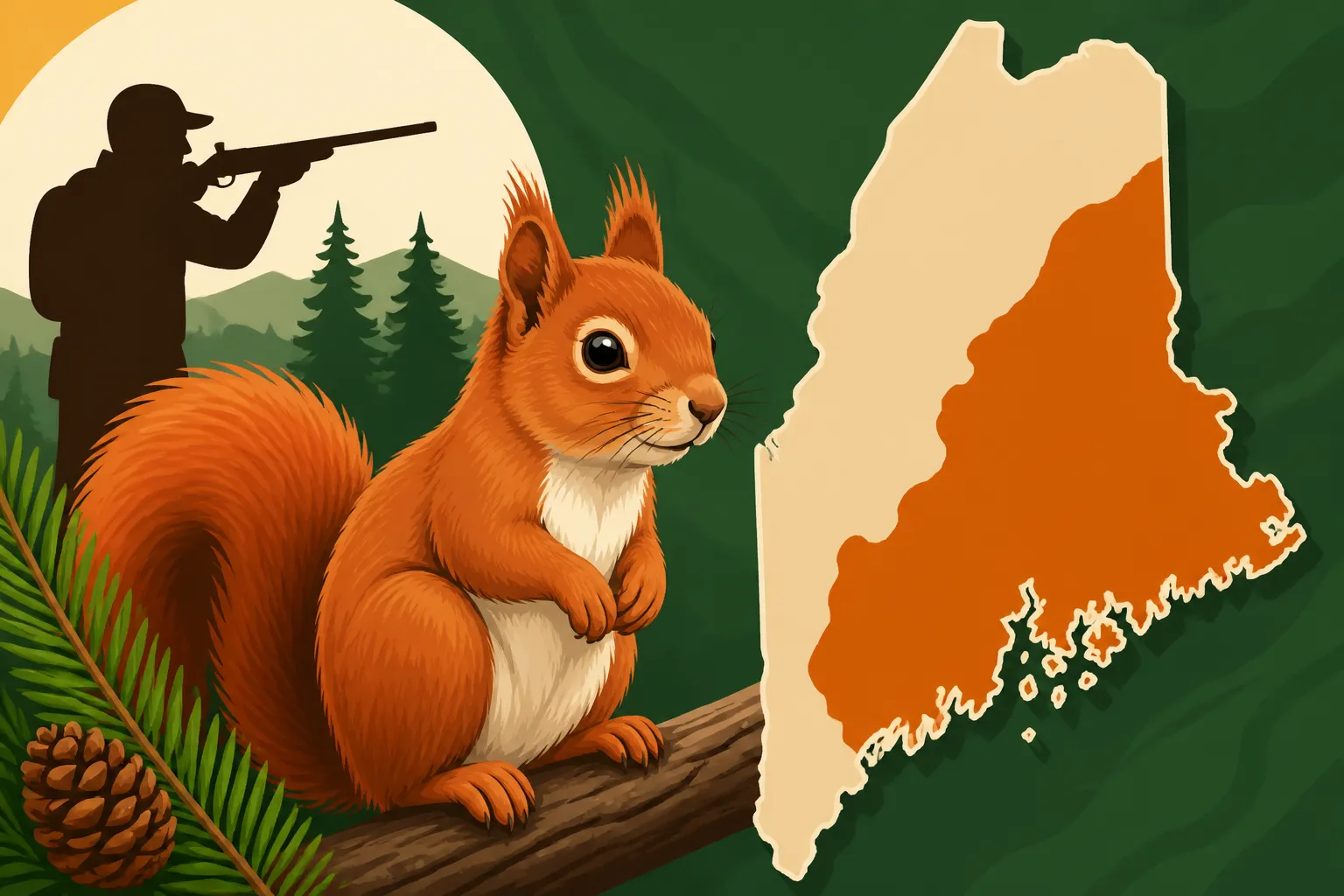
They are incredibly adaptable, capable of surviving in a variety of forest types, though they certainly have their preferences. Unlike some other species that might be restricted to specific habitats, red squirrels have a broad distribution throughout the entire state of Maine. Whether you're in Aroostook County or down in York, if there are conifers or mixed woods, there's a good chance a red squirrel is nearby.
Their year-round activity makes them a constant fixture, even in the harshest winter months. While many other small mammals go dormant or migrate, red squirrels are busy digging up cached food, leading to a landscape that always feels alive, even when snow blankets everything. This resilience is a testament to their evolutionary success in a state known for its long, cold winters.
Where Red Squirrels Naturally Thrive in Maine
Red squirrels are primarily associated with coniferous and mixed forests. Think towering red spruce, balsam fir, eastern white pine, and hemlock stands – these are their prime real estate. The cones from these trees are a staple of their diet, providing a rich, abundant food source that they diligently harvest and cache for later use. You'll often see the tell-tale piles of discarded cone scales, known as "middens," near the base of large trees or under dense thickets, a clear sign of red squirrel activity.
However, they aren't exclusively limited to these areas. You'll also find them making a living in deciduous forests, especially those with a strong component of nut-producing trees like oaks, hickories, and beeches. While conifers might be their bread and butter, a good mast crop in a hardwood stand will certainly draw them in. They’re quite opportunistic and will readily exploit whatever food sources are available in their territory.
Even in more developed areas, if there are enough mature trees and a modicum of natural cover, red squirrels can persist. They are common residents of state parks, larger woodlots near towns, and even expansive backyards with plenty of trees. Their ability to adapt to human presence, as long as their basic needs for food and shelter are met, contributes to their wide distribution across the state. Using tools like Scouting With the Maine Hunting App or onX Layers for Maine Land Status can help you pinpoint these mixed woodlots and potential squirrel hotspots, even on private land near more populated areas.
Factors Influencing Local Red Squirrel Populations
Several key factors play a significant role in determining the local abundance of red squirrels. The most obvious, of course, is food availability. Years with excellent cone crops from their preferred conifers, or strong mast production from hardwoods, generally lead to higher squirrel populations and better overwintering survival. Conversely, lean years can see a dip in their numbers, as competition for scarcer resources becomes more intense.
Forest structure is another critical element. Red squirrels prefer mature forests with a diverse canopy, offering plenty of branches for travel and large trees for denning and caching. They utilize tree cavities, abandoned woodpecker holes, or even build their own nests (dreys) out of leaves and twigs high in the branches. A healthy forest with old-growth components provides ample real estate for these industrious rodents.
Predation also keeps their numbers in check. Hawks, owls, coyotes, bobcats, and fishers all prey on red squirrels. In some areas, a strong population of one of these predators might subtly influence squirrel densities. For instance, a robust Maine Fisher Trapping Trends could mean a slight reduction in local squirrel populations as these agile hunters are incredibly effective at pursuing squirrels through the trees. Despite these pressures, their high reproductive rate usually ensures a quick rebound.
Differentiating Maine's Red Squirrels from Other Squirrel Species
While the red squirrel is distinctive, Maine is home to a few other squirrel species, and it's good to know the differences, especially if you're trying to read the woods. Often, hunters will group all small, chattering rodents into one category, but each species offers slightly different cues.
The most common confusion is often with the much larger gray squirrel, though they are quite different upon closer inspection. Flying squirrels, while present, are nocturnal and rarely seen, but understanding their habitat can also be useful for understanding the broader ecosystem. Learning to pick out the subtle differences can make you a more observant woodsman.
Knowing what species of squirrel you’re encountering can help you better understand the habitat you’re in. For example, a prevalence of gray squirrels might indicate a more mature deciduous forest with plenty of hardwoods, while a constant flurry of red squirrels points to a strong conifer presence. It’s all part of piecing together the puzzle of the forest floor and canopy.
Key Identifiers: Size, Coloration, Behavior, and Vocalizations
Red squirrels are noticeably smaller than gray squirrels, typically measuring around 11-14 inches long (including their tail), and weighing less than a pound. Their fur is a vibrant reddish-brown on their back, often with a white or creamy belly, and they usually have a distinct white ring around their eyes. Their tail is bushy but proportionate to their body, and often has a hint of black at the tip.
Their behavior is perhaps their most defining trait: they are incredibly active, almost constantly in motion, darting up and down trees, across branches, and along the forest floor. They are also notoriously bold and vocal, earning them the nickname "pine squirrels" or "chickarees" due to their characteristic "chick-chick-chick" alarm call, often accompanied by foot stomping and tail flicking. If you're Still-Hunting Aroostook County Farmland or trying to remain quiet, a chattering red squirrel can feel like a personal megaphone to every deer in the area.
Another key identifier is their preference for cones, which leads to those distinctive middens. You won't see gray squirrels creating large cone piles. While both might eat acorns, the red squirrel's primary diet revolves heavily around pine, spruce, and fir cones, and their activity will be centered around areas where these are abundant.
Overlap with Gray Squirrels and Flying Squirrels
Gray squirrels (Sciurus carolinensis) are larger, often weighing over a pound, with a predominantly gray coat, white belly, and a strikingly bushy, often grizzled, tail. They prefer mature deciduous or mixed forests, especially those rich in oak and hickory. While they will utilize conifer seeds if available, they are much more reliant on hard mast like acorns and beechnuts. Their vocalizations are less aggressive than a red squirrel's, often a series of barks and chirps, and they are generally a bit more cautious. If you're Grouse Hunting a Logging Road Edge, you're likely to encounter both, but their behaviors will differ.
Northern flying squirrels (Glaucomys sabrinus) and southern flying squirrels (Glaucomys volans) are Maine's third squirrel species. They are much smaller than red squirrels, possess large eyes for nocturnal vision, and have a distinctive flap of skin (patagium) between their front and hind legs that allows them to glide. They are strictly nocturnal, so seeing one during the day is rare. Their diet often includes fungi, lichens, nuts, and even insects. Because of their nocturnal nature, they generally don't interact much with the daytime activities of red squirrels or hunters, unless you're deep in a remote camp overnight and hear them scurrying across the roof.
Here's a quick comparison of Maine's common squirrel species:
| Feature | Red Squirrel (Tamiasciurus hudsonicus) | Gray Squirrel (Sciurus carolinensis) | Flying Squirrel (Glaucomys spp.) |
|---|---|---|---|
| Size | Small (11-14 inches, 0.4-0.6 lbs) | Medium-Large (18-20 inches, 1-1.5 lbs) | Small (8-10 inches, 0.1-0.3 lbs) |
| Coloration | Reddish-brown back, white belly, white eye-ring | Gray back, white belly, bushy gray tail | Brownish-gray back, white belly, large dark eyes |
| Primary Habitat | Coniferous & Mixed Forests | Deciduous & Mixed Forests (hard mast) | Deciduous & Mixed Forests (cavity nesters) |
| Activity | Diurnal (daytime), highly active, year-round | Diurnal, active year-round | Nocturnal |
| Key Diet | Conifer seeds (cones), nuts, fungi | Acorns, nuts, seeds, buds | Fungi, lichens, nuts, insects, small birds |
| Vocalizations | Loud, chattering "chick-chick-chick", foot stomping | Barks, chirps, chattering | Soft chirps, squeaks (rarely heard by humans) |
| Distinctive | Aggressive, middens (cone piles), white eye-ring | Very bushy tail, often seen in suburban areas | Patagium (gliding membrane), large eyes, nocturnal |
Red Squirrels and the Hunter: Why They Matter
It might seem counterintuitive to focus on something as small as a red squirrel when your sights are set on a big Maine buck or a wary spring gobbler. However, these little creatures can provide a wealth of information to the observant hunter. From indicating forest health to unwittingly serving as an alarm system, red squirrels are far more than just noisy distractions.
Their consistent presence and activity make them reliable indicators of certain environmental conditions. They are also, for better or worse, an integral part of the background noise of the forest. Understanding their role can help you interpret the subtle signs of the woods and sometimes even inform your hunting strategy.
Think of them as part of the intricate tapestry of the Maine woods. Every thread, no matter how small, has a role to play. Ignoring the smaller elements means missing out on potential clues that could lead you to bigger game.
Indicator Species for Forest Health and Mast Crops
Red squirrels, particularly their population levels and behavior, can be a decent barometer for the health of a coniferous or mixed forest. A thriving red squirrel population, indicated by abundant middens, active squirrels, and high numbers of caches, often suggests a healthy forest with consistent cone production. If you notice a sudden drop in red squirrel activity in an area that typically holds them, it could be a subtle sign of a poor cone year, changes in timber management, or an increase in localized predator pressure.
This insight can be especially useful when you're Hunting After a Poor Acorn Year and wondering what other food sources might be available for deer or bears. While deer might not directly compete with red squirrels for conifer seeds, a good cone crop often coincides with overall healthy forest conditions. Conversely, if you're scouting and finding very little squirrel activity in prime conifer habitat, it might signal that the area isn't holding much in the way of consistent food resources, potentially making it less attractive to larger game.
In fact, some hunters use squirrel activity as a direct gauge of forest production. If the red squirrels are going wild, building huge middens and constantly scampering with cones, you know the area had a good seed year. This kind of observation helps you understand the overall food availability, which is crucial for deer, bear, and other game that rely on the forest's bounty.
Scouting Cues and Noise Makers
For better or worse, red squirrels are nature's alarm system. Their incessant chattering and scolding, especially if directed towards a specific point on the ground, can sometimes alert you to the presence of larger game like deer, bear, or even a coyote moving through the woods. A red squirrel's agitated bark might mean it's spotted your target long before you have. I've personally had moments where a frantic squirrel's warning calls led my eyes to a subtle movement, revealing a feeding buck or a turkey quietly slipping through the underbrush.
However, their noisiness can also be a double-edged sword. If you're trying to Still-Hunting Western Maine Mountain Slopes and move silently, a red squirrel can unintentionally betray your position to deer that are already on high alert. Their chattering can be loud enough to carry through the quiet woods, making it difficult to approach game undetected. It's something you simply have to learn to live with and, perhaps, even use to your advantage by noting where their attention is drawn.
When using a ground blind or treestand, especially if you're trying to stay concealed, a red squirrel can become an almost comical distraction. They might scurry directly over your blind, climb up your stand, or even investigate your boots. While annoying, it's also a testament to their lack of fear and constant curiosity. Knowing their habits means you can anticipate some of these interactions and not be entirely surprised when one decides to scold you from inches away.
Exploring Specific Maine Regions for Red Squirrel Activity
While red squirrels are widespread, their exact density and the specifics of their habitat use can vary slightly depending on the distinct ecological characteristics of different regions within Maine. Understanding these regional nuances can add another layer to your knowledge of the state's diverse landscapes.
From the vast, unbroken forests of northern Maine to the more fragmented woodlots of the south, red squirrels adapt and thrive. Knowing these regional differences can help you fine-tune your scouting efforts and understand what to expect when you're in a particular part of the state.
Whether you're looking for deer sign in a cedar swamp or grouse in an alder run, the red squirrel's presence often helps define the character of that specific locale.
North Woods Abundance
The North Maine Woods, with its immense tracts of contiguous forest, particularly dense stands of spruce, fir, and pine, is prime red squirrel habitat. Here, you'll find some of the highest densities of red squirrels in the state. The sheer scale of the coniferous forests provides an endless supply of cones, and the relative lack of human disturbance allows them to flourish.
When you're Hunting a North Maine Woods Checkpoint Tract or exploring the deeper timber, the sounds of red squirrels are almost constant companions. Their middens can be enormous in these areas, representing generations of caching under ancient conifers. These vast forests also support a healthy population of their predators, like marten and fisher, creating a complex ecosystem where the red squirrel plays a vital role in the food web.
The North Woods offers such a consistent food base that red squirrels here rarely experience significant population crashes due to lack of resources, though extreme weather can always have an impact. This stability makes them a very reliable part of the forest's background hum in these northern reaches.
Southern and Central Maine Landscapes
As you move into Southern and Central Maine, the landscape becomes more a mosaic of mixed forests, agricultural fields, and increasingly, human development. Here, red squirrels still thrive, but their distribution might be slightly more patchy, concentrated in larger woodlots, state parks, and unbroken stretches of mixed forest. They might adapt to more suburban environments if adequate tree cover and food sources (including bird feeders, for instance) are available.
In these areas, the mix of conifers and hardwoods can provide a varied diet for red squirrels, allowing them to capitalize on both cone and mast crops. You might find them in smaller woodlots where Hunting Small Private Tracts in Maine is common, often right on the edges of fields or near residential areas, displaying a surprising tolerance for human activity.
Their populations in these more fragmented landscapes can sometimes be influenced by the size and connectivity of suitable habitat patches. While they can travel, their preference for continuous canopy cover means that large breaks in the forest can limit their expansion into certain areas. This makes finding a good patch of mixed forest even more important if you're looking for consistent squirrel activity.
Coastal and Mountainous Areas
Along Maine's rugged coast, red squirrels are very much at home in the spruce-fir forests that dominate the shoreline and islands. These coastal forests, often wind-swept and resilient, provide ample conifer cones. If you're out Hunting Downeast Coastal Cover or near the many small islands, you'll definitely hear and see them. Their presence even extends to some of the larger, wooded coastal islands where sea ducks often stage, creating a unique overlap of ecosystems.
In Western Maine's mountainous regions, red squirrels are also abundant, particularly in the mid to upper elevations where coniferous forests dominate the slopes. The higher elevations and rugged terrain don't deter them; in fact, the challenging environment often ensures a robust forest ecosystem that supports healthy squirrel populations. Here, their alarm calls might echo across vast valleys, sometimes serving as a signal that something is moving up or down a ridge line.
Regardless of whether you're in the deep woods, near a field edge, or high on a mountain, the tenacious and ever-present Maine red squirrel is a fascinating part of the state's wildlife. Paying attention to their habits, calls, and the signs they leave behind can truly deepen your appreciation for the natural world and even provide unexpected advantages in your hunting pursuits. GoHunt mapping resources can be particularly helpful in identifying suitable red squirrel habitat across these varied landscapes, allowing you to visually scout for dense conifer stands or mixed woods before you even set foot in the field.
Disclaimer
This article is for general informational purposes only and does not constitute professional advice. Laws, prices and regulations vary by location and change over time. Consult a qualified professional for guidance on your specific situation.