Maine Deer Weight Averages by Region
It’s a tale as old as time for Maine hunters: you’re swapping stories at deer camp, and someone inevitably starts bragging about the size of their buck. But what does "big" really mean when you consider the vast, diverse landscape of our state? Hunters often wonder why their deer from the rugged North Woods might look a bit lankier than a buddy's harvest from the rich farmlands of southern Maine. This guide is going to dive deep into the fascinating reality of Maine deer weight averages, broken down by region, helping you set realistic expectations and appreciate the unique characteristics of the whitetails inhabiting our beautiful state.
Understanding Deer Weight Factors in Maine
The weight of a deer isn't just a random number; it's a direct reflection of its environment, age, and even its lineage. In Maine, these factors can vary dramatically from one county to the next, leading to noticeable differences in the average weights of harvested deer.
Regional Differences in Habitat and Nutrition
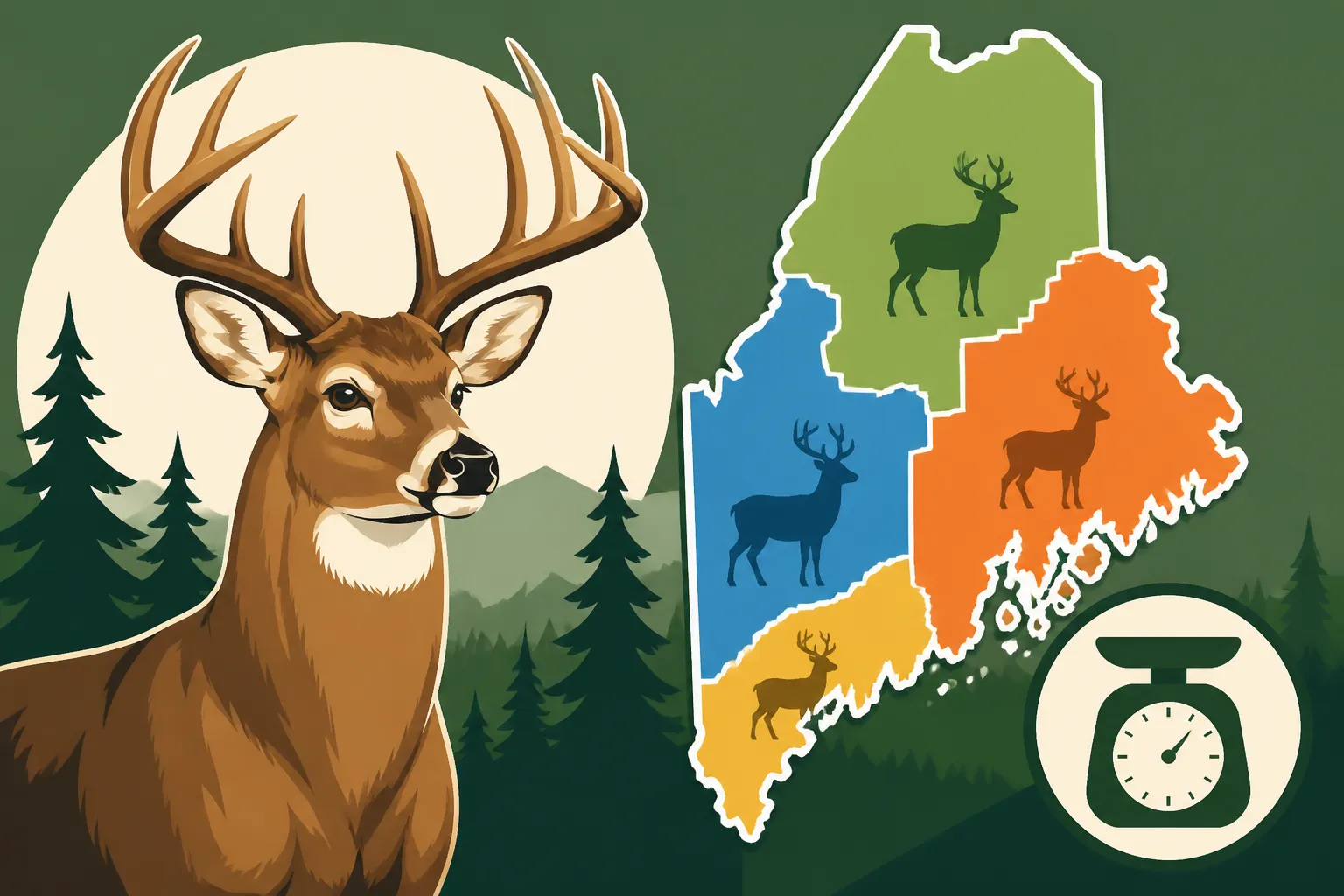
Maine is a state of incredible ecological diversity, and this plays a massive role in the health and size of our deer. Think about the dense, heavily forested areas of the North Woods compared to the mosaic of fields, orchards, and smaller woodlots found in southern or central Maine.
In the northern reaches, particularly in Aroostook and northern Penobscot counties, you're primarily dealing with vast tracts of industrial forestland. While there are clear-cuts and regenerating stands that provide browse, the overall nutritional quality can be lower than in more agricultural areas. Deer here often have to work harder to find consistent, high-quality forage. The growing season is shorter, and many food sources, like acorns from mature oak stands, are less common. This means deer might grow a bit slower, and their maximum weight potential might be reached at an older age, if at all.
Contrast that with central and southern Maine. Here, you find a greater mix of habitat types: suburban edges, old farms, apple orchards, and a higher prevalence of hardwoods like oak and beech that produce a valuable mast crop. These areas offer a buffet of high-energy foods, from corn and alfalfa in farmers' fields to a reliable supply of acorns and apples in abandoned orchards. This consistent access to better nutrition allows deer to put on weight more efficiently and often reach heavier body masses for their age. White-Tailed Deer Across Maine covers this habitat diversity in detail.
Age and Genetics: Beyond Just Location
While location is crucial, it's vital to remember that a deer's age is perhaps the single most important factor determining its weight. A healthy yearling buck in a prime agricultural zone will still weigh less than a mature, 4.5-year-old buck from the same area. Similarly, a 3.5-year-old buck from the North Woods might be significantly heavier than a 1.5-year-old from southern Maine, even if the southern deer has access to better food.
Genetics also play a subtle but undeniable role. Just like people, some deer are simply built to be larger or to carry more muscle and bone. While the Maine deer herd generally shares similar genetic predispositions, localized populations can develop subtle differences over generations based on their specific challenges and food availability. A deer that survives multiple harsh winters and consistently finds good food will naturally develop a larger frame and carry more weight, showcasing the resilience of our deer population.
Impact of Winter Severity and Browse Availability
Maine winters are no joke, and their severity has a direct, sometimes devastating, impact on deer weight and survival, especially in the northern half of the state. Deep snows and prolonged cold can make finding food incredibly difficult. Deer burn through their fat reserves just to stay warm and move through heavy drifts. This is why you often hear about the critical importance of Maine Deer Wintering Yards Explained. These sheltered areas, typically dense conifer stands, offer refuge from the worst weather and some available browse, helping deer conserve energy and minimize weight loss during the leanest months.
When winters are particularly harsh, even well-fed deer can lose significant weight. This can manifest as lower average weights across the herd in the following hunting season. Conversely, a mild winter allows deer to maintain better body condition, which translates to heavier deer come fall. This year-to-year variation is something experienced hunters always keep an eye on. Without sufficient browse, especially in winter, deer struggle to grow to their full potential, regardless of genetics. Why Deep Snow Limits Northern Maine Deer further illustrates this struggle.
Averages by Maine's Major Hunting Regions
When we talk about "average" deer weights, it's important to clarify that we're usually referring to dressed weight—the weight of the deer after the entrails have been removed. This provides a more consistent measurement than live weight, which can fluctuate with gut fill.
Northern Maine: The Challenge of Big Woods Bucks
In regions like northern Aroostook, Piscataquis, and parts of Penobscot County, the deer are true survivors. They often cover vast territories, living in a landscape dominated by spruce and fir forests, with limited agricultural fields. The deer here are often lean and tough, and a heavy buck is truly a testament to its age and ability to thrive in a challenging environment.
A 1.5-year-old buck (often called a yearling) in the North Woods might only dress out around 120-140 pounds. A mature 3.5-year-old or 4.5-year-old buck is what most hunters are truly after, and these can push into the 160-200 pound range, with anything over 200 pounds dressed being a true rarity and a magnificent trophy. These deer tend to be older to reach these weights due to the harder scrabble for food. They might not have the same fat reserves as their southern cousins, but they are hardy creatures. Getting a deer out of this country is often a much bigger challenge, as detailed in Getting a Moose Out of the North Woods (though on a smaller scale, the principle applies to deer!).
Central Maine: Mixed Habitat and Steady Growth
Moving into central Maine, encompassing areas like southern Penobscot, eastern Somerset, and northern Kennebec counties, you start to see a blend of deep woods and more settled areas. Here, deer benefit from a mix of timberlands, smaller farms, and abundant browse. They often have better access to quality forage than their northern counterparts, including a decent supply of acorns, wild apples, and some agricultural crops.
Because of this improved nutrition, deer in central Maine often achieve good weights at younger ages. A 1.5-year-old buck here might average 130-150 pounds dressed. For mature bucks, you can expect weights from 180-220 pounds dressed, with 200+ pounders being more common than in the deep North Woods. These deer often present a good balance of body size and antler growth, making this region a popular destination for many hunters.
Southern and Coastal Maine: Heavier Deer, Smaller Ranges
Southern and coastal Maine—think Cumberland, York, Androscoggin, and even coastal Hancock and Washington counties—is where you typically find the heaviest deer in the state. These regions boast richer soils, more extensive agricultural lands (like corn, hay, and potato fields), and a higher density of suburban areas with abundant gardens, ornamental plantings, and supplemental feeding (though hunting over bait is illegal). The winters are generally milder, meaning less stress on the deer herd.
Here, a yearling buck might easily dress out at 140-160 pounds. Mature bucks (3.5 years and older) regularly push into the 200-240 pound range dressed, and a 250+ pound dressed buck, while still a phenomenal animal, is more within the realm of possibility here than anywhere else in Maine. These deer often have a shorter travel range because food sources are so readily available. Hunting Small Private Tracts in Maine highlights how productive these smaller, often overlooked areas can be due to high deer density and food availability.
Maine Deer Weight Averages Table
To give you a clearer picture, here's a general comparison of average dressed weights for healthy Maine whitetail bucks by region and age class. Please remember these are general averages and individual deer can vary widely based on specific conditions, genetics, and year-to-year environmental factors.
| Deer Age Class | Northern Maine (Dressed Weight) | Central Maine (Dressed Weight) | Southern/Coastal Maine (Dressed Weight) |
|---|---|---|---|
| 1.5 Years Old | 120 – 140 lbs | 130 – 150 lbs | 140 – 160 lbs |
| 2.5 Years Old | 140 – 165 lbs | 155 – 185 lbs | 170 – 200 lbs |
| 3.5 Years Old | 160 – 190 lbs | 180 – 210 lbs | 200 – 230 lbs |
| 4.5+ Years Old | 180 – 220 lbs | 200 – 235 lbs | 220 – 250+ lbs |
This table illustrates the general trend: as you move south and west in Maine, deer tend to put on more weight for their age.
Practical Implications for Maine Hunters
Understanding these regional differences in deer weight isn't just for bragging rights; it has real implications for your hunting strategy, expectations, and even logistics.
Field Dressing and Meat Yield Expectations
Knowing the average weight for the region you're hunting helps you set realistic expectations for your harvest. If you're deep in the North Woods and tag a 150-pound dressed buck, that's a fantastic animal for that habitat! In southern Maine, that same weight might be closer to a 2.5-year-old rather than a mature buck.
This also impacts your meat yield. A heavier deer generally means more venison for the freezer. A 200-pound dressed buck will yield significantly more usable meat than a 140-pounder. Plan your processing needs, cooler space, and butchering time accordingly. Consider what Field Dressing a Deer in Cold Weather entails for different sized animals and how you'll manage the meat.
Trophy vs. Table Fare Mindset
For many, the idea of a "trophy" deer isn't just about antlers; it's also about body size. What constitutes a trophy in the North Woods might be different from a trophy in southern Maine. A 180-pound dressed buck with a decent rack might be considered a true giant after years of battling the harsh northern environment. In the south, where food is more plentiful, hunters might be holding out for a 220-pounder to be considered a "trophy."
It's all about perspective and appreciating the animal for what it is within its environment. If your goal is primarily table fare, then any legal deer provides excellent, lean protein. If you're chasing that truly massive buck, understanding the regional weight averages can help you focus your efforts on areas where larger deer are more likely to thrive and reach their maximum potential. Maine Buck Age Structure helps explain how older bucks contribute to these higher weight classes.
Scouting and Strategy Based on Regional Deer Health
When you head into the woods, whether you're scouting pre-season or in the thick of Hunting the Rut in Early November, knowing the general health and size potential of deer in that specific region can inform your strategy.
For example, in northern Maine, where deer density might be lower and weights generally lighter, you might focus more on finding concentrated food sources or Reading a North Woods Deer Yard for late-season hunting. You might also rely more heavily on tools like the Scouting With the Maine Hunting App or Reading Aerial Photos for North Woods Deer to identify prime habitat that offers the best possible nutrition and cover.
In southern Maine, where deer are more numerous and heavier, your strategy might shift to identifying travel corridors between abundant food sources and secure bedding areas, often on smaller, fragmented parcels. Utilizing resources like GoHunt, which can overlay property lines and habitat types, becomes incredibly valuable for understanding these local nuances and finding areas where mature, heavy deer are likely to be present. GoHunt can give you a leg up by helping visualize the landscape and pinpoint those hidden gems. When looking at potential hunting spots, considering a deer's likely size based on the regional averages can help you decide if it fits your hunting goals.
No matter where you hunt in Maine, every deer harvested is a success and a testament to the resilience of our wildlife. Understanding these regional weight averages simply adds another layer of appreciation for the incredible diversity of our state's whitetail herd.
Disclaimer
This article is for general informational purposes only and does not constitute professional advice. Laws, prices and regulations vary by location and change over time. Consult a qualified professional for guidance on your specific situation.