Hunting a Potato Field Edge in Aroostook
The vast, rolling potato fields of Aroostook County might look dauntingly open at first glance, but for a keen deer hunter, their edges are actually buzzing with activity. It's a common frustration to see deer disappear into the next woodlot or watch them feed just out of range in a massive field. But understanding how whitetails use these agricultural frontiers – where food meets cover – is key to unlocking some incredible hunting opportunities in Maine's northernmost county. This guide will help you decode the secrets of hunting these productive potato field edges, transforming those wide-open spaces into strategic hunting zones.
The Allure of Aroostook's Potato Field Edges for Whitetails
Aroostook County is famous for its potatoes, and those sprawling fields aren't just for human consumption; they're a massive draw for the local deer population. While the deep North Woods has its own unique challenges, the farm country offers a different, but equally rewarding, hunting experience. Deer in Aroostook learn to live alongside agriculture, and these field edges become critical resources.
Why Deer Gravitate to These Agricultural Hubs
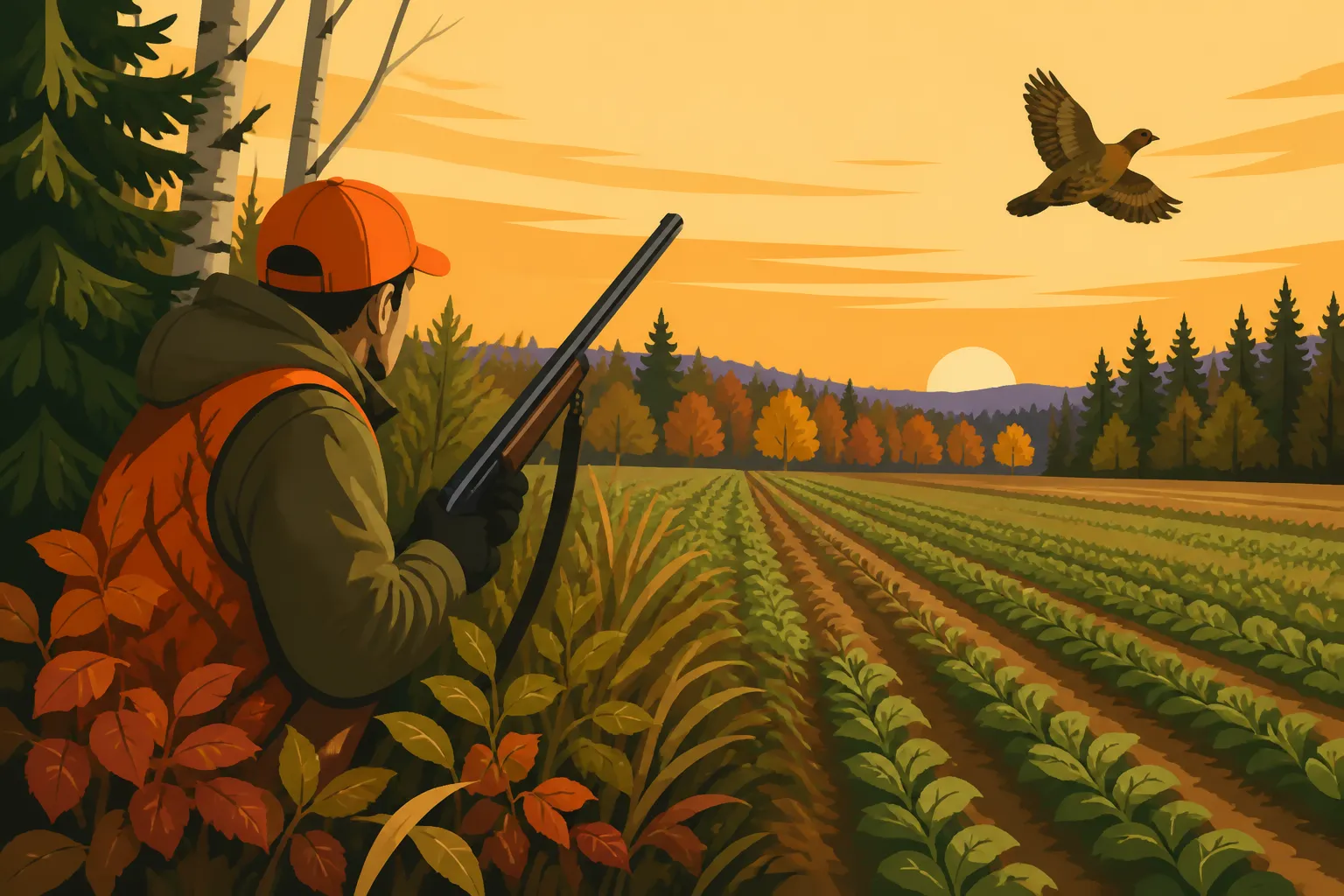
Think of a potato field edge as a major interstate for deer. It's not just about the potatoes themselves, though they certainly provide an irresistible food source, especially after harvest when they might root up remnants. But it's also about the sheer abundance of other forage plants that thrive in disturbed ground and along field margins. Deer will browse on clover, weeds, and other green growth that pops up around the crop fields. More importantly, these edges represent the perfect transition zone. On one side, you have an open feeding ground, often bordered by dense timber, cedar swamps, or thick brush. This juxtaposition of plentiful food and immediate, secure cover is exactly what a whitetail needs to survive and thrive. They can feed out in the open, often under the cover of darkness or low light, and then quickly duck back into the safety of the woods at the first sign of danger. These edges aren't just for feeding; they are travel corridors, staging areas, and social hubs, especially during the rut when bucks are cruising for does.
Understanding Deer Movement Patterns in Farm Country
Deer in farm country develop very specific movement patterns, often dictated by the human activity around them. During the day, particularly when farmers are working or there's significant hunting pressure, deer tend to become more nocturnal, sticking deep within the thick cover of adjacent woodlots. However, as evening approaches and the fields quiet down, they'll begin to filter out, often following established trails along the field edges. You'll see these distinct trails where they enter and exit the fields, usually at corners, points where woodlots finger out into the field, or where a brushy fencerow provides a bit more concealment. These points act as natural funnels and chokepoints, concentrating deer movement into predictable areas. A smart hunter understands that observing these patterns is paramount. Using tools like onX Hunt can give you an incredible bird's-eye view of these fields, helping you identify those fingers of cover, low spots, and drainage ditches that deer will naturally use for concealment as they move. It’s not just about looking at the green of the woods and the brown of the field; it's about seeing the subtle transitions and topographical features that create highways for deer.
Essential Scouting Techniques for Aroostook Field Edges
Scouting is where your success on a potato field edge truly begins. You can't just show up on opening day and expect to find deer consistently. Aroostook's vastness demands a systematic approach, combining technology with old-fashioned boots-on-the-ground effort.
Reading the Landscape: Aerial Maps and Boots on the Ground
Before you even step foot in the woods, pull out your mapping app, whether it's onX Hunt or another platform. Start by analyzing the aerial photos. Look for woodlots that extend into the fields, creating those natural funnel points. Identify drainage ditches, old fencerows, or brush lines that provide cover for deer moving from one woodlot to another. Pay close attention to subtle elevation changes, as deer often prefer to move along the backside of a rise for added concealment. These mapping tools are invaluable for Reading Aerial Photos for North Woods Deer.
Once you have a few promising spots identified, it’s time for boots on the ground. Walk the edges of these fields, focusing on the first 50-100 yards of timber or brush adjacent to the agriculture. Look for fresh deer sign: tracks in the soft earth, especially at field entrances and exits, fresh droppings indicating recent feeding, and rubs or scrapes on trees. Rubs are particularly telling, as they indicate a buck actively marking his territory, often along a travel corridor. Don't just focus on the visible field edge; push a little deeper into the woods to find potential bedding areas or staging zones where deer might hang out before stepping into the open. The fresher the sign, the more recent the activity, and the better your chances of encountering deer.
Timing Your Scouting for Maximum Insight
The timing of your scouting trips can significantly impact what you learn. Pre-season scouting, before the crops grow too tall or even before planting, allows you to see the true topography and identify pinch points without vegetation obscuring your view. You can spot old trails, natural funnels, and potential stand sites before the season pressure starts. Once crops are in the ground, deer behavior will shift, and they might use the standing crop for cover, making them harder to pinpoint.
However, post-harvest scouting can be equally, if not more, valuable. After the potatoes are dug, the fields are a buffet of discarded tubers, and deer will often flock to them. This is when you'll see the heaviest sign right on the field's edge. This period offers a unique window to observe fresh tracks, heavy trails, and even active scrapes left by rutting bucks taking advantage of the newfound food source.
Trail cameras are your best friends in this environment. Place them on those identified travel corridors, especially where a game trail intersects a field edge or along a prominent rub line. Cameras help you confirm deer movement times, gender, and frequency without having to be physically present. This is invaluable information when planning your actual hunt. Knowing when the big buck you're after is moving, whether it's primarily nocturnal or venturing out during daylight hours, allows you to fine-tune your strategy considerably.
| Deer Sign | What it Looks Like | What it Tells You | Best Action |
|---|---|---|---|
| Tracks | Impressions in mud, soft soil, or snow, leading to/from the field. | Size of deer, direction of travel, frequency of use. | Identify travel corridors and potential entry/exit points. |
| Scrapes | Bare patch of ground, often under a low-hanging branch, pawed clean. | Bucks actively marking territory, especially during rut. | Set up nearby for rutting activity, or place a camera. |
| Rubs | Bark rubbed off saplings or small trees by antlers. | Buck presence, usually near travel routes or bedding areas. | Indicates a buck's general area; look for fresh rubs to confirm current activity. |
| Droppings | Pellets or piles of deer scat. | Freshness indicates recent presence; location shows feeding/bedding. | Pinpoint feeding areas (field entry) or nearby bedding cover. |
| Browsing | Clipped twigs, bitten off leaves, often at deer-height. | What deer are eating, indicating a secondary food source. | Helps identify preferred native browse beyond field crops. |
Strategic Setup: Positioning Yourself for Success
Once you've done your homework and identified prime locations along the potato field edges, the next step is setting up your stand or blind for the best possible advantage. This isn't just about finding a tree; it's about minimizing your presence and maximizing your shot opportunity.
Choosing the Right Stand or Blind Location
The decision between an elevated stand and a ground blind often comes down to the specific cover available and your preferred hunting style. If the field edge is bordered by mature hardwoods or pines, a hang-on or ladder stand can be an excellent choice. Positioning yourself 15-20 feet up gives you a better vantage point, allows your scent to dissipate above the deer's nose, and provides a safer backdrop for shot placement. Look for a tree that offers good cover from the field, like one with dense branches or against a dark timberline. Make sure your approach and exit routes to the stand are quiet and don't spook deer entering or leaving the field. Hanging a Stand on a Private Land Field Edge is a great resource for details on stand placement.
Ground blinds are equally effective, especially in areas where suitable stand trees are sparse, or in places with thick brush, low ditches, or fencerows. A ground blind offers excellent concealment, warmth, and the ability to move a bit more without being detected. The key is to brush it in naturally, making it blend seamlessly with the surroundings. Brushing In a Blind on a Field Edge ensures that deer won't shy away from it. Often, a well-placed ground blind in a brushy corner or along a natural funnel can be deadly, allowing you to intercept deer as they transition from cover to the field.
Regardless of your choice, understanding Wind and Thermals in Maine Hill Country is absolutely critical. Deer are masters of using their nose. Always set up so the prevailing wind carries your scent away from where you expect deer to approach or cross. In Aroostook, flat agricultural land might seem less prone to thermals, but subtle air currents will still drop as evening cools and rise as morning warms. Always factor these into your stand or blind placement.
Adapting to Changing Conditions
Maine weather and agricultural practices are constantly changing, and a successful hunter knows how to adapt. The crop cycle, for example, dramatically influences deer movement. When potatoes are tall and green, they offer excellent cover, and deer might bed directly within the field or use the rows as pathways, making them nearly invisible. After harvest, when the fields are barren, deer become more cautious, relying more heavily on the immediate timber edges or waiting until deep darkness to venture out. Your setup might need to change based on whether the crop is standing or harvested.
Weather also plays a huge role. After a cold front, deer often move more actively, replenishing energy reserves. During heavy rain, they might hunker down, but a light drizzle can mask your sound and scent, making still-hunting more effective. Snow reveals fresh tracks and can concentrate deer in areas with accessible forage.
Finally, consider hunting pressure. Aroostook County sees a fair number of hunters, especially during the peak of firearms season. If deer are being pressured from deep woods, they might actually use the fringes of fields as a safer haven, or they might move through them more quickly, relying on speed to evade hunters. Knowing when and where other hunters typically operate can help you choose less-pressured spots or anticipate how deer will react to that pressure. GoHunt can be a useful tool here for understanding general hunting pressure patterns if available for specific areas.
Effective Hunting Tactics for Aroostook Potato Field Edges
Now that you've scouted and set up, it's time to put your plan into action. Hunting potato field edges requires patience, observation, and sometimes, a willingness to adapt your tactics on the fly.
Still-Hunting and Stand Hunting Strategies
For many hunters, a stationary approach from a stand or blind is the go-to tactic. This works best during the golden hours of dawn and dusk when deer are most likely to enter or exit the fields. Get into your stand well before first light, or stay until well after dark. Be patient. Deer may mill around in the timber just off the field edge for a long time, staging before they commit to stepping into the open. Focus your attention not just on the field itself, but on the timber's edge, scanning for subtle movements or the flick of an ear.
Still-hunting can also be highly effective along these edges, especially if you have a long stretch of timber or brushy fencerow bordering the field. This involves moving slowly, taking a few steps, then pausing to glass and listen for several minutes. Use the available cover, whether it's a stand of spruce, a low ridge, or a dense thicket, to break up your silhouette. Still-Hunting Aroostook County Farmland gives excellent advice on this method. Focus on transition zones – where hardwoods meet conifers, where a logging road cuts through, or where a small creek creates a natural corridor. Deer often follow these subtle changes in terrain and cover. Look for Scrape Lines Along a Logging Road or heavy tracks that indicate consistent travel.
Calling and Decoying on Field Edges
While not always necessary, calling and decoying can be powerful tools when hunting potato field edges, especially during the rut. If you've been monitoring trail cameras and know there are bucks cruising, a well-timed grunt or bleat can pique their curiosity. Grunt Calls in Mature Maine Hardwoods can sometimes pull a cautious buck out of the cover and into view. During the pre-rut and peak rut, bucks are actively searching for does, and a doe bleat can be very effective.
Decoys, particularly a small buck or doe, can add a visual element that's hard for a curious deer to resist. Placement is key: set your decoy quartering away from your position, so a buck approaching it will naturally offer a broadside shot. Ensure it's visible from typical deer travel routes but doesn't look out of place. On an open field edge, a decoy can be especially convincing, making it look like another deer is already in the area. However, always be aware of other hunters and ensure your decoy cannot be mistaken for a live deer. The vastness of Aroostook means you might have plenty of space, but it's always wise to be cautious.
Ultimately, hunting Aroostook's potato field edges is a rewarding challenge. It requires diligence in scouting, smart stand placement, and the patience to wait for that opportune moment. By understanding how deer interact with these agricultural landscapes, you'll be well on your way to a successful hunt. Remember that success in Maine is often about persistence and paying attention to the details that others might overlook.
Disclaimer
This article is for general informational purposes only and does not constitute professional advice. Laws, prices and regulations vary by location and change over time. Consult a qualified professional for guidance on your specific situation.