Working a Timbered Fence Line for Deer
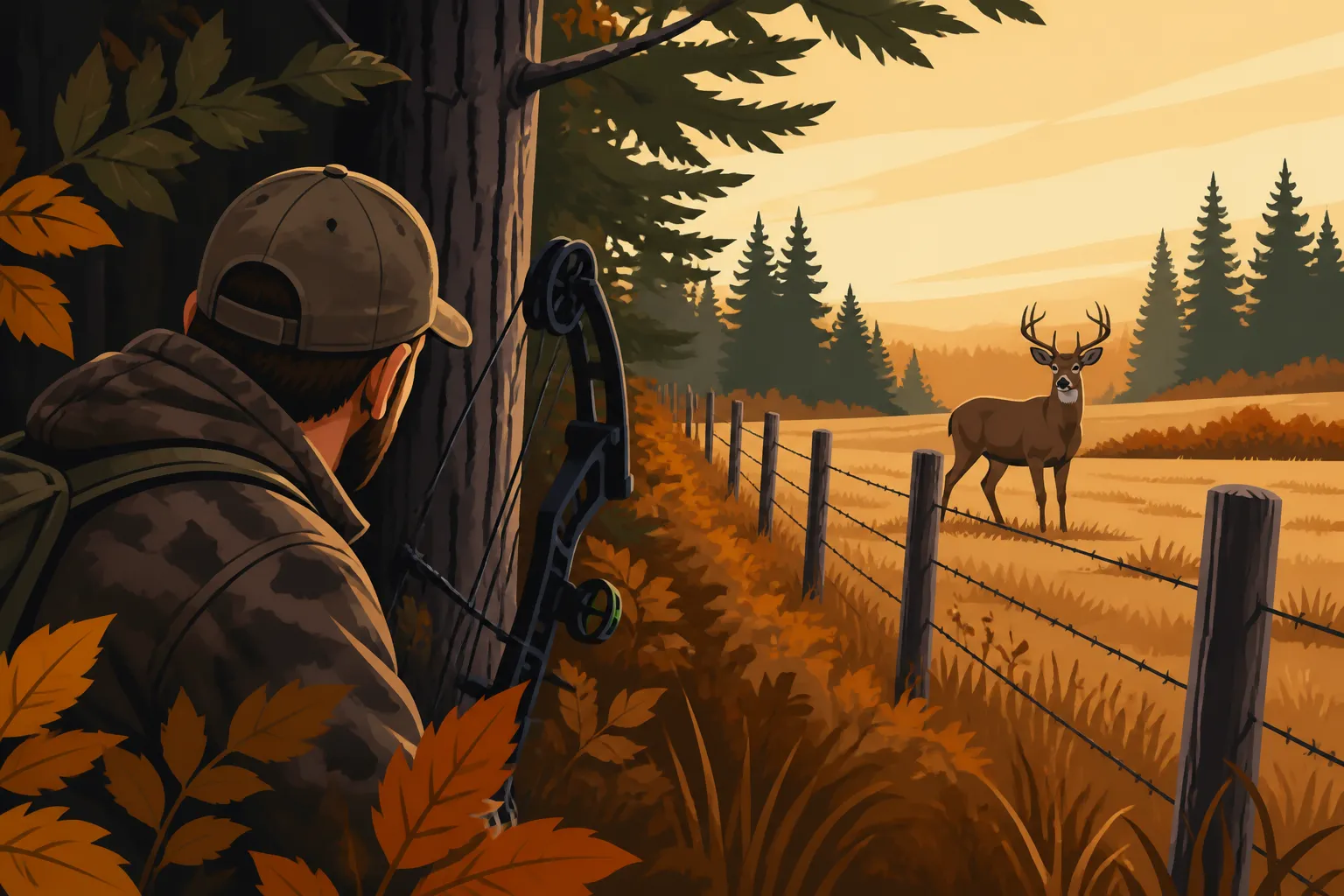
Finding consistent deer movement can feel like chasing ghosts sometimes, especially when you're trying to decode their patterns in varied Maine terrain. It's frustrating to scout for hours, only to find sparse, confusing sign. But there's one often-overlooked feature that consistently acts as a deer magnet: the timbered fence line. This guide will walk you through why these linear strips of cover are so productive and how to effectively hunt them for whitetails in the Pine Tree State.
Why Timbered Fence Lines Are Deer Magnets in Maine
When you're out in the woods, it's easy to overlook something as seemingly mundane as an old fence line. But a fence line, especially one that has grown up with mature trees, brush, and thick cover, creates a natural corridor and edge effect that deer absolutely adore. These aren't just random boundaries; they're often historical lines that mark changes in habitat or land use, and over decades, nature has shaped them into prime deer habitat.
The Edge Effect and Natural Funnels
Deer are creatures of the edge. They thrive where different habitats meet, moving between the safety of thick cover and the availability of food in more open areas. A timbered fence line, by its very nature, is a profound edge. It might separate a dense spruce-fir forest from an old growth hardwood stand, or a forgotten overgrown pasture from a working hayfield. This transition zone provides a blend of security and sustenance that deer seek out.
Imagine a deer moving from a bedding area deep in a cedar swamp towards a cornfield. Instead of crossing open ground, they'll often hug the nearest line of cover, which could very well be an old timbered fence. These linear features act as natural funnels, directing deer movement along predictable paths. Where these fence lines intersect with other cover, a small creek, or a change in elevation, they become even more potent pinch points. Deer feel safe traveling along these routes because they offer immediate concealment, allowing them to remain hidden from predators and hunters alike. You'll notice this behavior not just in deer but also in other game like turkeys, which often use fencelines to travel between fields and roosting areas.
Security and Concealment
Maine deer, especially the older, wiser bucks, prioritize security above almost everything else. A well-grown timbered fence line provides a fantastic sense of security. It's often a narrow band of dense vegetation – a mix of mature trees, thick underbrush, briars, and saplings – that offers perfect visual cover. Deer can move along these lines, hidden from sight, yet still be aware of their surroundings. This makes them ideal bedding areas, particularly during the day when deer might feel pressured in more expansive woods.
You might find a mature buck bedded just inside the timbered edge of a fence line, with his back to the thickest cover, facing out towards a more open area. This gives him the advantage of seeing potential threats long before they see him. The density of the vegetation also helps to muffle sound, providing an extra layer of protection. This is particularly true in areas where hunting pressure is high. Deer learn very quickly to use the thickest cover available to escape hunters. These natural corridors allow them to slip from one block of cover to another almost unnoticed, making it tough for hunters who stick to wider, more open timber.
Food Source Access and Transitional Zones
Beyond just travel and security, timbered fence lines often serve as critical access points to food sources. Historically, these fences were built to delineate agricultural fields from forest. Even if the fields are no longer actively farmed, they might still be overgrown with successional growth like apple trees, hawthorns, or other browse deer love. A timbered fence line allows deer to move from the deep woods directly to the edge of these feeding areas under the cover of darkness or low light, minimizing their exposure.
Think about a classic Maine scenario: a dense pine forest bordering an old apple orchard. An overgrown fence line between the two would be a superhighway for deer seeking those late-season apples. They can bed in the pines, travel silently along the fence, and step out into the orchard when conditions are right. This transitional zone is where deer spend a lot of their time, moving from cover to feed, and back again. Understanding this interaction is key to predicting their movements. If you're hunting in the late season, these specific areas can be crucial as deer concentrate on remaining food sources. For more on this, check out our guide on Late-Season Food Sources for Maine Whitetails.
Scouting Strategies for Maine's Timbered Fence Lines
You can't just walk up to any old fence line and expect to find deer. Successful hunting of these areas starts long before the season with diligent, intelligent scouting. Maine's varied landscape means that every fence line will offer unique opportunities, and understanding the subtle clues the deer leave behind is paramount.
Reading the Sign on the Line
When scouting timbered fence lines, you're looking for concentrated deer sign. Start by walking the length of the fence, paying close attention to both sides. You'll want to identify primary travel routes, which will be evident from beaten-down trails. Look for fresh tracks, especially larger tracks from mature bucks, and distinguish them from older, washed-out prints. Fresh droppings indicate recent activity.
Keep an eye out for rubs and scrapes. Bucks often use fence line trees to rub their antlers, especially where two distinct cover types meet or where the fence line makes a bend. Scrapes will frequently appear along the edge of the fence line, particularly near prominent branches deer can reach to lick. These "community scrapes" are vital communication hubs, especially during the rut. The more sign you find, the more confidence you can have in that particular section of the fence line. Don't just look for isolated signs; look for patterns and concentrations that suggest repeated use.
Aerial Intelligence and Topographical Mapping
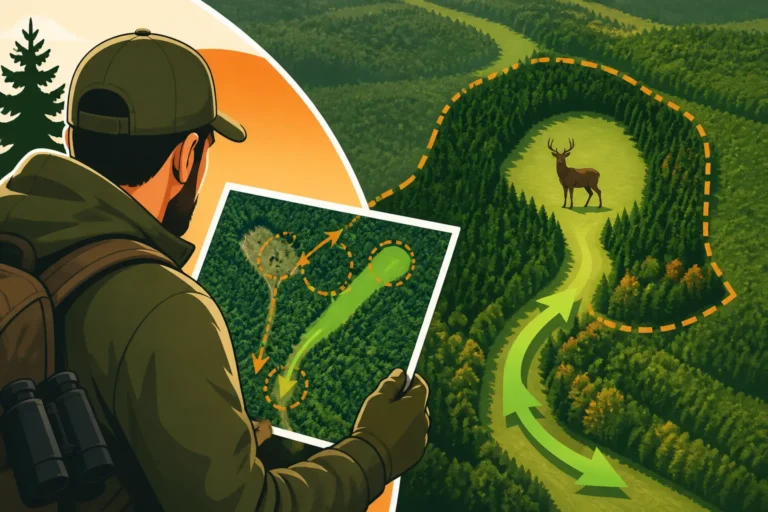
Before you even set foot in the woods, leverage modern technology. Tools like GoHunt are invaluable for pre-season scouting. Use their satellite imagery and topographical maps to identify potential timbered fence lines that might be hidden from casual observation. Look for linear features that connect different types of cover – perhaps a strip of woods between two fields, or a property line that runs along a ridge. Pay attention to how these lines intersect with changes in elevation, water sources, or other habitat features.
For instance, an old stone wall or barbed wire fence might be barely visible on the ground but clearly marked as a linear anomaly on an aerial map. If it's lined with thick timber, that's a prime candidate. Look for where these lines funnel down into narrower sections or where they meet a creek or a logging road. These are the pinch points that will concentrate deer movement. Overlaying different map layers can reveal subtle changes in vegetation or terrain that indicate high-traffic areas. Understanding the lay of the land from above can save you countless hours of walking. Consider reading up on Reading Aerial Photos for North Woods Deer to sharpen your map skills even further.
Strategic Trail Camera Placement
Trail cameras are your eyes in the woods when you're not there, and placing them strategically along timbered fence lines can be incredibly effective. Don't just put them on the first deer trail you see. Instead, focus on those natural funnels and pinch points you identified during your initial scouting and map analysis. Where a fence line crosses a creek, where it makes a sharp bend, or where there's a break in the cover, these are ideal spots.
Aim to place your cameras slightly off the main trail, perhaps 10-15 yards into the timber, facing the direction of expected deer travel. This reduces the chances of spooking deer and captures a wider view of the activity. Consider using a cellular camera if allowed and practical, as it allows you to monitor activity in real-time without having to disturb the area. Check your cameras regularly but not excessively, especially as hunting season approaches. The data you gather – time of day, direction of travel, and individual deer recognized – will be priceless in refining your hunting strategy.
Effective Hunting Tactics for Timbered Fence Lines
Once you've done your homework and identified promising timbered fence lines, it's time to put boots on the ground with a solid plan. The beauty of these features is their versatility; they offer opportunities for various hunting methods, from patient stand hunting to strategic still-hunting.
Stand and Blind Placement for Ambush
For many Maine hunters, setting up a stand or blind is the go-to method, and timbered fence lines provide excellent locations. When choosing your spot, consider the prevailing wind direction first and foremost. You absolutely must position yourself downwind of where you expect deer to approach or travel. An educated deer will often circle downwind before entering an open area or crossing a key travel corridor.
For a tree stand, look for a mature tree just inside the timbered edge, giving you a clear shot along the fence line and into any adjacent feeding areas. A height of 15-20 feet often provides a good vantage point and helps your scent dissipate. If you prefer ground hunting, a well-brushed-in ground blind can be incredibly effective. Place it where it blends seamlessly with the natural cover, again, paying strict attention to the wind. Think about setting up where the fence line either crosses a subtle ridge, meets another significant block of cover, or funnels deer past a specific food source. For more on stand placement, check out Hanging a Stand on a Private Land Field Edge.
Still-Hunting and Small Drives
Timbered fence lines aren't just for static sits; they can be fantastic for active hunting methods like still-hunting or even small, controlled deer drives. If you're still-hunting, move incredibly slowly, pausing often (5-10 minutes at a time) to scan the cover ahead and to your sides. Use the fence line as your guide, moving parallel to it or even right along it, using the thick cover for concealment. Pay close attention to any breaks in the fence or subtle openings, as deer will often pause at these points before proceeding.
For a small drive, especially with just a couple of friends, a timbered fence line can serve as an ideal barrier or funnel. You could have one or two hunters walk slowly along the fence, pushing deer towards another hunter strategically positioned at an intersection or pinch point further down the line. Communication is key here, and safety is paramount. Ensure everyone knows their zones of fire and stick to them. This can be particularly effective in areas where deer are pressured and tend to hide in the thickest cover. Learn more about effective deer drives in our article Deer Drives With Three or Four Hunters.
Capitalizing During the Rut
The whitetail rut is a magical time for deer hunters, and timbered fence lines become even more active during this period. Bucks are constantly cruising for does, and these linear features provide efficient and safe travel corridors. A fence line that connects a known bedding area to a feeding area, or even one that just parallels a likely doe bedding thicket, will see increased buck activity.
During the pre-rut and peak rut, bucks will expand their home ranges and actively scent-check these corridors. This is when those rubs and scrapes you found during scouting will be getting refreshed. Focus your hunting efforts during dawn and dusk, but don't discount midday hunting along these lines, as bucks will often move throughout the day during the rut. Using calls like grunts or rattling can be very effective here, as the timbered line often focuses sound and movement. If you're curious about the best time to target rutting bucks, check out Hunting the Rut in Early November.
Overcoming Challenges and Maximizing Success
Hunting timbered fence lines can be incredibly rewarding, but like all hunting, it comes with its own set of challenges. Being aware of these and having a plan to adapt will significantly increase your odds of success in Maine.
Navigating Hunting Pressure
Maine's deer hunting seasons, especially the firearms season, can see significant hunting pressure, particularly in accessible areas. This pressure often pushes deer into the densest, most overlooked cover. Timbered fence lines, with their inherent security, become prime escape routes and refuges. If you're hunting an area with a lot of other hunters, focus on the least obvious fence lines – those that are truly thick, difficult to access, or seem to lead to nowhere.
Deer will use these overlooked corridors to slip from one woodlot to another, or to access fields from areas less traveled by humans. Sometimes, the best strategy is to sit patiently on a fence line that acts as an escape route from a popular public hunting parcel. While others are pushing deer, you might intercept one looking for sanctuary. Using mapping applications like GoHunt can help you identify public land boundaries or areas of high accessibility that might indicate higher pressure, allowing you to target adjacent fence lines as escape routes.
Understanding Wind and Thermals in Maine's Topography
Wind and thermals are critical factors in all hunting, but they can be especially tricky along linear features like timbered fence lines. In Maine's varied terrain, from coastal plains to rolling hills, thermals will rise in the morning and fall in the evening, often creating unpredictable swirls, particularly where elevation changes.
Always consider the general wind direction, but be mindful of how localized topography can influence it. A fence line running along a ridge will have different thermal dynamics than one at the bottom of a valley or alongside a beaver flowage. In the morning, expect scent to rise with the warming air; in the evening, it will fall. Positioning yourself to intercept deer while keeping your scent out of their travel path is paramount. Sometimes, this means setting up further back in the timber, slightly off the fence line, or choosing a stand location that allows your scent to blow out over an open field where deer aren't likely to be. Our guide on Wind and Thermals in Maine Hill Country offers more insights into this complex topic.
Adapting to Changing Conditions
Maine weather is notoriously fickle, and deer behavior can change on a dime based on temperature, snowfall, and recent rain. A fence line that was hot in early season might be dormant after a heavy snow, as deer might shift to more protected deer wintering yards. Conversely, a fence line bordering an exposed field might become active again if a late-season snow reveals forgotten food sources beneath the white blanket.
Stay flexible. If your chosen fence line isn't producing, don't be afraid to move. Have several scouted options. Pay attention to food availability; if acorns are scarce, deer might be hitting old apple trees along another fence line. After a fresh snowfall, tracks will tell you exactly where deer are moving, allowing you to adjust your strategy rapidly. The key is continuous observation and an willingness to adapt your approach to what the deer are telling you.
Comparing Fence Line Hunting Strategies
To help visualize some of these strategies, here's a table comparing different approaches to hunting timbered fence lines in Maine.
| Strategy | Ideal Conditions | Pros | Cons | Key Considerations |
|---|---|---|---|---|
| Tree Stand Sit | Pre-rut, Rut, Cold Weather (all seasons) | Elevated vantage, good for scent control (with proper wind), patient. | Requires suitable tree, fixed position, limited mobility. | Wind direction is paramount; identify key travel funnels or crossings. |
| Ground Blind | All Seasons, particularly high pressure areas | Excellent concealment, good for multiple hunters, comfortable. | Requires brushing in, fixed position, can limit shooting lanes. | Position for prevailing wind; ensure clear shooting lanes; blend with environment. |
| Still-Hunting | Any Season, especially post-rain/snow | Active, allows covering ground, adaptable to changing sign. | Requires immense patience and discipline, easy to spook deer if rushed. | Move slowly, pause often, use cover; focus on fresh sign and natural funnels. |
| Small Deer Drive | Post-rut, Late Season (cold weather) | Can be highly effective at moving deer out of thick cover. | Requires multiple hunters, safety is critical, can push deer off property. | Clear communication, defined roles, strict safety zones; target thickest cover. |
Disclaimer
Please ensure you are familiar with and adhere to all current Maine Department of Inland Fisheries and Wildlife hunting regulations and licensing requirements. Hunting safely and ethically is paramount. Always obtain landowner permission before hunting on private land.