Deer Drives With Three or Four Hunters
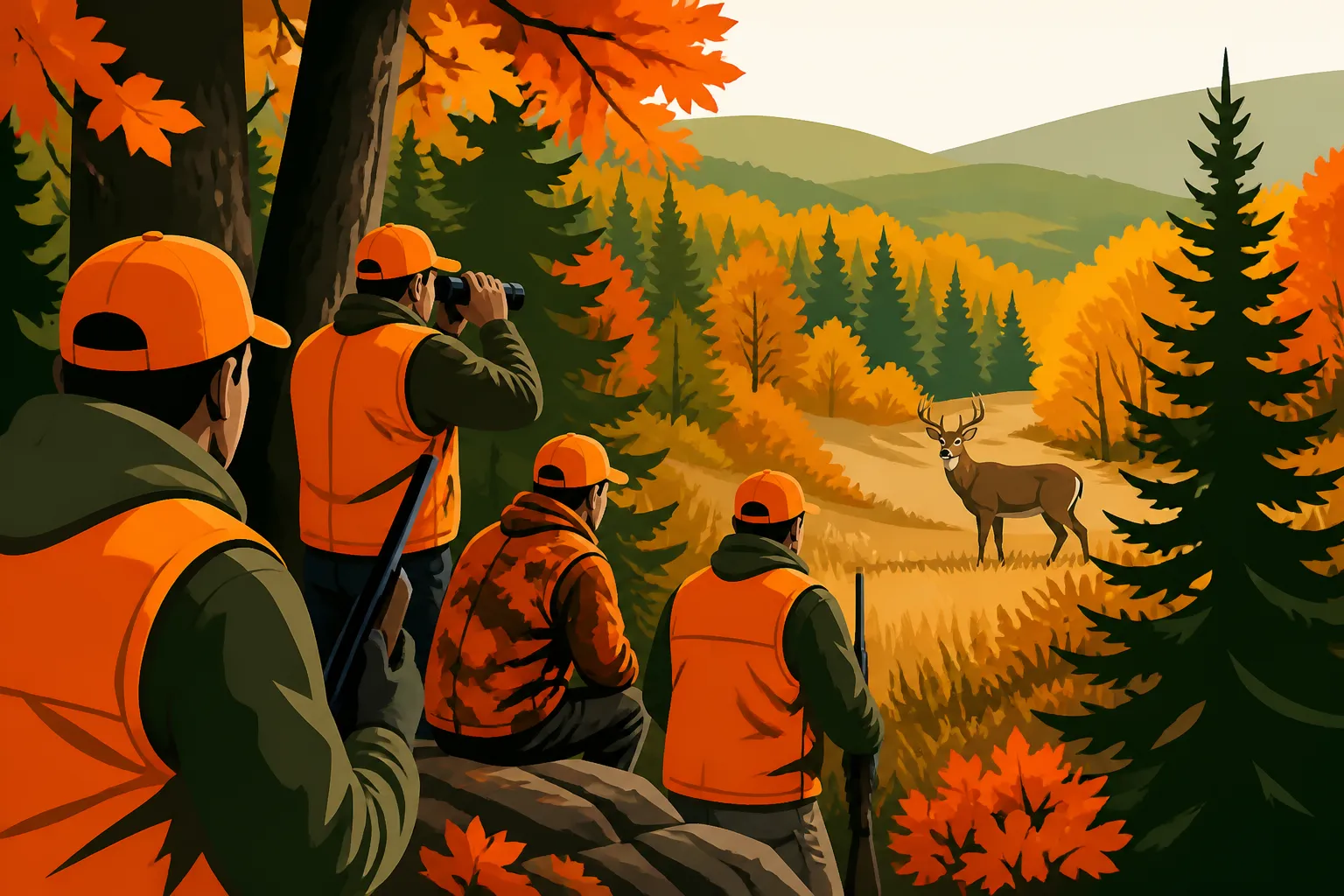
There's nothing quite like the collective thrill and strategic challenge of a deer drive, but it can often feel overwhelming if you don't have a small army of hunters at your disposal. Many folks get discouraged, thinking they need a dozen people to push deer effectively, leading to missed opportunities or half-hearted attempts that spook more deer than they move. This guide will walk you through the precise art and science of executing highly successful deer drives with just three or four hunters, focusing on strategy, safety, and maximizing your chances in Maine's diverse landscapes.
The Power of Small Deer Drives in Maine
When you think about deer drives, your mind might conjure images of large groups fanning out across vast tracts of land. And while those can certainly be effective in some scenarios, they often come with their own set of logistical nightmares and safety concerns, especially when you’re dealing with private land or smaller woodlots. For many of us who hunt Maine, a big crew just isn't always practical or available. This is where the beauty and efficiency of a small, well-coordinated drive with just three or four hunters truly shines.
Why Three or Four Hunters is Ideal
You might be surprised to hear this, but fewer hunters can actually translate to a more controlled, surgical approach, particularly in the thick cover and varied topography we have here in Maine. With a smaller team, communication is clearer, movements can be more deliberate, and the element of surprise is often easier to maintain. Instead of trying to cover every inch of ground, which is impossible anyway, you're focusing on pushing deer through specific bottlenecks, funnels, or escape routes that you've identified through scouting. This targeted approach is not only safer but often more successful, as you're leveraging deer behavior rather than just making noise. It allows you to really dial in on particular terrain features, like a wooded ridge or a dense cedar swamp, where deer are likely to be bedding or moving. You're not just hoping to bump a deer; you're planning to push it into a predetermined zone.
Think about it this way: in Maine's varied terrain, from dense spruce thickets to rolling hardwood ridges, a smaller team allows for greater agility. You can adapt on the fly much more easily than a large group when a deer breaks unexpectedly or the wind shifts. Plus, with fewer boots on the ground, you create less general disturbance outside of your intended drive path, keeping more deer in the area for future hunts. This method truly emphasizes quality over quantity, making every hunter's contribution significant.
Understanding Your Role as Driver or Stander
For a successful small-team drive, everyone needs to know their job, and it’s usually one of two distinct roles: the "driver" or the "stander." There's no room for improvisation here; clear roles are paramount to both success and, most importantly, safety.
The drivers are the ones who will actively move through the cover, pushing deer towards the standers. Their job isn't to crash through the woods making as much noise as possible, though some noise is certainly part of the process. Instead, drivers should move purposefully, scanning ahead for deer signs, listening for subtle movements, and maintaining their predetermined path. They control the pace of the drive, often moving slower than you might think, pausing to listen, and using the wind to their advantage. Effective drivers are essentially skilled still-hunters, slowly picking apart the cover to dislodge deer. They need to understand the terrain, predict deer movement, and communicate any sightings or changes to the standers.
The standers are positioned strategically along the anticipated escape routes or funnels where deer are expected to emerge. Their job requires patience, absolute stillness, and an acute awareness of their surroundings and backstop. Standers must be ready to quickly and ethically take a shot when a deer appears, but also vigilant about identifying drivers to ensure safe shot placement. They'll need to resist the urge to move or fidget, even if they don't see anything for a long time. Often, the stander's success hinges on simply being present and camouflaged in the right spot at the right time. They should be positioned in a way that gives them clear shooting lanes but also provides a safe backdrop, ensuring that any shot taken won't endanger another hunter or property.
The success of your drive truly rests on how well each individual understands and executes their specific role. It’s a team sport, and every player matters.
Strategic Planning for Success
A small deer drive isn't just about showing up and walking through the woods. It's a calculated maneuver that requires thorough pre-hunt preparation. Without a solid plan, you're essentially just taking a walk and hoping for the best, which is rarely a productive way to fill your tag in Maine. The less hunters you have, the more critical your planning becomes.
Picking the Right Ground
The key to a successful small drive is selecting the right piece of land. You're not trying to drive a square mile; you're looking for smaller, contained areas where deer are likely to be bedding or feeding, and where their escape routes are naturally limited or funneled. This could be a dense, overgrown clear-cut, a peninsula of timber jutting into a field, a thick spruce stand bordered by open hardwoods, or a small woodlot surrounded by open fields. Look for areas that naturally bottle-neck deer movement. An excellent candidate would be a small block of dense cover, perhaps 10 to 20 acres, with obvious entry and exit points. Areas that serve as natural bedding cover during the day are prime targets.
When Scouting Maine Private Land Before Season, pay close attention to topography, prevailing winds, and existing deer sign. Fresh tracks, rub lines, and especially scrape lines along a logging road can tell you where deer are moving and what their patterns are. Using mapping tools like GoHunt, you can identify natural funnels between two woodlots, narrow strips of cover, or pinch points between water features or dense swamps. These are the perfect canvases for a small drive. Consider a cedar swamp for example; these can be frustrating to hunt individually, but with a small, coordinated drive, you can effectively push deer out of their dense hideouts. Identifying areas where deer prefer to bed, such as thick stands of young conifer growth or south-facing slopes that catch the sun, will give you a significant advantage. Don't forget to consider areas near late-season food sources for Maine whitetails, as deer will often bed nearby.
Mapping Your Drive and Escape Routes
Once you've identified your ideal piece of ground, it's time to get down to the nitty-gritty of planning the drive itself. This involves carefully mapping out the exact path the drivers will take and, more importantly, where the standers will be positioned. Using an app like GoHunt, or even a detailed paper map, you should clearly mark:
- Driver Paths: These should be deliberate, not random. Drivers should move in a way that systematically covers the thickest cover, pushing deer forward rather than allowing them to loop back. Consider the wind direction; drivers should generally move into or across the wind to prevent deer from scenting them too early and slipping out the sides.
- Stander Positions: These are critical. Standers need to be placed along known or anticipated deer escape routes. This could be a narrow saddle on a ridge, a creek bottom, a logging road crossing, or a field edge. Think about where deer would naturally flee to safety once disturbed. Ideally, standers should be positioned slightly downwind of these escape routes, with a clear view of where deer are likely to emerge. It's better to have standers covering fewer, higher-percentage escape routes than trying to cover every possible exit, which usually results in gaps deer can exploit. Remember to account for shot lanes and safe backstops. For instance, Hunting a Funnel Between Two Woodlots is a classic stander placement strategy.
- Communication Points: Establish clear methods for communication. This could be two-way radios, specific whistle signals, or even predetermined hand signals if line-of-sight allows. Crucially, everyone needs to know what these signals mean and when to use them.
Before the drive even begins, everyone involved should have a clear understanding of the entire plan. Walk through it on the map, discuss potential contingencies, and ensure every hunter knows where everyone else will be at all times. This shared understanding is the bedrock of a safe and successful drive. It’s also wise to consider the terrain features that might influence how deer move. For instance, Wind and Thermals in Maine Hill Country can play a huge role in how deer react to pressure, and your standers should be placed accordingly.
Executing the Drive Safely and Effectively
Even the best-laid plans can go awry without proper execution. When you're dealing with just three or four hunters, every move counts. It’s not about brute force; it’s about intelligent, coordinated movement and absolute adherence to safety protocols.
Communication and Pace
Effective communication is the lifeblood of a small deer drive. Drivers need to communicate their progress, any deer sightings, or changes in direction to the standers. Standers, in turn, need to relay any deer movement they observe, even if it's not within their shooting lane, so drivers can adjust their push. Modern two-way radios are invaluable for this, allowing for real-time updates without shouting and spooking deer prematurely. Ensure everyone's radios are charged and tested beforehand.
The pace of the drive is equally important. Many beginners make the mistake of driving too fast, crashing through the woods. This often results in deer simply busting out the sides of the drive, long before they get close to the standers. A better strategy for small drives is a slow, methodical push. Drivers should take their time, pausing frequently, still-hunting through the cover, and allowing standers ample time to react. Think of it like a slow, deliberate squeeze. The idea is to make the deer feel uncomfortable enough to move, but not so panicked that they make an irrational dash. A driver who can accurately read deer sign, like a fresh track or a well-used trail, can adjust their pace and angle to subtly guide deer towards the standers, much like you would when Finding Sign in Big North Woods Timber. This calculated pressure gently nudges deer rather than sending them into a full-blown panic.
Post-Shot Protocol and Recovery
So, you’ve put in the planning, executed the drive, and a stander has taken a shot. What now? The moments immediately following a shot are critical. The stander should immediately communicate to the rest of the team that a shot has been fired. This lets everyone know to hold their positions and wait for further instructions. Do not immediately rush to the shot site. Give the deer time, especially if the shot wasn't perfect. A wounded deer might run a short distance and then bed down, whereas immediately pursuing it can push it much farther. Wait at least 20-30 minutes for a suspected gut shot, and 5-10 minutes for a clear lung/heart shot.
Once the waiting period is over, the stander should approach the shot site carefully, looking for blood, hair, or any other sign. Communicate what you find. If a good blood trail is located, then the entire team can shift focus to tracking and recovery. This is where teamwork truly shines. Even if you only have three or four hunters, a fresh pair of eyes can make all the difference when Tracking a Deer in Fresh Maine Snow or following a sparse blood trail through difficult terrain. If darkness falls, know the protocols for Blood Trailing After Dark in Maine, which often involves bringing in brighter lights and being extra methodical. Recovering a deer from a dense area like a Recovering a Deer From a Cedar Swamp can be a real challenge, so having an extra hand or two is incredibly helpful. Every member of the team should be ready to assist in the tracking process, looking for subtle signs like disturbed leaves, bent grass, or drops of blood.
Safety First, Always
This cannot be stressed enough: safety is paramount in any hunting scenario, but especially during a deer drive where hunters are moving in a coordinated fashion. Before anyone even steps foot in the woods, every hunter must confirm they are wearing the legally required amount of blaze orange (or blaze pink, which is also legal in Maine). This includes vests, hats, and any other outerwear that meets the square inch requirements. For those taking Maine Hunter Education Requirements, these safety principles are drilled into you from the start.
Key safety rules for a small drive include:
- Positive ID of Target and Backstop: Never shoot at movement, sound, or color. Always clearly identify your target as a legal deer and ensure you have a safe backdrop before pulling the trigger. Know what is beyond your target.
- Awareness of Other Hunters: Everyone needs to know where the other hunters are at all times. Drivers should make some noise to signal their presence (without overdoing it to spook deer too early), and standers should be aware of the direction the drive is coming from.
- Assigned Shooting Zones: Standers should have clear, pre-discussed shooting lanes and angles. They should never shoot into the drive or towards where drivers are expected to be.
- Safe Handling of Firearms: Firearms should be carried safely with the muzzle pointed in a safe direction, and the safety on until ready to shoot.
- Clear Communication: As mentioned, clear and constant communication is a safety tool as much as it is a tactical one.
By drilling these safety measures before every drive, you ensure that everyone understands the risks and how to mitigate them, making the experience enjoyable and secure for all involved.
Post-Drive Considerations and Learning
The drive doesn't end when the deer is on the ground, or even if it gets away. Every drive is a learning opportunity. Taking the time to debrief and analyze what happened will make your next drive even more successful.
Adapting to Conditions and Deer Behavior
Maine's weather and deer behavior can be incredibly unpredictable. A successful small drive requires you to be a student of both. If it's a cold, snowy day, deer might be holed up in thick wintering yards, making them harder to push. If it's warm and rainy, they might be more scattered. The time of year also plays a huge role; Hunting the Rut in Early November means bucks might be moving more erratically, cruising for does, making them less predictable in their escape routes. Conversely, Hunting the Muzzleloader Close in Mid-December often means deer are focused on late-season food sources and will be more concentrated in specific areas.
After each drive, successful or not, discuss what the deer did. Did they break out the sides? Did they run straight through the standers? Did they backtrack through the drivers? Understanding these behaviors allows you to adapt your strategy for future hunts. Maybe your drivers were too noisy, or perhaps your standers were positioned too close, not allowing deer to feel pressured into the funnel. Over time, you'll develop a keen sense for what works in different conditions and in specific locations. Utilizing mapping tools like GoHunt after a drive to mark where deer broke out or where they were seen can provide invaluable data for future planning.
Analyzing and Improving Your Strategy
The post-drive debrief is not about assigning blame; it's about collective learning. Gather your team, even if it's just two or three others, and talk through the entire drive.
Here’s a simple table to guide your post-drive analysis:
| Aspect | What Worked Well? | What Could Be Improved? | Why? (Hypothesized Reason) | Actionable Changes for Next Time |
|---|---|---|---|---|
| Scouting | Accurate prediction of bedding/travel. | Missed key escape routes or terrain features. | Did not spend enough time on foot. | More detailed pre-scout. |
| Driver Movement | Consistent pace, effective pushing. | Too fast/slow, pushed deer sideways. | Misunderstood terrain, lack of communication. | Adjust pace, more radio checks. |
| Stander Placement | Covered primary escape routes, good visibility. | Deer broke past, poor shooting lanes, missed backstop. | Misjudged deer's escape path, poor cover. | Relocate, clear lanes. |
| Communication | Clear radio calls, timely updates. | Static, unclear signals, missed updates. | Batteries low, too much chatter. | Test radios, pre-set signals. |
| Deer Behavior | Deer followed predicted path. | Unexpected breaks, looped back. | Wind shift, too much pressure, unexpected sign. | Adjust to wind, lighter push. |
| Safety | All protocols followed. | Near misses, unclear ID of targets/hunters. | Rushed shot, lack of awareness. | Re-emphasize safe zones. |
This structured approach helps you identify patterns, understand cause and effect, and refine your techniques. Perhaps you realize you should have Posting a Drive Around a Woodlot differently, or that a particular stander position was too exposed. Each drive, whether you punch a tag or not, adds to your collective knowledge and makes you a more effective hunting team. Don's shy away from those tough conversations. Honest reflection is how you truly improve your hunting prowess in the Maine woods.
Disclaimer
Please note: Hunting regulations and laws can change. Always consult the latest Maine Department of Inland Fisheries & Wildlife (MDIFW) regulations before planning any hunting activity. Safety should be your absolute top priority on every hunt.