Asking a Maine Landowner for Permission
Finding good hunting land in Maine can feel like an insurmountable challenge, especially for those new to the state or struggling to find unpressured areas. With so much private property making up the landscape, many hunters shy away from the crucial step of asking for permission, which means they're often missing out on incredible opportunities and the chance to build lasting connections. This guide will walk you through the respectful and effective ways to approach landowners in Maine, helping you build relationships that can unlock prime hunting experiences.
Understanding Maine's Unique Land Access Culture
Maine has a long and storied tradition of private land access for outdoor recreation, but it's a tradition built entirely on respect and responsible behavior. It's not a right, it's a privilege, and understanding this fundamental aspect is your first step toward success.
Maine's Implied Permission vs. Posted Land
One of the most defining characteristics of Maine's land access is the concept of "implied permission." What does this mean? Basically, unless land is explicitly posted as "No Trespassing" or "Private Property," the law generally presumes that you have permission to access it for traditional outdoor activities, including hunting. This is a huge benefit for hunters and one that many states don't offer. However, it comes with a massive caveat: this implied permission can be revoked at any time by the landowner, and it demands an even higher level of courtesy and ethical behavior from those utilizing it. It's a system that works when everyone upholds their end of the unwritten agreement. You can delve deeper into Maine Posted Land Rules to understand the specifics.
Contrast this with land that is posted. When you see those unmistakable signs, whether bright orange or stark white, they mean exactly what they say: access is denied. Ignoring these signs is not just disrespectful, it's trespassing and can lead to fines and legal trouble. Always respect posted land. Even if it's not posted, if you're not sure, it's always better to ask. And if you're looking to hunt a specific, desirable piece of unposted private property, proactively asking for permission is still the golden rule. It shows respect and can solidify your access.
The Importance of Good Landowner Relations
Maine's hunting culture thrives on the relationships between hunters and landowners. A landowner who trusts you, knows you're responsible, and understands your intentions is far more likely to grant permission than someone who feels taken advantage of. These relationships aren't just about getting access to a specific parcel; they're about being part of a community. When you demonstrate respect, honesty, and responsibility, you're not just securing access for yourself, you're helping to preserve Maine's hunting traditions for everyone.
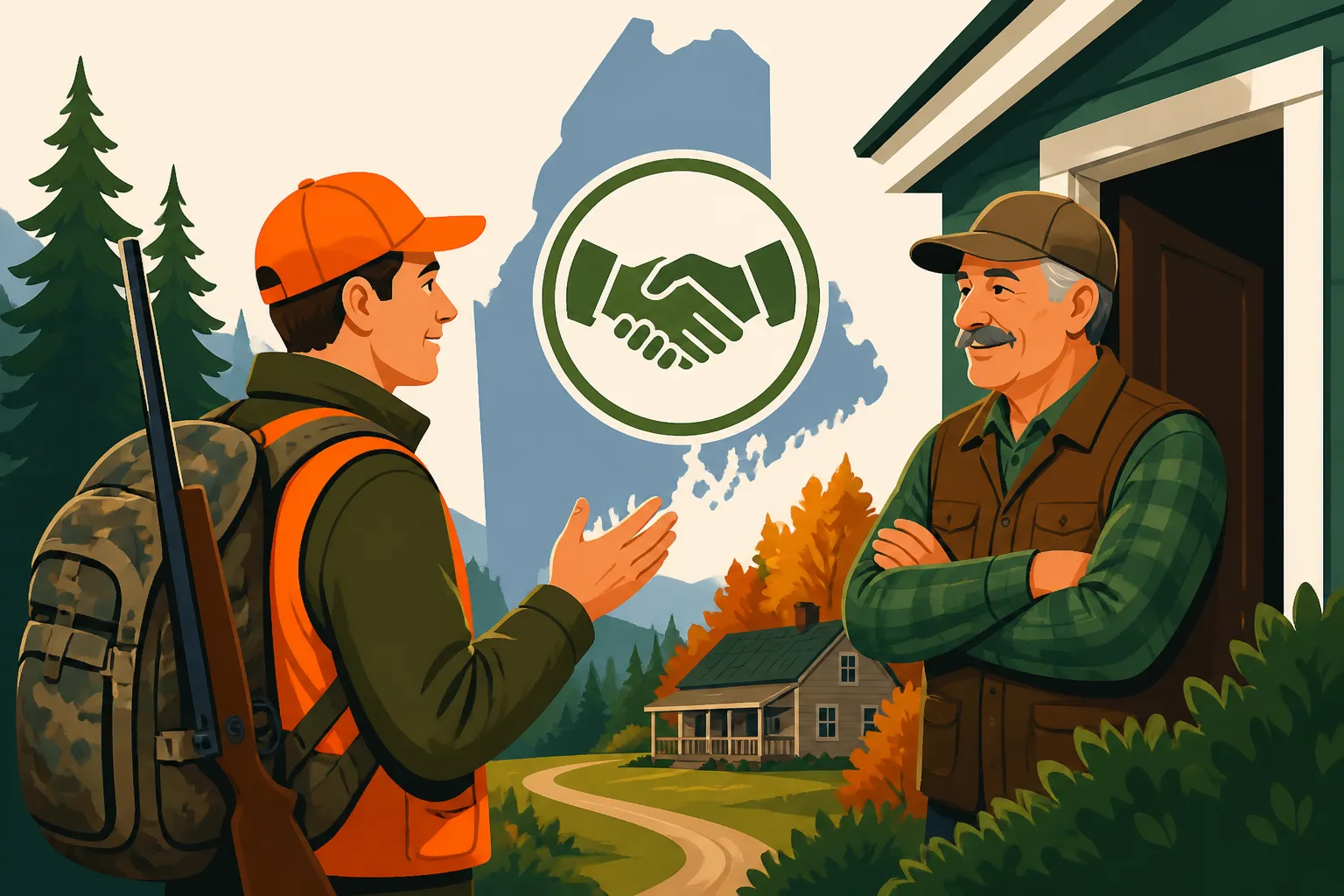
Think of it this way: every interaction you have with a landowner leaves an impression, not just of you, but of hunters as a whole. A negative experience for one landowner can lead them to post their land, shutting it off to everyone. A positive experience, however, can open doors, literally and figuratively. Building these bridges often starts with a simple, polite conversation and consistently showing that you're a good steward of their property. It's about earning that trust, one handshake at a time, and understanding the spirit of the Maine Landowner Relations Program.
Preparing for the Ask: Research and Respect
Walking up to a random house and asking to hunt might work occasionally, but a well-prepared and respectful approach significantly increases your chances of success. Preparation is key to showing genuine interest and trustworthiness.
Scouting for Prime Private Land
Before you even think about knocking on a door, you need to know what you're asking for. Good scouting isn't just for public land; it's absolutely vital for identifying promising private parcels. Start with maps—topographical maps, aerial imagery, and even plat maps from town offices can reveal a lot about property boundaries, terrain features, and potential wildlife corridors. Look for areas with diverse habitat, pinch points, food sources like abandoned apple orchards, or cover that deer might utilize, especially close to agricultural fields or dense timber. Reading Aerial Photos for North Woods Deer can give you an edge in this.
Sometimes, simply observing from a distance can tell you a lot. Are there old logging roads that haven't been touched in years? Is there a creek bottom that provides excellent bedding cover? Pay attention to fields that might be left unharvested, or edges where different habitat types meet. This pre-scouting lets you identify parcels that are truly worth pursuing, rather than wasting your time on properties with little potential. This groundwork also demonstrates to the landowner that you're a serious hunter, not just someone looking for "anywhere" to hunt.
Identifying the Landowner and Their Property Boundaries
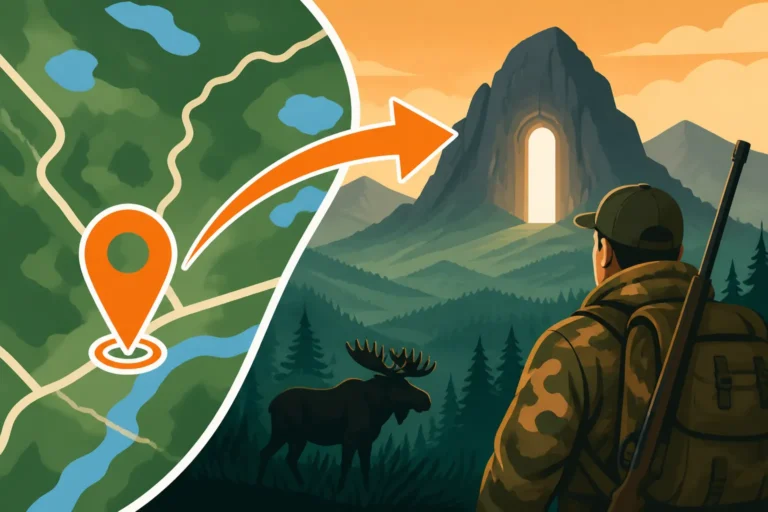
Once you've identified a promising parcel, the next critical step is to find out who owns it. You can't ask for permission if you don't know who to ask! Town offices are your best friend here. Most towns have public records departments where you can look up property tax maps (sometimes called assessors' maps) that show property lines and often list the owner's name and mailing address. Many towns are also putting this information online, making it even easier.
Another invaluable tool for this process is a mapping app like onX Hunt. These apps overlay property lines, owner names, and even mailing addresses directly onto satellite imagery and topographic maps on your phone. This means you can be standing on the edge of a promising woodlot, pull out your phone, and instantly see who owns it and how to contact them. It takes a lot of the guesswork out of the equation and makes your research much more efficient. When you approach a landowner, being able to say, "I noticed your property on Smith Road, parcel R3-4, has some great looking habitat for deer," shows you've done your homework and respect their ownership. This level of detail shows you're not just guessing; you're informed.
Crafting Your Approach and Presentation
First impressions truly matter. When you approach a landowner, your appearance, demeanor, and the way you present yourself are critical. Dress neatly, but appropriately – you don't need a suit, but don't show up looking like you just rolled out of bed after a week in the woods. Make eye contact, offer a firm handshake, and speak clearly and politely.
Think about what you'd want to hear if someone was asking for a favor from you. Be prepared to explain who you are, where you're from, and why you're interested in their property. Have a brief, honest explanation for why you chose their specific parcel (e.g., "I've noticed some deer sign near your back forty" or "that field edge looks like a perfect place to hang a stand"). Be ready to share details about your hunting style – do you plan to use a bow, muzzleloader, or rifle? Are you a still-hunter, or do you plan to sit in a treestand? This transparency builds trust from the outset.
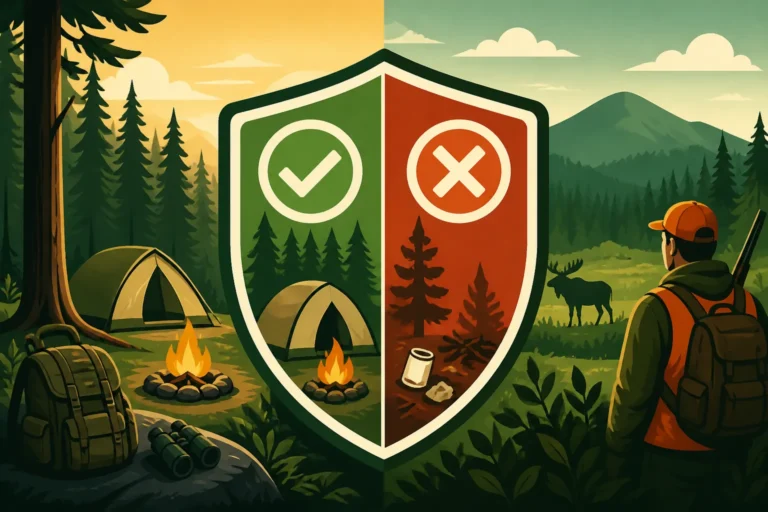
Here's a quick reference for preparing your ask:
| Do's | Don'ts |
|---|---|
| Dress neatly and presentably | Wear dirty, torn, or inappropriate clothes |
| Be polite and respectful | Be demanding, entitled, or aggressive |
| Make eye contact and speak clearly | Mumble, look at your feet, or use slang |
| Explain your intentions and methods | Be vague about what you want to do |
| Offer to help with chores | Expect access without offering anything |
| Bring a map showing the property | Show up without any knowledge of the land |
| Be prepared to leave contact information | Forget to provide a way to reach you |
| Accept "no" gracefully | Argue or complain if denied |
The Art of the Ask: Making Your Pitch
This is where the rubber meets the road. Once you've done your homework and presented yourself well, the actual conversation needs to be handled with care.
What to Say and How to Listen
Start by introducing yourself and immediately stating your purpose in a non-demanding way. Something like, "Good morning/afternoon, my name is [Your Name], and I was hoping to speak with the landowner about the possibility of hunting on your property." This gets straight to the point without beating around the bush. Be direct, but never entitled. Emphasize your respect for their property. You might mention how you've used onX Hunt to understand the property boundaries and ensure you're speaking to the correct person.
Then, be quiet and listen. The landowner might immediately say no, or they might launch into a story about past issues, or they might ask a lot of questions. Your job is to listen carefully to their concerns, answer honestly, and offer solutions. If they mention problems with litter, you can offer to help clean up. If they're worried about fences, assure them you'll be extra careful. If they have specific areas they want off-limits, respect that immediately. This is not a negotiation; it's a conversation where you aim to build rapport.
A great way to show respect is to ask about their preferences. "Are there any specific areas you'd prefer I avoid?" "Is there a certain time of day that works better for you if I'm on the property?" "Do you prefer a phone call or a text message if I need to reach you?" These questions demonstrate that you value their property and their peace of mind. Remember, a 'yes' might come with conditions, and you must be willing to abide by them. Knocking on Doors in Aroostook Farm Country often involves these types of direct, respectful conversations.
Offering Value and Building Trust
Sometimes, simply asking isn't enough. Offering to provide some form of value can be a game-changer. This doesn't mean you need to bribe them, but rather offer a helping hand. "I'd be happy to help you with some chores around the property, like stacking firewood or cleaning up blowdowns, if you ever need a hand." For many Maine landowners, especially those with larger properties, an extra set of hands can be invaluable. Even small gestures, like offering to keep an eye on their property for anything suspicious while you're there, can build immense trust.
Transparency about your hunting practices is also key to building trust. Explain your commitment to ethical hunting, safe firearm handling, and respecting wildlife. Reassure them you'll only park in designated areas, leave no trace, and notify them when you'll be on the property. If you're planning to use a treestand, explain your method for Hanging a Stand on a Private Land Field Edge and assure them you'll remove it completely at season's end, leaving no permanent marks. This level of detail shows you're not just looking for a spot to hunt, but you're also a responsible individual.
Cultivating the Relationship: After You Get a "Yes"
Congratulations, you got permission! This isn't the end of the process; it's just the beginning. The ongoing relationship is what truly matters and what will likely secure your access for years to come.
Following Through on Your Promises
The most important thing you can do once you have permission is to do exactly what you said you would. If you promised to call before you hunt, call. If you said you'd park in a certain spot, park there. If you said you wouldn't drive an ATV off the main trail, don't. Any deviation from your promises, no matter how small, can erode the trust you've painstakingly built. Consistency and reliability are paramount.
Leaving no trace is another non-negotiable. Pick up all your trash, including spent shell casings, food wrappers, and even small pieces of string. If you use a ground blind, ensure it's removed or properly camouflaged and maintained. When you harvest an animal, handle the field dressing discreetly and responsibly. The goal is that when you leave, the landowner barely knows you were there, aside from a polite message letting them know you're done for the day. This attention to detail shows profound respect for their property and their generosity.
Maintaining Communication and Showing Appreciation
Regular, respectful communication is vital. A quick text message before you head out, "Hey [Landowner's Name], just letting you know I'm heading out to the back field this morning, should be off by noon," goes a long way. After a hunt, especially if you harvest an animal, consider sending a message or even stopping by to say thank you. Many landowners appreciate hearing about your success, and it's a perfect opportunity to share a picture (if appropriate and welcomed) or even offer some of the meat.
Showing appreciation doesn't have to be extravagant. A simple thank you note, a small gift like a gift certificate for a local restaurant, or a genuinely helpful gesture (like splitting some firewood or fixing a fence post you noticed was loose) can solidify the bond. Remember, they are doing you a favor. Never take it for granted. These small acts of kindness and consideration cement your reputation as a respectful and responsible hunter, ensuring you become a welcome guest, not just a tolerated presence. For managing land and understanding features, remember to leverage tools like onX Hunt to keep track of any agreed-upon boundaries or safe zones.
Dealing With Denials Gracefully
It won't always be a "yes," and that's okay. Many landowners have valid reasons for not wanting hunters on their property—past bad experiences, liability concerns, or simply wanting their land for personal use. If you hear "no," respond with grace and understanding. A polite, "I completely understand, thank you for your time anyway," and a sincere smile as you walk away, leaves a far better impression than arguing or pouting.
Who knows? That same landowner might reconsider in a year or two, or they might mention your polite demeanor to a neighbor who is looking for a responsible hunter. Even a "no" can be an opportunity to build goodwill in the community. Never burn a bridge. There are plenty of other places to hunt, and maintaining your reputation as a respectful individual is more important than any single hunting spot. If you're having trouble finding access, remember to also explore Maine's extensive public lands, like Maine Wildlife Management Areas or consider joining a Maine hunting club for more opportunities.
Disclaimer
This article is for general informational purposes only and does not constitute professional advice. Laws, prices and regulations vary by location and change over time. Consult a qualified professional for guidance on your specific situation.