Upland Bird and Small Game Hunting in Maine
For many hunters, the focus often narrows to deer, moose, or bear, making it easy to overlook the incredible, accessible, and often less-pressured opportunities that Maine's uplands and dense coverts offer. If you've ever felt intimidated by the perceived complexity or lack of information on where and how to pursue smaller game in our vast state, you're not alone. This comprehensive guide is here to demystify upland bird and small game hunting, providing you with the knowledge and tactics needed to enjoy fantastic days afield chasing ruffed grouse, woodcock, snowshoe hare, and more across the diverse landscapes of Maine.
Understanding Maine's Upland Bird and Small Game Landscape
Maine is a truly special place for small game hunters, boasting a diverse array of habitats that support thriving populations of popular species like ruffed grouse, American woodcock, and snowshoe hare. While deer hunting often takes center stage, the pursuit of these smaller game animals offers a unique, often more active, and incredibly rewarding experience. It's a chance to explore forgotten logging roads, dense alder thickets, and snowy cedar swamps, reconnecting with the wild rhythms of the forest in a different way.
The Rich Tapestry of Maine Habitats
Maine’s landscape is a mosaic of dense forests, agricultural fields, reverting farmlands, and coastal lowlands, all contributing to a rich biodiversity that benefits small game. From the sprawling North Maine Woods with its industrial timberlands and regenerating clearcuts to the rolling hills and fragmented woodlots of southern and central Maine, there's habitat for just about every small game species. This variety means that no matter where you are in the state, you're likely not far from excellent hunting opportunities. It's about learning to "read" the land for specific signs that indicate where these animals prefer to live and feed.
For instance, the dense, young growth that follows timber harvesting creates ideal conditions for ruffed grouse, providing both food and escape cover. Woodcock, on the other hand, are drawn to the moist, worm-rich soils found in alder runs and young aspen stands. Snowshoe hare thrive in areas with thick conifer cover, particularly cedar swamps and dense spruce-fir regeneration, which offer protection from predators and deep snow during winter. Understanding these habitat preferences is the first step to becoming a successful small game hunter.
Overview of Key Species and Seasons
Maine offers generous seasons for most upland birds and small game, providing ample opportunity from early fall through the heart of winter. Ruffed grouse and woodcock seasons typically open in late September, coinciding with the vibrant fall foliage and cooler temperatures that make for pleasant hunting. Snowshoe hare season kicks off a bit later, often in October, and extends deep into the winter months, offering exciting opportunities to hunt over snow.
Other species like gray squirrels and cottontail rabbits also have open seasons, often overlapping with the more popular deer and bird seasons. While they might not be the primary target for many, they can provide additional excitement and challenge, especially during still-hunting trips or when you encounter them incidentally. Remember, seasons and bag limits can vary by Wildlife Management District (WMD) or even change annually, so always double-check the latest regulations from the Maine Department of Inland Fisheries and Wildlife (MDIFW) before heading out.
Ruffed Grouse Hunting in Maine: The King of the Covert
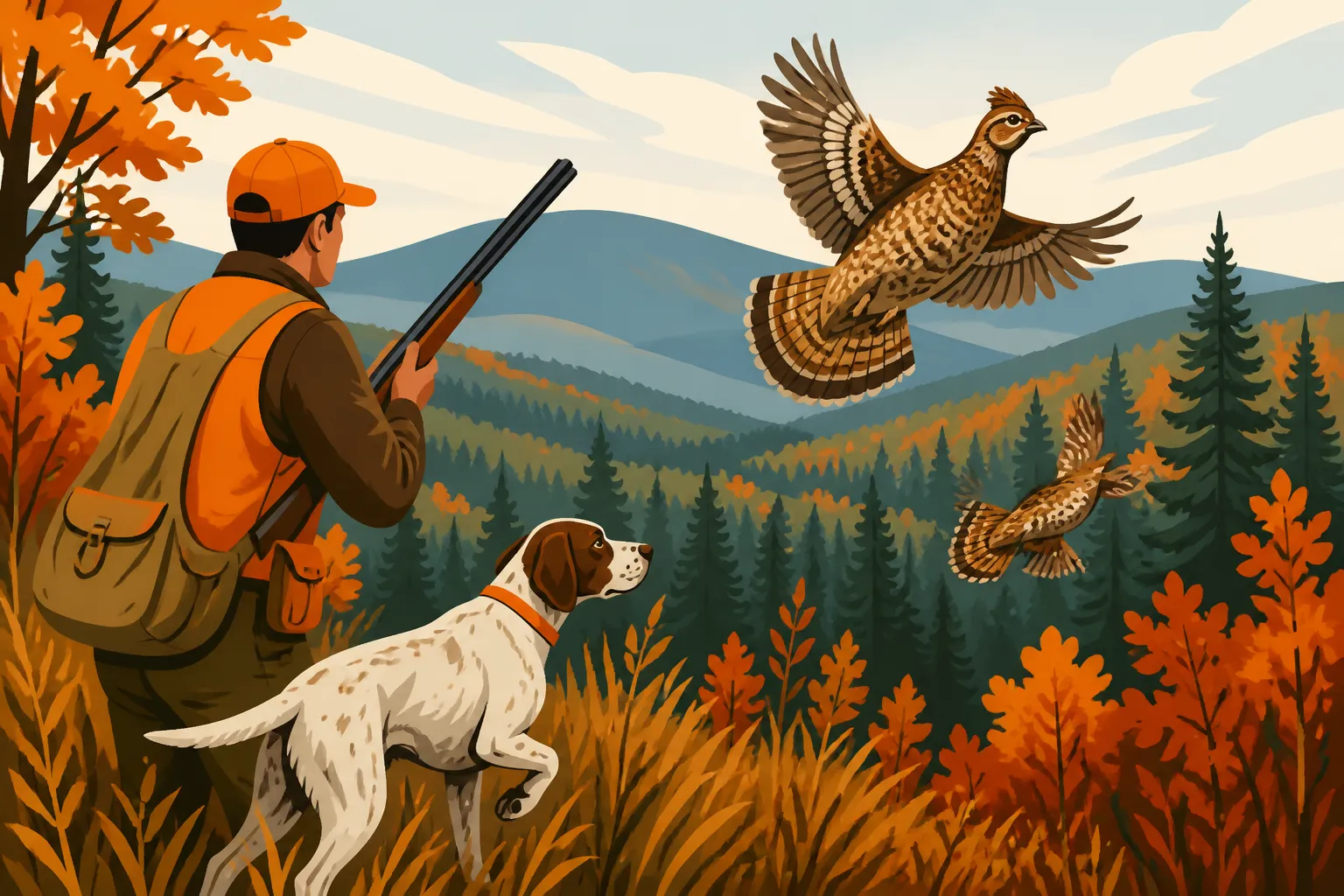
Ruffed grouse, often affectionately called "partridge" by Mainers, are perhaps the most iconic upland bird in the state. Their explosive flush and challenging flight through dense timber make them a prized target for shotgunners and bird dog enthusiasts alike. Hunting grouse isn't just about bagging a bird; it's about the thrill of the flush, the beauty of the fall woods, and the deep satisfaction of finding a bird in truly wild cover.
Ideal Grouse Habitat and Behavior
Grouse are creatures of young, regenerating forests, preferring areas with a mix of aspen, birch, maple, and dense conifers that provide both food and protection. Think of old logging cuts, abandoned apple orchards, and the edges where different forest types meet. They especially love areas with a high density of small trees and shrubs that offer overhead cover from aerial predators and dense horizontal cover to hide from ground predators. These birds are master camouflage artists, often holding tight until you're nearly on top of them before erupting in a flurry of wings.
You'll often find them feeding on a variety of foods depending on the season, including berries, seeds, buds, and catkins, especially those from aspen and birch. In the North Woods, the prevalence of active timber harvesting means there's always new, prime grouse habitat being created. Farther south, you might find them in neglected farmsteads or even in suburban woodlots where suitable cover remains. Learning to identify these key habitat components is crucial for successful grouse hunting.
Effective Tactics for Maine Grouse
Hunting Maine grouse can be done effectively with or without a dog, though a good pointing or flushing dog certainly adds a layer of efficiency and enjoyment. For those hunting without a dog, "still-hunting" or "slow-walking" is the name of the game. Move slowly, pause frequently, and scan ahead for cover. Grouse often hold tight, relying on their camouflage, so a sudden stop can sometimes trigger a flush from a bird you've just walked past. Focus your efforts along old logging roads, walking them slowly and veering into the dense edges where the birds often feed. You can learn more about Grouse Hunting a Logging Road Edge for specific strategies.
If you're hunting with a pointing dog, allow your dog to work the cover, paying close attention to their body language. When a dog goes on point, approach cautiously, ready for the flush. For flushing dogs, encourage them to work through thick cover ahead of you, driving birds out. In either case, fast reflexes are key when a grouse bursts from cover. Shotguns typically favored are 20-gauge or 12-gauge with open chokes (improved cylinder or skeet) and loads of 7 ½ or 8 shot, which are perfect for quick shots in dense timber.
American Woodcock Hunting: Timberdoodles of the Alders
The American woodcock, affectionately known as the "timberdoodle," is another fantastic bird to pursue in Maine's autumn woods. These migratory shorebirds offer a unique challenge, often holding incredibly tight and flushing with an almost comical, fluttering flight pattern. Unlike grouse, which are found year-round, woodcock are migratory, making their presence a sure sign of autumn.
Woodcock Habitat and Migration Patterns
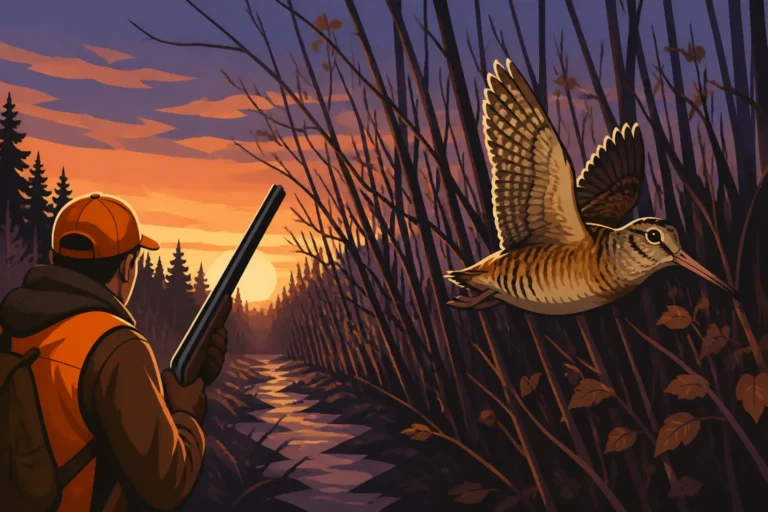
Woodcock prefer moist, young forest habitats, especially dense alder thickets, regenerating clearcuts, and the edges of beaver flowages. They feed primarily on earthworms, which means they seek out soft, moist soil where worms are abundant. You'll often find them in close proximity to water sources, like small streams, swamps, or low-lying areas. The key to finding woodcock is locating these specific wet, brushy areas, often nestled within larger tracts of forest. Understanding Woodcock Hunting an Alder Run at Dusk can give you a tactical advantage.
Maine is a critical migration corridor for woodcock moving south from their northern breeding grounds. Their migration typically begins in late September and can extend through October, with peak numbers often passing through mid-October, depending on weather patterns. A sudden cold snap or frost can prompt a large-scale movement of birds. Hunters will often notice new "flights" of birds arriving in their favorite coverts overnight, offering fresh opportunities.
Techniques for Timberdoodles
Like grouse, woodcock can be hunted with or without a dog, but a good pointing dog can be a significant asset due to the birds' tendency to hold so tightly. A dog's keen nose can pinpoint birds that a human hunter might walk right past. When hunting without a dog, move slowly and deliberately through suitable cover, pausing frequently. Woodcock will often let you get very close before flushing, sometimes almost underfoot.
Because of their close-holding nature and fluttering flight, open chokes and light loads are also preferred for woodcock. A 20-gauge or 28-gauge shotgun with skeet or improved cylinder chokes and light field loads (7 ½ or 8 shot) is ideal. When a bird flushes, remember their flight path is often erratic but generally short, before they pitch down into another thicket. The challenge is often more about finding them and getting a clear shot in the dense cover than it is about hitting a fast-flying target. Focus on quick, instinctive shots.
Snowshoe Hare Hunting: Winter's Whitetail
When the leaves have fallen and the snow begins to fly, Maine's snowshoe hare hunting really comes into its own. These fascinating creatures, with their iconic seasonal coat changes and large, snowshoe-like feet, offer a fast-paced, exciting hunt that can be enjoyed well into the colder months. It’s a great way to extend your hunting season and enjoy the crisp, quiet beauty of a Maine winter forest.
Hare Habitat and Seasonal Adaptations
Snowshoe hares are perfectly adapted to the deep snows of a Maine winter. Their large, furred feet act like natural snowshoes, allowing them to travel easily over snow that would bog down other animals. They primarily inhabit dense conifer cover, particularly spruce-fir thickets, cedar swamps, and areas of dense regeneration where they can find both food and protection from predators like coyotes and bobcats. These dense areas provide critical thermal cover and concealment.
As winter progresses, their diet shifts from green vegetation to the twigs, buds, and bark of woody shrubs and young trees. You’ll often find their distinctive tracks, resembling miniature snowshoes, crisscrossing through these dense woods. In areas with mixed forest, pay attention to the transition zones where hardwood stands meet dense conifers, as hares will often utilize both for foraging and cover.
Hunting Hare With and Without Dogs
By far the most popular and often most effective method for hunting snowshoe hare in Maine is with a pack of beagles. The melodic baying of hounds as they pursue a hare through the woods is an unforgettable experience. Hares have a tendency to run in circles, often returning to their starting point, which allows hunters to post up on known runways or trails and intercept the hare as the dogs push it through. You can dive deeper into Snowshoe Hare Hunting With Beagles for a more in-depth look at this exciting method.
For those without dogs, still-hunting or "bushwhacking" through dense cover can also be productive. This requires patience and keen eyes. Move slowly, pausing frequently, and scrutinize every thicket, brush pile, and downed tree. Hares will often sit perfectly still, relying on their camouflage (white in winter, brown in summer) to avoid detection. Look for the tell-tale black eye, which often stands out against their white winter coat. Kicking brush piles or tapping thickets with a stick can sometimes get a reluctant hare to flush. A .22 rifle or a small-gauge shotgun (like a .410 or 20-gauge) is appropriate, depending on whether you prefer a clean headshot or a spread of shot in dense cover.
Other Small Game Opportunities in Maine
While grouse, woodcock, and snowshoe hare steal much of the small game spotlight, Maine offers several other species that can provide excellent hunting opportunities and help fill the freezer. These often overlooked species can be a great addition to a hunting trip or a primary target for those looking for something a little different.
Gray Squirrel and Red Squirrel
Squirrels are abundant across much of Maine, particularly in hardwood forests with mature oak, beech, and hickory trees that provide crucial mast crops. Gray squirrels are the more popular quarry, offering both a fun hunt and delicious table fare. They are active during daylight hours, especially in the early morning and late afternoon. Hunting squirrels can be a fantastic way to introduce new hunters, especially youth, to the sport due to their plentiful numbers and predictable behavior.
The best tactic is often to find an area with abundant mast (acorns, beechnuts, hickory nuts) and sit quietly, watching for movement. Squirrels are naturally curious and will often reveal themselves by chattering or rustling leaves. A .22 rifle or a small-gauge shotgun is perfect for squirrel hunting. Red squirrels, while smaller and often seen as pests by some, are also fair game and can provide a lively hunt in conifer forests.
Cottontail Rabbits
While not as widespread or abundant in Maine as snowshoe hare, cottontail rabbits can be found in localized populations, particularly in the southern and central parts of the state where agricultural lands and brushy fields provide suitable habitat. They prefer thick, brushy cover, old fields, hedgerows, and the edges of suburban areas. They are often found in conjunction with human-disturbed landscapes, unlike the more wilderness-loving snowshoe hare.
Hunting cottontails is similar to hunting snowshoe hare, either by still-hunting very slowly through thickets or, more effectively, with beagles. A good pack of hounds can quickly get cottontails moving, providing challenging shots as they dart through dense brush. A small-gauge shotgun is typically preferred for these fast-moving targets. Always check WMD regulations, as cottontail season dates can differ from snowshoe hare.
Crow Hunting for a Challenge
Though not typically considered "small game" in the same vein as birds or mammals for the table, crows offer a unique and challenging hunting opportunity in Maine, often with very liberal seasons. They are intelligent birds and can provide excellent wing-shooting practice. Crow hunting is often done by setting out decoys and using electronic or mouth calls to bring them into shotgun range. It's a game of deception and quick reactions.
Crow hunting can be particularly productive in agricultural areas, where crows congregate to feed on crops, or along major flight paths to and from roosting sites. There are specific Crow Hunting Seasons and Tactics in Maine that can help you plan a successful hunt for these wary birds. While not for everyone, it adds another dimension to Maine's diverse hunting portfolio.
Essential Gear and Preparations for Small Game Hunting
Embarking on a small game hunt in Maine requires thoughtful preparation and the right gear to ensure safety, comfort, and success. The varying terrain and weather conditions across the state, from early autumn warmth to deep winter snow, necessitate adaptability in your kit.
Firearms and Ammunition Choices
For upland birds like grouse and woodcock, a lightweight, fast-handling shotgun is ideal. Most hunters prefer a 12-gauge or 20-gauge, but a 28-gauge or even a .410 can be very effective, especially for woodcock. Open chokes (Improved Cylinder or Skeet) are best for the close-range shots often presented in dense cover. As for ammunition, 7 ½ or 8 shot are standard for both grouse and woodcock, providing a good pattern density without excessive penetration.
When pursuing snowshoe hare, your choice of firearm might depend on whether you're hunting with dogs or still-hunting. With beagles, a shotgun (12, 20, or .410 gauge with 6 or 7 ½ shot) is usually preferred for quick shots at moving targets. For still-hunting, a .22 caliber rifle can be effective for precise headshots on stationary hares. For squirrels, a .22 rifle or small-gauge shotgun also works well. Always carry enough ammunition for your hunt, but avoid overpacking; ounces turn into pounds on a long walk.
Apparel, Footwear, and Safety Gear
Layering is crucial for comfort in Maine's variable weather. Start with a moisture-wicking base layer, add insulating layers (fleece or wool), and finish with a durable, water-resistant outer shell. Blaze orange is a non-negotiable safety item during firearms seasons; always wear sufficient blaze orange to be visible from all directions. A blaze orange vest or hat is usually sufficient for small game, but refer to Maine Blaze Orange Requirements for specific rules.
Good quality, waterproof hiking boots are essential, especially for traversing wet coverts and rugged terrain. In deeper snow, insulated, waterproof boots are a must for hare hunting. Gaiters can be invaluable for keeping snow and debris out of your boots. Beyond clothing, always carry a small first-aid kit, a compass and map (or GPS device like those offered by GoHunt, or a smartphone app with downloaded maps), a knife, fire-starting materials, and a headlamp. A fully charged cell phone is a good backup, but don't rely on it for navigation or communication in remote areas where service is spotty.
Canine Companions: Benefits and Training
Hunting with a well-trained dog can significantly enhance your small game hunting experience. Pointers like English Setters or German Shorthaired Pointers excel at finding and holding grouse and woodcock, making retrieval much easier. Flushers, such as Springer Spaniels or Labrador Retrievers, are also effective at pushing birds from dense cover. For snowshoe hare, beagles are the undisputed champions, their baying adding an auditory thrill to the hunt.
Proper training is vital for safety and effectiveness. Dogs should be steady to wing and shot, retrieve to hand, and be responsive to commands. They also need proper care in the field, including adequate water, food, and protection from thorns and cold. Consider specialized dog vests for protection in thick cover. A well-behaved hunting dog isn't just a tool; it's a partner that shares in the joy of the hunt.
Finding and Accessing Prime Maine Small Game Habitat
One of the biggest hurdles for any hunter, especially when targeting small game that relies on specific habitat types, is simply knowing where to go. Maine has vast tracts of land open to hunting, but not all of it is productive for every species. Learning how to identify and access prime habitat is key to consistent success.
Utilizing Public Lands and Wildlife Management Areas
Maine boasts numerous public land options, including State Wildlife Management Areas (WMAs), Public Reserved Lands, and various federal lands. WMAs, managed by the MDIFW, are specifically designed to enhance wildlife habitat and public recreation, making them excellent places to start your search. Many WMAs contain a mix of forest types, old fields, and wetland areas that are ideal for grouse, woodcock, and hare. Researching Maine Wildlife Management Areas will help you identify potential spots near you.
Public Reserved Lands, managed by the Bureau of Parks and Lands, also offer extensive hunting opportunities. These lands often have older growth forests but can include regenerating areas from past timber harvests. While not always as intensely managed for small game as WMAs, they can hold good populations, especially for grouse and snowshoe hare. Always consult specific land use regulations for any public land you plan to hunt, as some areas may have restrictions. Using mapping applications with public land layers, like GoHunt, can be invaluable for identifying these accessible areas.
Navigating Private Timberland and Farm Country
A significant portion of Maine's landscape is privately owned, particularly by large timber companies. Historically, many of these companies have allowed public access for recreation, including hunting. The vast North Maine Woods, for example, is predominantly private timberland, and while some gates charge a fee for access, many areas are open to the public. These industrial forest lands are dynamic, with ongoing harvesting creating a constant supply of young, regenerating forests — perfect for grouse and snowshoe hare.
In southern and central Maine, farmland and smaller woodlots are often privately owned. While Maine has a tradition of "implied permission" for recreational access on unposted land, it's always best practice to seek explicit permission from landowners when hunting on smaller private parcels. Building relationships with landowners can unlock access to some of the best small game habitat, especially for woodcock in alder bottoms or rabbits in brushy fields. Using mapping tools to identify land ownership, like the detailed parcel data available through GoHunt, can greatly assist in this process, allowing you to easily find and contact landowners for permission. You can learn more about Scouting Maine Private Land Before Season to prepare.
Scouting and Reading the Landscape
Effective scouting is paramount for small game hunting. It's not just about looking for animal sign; it's about understanding the habitat. Before the season, or even during, use aerial photos and topographic maps to identify key features:
- For Grouse: Look for diverse forest types, recent clearcuts (3-15 years old), old orchards, and dense transition zones.
- For Woodcock: Focus on low-lying, wet areas, alder thickets, and young aspen stands, often near streams or swamps.
- For Snowshoe Hare: Pinpoint dense conifer stands, particularly cedar swamps, spruce-fir regeneration, and thick brush.
Walk prospective areas, looking for tracks, droppings, and feeding signs. Pay attention to the undergrowth: Is it thick enough for cover? Is there food available? Even during the deer season, keep an eye out for small game signs. The more time you spend in the woods, the better you'll become at "reading" the landscape and identifying productive cover.
Regulations, Licenses, and Conservation for Maine Small Game Hunters
Navigating hunting regulations can sometimes feel overwhelming, but understanding Maine's rules is crucial for ethical and legal small game hunting. Maine's commitment to wildlife conservation ensures that these cherished resources remain abundant for future generations.
Licensing and Permit Requirements
Before heading afield, you'll need the appropriate licenses. All hunters, resident or nonresident, must possess a valid Maine hunting license. For small game, this typically means a basic hunting license. If you plan to hunt migratory birds like woodcock, you'll also need a Maine Migratory Bird Hunting Permit and a federal duck stamp, even though woodcock are not ducks. This is part of the national migratory bird management program.
If you're a nonresident, you'll want to explore Maine Nonresident License Options to ensure you have everything you need. For residents, understanding Maine Resident License Options is equally important. Hunter education is also a prerequisite for most first-time hunters in Maine; check Maine Hunter Education Requirements if you're new to the sport or haven't taken a course. Always carry proof of your license and any required permits while hunting.
| Species | Typical Season Start | Typical Season End | Daily Bag Limit (Varies by WMD/Year) | Key Habitat | Preferred Method |
|---|---|---|---|---|---|
| Ruffed Grouse | Late September | December 31 | 4 | Young regenerating forest, alder runs, old orchards | Still-hunting, pointing dogs |
| American Woodcock | Late September | Late October/Early Nov | 3 | Moist alder thickets, young aspen, stream edges | Still-hunting, pointing dogs |
| Snowshoe Hare | October 1 | March 31 | 4 | Dense conifer thickets, cedar swamps, spruce-fir regeneration | Beagles, still-hunting |
| Gray Squirrel | Late September | December 31 | 4 | Mature hardwood forests, oak/beech stands | Still-hunting, stalking |
| Cottontail Rabbit | October 1 | March 31 | 4 | Brushy fields, hedgerows, thickets near agriculture | Beagles, still-hunting |
| Crow | Varies (often August-March) | Varies | No Limit | Agricultural fields, timber edges, roosts | Calling, decoys |
Note: All season dates and bag limits are subject to change. Always consult the current Maine Hunting and Trapping Laws booklet published by MDIFW.
Important Laws and Ethical Considerations
Beyond licensing, there are several key regulations to be aware of:
- Blaze Orange: As mentioned, mandatory during firearms season for deer, but always a good idea for visibility while small game hunting.
- Sunday Hunting: Hunting on Sunday is generally prohibited in Maine, with very few exceptions. Respect this rule. Maine Sunday Hunting Rules covers this in detail.
- Firearms Discharge Setbacks: Be aware of safety zones around dwellings and other structures. Maine has specific setback distances for discharging firearms.
- Road Hunting: While legal to retrieve game from a public road, shooting from a paved public way is illegal. Use common sense and prioritize safety.
Ethical hunting means respecting the game, the land, and other users. Always strive for clean, quick kills. Follow all game laws, and if hunting on private land, treat it better than you found it. Pack out all trash, and leave gates as you found them. These practices ensure positive landowner relations and the continued privilege of hunting.
Small Game Conservation Efforts in Maine
Maine's healthy populations of grouse, woodcock, and hare are not by accident; they are a direct result of ongoing conservation and habitat management efforts. The MDIFW, in partnership with conservation organizations like the Ruffed Grouse Society and the American Woodcock Society, actively manages habitats across the state to benefit these species. This includes promoting timber harvests that create desirable young forest conditions, protecting critical wetland areas, and conducting population surveys to inform management decisions.
Hunters play a crucial role in conservation through license fees and excise taxes on firearms and ammunition (Pittman-Robertson Act funds), which directly support wildlife management. By purchasing your license and hunting responsibly, you contribute directly to the health and future of Maine's small game populations. Understanding Maine Ruffed Grouse Population Cycles or Maine Woodcock Singing Ground Surveys helps appreciate the science behind the management.
Disclaimer
Please be aware that hunting regulations, season dates, and bag limits are subject to change annually. Always consult the most current official Maine Department of Inland Fisheries and Wildlife (MDIFW) hunting and trapping law booklet or their website before planning any hunting trip. This guide is for informational purposes only and should not be considered a substitute for official regulations.