Hunting a Blueberry Barren Edge
For many deer hunters in Maine, the thought of wide-open blueberry barrens might not immediately conjure images of big bucks. It’s easy to dismiss these areas as too exposed, too barren (as the name suggests!), and therefore not prime whitetail habitat. But that couldn't be further from the truth. In reality, these unique landscapes, particularly their edges, can be absolute magnets for deer, offering a blend of food and cover that's hard to beat in certain seasons. If you've been overlooking these spots, you’re missing out on some incredible hunting opportunities. This guide will walk you through exactly how to identify, scout, and hunt the productive edges of Maine's blueberry barrens, transforming what might seem like a desolate expanse into your next successful deer hunting spot.
Understanding Maine's Blueberry Barrens as Deer Habitat
Blueberry barrens, especially common in Downeast Maine, are far more than just fields of low-growing plants. They represent a dynamic ecosystem that offers vital resources for whitetails, particularly when you understand how deer utilize their unique structure. The key isn't necessarily hunting in the middle of the barren, but rather focusing intently on where the barren meets other types of cover.
The Allure of the Edge
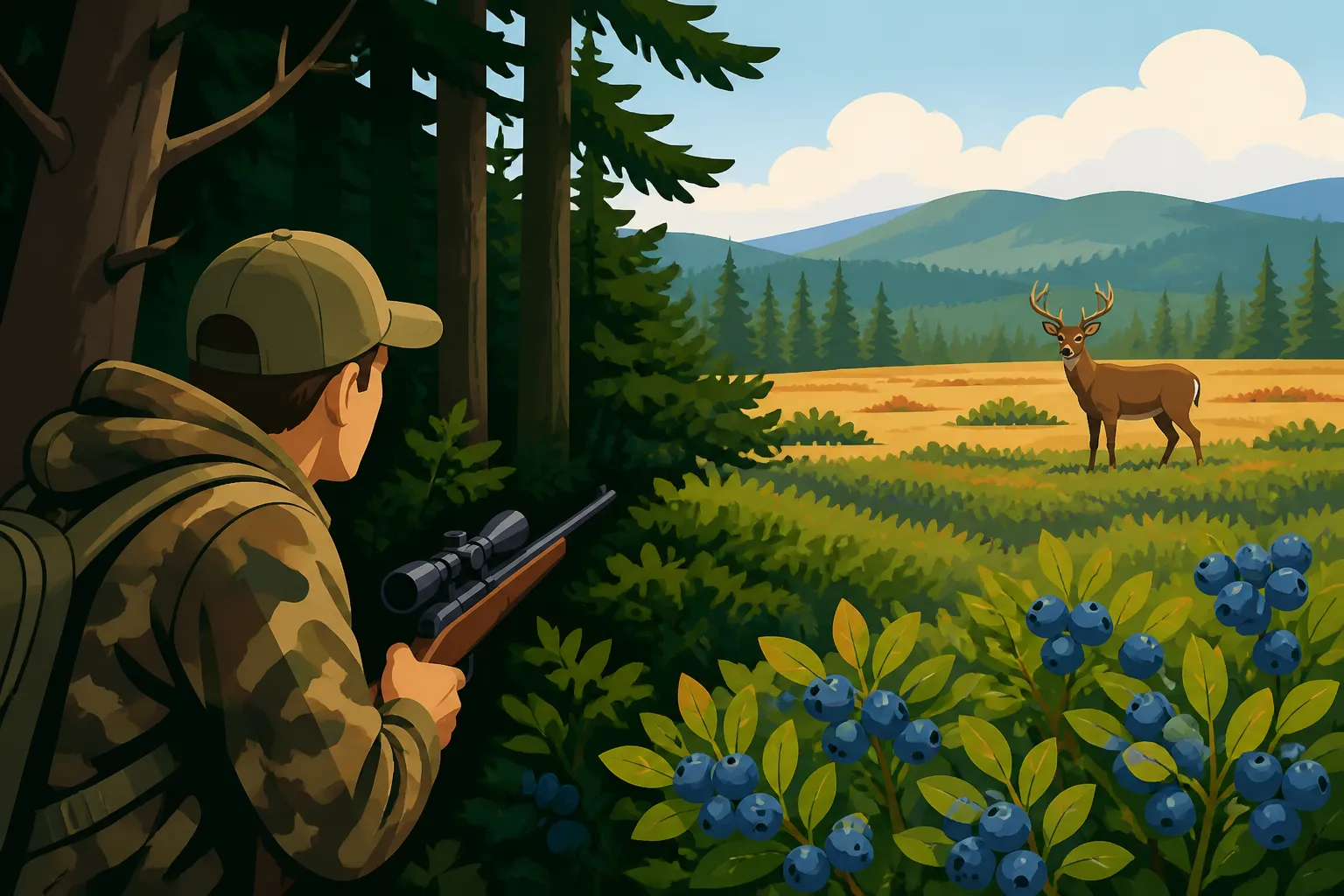
Deer, by nature, are creatures of the edge. They thrive in transition zones where different habitat types meet, providing them with a buffet of food options, security cover for bedding, and efficient travel corridors to move between the two. A blueberry barren edge is a textbook example of such a zone. On one side, you have the low, dense blueberry bushes, often intermingled with sweet fern, huckleberry, and other ground vegetation. These plants offer a smorgasbord of browse and, crucially, high-calorie berries when they're in season.
On the other side of that edge, you'll typically find denser cover – perhaps a mixed-wood forest of spruce, fir, and hardwoods, or thick regenerating clear-cuts. This thicker cover provides essential protection from predators, harsh weather, and human disturbance. Deer will often bed deep in this denser cover during the day and then filter out onto the barren to feed during low light conditions. The edge itself becomes a natural highway, a place where deer feel comfortable moving between safety and sustenance. Understanding this dynamic is the first step to successfully Hunting Downeast Blueberry Barrens.
Seasonal Changes and Forage Availability
The appeal of blueberry barrens to deer shifts dramatically throughout the hunting seasons, largely depending on what forage is available. In the early archery season, typically starting in September, the blueberry bushes are still laden with ripe berries. This makes the barren edges an absolute hotspot, drawing deer in for an easy, high-energy meal. As the season progresses into October and November, the berries might be gone, but the browse itself, along with the protective cover the low-growing bushes still offer, remains valuable.
Later in the season, particularly during the firearms and muzzleloader seasons, the importance of the barren might shift from a primary food source to a staging area or a quick pass-through spot. However, the dried, dormant blueberry stems can still offer some browse, and the ground vegetation underneath might hold residual value. What truly makes these edges shine late in the season is often their proximity to other critical Late-Season Food Sources for Maine Whitetails, like oak ridges or agricultural fields, with the barren edge serving as a connecting pathway. Always consider the time of year and what specific food sources are drawing deer in or causing them to travel along these edges.
Identifying Key Features Along the Barren Edge
Not all barren edges are created equal. Just like in any other habitat, deer will gravitate towards specific micro-features that offer additional benefits. Look for fingers or points of woods that jut out into the barren, or conversely, areas where the barren extends into the timber. These create natural funnels that concentrate deer movement. Shallow depressions, small drainage ditches, or even subtle changes in elevation along the edge can also serve as natural travel routes, offering a bit more concealment than the flat, open expanse.
Pay close attention to where distinct trails emerge from the woods onto the barren or run parallel to the edge within the thicker vegetation. These are the deer's preferred pathways. Also, scout for isolated pockets of thicker cover – a clump of young conifers, a stand of alders, or even a rock outcrop – that might be nestled right on the edge. These spots can provide temporary bedding or staging areas before deer venture further into the open. The more intricate the edge, the more potential it holds for concentrating deer activity.
Scouting and Planning Your Hunt on the Barren Edge
Effective scouting is paramount when hunting blueberry barren edges. You can't just show up on opening day and expect success. These areas require careful observation, both remotely and on the ground, to decipher how deer are utilizing them. It’s about understanding the nuances that transform a general area into a specific, high-probability hunting spot.
Pre-Season Reconnaissance: Boots on the Ground and Beyond
Before the season even begins, you need to be out there putting in the work. Start with topographical maps and aerial imagery, which are indispensable tools for identifying potential barren edges. Look for the distinct line where the lighter green/tan of the barren meets the darker green of the forest. Pay attention to how the topography might funnel deer, even subtle draws or ridges. Reading Aerial Photos for North Woods Deer can reveal hidden travel corridors and bedding areas adjacent to the barren.
Once you have some potential spots identified, it’s time for boots on the ground. Walk the perimeter of the barren, ideally just outside the tree line, looking for fresh sign. Are there trails leading in and out? Are there rubs on small trees along the edge, indicating buck activity? What about old scrapes? Don't be afraid to venture a little way into the barren itself to see if deer are feeding heavily there. The goal is to piece together a puzzle of deer movement, figuring out their entry and exit points, and where they are spending their time.
Reading Deer Sign: Rubs, Scrapes, and Trails
Deer sign along a barren edge can tell a compelling story about how whitetails are using the area. Fresh deer tracks entering or exiting the barren from the timber are obvious indicators of movement. Look for trails that are worn down, especially where they intersect with points or dips in the edge. These will be high-traffic areas.
During the rut, keep an eye out for rubs on small saplings and trees along the transition line. These are often made by bucks scent-marking their territory and can indicate a buck's travel route. Scrapes, particularly those made under overhanging branches, are also crucial indicators of buck presence. Bucks will often make scrape lines along favored travel corridors, and the barren edge provides an ideal location for these. If you find multiple rubs and scrapes, you’ve likely found a buck's preferred pathway. Take note of their freshness – shiny wood on rubs and moist, pawed-up earth on scrapes are good signs of recent activity.
Using Technology for Barren Edge Scouting
Modern hunting technology has revolutionized how we scout, and it’s especially useful for intricate landscapes like blueberry barrens. Mapping applications like onX Hunt or GoHunt are invaluable. They allow you to overlay property lines on satellite imagery, ensuring you're always aware of boundaries, which is crucial for Finding Maine Property Lines. You can mark rubs, scrapes, and bedding areas directly on your phone or tablet, creating a digital scouting map that updates in real-time.
These apps also provide detailed topographical maps, showing subtle elevation changes that might not be obvious on the ground but can be critical in predicting deer movement and determining wind direction with Wind and Thermals in Maine Hill Country. You can even use the satellite imagery to identify different vegetation types, pinpointing where the barren ends and denser timber begins. Before you even set foot in the woods, you can gain a significant advantage by studying these maps, visualizing how deer might move, and identifying potential stand sites. This remote scouting can save you countless hours of unproductive walking.
Effective Hunting Strategies for Blueberry Barren Edges
Once you’ve identified promising barren edges and understood how deer are using them, it’s time to formulate your hunting strategy. The key is to be adaptable and consider the specific conditions of your chosen spot, but a few core tactics consistently pay off.
Stand Placement and Wind Considerations
Selecting the right stand location along a barren edge is critical. Your primary goal is to intercept deer as they move between the security of the timber and the feeding opportunities on the barren. Look for natural funnels – places where the timber creates a bottleneck, or where trails converge. Placing your stand slightly inside the timber, overlooking the edge, often provides the best concealment and a clear shot opportunity when deer step out.
Wind direction is, as always, paramount. Deer will almost always try to use the wind to their advantage, circling downwind of a suspected threat. Position your stand so your scent is blowing away from where you expect deer to approach from or exit to. This might mean setting up on different sides of the barren for different wind directions, or even having multiple stand options. For example, if deer are typically coming from a cedar swamp deep in the timber to feed on the barren, and the wind is from the west, you'd want to be set up on the eastern side of their approach, with your scent blowing eastward, away from their path. Always remember, a deer's nose is their most potent defense.
Still-Hunting the Barren Perimeter
Still-hunting is a highly effective, albeit challenging, strategy for hunting barren edges, especially when conditions are right. This involves moving incredibly slowly and deliberately along the edge, taking a few steps, then pausing for several minutes to observe, listen, and scan your surroundings. It's not about covering ground quickly, but about detecting deer before they detect you. Still-Hunting Aroostook County Farmland shares a similar philosophy of slow, deliberate movement in open-ish country.
This tactic works best when there's a slight breeze to help muffle your sounds, or during light rain or snowfall. Focus on the subtle movements – an ear flick, a flash of white tail, the glint of an antler. As you move, constantly scan both into the barren and into the thicker timber adjacent to it. Deer might be bedded just inside the tree line, or slowly feeding out into the barren. The beauty of still-hunting is that you're constantly adapting to what the woods present, allowing you to react to fresh sign or unexpected deer encounters.
Driving the Edge with a Small Group
For larger blueberry barrens, or those with significant adjacent cover, a small deer drive can be a very productive strategy. This is particularly effective with two to four hunters. The idea is to have one or two "drivers" push slowly and quietly along the timber edge, or even slightly into the barren itself, while one or two "standers" are positioned at likely escape routes or cross-over points. Deer Drives With Three or Four Hunters is an excellent resource for refining this tactic.
The drivers aim to move deer naturally, not to spook them into a dead run. They should move with the wind in their face, or crosswind, to prevent their scent from blowing ahead and alarming deer prematurely. Standers, conversely, should be positioned downwind of expected deer movement, well concealed, and ready for a shot. Communication is key, usually through pre-determined routes and timing, or quiet radios if permitted. This method can effectively push deer out of thick bedding areas along the barren edge and into shooting lanes.
Timing Your Hunt for Peak Activity
Knowing when to hunt a blueberry barren edge is just as important as how. Deer activity can vary dramatically throughout the day and across the different phases of Maine's hunting seasons. Understanding these patterns will greatly increase your chances of success.
Early Season Opportunities
The early archery season, typically opening in September, is prime time for blueberry barrens. At this point, many of the berries are ripe and abundant, offering a high-calorie, easily accessible food source. Deer, especially bachelor groups of bucks and family groups of does, will frequent these edges during the cooler morning and evening hours to gorge on the berries. Your best bet is to be in your stand well before first light, waiting for deer to filter out of their bedding areas in the adjacent timber. Similarly, an evening hunt, staying until legal shooting light ends, can be incredibly productive as deer emerge to feed before dark.
During this period, deer patterns can be relatively predictable, centering around food. If you've located a barren with active feeding sign, plan to hunt it during those low-light feeding windows. Pay attention to how the deer are entering and exiting – are they using a specific trail, a small saddle, or a dip in the terrain? This early season focus on food sources makes barren edges an attractive proposition.
Mid-Season and the Rut
As October transitions into November, Maine's deer rut begins to kick into high gear. While the blueberries might be gone, the barren edges remain important as travel corridors and scent-checking routes for cruising bucks. Bucks will use the edge of dense cover to travel, scent-checking for does without fully exposing themselves in the middle of the barren. Does may also use the barren as a place to feed during non-peak rut times, or even to hide from persistent bucks, which in turn draws bucks to the perimeter.
During this period, active calling can be effective. A well-placed grunt call or rattling sequence can pique the curiosity of a cruising buck using the edge. Rattling and Grunting Maine Bucks can draw a buck off the edge and into range. Mornings and evenings are still productive, but mid-day movement increases during the rut, so don't be afraid to sit through the middle of the day. A buck might be chasing a doe across or along the barren at any hour. Focus on pinch points or funnels along the edge where deer are forced to travel close.
Late Season Food Sources and Security
By the time Maine's firearms season is winding down in late November and the muzzleloader season extends into mid-December, conditions can be tough. Snow might cover the ground, temperatures plummet, and natural food sources become scarce. Blueberry barrens, at this point, are less about active feeding on berries and more about what the edge provides in terms of security and access to other, more crucial late-season food sources.
Deer, especially bucks trying to recover from the rut, are prioritizing calories and security. They'll often bed in the thickest cover adjacent to the barren, using the edge to travel to distant food sources like standing cornfields (if applicable), regenerating clear-cuts offering browse, or even certain evergreen swamps that provide thermal cover. Hunting a barren edge in the late season means focusing on travel patterns between these critical areas. Look for heavy trails that indicate consistent use, and be prepared for cold-weather sitting. Deer movement might be concentrated during specific, shorter windows, often when they move from bedding to whatever sparse food is available, usually around midday when temperatures are slightly warmer.
Disclaimer
This article is for general informational purposes only and does not constitute professional advice. Laws, prices and regulations vary by location and change over time. Consult a qualified professional for guidance on your specific situation.