Hunting a Fire Road Through Industrial Forest
Navigating the vastness of Maine's industrial forests can feel overwhelming for any hunter, especially when you're trying to find a quiet, productive spot away from the crowds. Those main logging roads often see a lot of traffic, but tucked away within these sprawling timberlands are hidden gems: the old fire roads. This guide will walk you through how to effectively scout, hunt, and stay safe when pursuing game along these often-overlooked corridors.
Understanding Maine's Industrial Forests and Fire Roads
Maine is a state dominated by vast tracts of privately owned timberland, often referred to as industrial forest. This isn't your typical state park or national forest; it's land actively managed for logging, but thankfully, much of it remains open for public recreational use, including hunting, thanks to Maine's long-standing tradition of landowner generosity.
The Landscape of Industrial Timberland
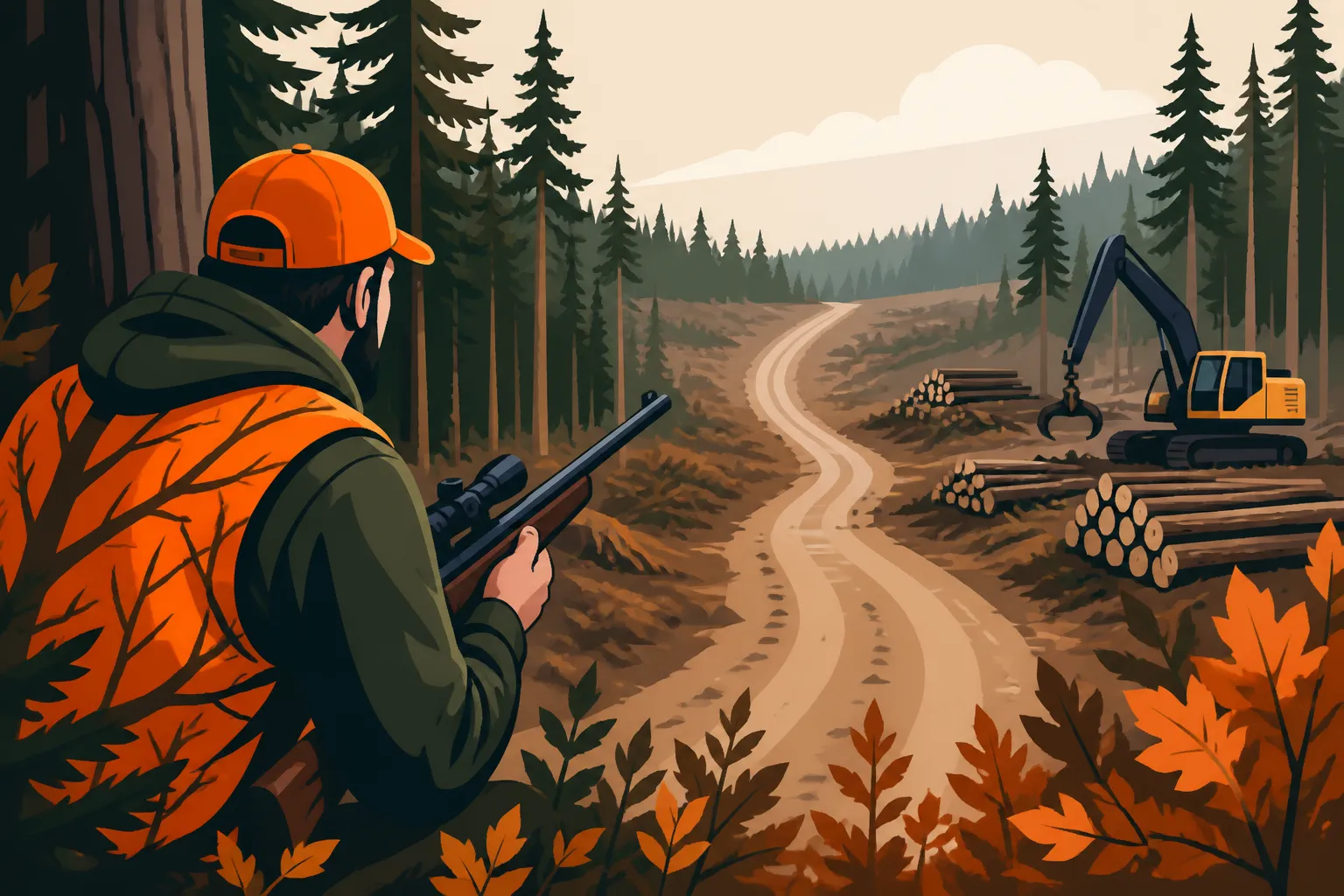
Imagine thousands upon thousands of acres, crisscrossed by a network of roads ranging from superhighways of gravel to barely-there tracks. This is the reality of Maine's industrial forest. These lands are primarily owned by timber companies, paper companies, or large investment groups, and their main purpose is harvesting trees. This means the landscape is constantly changing: clear-cuts today might be young sapling stands tomorrow, and mature timber might become a fresh logging operation. It can be a real head-scratcher trying to figure out where the deer, moose, or bears might be feeding or bedding in such a dynamic environment.
The sheer scale can be daunting. Unlike a small woodlot near town, these areas can stretch for miles, offering both incredible solitude and the potential to get utterly turned around if you're not prepared. The ever-present logging operations, while a potential disturbance, also create vital new habitat and food sources, which, ironically, can be a hunter's best friend. Understanding that this isn't static, pristine wilderness but a working forest is key to successfully hunting it.
What Exactly is a Fire Road?
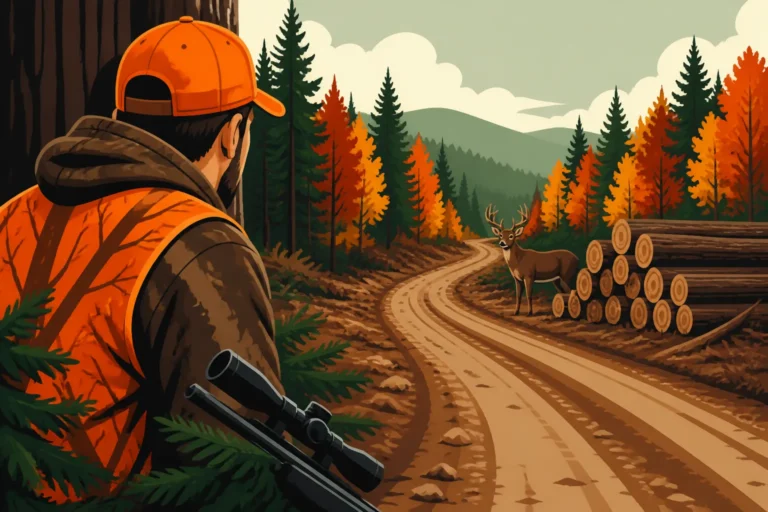
A fire road, in this context, is typically a smaller, less-maintained gravel or dirt track that branches off from the main logging roads. Their primary purpose, as the name suggests, is to provide access for fire suppression equipment into more remote parts of the timberland, or for smaller-scale logging operations. They're often older, sometimes overgrown, and frequently gated, preventing vehicular traffic. This gating is precisely what makes them so attractive to hunters.
Think of them as arteries leading off the main veins of the forest. Because they're less traveled by vehicles, they offer a quieter, more undisturbed route into deeper cover. They might be just wide enough for a single vehicle, or in some cases, barely discernible two-tracks. You'll often find them winding through various timber types, along ridge lines, or skirting the edges of swamps and clear-cuts. While a main logging road might see dozens of vehicles a day during hunting season, a fire road might only see a handful of hunters on foot or bike, if that. They're the kind of places where you truly feel like you've left the world behind and stepped into prime hunting territory.
Scouting and Planning Your Hunt on a Fire Road
Success in hunting fire roads, much like any other type of hunting, hinges on diligent scouting and thorough planning. Don't just show up and expect to find game; the vastness of industrial forest demands a more strategic approach.
Digital Tools for Reconnaissance
Before you even step foot in the woods, the best place to start your scouting is from your couch. Modern mapping applications are absolute game-changers for identifying promising fire roads and understanding the landscape of Maine's industrial forest. Tools like onX Hunt or GoHunt allow you to overlay property lines, topo maps, and aerial imagery, which is invaluable.
Start by zooming in on areas of industrial timberland you're interested in. Look for the fainter lines that denote these secondary roads branching off the primary logging routes. Pay close attention to gates, which are usually marked on these apps, as they indicate where you'll have to switch from vehicle to foot or bike. Use the aerial imagery to spot key habitat features:
- Clear-cuts: Fresh clear-cuts provide new browse and thick cover. Older clear-cuts (5-15 years old) are often dense with young alders and saplings, providing bedding cover and food for deer and moose.
- Swamps and wetlands: These are natural travel corridors and bedding areas, especially for deer. Look for where a fire road skirts the edge of a cedar swamp.
- Ridge lines and saddles: Deer often travel along ridges and through saddles, especially during the rut. A fire road running along a ridge or through a saddle can be a natural intercept point.
- Water sources: Small brooks, ponds, or beaver flowages intersected by a fire road are always worth investigating.
Mark potential parking areas, gated access points, and specific spots where the fire road crosses or parallels interesting cover. This digital legwork saves you countless miles of aimless wandering in the actual woods. You can even check out Reading Aerial Photos for North Woods Deer to dive deeper into this technique.
On-the-Ground Scouting Strategies
Once you've done your digital homework, it's time to hit the woods, ideally before the season opens. Walking or biking these fire roads is the most effective way to scout them. Driving a main logging road might give you a glimpse, but it's the quiet footfall that reveals the secrets.
As you move along the fire road, keep your eyes peeled for signs of game:
- Tracks: Look for deer, moose, or bear tracks in soft spots, mud puddles, or even dust. Pay attention to the direction of travel and how recent they appear. Are they consistently crossing the road in one spot?
- Scat: Fresh droppings indicate recent activity and can tell you what animals are in the area.
- Rub lines and scrape lines: These are crucial during deer season. Rubs are where bucks have rubbed their antlers on saplings or small trees, signaling their presence and aggression. Scrapes are bare patches of ground, often under a low-hanging branch, where bucks paw and urinate to leave their scent. If you find a series of these along or near a fire road, you've found a travel corridor during the rut. You can learn more about Scrape Lines Along a Logging Road.
- Feeding sign: Look for browsed saplings, particularly tender shoots of maple, aspen, or cedar. In fall, investigate any apple trees, oak stands, or beech trees near the road for dropped mast. If you're Hunting After a Poor Acorn Year, deer will be focusing on other food sources, so adjust your scouting accordingly.
Identify "pinch points" or "funnels" where the fire road passes between two distinct blocks of cover, or where a thicket forces animals into a narrow crossing. These are prime ambush locations. Take note of prevailing wind directions and how terrain features might create thermals in the mornings and evenings. This on-the-ground validation of your map scouting is irreplaceable. For a broader approach to finding game, check out Scouting With the Maine Hunting App.
Access and Permission Considerations
Maine has a wonderful tradition of implied permission on private land, meaning you can generally hunt private, unposted land without asking specific permission. However, this tradition comes with responsibilities, especially on industrial timberland.
- Posted Land: Always respect "No Trespassing" or "Posted" signs. While rare on large industrial tracts that want to maintain public goodwill, they do exist, particularly near active logging operations or company buildings.
- Gated Roads: Most fire roads will be gated. A locked gate means no vehicular access. Do not attempt to drive around, through, or damage a locked gate. However, a locked gate often means you can walk or bike beyond it. This is a huge advantage, as it pushes vehicle traffic further away and gives you access to quieter areas. Always assume a gated road is foot or bike access only, unless clearly marked otherwise.
- Active Logging: Be extremely cautious of active logging operations. Heavy machinery, falling trees, and busy truckers are a serious safety hazard. If you encounter an active site, either avoid it entirely or make yourself highly visible (extra blaze orange!) and move through quickly and respectfully. Sometimes, these operations might temporarily post an area for safety.
- Permission: While not always required on unposted land, knocking on a landowner's door (if a small parcel) or calling the timber company (for larger tracts) can clarify access rules and build good relationships. This also shows respect and ensures you're not inadvertently trespassing. Remember, Do You Need Written Permission in Maine? often not, but it never hurts.
Key Access Reminders for Industrial Forest Hunting
| Feature | Description | Hunter Action |
|---|---|---|
| Main Logging Roads | Well-maintained, busy gravel roads for timber transport. | Use for vehicle access; high traffic, but good for quick entry/exit. |
| Fire Roads (Gated) | Less maintained, often gated, dirt/gravel tracks. | Foot or bike access usually permitted beyond gates. Prime quiet access. |
| Posted Signs | Clearly marked "No Trespassing" or "Posted" signs. | Absolutely no entry. Find alternate access. |
| Active Logging | Heavy machinery, tree felling, active truck traffic. | Avoid or use extreme caution. Wear extra blaze orange. |
| Implied Permission | Maine tradition on unposted private land. | Generally allowed, but respect land and signs. |
Effective Hunting Tactics Along Fire Roads
Now that you've found your fire road and understood the terrain, it's time to talk tactics. Hunting a fire road isn't about setting up on the road itself, but rather using it as a strategic element to access or funnel game.
Still-Hunting the Edges
Still-hunting is one of the most effective methods when working along a fire road, especially for deer and moose. Instead of walking directly down the center of the road, which is often too exposed, you'll want to move slowly and deliberately just inside the timber, parallel to the road.
- Go Slow, Stop Often: The key to still-hunting is patience. Take a few steps, then stop and thoroughly scan your surroundings for several minutes. Use your binoculars to pick apart the cover, looking for horizontal lines (a deer's back), patches of hide, or antler tines that don't quite blend in.
- Use the Road for Concealment: The road itself can act as a sound buffer. The open corridor can sometimes draw deer to cross it, and by staying just inside the timber, you remain hidden while having a clear line of sight to the open strip. The edge where the timber meets the road is a natural transition zone that animals often use.
- Focus on Transitions: Deer frequently browse and bed in the thick regrowth that often flanks fire roads, especially in areas adjacent to older clear-cuts or swamps. They'll use the denser cover for security but might venture to the edge to feed or test the wind before crossing the more open road. This tactic works well whether you're still-hunting for deer or Still-Hunting Aroostook County Farmland that abuts a woodlot. The principle of working the edge remains the same.
Remember, your goal isn't to walk the road, but to hunt the dense cover alongside it, occasionally peeking out onto the road to check for movement or tracks.
Setting Up on Crossings and Funnels
Fire roads often create or run through natural funnels and crossing points for wildlife. Identifying these areas during your scouting phase is paramount for successful ambush hunting.
- Natural Funnels: Look for places where the terrain or vegetation forces deer into a narrower path. This could be a pinch point where a dense swamp or steep ridge pushes animals to cross the fire road in a specific, limited area. A saddle between two hills or a narrow strip of timber connecting two larger blocks of woods are also classic funnels.
- Creek Crossings: Any time a fire road crosses a stream, brook, or beaver flowage, it creates a natural crossing point. Animals will often follow these water features and cross the road at the easiest point. These are fantastic spots to set up.
- Ambush Points: Once you've identified a funnel or crossing, find an elevated position or a spot with good cover (a thick stand of spruce, a cluster of rocks) that offers a clear shot across the road and into the likely approach routes. This is where a ground blind or even a carefully hung treestand can be effective, provided you follow all local regulations regarding their use on private land. Just make sure you understand the rules for Hanging a Stand on a Private Land Field Edge or similar forested private ground. Deer often "stage" in the thick cover near the road, observing the open area before committing to a crossing. Positioning yourself to intercept them before they step into the open is key. This strategy is also incredibly useful for Hunting a Funnel Between Two Woodlots.
Using the Road as a Travel Corridor
While you're not necessarily hunting directly on the fire road, it can be an invaluable tool for quiet and efficient travel, especially when you're trying to reach deeper hunting grounds or move between promising setups.
- Quiet Access: Unlike bushwhacking through dense Maine woods, a fire road offers a relatively clear, quiet path. This is particularly true if it's grassed over or has a soft dirt surface. Wearing quiet clothing and soft-soled boots will help immensely.
- Strategic Movement: Use the fire road to quickly get from your parking spot to your chosen still-hunting area or stand location. During the middle of the day, when game activity might be lower, you can use the road to move to a new area or check a different section of timber.
- Dawn and Dusk Advantage: Travel the road quietly in the pre-dawn hours to reach your stand, or use it to quickly cover ground to get back to your vehicle after last light. Since deer and other animals often cross these roads at dawn and dusk, being quiet and aware during your movements is crucial. However, once you're in position, remember the still-hunting tactics mentioned above and focus your attention on the edges and cover.
Safety and Ethics in Industrial Forest
Hunting in Maine's industrial forests, while offering incredible opportunities, also comes with unique safety and ethical considerations that every hunter needs to be aware of. You're not just a hunter; you're a guest on someone else's working land.
Sharing the Space: Logging Operations and Other Users
One of the biggest differences between hunting public land and industrial forest is the potential for active logging operations. These are dangerous places, and your safety is paramount.
- Active Logging: Always be on high alert for the sounds of chainsaws, skidders, feller bunchers, and logging trucks. If you hear or see active operations, steer clear. Do not approach the crew or enter their work zone. They are focused on their job, often in noisy environments, and may not see or hear you. Sometimes, a gate or road will be temporarily posted "No Entry" for safety reasons during active logging. Respect these signs.
- Blaze Orange is Non-Negotiable: Given the presence of other hunters, recreational users, and potential logging operations, wearing ample blaze orange (or blaze pink, which is also legal in Maine) is not just a suggestion, it's a legal requirement and a critical safety measure. Even if you're not legally required to wear it in a specific season (like during archery), it's always a good idea in these environments. Ensure you understand How Much Blaze Orange Maine Requires.
- Other Users: Remember that fire roads are also used by other outdoor enthusiasts: hikers, mountain bikers, ATV riders, snowmobilers (in winter), and other hunters. Maintain a respectful distance, give way, and always assume there are other people around. Be mindful of your shooting lanes and always identify your target and what lies beyond it.
Navigational Preparedness and Emergency Planning
The vastness and remoteness of industrial forests mean that getting lost or encountering an emergency can be a serious situation. You cannot rely on cell service being available.
- Redundant Navigation: Do not put all your faith in your smartphone. While apps like onX Hunt or GoHunt are incredibly useful, batteries die, and signals drop. Always carry a physical map (a DeLorme Maine Atlas and Gazetteer is a classic) and a compass. Know how to use them together. Mark your starting point and plan your route. Understand Where to Get a Maine Public Land Map (even though this is private land, many public land mapping resources will show major industrial tracts).
- Emergency Essentials: Pack for the unexpected. A small backpack should contain a first-aid kit, extra water, high-energy snacks, a flashlight or headlamp (even if you plan to be out before dark), a fire starter, and a whistle.
- Tell Someone Your Plan: Before you head out, always inform someone of your exact hunting location, which fire road you'll be on, your planned route, and when you expect to return. This simple step can be a lifesaver if something goes wrong. If you're going deep into the North Maine Woods, consider investing in a satellite messenger device for true emergency communication where cell service is nonexistent.
By respecting the land, practicing responsible hunting ethics, and prioritizing safety, hunting Maine's fire roads can offer incredibly rewarding experiences and access to some of the state's most untouched hunting grounds.
Hunting Fire Roads: Pros and Cons
Hunting fire roads in Maine's industrial forests offers a unique blend of accessibility and remoteness, but it comes with its own set of advantages and challenges. Understanding both sides can help you decide if this style of hunting is right for your next adventure.
| Feature | Pros | Cons |
|---|---|---|
| Access | Often provides quieter, gated access into remote areas. Less competition than main logging roads. | Gated roads mean no vehicle access beyond the gate; requires walking or biking. Can be long hikes. |
| Game Movement | Deer, moose, and bears frequently use fire roads as travel corridors or cross them at funnels. | Can be exposed; animals may be wary of open areas. |
| Scouting | Clear paths make it easier to find tracks, rubs, and scrapes. Digital maps help identify key features. | Vastness can be overwhelming; finding the right fire road takes time and effort. |
| Habitat | Industrial forest management creates diverse habitat (clear-cuts, mature timber) and food sources. | Constantly changing landscape due to logging can make previous "hot spots" disappear. |
| Solitude | Generally offers more solitude compared to readily accessible public lands or main roads. | Still possible to encounter other hunters, especially on popular fire roads. |
| Safety | Roads provide easier navigation in emergencies. | Remote locations mean help is far away. Active logging poses significant hazards. |
| Ethics | Respecting private land traditions fosters good landowner relations. | Misunderstanding private land rules or disrespecting property can lead to access loss. |
Disclaimer
This article is for general informational purposes only and does not constitute professional advice. Laws, prices and regulations vary by location and change over time. Consult a qualified professional for guidance on your specific situation.