Booking a Grouse and Woodcock Guide
Finding prime cover for grouse and woodcock in Maine can feel like an overwhelming task, especially if you're not intimately familiar with the local landscape or have limited time to scout. Many hunters dream of those classic New England flushes but get bogged down trying to figure out where to start, what kind of cover to look for, and how to work it effectively. This comprehensive guide is designed to help you navigate the process of booking a reputable guide for grouse and woodcock, ensuring you have the best possible chance at a memorable and successful upland bird hunting experience in the Pine Tree State.
Why Consider a Guided Grouse and Woodcock Hunt in Maine?
Let's be honest, hunting can be a lot of work. When it comes to upland birds, particularly the notoriously elusive ruffed grouse and the camouflaged American woodcock, that work is magnified. You're not just dealing with the birds themselves, but dense covers, variable terrain, and the sheer vastness of Maine's woodlands. For many, especially those traveling from out of state or with limited time, trying to figure it all out on your own can lead to more frustration than actual hunting. This is precisely where a guided trip shines, transforming potential headaches into genuine opportunities.
Navigating Maine's Unique Covers
Maine's landscape is a patchwork of diverse habitats, from mature hardwoods and thick spruce-fir stands to regenerating clear-cuts and classic alder runs. Each cover type holds birds differently, depending on the time of year, weather, and food sources. If you're not from around here, or even if you've hunted other parts of New England, decoding these nuances can take years. Think about trying to find that perfect mix of young growth and water that woodcock absolutely adore, or the gnarled apple trees in an old farmstead that attract grouse. It's not always obvious to the untrained eye.
A local guide has spent countless hours, often decades, mapping these prime locations in their mind. They know the subtle shifts in vegetation that indicate a productive woodcock covert or the specific logging roads that offer consistent grouse flushes. They're tuned into the rhythm of the woods and can read the signs that tell them where birds are likely holding. This expertise saves you invaluable scouting time and puts you right where the birds are, or at least where they should be. It's the difference between wandering aimlessly and purposeful, productive hunting.
Maximizing Limited Time and Opportunity
For many of us, hunting trips are a precious commodity, often limited to a few days or a long weekend. You don't want to spend half of that time driving around, looking at maps, or stomping through unproductive ground. A guided hunt is designed to optimize every moment you have in the field. From the moment you meet your guide, the focus is on hunting. They've already scouted, secured access, and have a game plan for the day, often with backup covers in mind.
Consider someone flying into Bangor or Portland for a short hunt. They might have three days total to get their boots on the ground. Without a guide, a significant portion of that time could be lost to travel, unfamiliarity with local regulations, and the sheer challenge of locating accessible, birdy areas. A guide ensures that your limited days are spent with your shotgun shouldered, dogs working, and birds flushing. This is especially valuable when you're targeting two distinct species like grouse and woodcock, which often prefer slightly different habitats, though they can frequently be found in close proximity. Upland Bird and Small Game Hunting in Maine offers a broader look at the opportunities, but a guide truly hones in on the specific experience you're seeking.
The Advantage of Experienced Dogs and Handlers
Let's be frank: most casual upland hunters don't have access to world-class bird dogs, let alone the time to train them to that level. Grouse and woodcock hunting, particularly in Maine's dense cover, is incredibly challenging for dogs. They need to be biddable, intelligent, and possess an exceptional nose, not to mention the stamina to run all day. Finding downed birds in thick spruce or a tangled alder swamp without a skilled dog is often an exercise in futility, leading to lost birds and missed opportunities.
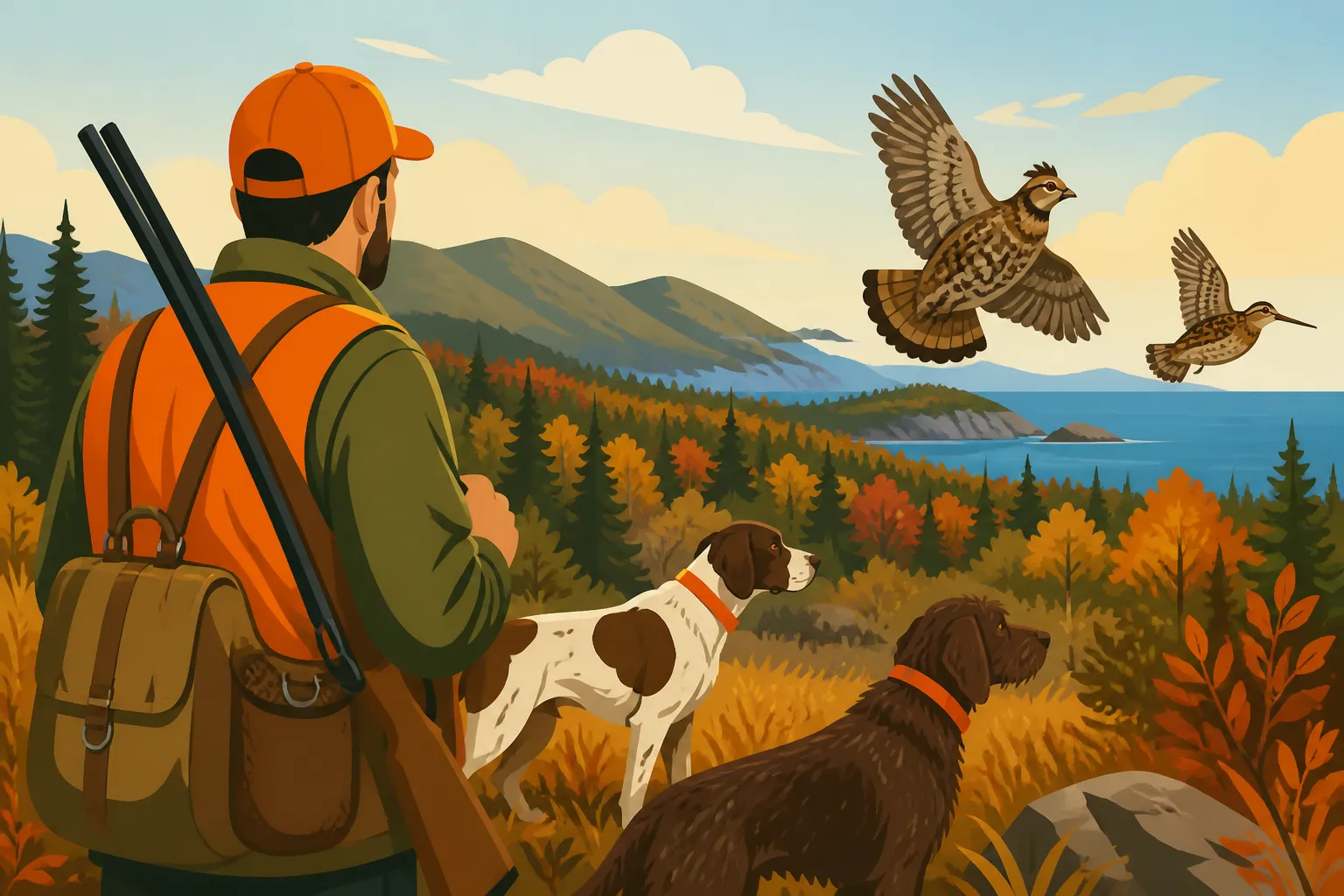
A professional guide brings their highly trained dogs—often English Setters, Brittanys, or Pointers—which are specifically bred and conditioned for this type of hunting. These dogs are experts at finding, pointing, and retrieving birds in the toughest cover. They work as a cohesive team with their handler, covering ground efficiently and locating birds that you might otherwise walk right past. The experience of watching a well-trained dog go on point, nose twitching, tail rigid, is often as rewarding as the shot itself. It's a true partnership, and it elevates the entire hunting experience from a walk in the woods to a symphony of skill and instinct.
What to Expect from a Maine Upland Bird Guide
When you book a guided grouse and woodcock hunt in Maine, you're not just paying for access to land; you're investing in an entire experience. This includes the guide's expertise, their dogs, their knowledge of local bird behavior, and the logistical support to make your day run smoothly. Understanding what a typical day looks like and what's generally included can help manage expectations and ensure a satisfying trip.
Typical Day on an Upland Hunt
Your day usually starts bright and early, often meeting your guide at a predetermined spot near the hunting grounds, perhaps a local diner for a quick breakfast or a gas station parking lot. After introductions and a brief discussion of the day's plan, you'll head out to the first cover. A good guide will have several areas scouted, allowing them to adapt to changing conditions or bird activity. You might start in a prime woodcock covert, working through alder runs and wet bottomlands, where these migratory birds prefer to hold. American Woodcock in Maine describes their habits, and your guide will put you in the best spots.
As the morning progresses, or after moving to a new location, you might shift focus to grouse habitat—perhaps a regenerating clear-cut or an old apple orchard. The pace will vary depending on the cover and the dogs' work, but expect to walk a good distance, sometimes through challenging terrain. The guide will lead, positioning hunters to maximize shot opportunities as the dogs work. Lunch is often a field affair, a sandwich and a hot drink enjoyed while leaning against a tree, sharing stories and perhaps planning the afternoon's strategy. By late afternoon, you'll be tired but hopefully exhilarated, with stories and perhaps a few birds in the bag. Expect the day to be physically demanding but incredibly rewarding.
Gear, Logistics, and Field Essentials
While your guide provides the essential "bird-finding" tools—namely, their trained dogs and knowledge of the terrain—you'll still be responsible for your personal hunting gear. This includes your shotgun (often a 20 or 12 gauge, suitable for upland birds), appropriate ammunition (typically lead shot sizes 7.5 or 8), and eye and ear protection. Maine also has specific blaze orange requirements, so be sure your hat and vest meet the legal minimums. Maine Blaze Orange Requirements is a good resource to review before your trip.
Logistically, guides typically provide transportation from the meeting spot to the hunting covers, often in a rugged truck capable of handling rough logging roads. They'll have a dog box, water for the dogs, and basic first aid for both humans and canines. What they usually don't provide are your personal snacks, drinks, or specialized clothing beyond the required blaze orange. It’s always a good idea to bring a small daypack with essentials like water, a high-energy snack, extra shells, and perhaps a small camera to capture those memorable moments. Some guides might offer a packed lunch as part of their package, but it's wise to confirm this beforehand.
Bird Cleaning and Post-Hunt Care
So, you've had a fantastic day, and your vest is a little heavier. What happens next? Most Maine upland guides will assist you with basic bird cleaning, usually breasting out the grouse and woodcock for you. This often happens back at the truck or at their camp if you're staying there. They'll show you how to properly field dress and cool your birds, ensuring the meat stays fresh. This is a great opportunity to learn proper game care techniques if you're new to it.
After the birds are cared for, they'll typically be placed in a cooler for transport. You'll want to have a plan for keeping them cool on your journey home or for preparing them for dinner. If you're staying for multiple days, your guide might have facilities to store your game. It's always a good idea to discuss your post-hunt game care expectations with your guide when booking. Some hunters like to take their birds to a local taxidermist for mounting, and your guide might have recommendations. Ultimately, the goal is to make sure your hard-earned birds are properly handled from field to freezer.
Choosing the Right Maine Grouse and Woodcock Guide
Selecting the right guide is paramount to a successful and enjoyable upland bird hunt. Just like any profession, there's a wide range of experience and personality among guides. You want someone who not only knows the birds and the land but also matches your hunting style and personality. This isn't just a transaction; it's a partnership for the day, and a good fit makes all the difference.
Credentials and Experience of a Registered Maine Guide
In Maine, anyone who guides for compensation is required to be a Registered Maine Guide. This isn't just a title; it signifies that they've met specific criteria, including passing a rigorous exam covering woods craft, first aid, navigation, and state regulations. When you're Hiring a Registered Maine Guide, you're choosing someone who has demonstrated a baseline level of competence and responsibility. Always confirm your guide's current registration status. It’s a foundational element of their credibility.
Beyond the basic license, look at their specific experience with upland birds. Have they been guiding grouse and woodcock for many years? Do they focus on these species, or do they offer a wide array of hunts? A guide who specializes in upland birds is likely to have a deeper knowledge of their habits, preferred coverts, and how to effectively work dogs for them. Don't hesitate to ask about their background, how long they've been guiding, and what areas of the state they typically hunt. A guide operating in the North Maine Woods will have a different approach and set of covers than one working more settled areas in central or southern Maine. What a Registered Maine Guide License Requires details the legal aspects, but practical experience is just as vital.
Understanding Guide Specializations and Dog Breeds
Different guides often have different hunting styles and preferences for dog breeds, which can influence your experience. Some guides might focus heavily on fast-paced hunting over wide-ranging pointers, covering a lot of ground. Others might prefer a slower, more deliberate hunt with close-working flushers or slower-paced pointers, focusing on thorough coverages. Knowing your own preferences can help you find a match. Do you prefer lots of walking and many flushes, or a more selective, methodical approach?
The breed of dog can also be a significant factor. English Setters and Brittanys are popular for their birdiness and stamina. Pointers excel at finding and holding birds. While a good dog is a good dog regardless of breed, some hunters have a preference. Don't be shy about asking what kind of dogs the guide runs and if they've had success with them on grouse and woodcock specifically. A guide who passionately talks about their dogs and their training is usually a good sign of their dedication. For instance, if you're passionate about Running Pointing Dogs on Maine Woodcock, you'll want a guide whose dogs are expertly trained for this.
Asking Key Questions Before Booking
Before you commit to a booking, having a detailed conversation with your prospective guide is crucial. This is your chance to get all your questions answered and ensure there are no surprises. Some essential questions to ask include:
- What is the average group size? Are you hunting solo, or will you be part of a larger group?
- What is the daily rate and what does it include? Confirm meals, bird cleaning, and transportation. Average Cost of a Grouse and Woodcock Guide Day can give you a general idea, but specific inclusions vary.
- What is their cancellation policy? Weather in Maine can be unpredictable, and plans sometimes change.
- What is their success rate? While no guide can guarantee birds, they should be able to provide realistic expectations based on past seasons and current conditions.
- Can they provide references? Speaking with past clients can offer invaluable insight into a guide's professionalism and the overall experience.
- What are their ethical hunting practices? A good guide prioritizes safety, fair chase, and dog welfare above all else.
Platforms like BookYourHunt or GoHunt can be useful starting points for finding guides, as they often list services and provide a framework for initial inquiries. However, always follow up with direct communication to ensure a personal connection and ask these detailed questions. Questions to Ask a Maine Outfitter provides a more exhaustive list of inquiries that apply to any guided hunt.
| Factor | Considerations for Choosing a Guide | Red Flags |
|---|---|---|
| Credentials | Registered Maine Guide status; specific upland bird guiding experience; good reputation. | Unlicensed or evasive about credentials; no specific experience with grouse/woodcock. |
| Hunting Style | Matches your preferred pace (fast/slow); appropriate dog breeds for your style; clear communication on approach. | Doesn't discuss hunting style; uses dogs unsuited for Maine cover; seems inflexible. |
| Inclusions/Costs | Clear breakdown of daily rate, what's included (meals, birds, transport), and what's extra; transparent cancellation policy. | Vague pricing; hidden fees; unwilling to provide a detailed breakdown; strict "no refund" policy regardless of circumstances. |
| Communication | Responsive, friendly, professional in conversations; willing to answer all questions; offers references. | Slow to respond; unprofessional tone; dismisses questions; refuses to provide references. |
| Ethics | Emphasis on safety, dog welfare, fair chase, and adherence to regulations; responsible game handling. | Hints at bending rules; doesn't prioritize dog safety; focuses only on "kill numbers." |
Understanding the Investment: Costs and Inclusions
Booking a guided upland bird hunt is an investment, both in terms of money and your precious hunting time. Knowing what to expect regarding costs and what's typically included in a package will help you budget effectively and avoid any unpleasant surprises. Remember, you're paying for expertise, access, and the unique experience of hunting over well-trained dogs.
Breaking Down Guide Fees and Day Rates
The cost of a guided grouse and woodcock hunt in Maine can vary widely depending on the guide's experience, the duration of the hunt, and the services included. Most guides operate on a daily rate, which typically covers the guide's time, the use of their dogs, and transportation to and from the hunting covers. Expect to find rates that reflect a full day's work, often for one or two hunters, as adding more guns can sometimes detract from the quality of the hunt in tight cover.
Some guides might offer half-day options, but a full day often provides the best value, allowing time to work multiple covers and adjust to bird movements. What a Bird Dog Guide Day Includes is a good article to review to understand the scope of services. When comparing prices, don't just look at the bottom line. Consider the guide's reputation, the quality of their dogs, and what past clients say about their experience. A slightly higher fee for an exceptional guide often translates into a far more memorable and successful hunt. Deposits are almost always required to secure your booking, and the balance is typically due on the day of the hunt.
What's Typically Included in a Package
While exact inclusions will vary from guide to guide, here's a general idea of what you can expect in a standard grouse and woodcock package:
- Guide Services: The professional expertise of a Registered Maine Guide, including their knowledge of prime covers, bird behavior, and safety protocols.
- Trained Bird Dogs: The primary advantage! Access to highly skilled pointers or flushers that are essential for finding and retrieving birds in dense cover.
- Transportation: From a designated meeting point to the various hunting grounds throughout the day.
- Field Lunch & Refreshments: Many guides will provide a simple but satisfying lunch (sandwiches, snacks) and non-alcoholic beverages in the field. Always confirm this.
- Bird Cleaning: Assistance with breasting out your harvested birds and preparing them for transport.
What is usually NOT included and will be your responsibility:
- Hunting Licenses and Permits: You must purchase your own Maine hunting license and any necessary migratory bird permits, such as the Maine Migratory Bird Certification or a Federal Duck Stamp if required for woodcock. Maine Hunting Licenses and What They Cost will help you get started.
- Ammunition: Bring an adequate supply of appropriate shotgun shells.
- Personal Gear: Your shotgun, eye/ear protection, waterproof boots, appropriate clothing, and blaze orange.
- Lodging & Evening Meals: Unless you book an all-inclusive sporting camp package (which would be a different type of booking), your accommodations and meals outside of the field are your responsibility.
- Gratuities: Tipping your guide is customary and appreciated.
Accounting for Additional Expenses and Tipping Etiquette
Beyond the base guide fee, remember to budget for several other expenses. Travel costs to and from Maine, gas for personal vehicle use, lodging (if not included), and meals are all significant. Don't forget the cost of your hunting license and any specific stamps or permits required for migratory birds.
Tipping is an important part of the hunting guide industry and is a way to show your appreciation for a guide's hard work, dedication, and the quality of the experience. The customary tip for a hunting guide typically ranges from 15-20% of the total hunt cost. For a guided day trip, this might mean a cash gratuity handed to the guide at the end of the day. If you're on a multi-day trip with multiple guides or support staff, the tip might be distributed. Tipping a Maine Hunting Guide offers more specific advice on this etiquette. Consider bringing cash specifically for this purpose. It’s a small gesture that goes a long way in recognizing a job well done.
Preparing for Your Guided Upland Adventure
Once you've booked your guide and the excitement starts to build, it's time to shift your focus to preparation. A guided hunt is still your hunt, and being physically ready, having the right gear, and understanding the regulations will greatly enhance your enjoyment and success.
Physical Conditioning and Shooting Practice
Upland bird hunting in Maine, particularly for grouse and woodcock, is a physically demanding activity. You'll be walking through varied and often challenging terrain: dense thickets, uneven forest floors, wet alder swamps, and sometimes up and down hills. A full day of this can be exhausting if you're not in reasonable shape. Start incorporating walking, hiking, or other cardiovascular exercises into your routine in the weeks leading up to your trip. The fitter you are, the more you'll enjoy the hunt, and the more ground you'll be able to cover alongside the dogs and your guide.
Equally important is your shooting proficiency. Wing shooting at flushing grouse or zig-zagging woodcock is notoriously difficult. Spend time at the sporting clays course or skeet range. Practice mounting your shotgun quickly, swinging smoothly, and shooting instinctively. Focus on close-range, fast-moving targets. This isn't just about bagging birds; it's about making clean, ethical shots when the opportunity arises. Your guide will get you into birds, but it's up to you to seal the deal.
Essential Personal Gear and Clothing
Maine weather, especially during the fall upland season, can be highly unpredictable. One day could be crisp and sunny, the next cold and rainy. Layering is key!
Here’s a checklist of essential personal gear:
- Sturdy, Waterproof Boots: This is non-negotiable. You'll be walking in damp, muddy, and sometimes snowy conditions. Good ankle support is crucial.
- Layered Clothing: Start with a moisture-wicking base layer, add an insulating layer (fleece or wool), and finish with a durable, brush-resistant outer shell. Make sure your outer layer is also waterproof or highly water-resistant.
- Blaze Orange: A vest and hat are typically required. Ensure it meets Maine's visibility standards.
- Gloves and Hat: Even on mild days, hands can get cold, and a hat provides warmth and protects from brush.
- Eye and Ear Protection: Essential for safety and comfort.
- Shotgun: Clean, sighted, and familiar to you.
- Ammunition: Enough for the day, typically several boxes.
- Daypack: For water, snacks, extra shells, and personal items.
- Water Bottle/Hydration Pack: Staying hydrated is critical.
- Bug Spray: Even in fall, ticks can be present, and mosquitoes might make an appearance in still, damp areas.
- Camera: To capture memories, of course!
Pack with the expectation of walking through wet, brushy cover. Durability and comfort are your best friends.
Licenses, Permits, and Maine Regulations
Before you even step foot in the woods, ensure all your paperwork is in order. You'll need a valid Maine hunting license. Non-residents will need to purchase a non-resident license. Additionally, because woodcock are migratory birds, you'll need a federal migratory bird hunting stamp (Federal Duck Stamp) and typically be HIP (Harvest Information Program) certified, even if you're not hunting ducks or geese. These are usually easy to acquire online through the Maine Department of Inland Fisheries and Wildlife (MDIFW) website or at a local licensing agent. Maine Migratory Bird Certification details these requirements.
Your guide will be an expert on local regulations, but it's your responsibility as a hunter to know and adhere to all laws, including bag limits and season dates for Ruffed Grouse in Maine and woodcock. Don't leave this to the last minute. Get your licenses well in advance of your trip to avoid any last-minute stress or delays. Having everything squared away means you can focus entirely on the hunt once you arrive.
Disclaimer
This article is for general informational purposes only and does not constitute professional advice. Laws, prices and regulations vary by location and change over time. Consult a qualified professional for guidance on your specific situation.