Coyote Calling at First Light
There's nothing quite like the hopeful chill of a Maine predawn, the stars still clinging to the dark sky, and the promise of a new day breaking. For many of us, that's prime time to be out there, trying to call in a wily coyote. It's a frustrating dance, sometimes, feeling like you're talking to thin air, but with the right approach at first light, you can dramatically increase your chances. This comprehensive guide will walk you through the nuances of calling coyotes as the sun comes up, from understanding their morning patterns to mastering your setup and call sequences.
Understanding Coyote Behavior at Dawn
Calling coyotes effectively means getting inside their heads, and that's especially true when the world is just waking up. They're not just randomly wandering; their movements and activities at dawn are often predictable if you know what to look for.
Why First Light is Prime Time
Coyotes, like many predators, are creatures of habit, and their habits often revolve around the crepuscular hours – dawn and dusk. For most of the night, they've been on the prowl, hunting smaller prey like rabbits, mice, and even deer fawns during certain times of the year, contributing to the broader goal of reducing Maine Predator Impact on Fawn Recruitment It’s exhausting work, and as the eastern sky starts to lighten, they're often making their last rounds before seeking out a bedding area for the day. This transition period, from their nocturnal hunting to their daytime resting, is your golden window. They might be finishing a meal, still searching for an easy one, or moving from a distant feeding ground back towards thicker cover. They're vulnerable, often alone or in smaller family groups, and more susceptible to a convincing call than they might be in the middle of the day. They're often covering ground, and a well-placed, realistic call can pull them off their intended course.
Reading the Landscape for Morning Movement
To intercept a coyote at first light, you need to think like one. Where would they be coming from, and where would they be going? Coyotes are masters of using terrain to their advantage. At dawn, they'll often travel along natural corridors: logging roads, old stone walls, field edges, creek bottoms, and ridge lines. These routes offer easy travel and often provide cover or a vantage point. For example, a coyote might spend the night working a low-lying valley for rodents, then move up onto a ridge to survey the area or to find a sunny spot to bed down as the day warms. Identifying these travel lanes and understanding how thermal currents might carry your scent can be a game-changer. A little fog hanging in a valley on a crisp morning can also provide visual cover for a coyote sneaking in, so understanding how these atmospheric conditions affect their movement and your visibility is crucial.
The "Early Bird" Advantage
This isn't just a saying; it's a fundamental truth for first-light coyote calling. The first 30-60 minutes after legal shooting light begins are often the most productive. The world is quiet, scenting conditions are often ideal with dew on the ground and minimal wind, and the coyotes themselves are active but not yet settled. Getting to your chosen setup location well before shooting light, even an hour or more before, is absolutely critical. This allows the woods to settle down after your approach, minimizes the chance of bumping a coyote on the way in, and ensures you're ready to make your first calls the moment it's legal. Rushing in as the sun peeks over the horizon is a recipe for failure; you'll likely spook any coyotes already active in the area. Remember, you might only get one chance to call them in, especially if they've had much pressure. If you're hunting in areas like Aroostook County Farmland getting there early can mean catching coyotes moving off open fields and into woodlots.
Essential Gear and Setup for First Light Calling
Having the right gear and knowing how to use it is just as important as understanding coyote behavior. It's not just about buying expensive equipment; it's about making smart choices that stack the odds in your favor for those critical dawn minutes.
Choosing the Right Calls
When it comes to calls, you have a few options, and each has its place, especially at first light.
- Electronic Calls: These are incredibly versatile and are often the go-to for serious coyote hunters. Brands like FOXPRO and Lucky Duck offer a huge library of realistic sounds, from various distress calls (rabbit, fawn, bird) to coyote vocalizations (howls, barks, pup distress). At first light, a subtle rabbit distress or a lonely female howl can be incredibly effective. The ability to control volume and switch sounds remotely from a distance is a huge advantage, allowing you to react to a coyote's response without moving. Just remember the legalities; always check Maine's specific regulations regarding electronic calls.
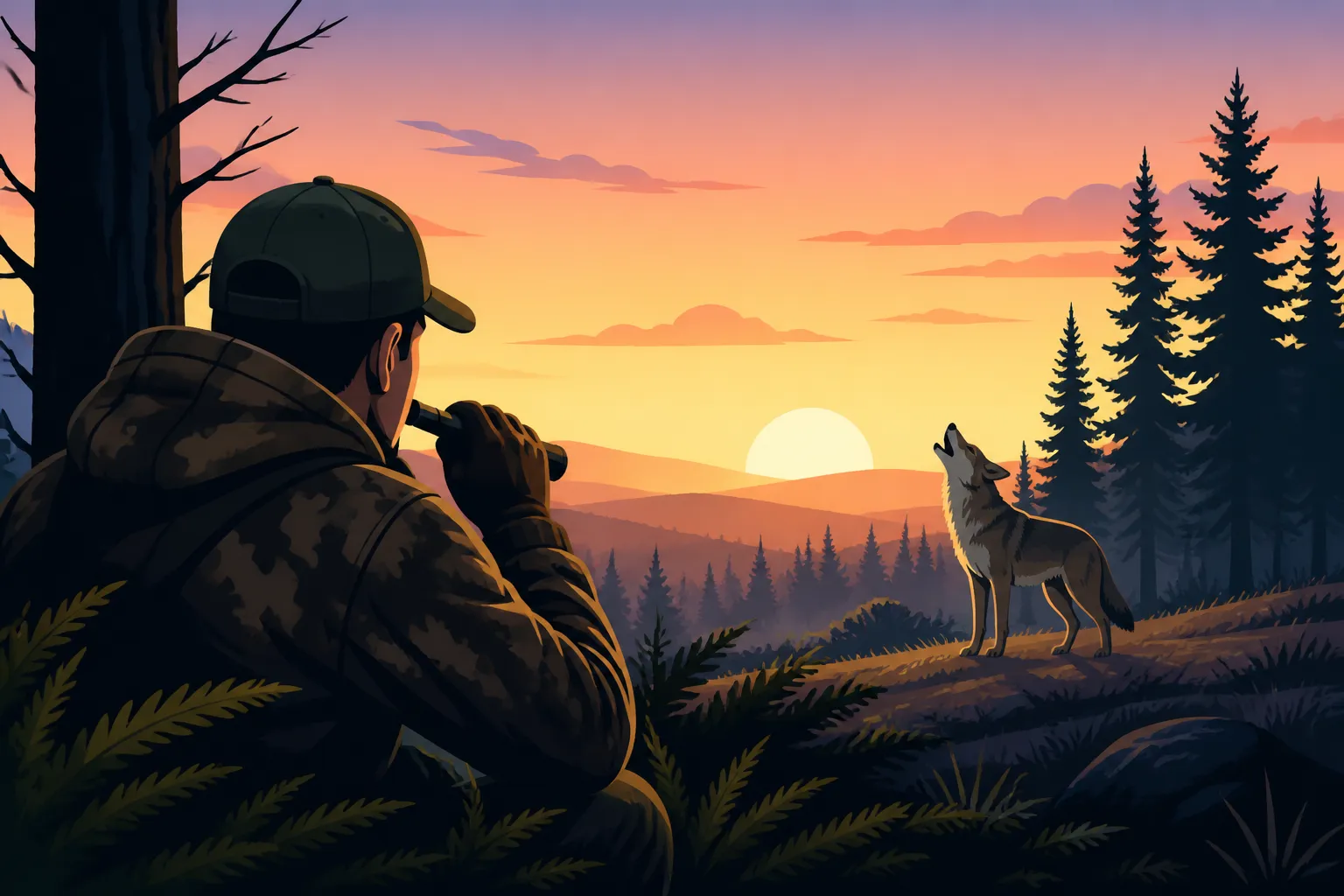
- Hand Calls: These require more skill but can be incredibly rewarding. Open-reed calls are versatile, capable of producing a wide range of distress sounds, while closed-reed calls are often easier for beginners to master. Locator calls, like an owl hooter or a coyote howl, are great for getting a coyote to respond without necessarily committing to coming in. A simple lip squeak or kiss of your hand can bring a "hung-up" coyote those last few yards. Many experienced callers like to start with an electronic call for volume and range, then switch to a hand call for close-in finesse when a coyote is spotted.
- Decoys: Motion decoys, especially those mimicking a dying rabbit or a bird, can add a crucial visual element. Coyotes are incredibly curious, and a bit of movement can often seal the deal, drawing their attention away from you and towards the "prey."
Here's a quick look at common call types and their best uses at first light:
| Call Type | Primary Sound | Best Use at First Light | Notes |
|---|---|---|---|
| Rabbit Distress | Squeals, wails, crying | Mimics easy prey, draws hungry coyotes. Good opener. | Start soft, escalate volume. |
| Fawn Distress | Bleats, cries (often electronic) | Highly effective during and after deer fawning season (late spring/summer). | Irresistible to coyotes with pups or seeking an easy meal. |
| Bird Distress | Chirps, squawks | Good for a change-up, can pique curiosity if other calls fail. | Often used in conjunction with a bird decoy. |
| Lone Howl/Interrogation Howl | Long, drawn-out howl | Locator call to get a response; can also challenge territorial coyotes. | Good to start before full light or if no response to distress. |
| Pup Distress | Whimpers, yelps, cries | Triggers an aggressive response from adult coyotes, especially during breeding/pup-rearing season. | Can bring multiple coyotes in looking to confront a threat. |
| Ki-Yi | Short, sharp yelp | Mimics a submissive coyote, can draw in dominant animals or bring in a "hung-up" coyote. | Use sparingly and with confidence. |
Scent Control and Concealment
This cannot be overstated: coyotes have an incredible sense of smell. At first light, with the air often still and thermals just starting to shift, scent control is paramount.
- Scent-Eliminating Sprays and Laundry Detergents: Treat all your hunting clothes, including your outer layers, with scent-eliminating products. Wash them in scent-free detergent.
- Wind Direction: Always, always play the wind. Approach your setup location and make your stand with the wind in your face or quartering. Even a slight shift in wind can carry your scent to a circling coyote. Use a wind checker frequently. This is especially true when still-hunting, as you'll want to be careful moving through areas like Maine Deer Wintering Yards Explained
- Thermals: As the sun rises, warm air begins to lift from low-lying areas, and cooler air flows down from higher ground. Understanding how these thermals will affect your scent cone as the morning progresses is key. Early in the morning, thermals usually fall, meaning your scent will drift downhill. As the sun warms the earth, thermals will rise, carrying your scent uphill. Try to set up so that your scent isn't being carried into likely approach corridors.
- Concealment: In the dim light of dawn, your silhouette can be a dead giveaway. Break up your outline against natural cover. Sit with your back to a large tree or dense bush. A good quality camouflage pattern designed for the local terrain is essential. A portable blind, even a simple pop-up, can be highly effective, especially if you're hunting in areas like Coyote Calling Maine Farm Country where natural cover might be sparse. Using a Ground Blind on Posted-Free Land, where you have permission, can give you a crucial edge.
Setting Up for Success: Angles and Approach
Your setup determines your shot opportunity.
- Vantage Point: Ideally, you want a slightly elevated position that offers good visibility of the approach lanes you expect coyotes to use, but without silhouetting yourself. Look for a spot that allows you to see at least 100-200 yards in front and to the sides.
- Backdrop: Always have a solid backdrop to break up your outline. A dense stand of pines, a large rock outcropping, or even a rise in the terrain can work wonders. Avoid sitting in the open or against the sky.
- Sun Position: At first light, the sun will be low on the horizon. Try to position yourself so the rising sun is behind you, shining into the coyote's eyes. This makes it harder for them to see you and can buy you precious seconds.
- Shooting Lanes: Trim any small branches or bushes that might impede your shot. You want clear lanes for 50-150 yards. Remember, coyotes often move quickly and erratically.
- Minimizing Movement: Once you're set up, become a statue. Any unnecessary movement, especially as light improves, can give you away. Practice bringing your rifle or shotgun to your shoulder smoothly and quietly.
Mastering the Call Sequence at Dawn
Once you're in position and the woods are still, it's time to begin calling. This is where art meets science, and adapting your sequence to the situation is key.
Starting with Subtle Sounds
At first light, the world is often very quiet, and a sudden, loud blast from a call can be jarring and unnatural, potentially spooking a coyote that's already close. I've seen it happen more times than I can count. Instead, try starting with something soft, almost tentative.
- Whisper a Distress: A gentle whimpering rabbit or a soft series of mouse squeaks can be highly effective. The idea is to make the coyote think there's a vulnerable, easy meal just struggling a little bit, not screaming in panic. This low-volume approach also allows you to gauge the immediate surroundings. If a coyote is bedded up just a few hundred yards away, a gentle sound is less likely to blow them out of the country.
- Locator Howl (Early, Soft): Before legal shooting light, a very soft, questioning coyote howl can be used as a locator. The goal isn't to call them in yet, but to get a response that tells you where they are. This is particularly useful in wide-open areas or if you suspect coyotes are still far off. Just be mindful of local Maine Public Land Hunting Hours and don't call loud enough to disturb others or trigger a premature approach before you're ready to shoot.
Escalating the Intensity
If you don't get an immediate response to your subtle calls within 5-10 minutes, it's time to incrementally increase the intensity.
- Increase Volume and Duration: Gradually increase the volume of your distress calls. Make the rabbit sound more frantic, or the bird more distressed. Extend the length of your calling sequences. Don't be afraid to add in some pauses—coyotes will often come in silent and stop to listen, so give them time to react.
- Add Variety: Switch up your sounds. If a rabbit distress isn't working, try a fawn bleat (especially during late spring/early summer) or a different bird distress. The goal is to hit on a sound that piques their interest enough to investigate. Sometimes, a series of short, sharp barks, followed by a period of silence, can make a curious coyote commit.
- Coyote Vocalizations: If you're confident there are coyotes in the area and they're not responding to distress, try a challenge howl or a pair of howls. This can tap into their territorial instincts, bringing them in to investigate what they perceive as an intruder. Be careful with this, though; an overly aggressive howl can sometimes push wary coyotes further away. If you use an electronic call, you can mimic a pair of coyotes, making it sound even more realistic. Using mapping software like GoHunt, you can identify terrain features where these territorial challenges might be most effective.
Patience and Persistence in the Cold Light
This is where many hunters lose out. Coyote hunting, especially at first light, demands immense patience.
- The Waiting Game: Once you've completed a calling sequence, wait. Coyotes do not always charge in. They will often circle downwind, approach cautiously, and stop repeatedly to assess the situation. Give them at least 15-20 minutes, sometimes longer, after your last call before deciding to move. I've had coyotes show up 10 minutes after I thought they were gone.
- Scanning and Spotting: Continuously scan your surroundings, not just directly in front of you. Coyotes have a knack for appearing silently from unexpected directions. Pay close attention to any movement, however slight, or flashes of color. Binoculars are invaluable for spotting a subtle twitch of an ear or a flicker of movement in dense cover.
- When to Move: If, after 20-30 minutes of varied calling and diligent waiting, you haven't seen or heard anything, it might be time to move to a new location. Don't just pack up and stomp out. Move quietly and cautiously, scanning as you go, because a coyote could still be watching you or lingering nearby. Sometimes the key to finding them is to keep moving and calling until you get a response, especially in vast areas often accessible through North Maine Woods Logging Road Access.
Real-World Scenarios and Troubleshooting
No two hunts are exactly alike, and coyotes are masters of adapting. Being able to troubleshoot and adjust your tactics on the fly is what separates successful callers from frustrated ones.
Dealing with Wary Coyotes
Maine coyotes, especially those that have been hunted before, are notoriously wary. They are incredibly smart survivors.
- The "Hang Up": This is perhaps the most common frustration. A coyote responds, approaches, but then "hangs up" at 150-200 yards, often just out of easy rifle range, or circles to get downwind. When this happens, often they've caught something in the air – maybe a hint of your scent, or something about your setup just doesn't feel right to them. Your best bet is to become completely still. If you have an electronic call, switch to a very subtle, low-volume "distress" sound, or even a soft whimper. Sometimes, a quick, almost imperceptible lip-squeak can bring them those last few yards out of curiosity. If they've committed to circling downwind, it's often a lost cause unless you can make a quick, silent adjustment to your position.
- The "Ghosting" Phenomenon: You make a great series of calls, feel confident, but nothing shows up. Later, you find tracks in the snow or mud that show a coyote came in, observed the situation, and then slipped away unnoticed. This emphasizes the need for impeccable concealment, minimal movement, and continuous scanning. The best way to combat ghosting is to always hunt with your "head on a swivel," checking your flanks and rear as frequently as possible. Utilize mapping apps like GoHunt to scout likely approach routes beforehand, giving you an idea where to focus your attention.
- Decoys as a Distraction: A motion decoy placed 20-30 yards from your position can be a fantastic tool here. If a coyote hangs up, the decoy gives them something else to focus on, drawing their eyes and attention away from your position, potentially allowing you to get a shot off.
Adapting to Weather and Terrain
Maine's weather and diverse terrain constantly challenge hunters.
- Fog and Rain: These conditions can be your friend or foe. Fog dramatically reduces visibility, which can make a coyote more bold in approaching. However, it also limits your visibility for spotting them and making a shot. Light rain can dampen scent, which can be an advantage for you. In these conditions, focusing on louder, more aggressive calls might be necessary to penetrate the atmosphere, and you might need to adjust your setup to be closer to known travel routes.
- Snow: Fresh snow is a tracker's dream, showing you exactly where coyotes are moving, which is vital intel for future hunts. Heavy snow can slow coyotes down, but also pushes them to easier travel paths like packed snowmobile trails or logging roads. In deep snow, a struggling rabbit distress might sound particularly enticing.
- Dense Cover vs. Open Country: In areas with thick spruce and cedar, like many parts of central and northern Maine, you might need to use louder, more aggressive calls to be heard. You'll also need to focus on creating very short shooting lanes. In open agricultural areas, like much of Aroostook County Potato Country, coyotes are more likely to see you from a distance, demanding even better concealment and longer-range shots. Your call strategy might lean more towards soft, curiosity-provoking sounds that draw them in slowly across the open. Knowing the lay of the land, perhaps by Reading Aerial Photos for North Woods Deer to understand cover and topography, can be incredibly helpful.
Safety First: Ethical Considerations and Shot Placement
As with all hunting, safety is paramount.
- Target Identification: Always be 100% sure of your target and what is beyond it. In the dim light of dawn, shadows can play tricks. Use binoculars to confirm your target before raising your weapon. Maine also has very specific Blaze Orange Requirements, so ensure you and any hunting partners are compliant, even if you are trying to be concealed for calling.
- Clear Backstop: Ensure your shot has a safe backstop. Never shoot over a ridge or towards areas where you don't know what's beyond.
- Shot Placement: Coyotes are tough animals. Aim for the vitals (heart/lungs) for a quick, humane kill. A well-placed shot is essential for a clean harvest and prevents a wounded animal from suffering. If you're unsure of your shot, wait for a better opportunity. Practice shooting in low light conditions to understand your own limitations and your rifle's capabilities.
- Respectful Conduct: Always be a responsible hunter. This means following all regulations, respecting landowners, and acting ethically. Whether you're hunting on private land with permission or on one of Maine's many Maine Wildlife Management Areas (WMAs), remember you represent all hunters.
Calling coyotes at first light is a challenging but immensely rewarding endeavor. It combines woodcraft, patience, and a deep understanding of animal behavior. By preparing thoroughly, understanding how coyotes move at dawn, mastering your call sequence, and adapting to real-world scenarios, you'll significantly increase your chances of success on your next Maine coyote hunt. Good luck out there!
Disclaimer
Please remember that hunting regulations and seasons can change. Always consult the most current Maine Department of Inland Fisheries & Wildlife (MDIFW) regulations before heading into the field. This guide is for informational purposes only and does not substitute for official state hunting laws and safety guidelines.