Dragging a Deer Out of a Cedar Swamp
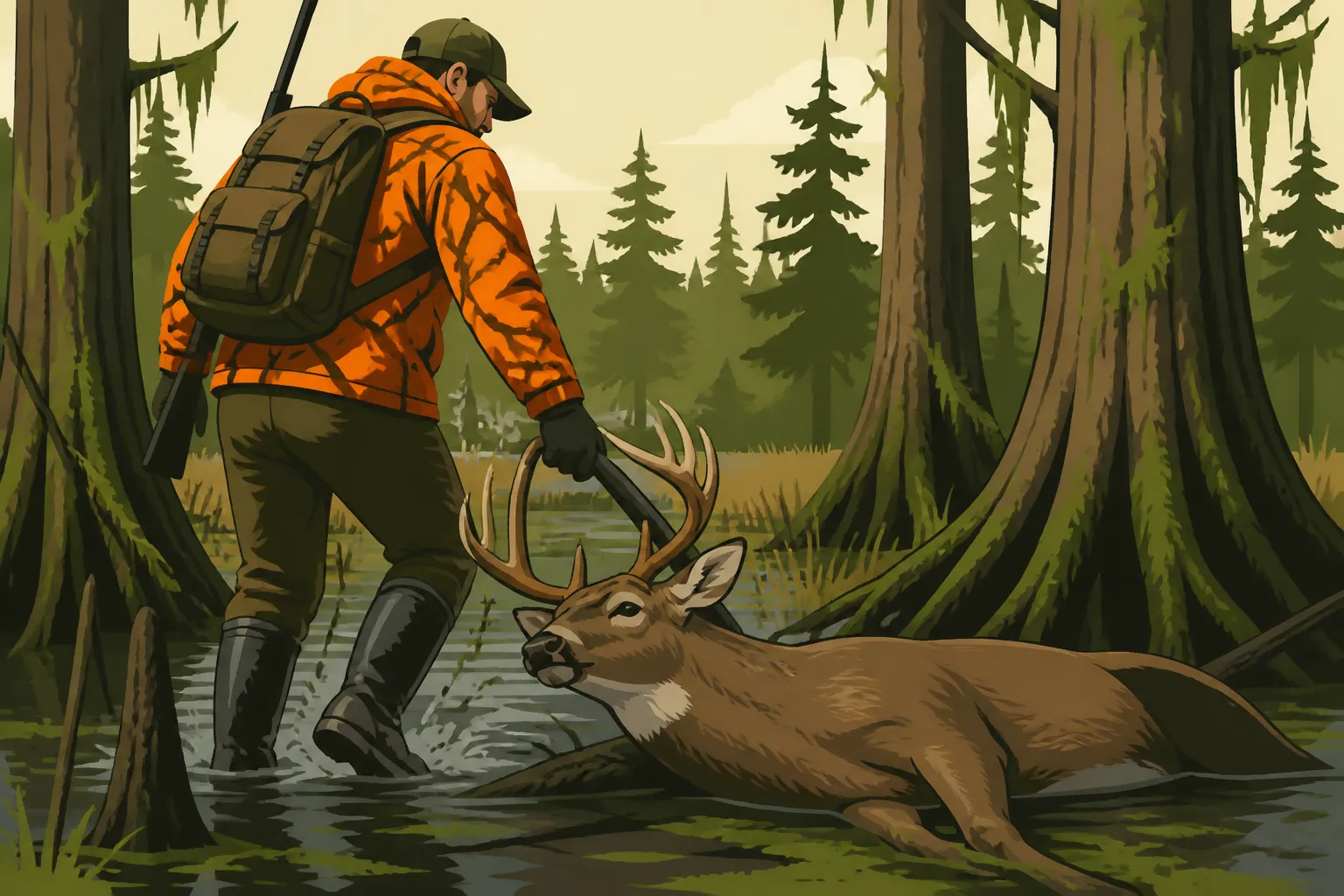
So, you’ve done it. After hours, maybe days, of patient hunting through the dense Maine woods, you’ve finally put down a deer. The feeling of accomplishment is immense, a wave of relief and excitement washing over you. But then reality hits. You're standing knee-deep, or worse, waist-deep, in a cedar swamp, and your prize is a couple hundred pounds of inert weight just begging to be moved. Getting a deer out of a cedar swamp is one of the toughest challenges a Maine hunter faces, often turning triumph into a monumental test of will. This guide will walk you through the unique difficulties and practical strategies for retrieving your deer from these notoriously challenging landscapes.
The Unique Challenges of Maine Cedar Swamps
Maine's cedar swamps are notoriously beautiful but equally treacherous. They are often vital habitat, particularly during the harsh winter months, serving as crucial deer wintering yards. But for a hunter, they present a gauntlet of obstacles that can quickly turn a successful harvest into an epic ordeal.
Understanding the Terrain
Picture this: you're working your way through what looks like solid ground, only for your foot to break through the thin layer of frozen moss and detritus, plunging you into cold, murky water and mud. That's a cedar swamp in a nutshell. The ground is a deceptive patchwork of sphagnum moss, tangled roots, fallen logs, and pockets of deep, sucking mud or standing water. It's rarely flat, often riddled with hummocks and depressions, making every step a calculated risk. The dense canopy of cedar, spruce, and fir blocks out most sunlight, keeping the ground perpetually damp and cool, even on a mild day. This kind of terrain saps your energy with every step, and when you add the weight of a deer, it becomes an absolute grind. It’s not just the mud; it’s the constant snagging on downed limbs, the trip hazards hidden by leaf litter, and the sheer effort required to maintain balance while traversing uneven, unstable ground. Knowing how to interpret a Reading a North Woods Deer Yard can sometimes help you anticipate these features, as deer tend to follow the paths of least resistance, which are still often brutal for a human.
The Weight of a Harvested Deer
Let's be realistic: even a smaller Maine deer can weigh over 100 pounds, and a mature buck can easily top 200, with some exceptional ones pushing 300 pounds or more, especially before field dressing. That's an incredible amount of dead weight to drag through obstacles that actively resist your movement. When you combine this weight with the swampy terrain, the friction becomes immense. The deer's hide will catch on every root, every submerged branch, every clump of moss, acting like a giant brake. It's not just the weight, but the drag coefficient that makes it so difficult. Imagine trying to drag a heavy, irregular-shaped sack of sand across a sticky, uneven surface while you yourself are struggling to stay upright. Add to that the possibility of ice forming on the deer’s hide, or the hide soaking up water, making it even heavier and more unwieldy. The frustration of feeling like you're only gaining inches for every foot of effort is a real spirit-killer.
Weather and Environmental Factors
Maine weather is famously unpredictable, and a cedar swamp only amplifies its effects. If it's raining, the ground becomes even slicker and muddier, turning the swamp into a true quagmire. If it's cold, the water can be bone-chilling, quickly leading to hypothermia if you're not properly dressed and careful. Snowfall, while potentially helping to reduce friction somewhat, can also obscure hazards, making footing even more treacherous. Deep snow, particularly common during Hunting the Muzzleloader Close in Mid-December and other late-season hunts, makes breaking trail incredibly difficult, and the deer’s body will plow through it, creating an even heavier load. The dense canopy also means that visibility can be poor, making it easy to get disoriented, especially as dusk approaches. Furthermore, the thick cover limits air circulation, meaning that even on relatively calm days, the humidity in a swamp can be high, leading to rapid cooling if you sweat and then stop moving. This is why understanding How Deep Snow Affects Maine Deer Survival is key, as deer use these yards for protection, but they also become challenging recovery zones for hunters.
Essential Gear for Deer Recovery in Swamps
Successfully recovering a deer from a Maine cedar swamp requires more than just grit; it demands the right gear. Going in unprepared is a recipe for exhaustion, injury, or worse, losing your hard-earned deer. Thinking ahead about what you might encounter can save you hours of struggle and a lot of heartache.
Personal Gear for the Hunter
First and foremost, you need to think about your own safety and comfort. Waterproof and insulated boots are absolutely non-negotiable. Look for boots with aggressive tread for traction on slippery surfaces and good ankle support. Neoprene waders or waterproof hunting pants are also highly recommended to keep you dry and warm when you inevitably step into deep water or mud. A good quality, moisture-wicking base layer and appropriate outer layers are crucial, as you'll be exerting a lot of energy, but also stopping frequently. Remember, Maine Blaze Orange Requirements apply to ground-level hunters during firearms season, so make sure your outer layers meet the visibility standards.
Beyond clothing, carry a robust first-aid kit. Sprains, cuts, and scrapes are common in this environment. A sharp knife for field dressing is essential, and consider a small hand saw or game shears for clearing brush or quickly removing a leg if needed to reduce weight for a drag. High-energy snacks and plenty of water are vital to keep your fuel levels up. Don't underestimate how much energy you'll burn. A GPS device or a reliable hunting app like GoHunt on your phone (with extra battery or a power bank) is indispensable for navigating out of the swamp, especially as fatigue sets in and daylight fades.
Specialized Dragging Equipment
This is where you can make your life significantly easier. Forget trying to grab a leg and pull. That's a back-breaker.
The primary tool is a sturdy deer drag or harness. These distribute the pulling force across your shoulders and waist, using your strongest muscles and reducing strain on your back. There are commercial options like the popular "Deer Sleigh" or simple heavy-duty straps that create a harness. Some hunters even fashion their own using strong rope and padded shoulder straps.
Another invaluable piece of gear is a heavy-duty sled or game cart. While a cart might be impractical in the deepest, thickest parts of a swamp due to wheels getting bogged down, a sturdy plastic sled can make a world of difference. Lay the deer on the sled, secure it with straps, and the sled will glide over roots and through shallow mud much more easily than a bare carcass. Look for sleds made of durable, slick plastic that can withstand abuse. Even a cheap, heavy-duty plastic toboggan can be a lifesaver. If you plan to hunt these challenging areas regularly, investing in a quality deer sled is highly recommended. It’s an upfront cost, but your back will thank you.
Navigation and Communication Tools
Getting turned around in a dense cedar swamp is incredibly easy. The uniform canopy and lack of distinct landmarks mean every direction can look the same. A reliable GPS unit, or a hunting app with downloaded offline maps (GoHunt is excellent for this with its detailed aerial imagery and public/private land layers), is absolutely crucial. Mark your kill site, your entry point, and any significant landmarks or clear trails you find. Don't rely solely on your phone; a dedicated GPS has better battery life and is often more robust. Carry a compass and a physical map as a backup.
Communication is another key element. Cell service is often spotty or nonexistent in remote Maine swamps. A satellite messenger device (like a Garmin InReach or ZOLEO) can be a lifesaver, allowing you to send text messages and call for help even without cell service. If you're hunting with a partner, two-way radios are invaluable for staying in touch, especially if you get separated or need to coordinate a two-person drag. Always let someone know where you're going and when you expect to return, especially when venturing into such challenging terrain.
| Gear Category | Essential Items | Notes |
|---|---|---|
| Personal Protection | Waterproof, insulated boots (e.g., Muck Boots), Waders/Waterproof pants | Prioritize traction and dryness. |
| Safety & Survival | First-aid kit, Emergency blanket, Fire starter, Whistle, Headlamp/Flashlight | Always expect the unexpected, especially if you're Blood Trailing After Dark in Maine. |
| Navigation | GPS device, Phone with offline maps (e.g., GoHunt), Compass, Physical map | Redundancy is key. Mark waypoints. |
| Dragging & Tools | Deer drag harness, Heavy-duty plastic sled, Sharp knife, Field dressing kit | Invest in a good harness. Sleds drastically reduce friction. Consider a saw for quick cuts. |
| Hydration & Fuel | Water bottles/hydration pack, High-energy snacks | Recovery is physically demanding; stay fueled and hydrated. |
| Communication | Satellite messenger, Two-way radios (if with partner), Power bank for phone | Cell service is often unreliable in deep woods. |
Strategic Approaches to Deer Extraction
The moment you stand over your deer in a swamp, you need a plan. Rushing in without thinking can lead to injury, exhaustion, and potentially losing your deer. Strategic planning, whether you’re alone or with a partner, is paramount.
The Solo Drag: Techniques and Limits
Let’s be honest, many of us hunt alone. And when you’re solo, recovering a deer from a cedar swamp feels like an insurmountable task. The key here is not brute force, but smart force.
First, field dress the deer immediately if conditions allow. This removes a significant amount of weight (blood, entrails) and helps cool the carcass, crucial for meat preservation, especially if you’re looking at a long haul. If it's warm, this step is critical. Even in cold weather, reducing weight is beneficial. Read up on Field Dressing a Deer in Cold Weather for best practices.
Next, assess the shortest path of least resistance out of the immediate swamp. This might not be the straightest line back to your vehicle. Look for slight rises, drier patches, or areas with fewer downed trees. A good hunting app like GoHunt with detailed topo maps can help you visualize these subtle elevation changes.
When dragging, take frequent, short breaks. Don't try to drag 100 yards in one go. Drag for 10-20 feet, then rest. Use your body weight, leaning into the harness, rather than just pulling with your arms. If you encounter a particularly dense tangle of brush or a deep mud hole, consider using a small hand saw to clear a path. You might even have to briefly pull the deer onto a log to reposition or get over an obstacle. If you hit an impassable obstacle, sometimes it's better to go around, even if it adds distance, than to fight a losing battle. The frustration of being stuck can lead to poor decisions, so stay calm and methodical.
Teamwork Makes the Dream Work
If you're lucky enough to be hunting with a partner or have friends willing to help, retrieving a deer from a swamp becomes significantly more manageable. Two, three, or even four people can distribute the weight and leverage their combined strength.
Designated Roles: When multiple people are involved, it helps to have designated roles. One person can lead, clearing obstacles and scouting the best path. Another can be on the main drag harness, using their legs and core. Others can help lift, push, or pull from the sides, especially over logs or through deep mud. It's like a finely tuned machine; everyone needs to communicate and work together.
Rope and Pulley Systems: This is where teamwork truly shines. With enough rope, you can set up a simple pulley system. Attach one end of a long, strong rope to the deer, and the other end to a sturdy tree further down your intended path. Then, use another rope or strap to create a loop around the main rope, and have one or more people pull on this loop. This creates a mechanical advantage, essentially multiplying your pulling power. Even a basic 2:1 or 3:1 system can make a monumental difference, allowing a couple of people to move a deer that would be impossible for one. This requires some basic knot-tying skills and forethought, but the payoff in reduced effort is enormous. Just remember to have enough length in your ropes for significant pulls.
Mechanical Advantage and Improvisation
Sometimes, even with a team, the swamp is just too thick, too deep. This is when you need to get creative and think about maximizing mechanical advantage.
Winches and Come-Alongs: For the truly impossible situations, a hand-cranked winch or come-along can be a game-changer. These devices use a ratcheting mechanism to slowly but surely pull incredibly heavy loads. You'll need sturdy anchor points (large trees) along your path. It's slow, tedious work, but it's often the only way to move a massive deer through extreme terrain without heavy machinery.
Leverage with Logs: Don't forget the power of leverage. If you need to get a deer over a particularly large log or out of a deep depression, find a sturdy pole or fallen branch. Use it as a lever, prying the deer up and over obstacles. This saves your back and conserves energy.
Strategic Cutting: Sometimes the best path isn't clear until you make it clear. A small, portable hand saw or even a folding saw can be used to quickly clear small trees, thick brush, or stubborn roots that are impeding your progress. It might feel like you're losing time, but a few minutes of cutting can save an hour of struggling. Always prioritize safety when using cutting tools, especially when fatigued.
Remember that for any deer harvest, proper post-recovery steps are important, like Butchering a Deer at Camp or Registering a Maine Deer Online.
Post-Recovery Steps and Considerations
After the monumental effort of dragging your deer out of a cedar swamp, the job isn't quite finished. There are crucial steps to ensure your meat is good and that you stay safe.
Field Dressing and Preservation
If you were unable to fully field dress the deer in the swamp due to deep water or other obstacles, do so immediately upon reaching solid ground or your vehicle. Speed is of the essence, especially if temperatures are mild. The internal organs hold a lot of heat, which can spoil the meat quickly. Remove all organs, clean out the cavity as best you can, and prop the cavity open to allow for maximum airflow.
Once field dressed, the next priority is cooling the carcass. If it's cold outside (below 40°F / 4°C), you can hang the deer in a shaded, secure spot. If temperatures are warmer, you'll need to get it on ice quickly. Place ice bags inside the body cavity and around the deer to bring the core temperature down rapidly. Proper care here means the difference between delicious venison and spoiled meat. This is particularly important because often, the struggle of extraction means the carcass isn't cooling as effectively as it should, especially during the early weeks of Maine's Four-Week Firearms Deer Season.
Safety First: Preventing Injury
Dragging a deer from a swamp is incredibly strenuous, and the risk of injury is high. Back strains, muscle pulls, slips, and falls are all common.
Know Your Limits: Don't push yourself to the point of exhaustion or injury. If you're alone and struggling, it's sometimes better to go back to camp, get help, or even come back the next day with a better plan and fresh energy. A deer left overnight in cold weather, especially after field dressing, will often be fine. Your safety is always more important than immediate retrieval.
Stay Hydrated and Fueled: As mentioned earlier, the physical demands are immense. Keep drinking water and snacking to prevent dehydration and fatigue, which can impair judgment and lead to accidents.
Proper Lifting Techniques: When you do need to lift or reposition the deer, use your legs, not your back. Bend at the knees, keep your back straight, and lift smoothly.
Layered Clothing and Hypothermia: Getting wet in a cold swamp is a recipe for hypothermia. Even on milder days, the evaporative cooling from wet clothing can drop your body temperature dangerously. Carry dry clothes in your pack or vehicle to change into immediately after recovery. Pay attention to shivering, slurred speech, or confusion in yourself or your partners – these are signs of hypothermia and require immediate action to warm up.
Retrieving a deer from a Maine cedar swamp is a rite of passage for many hunters, a true test of grit and ingenuity. While it's certainly one of the less glamorous aspects of hunting, mastering these recovery techniques ensures that your hard-earned success on the hunt translates into venison for the table, without breaking your back in the process.
Disclaimer
The information provided in this guide is for informational purposes only and is not a substitute for professional advice or formal hunter education. Always consult the most current Maine hunting regulations and prioritize safety when hunting and recovering game. Conditions in the field can change rapidly, and hunters should be prepared for all eventualities.