Maine Deer Damage Permits for Farmers
There's nothing quite like the heartbreak of watching your livelihood disappear, bite by bite, under the cover of darkness. For farmers across Maine, the sight of a healthy deer herd can quickly turn from a picturesque wildlife moment into a financial nightmare when those deer decide your carefully cultivated crops are their personal buffet. This guide will walk you through the specifics of Maine's deer damage permit system, offering a lifeline for those battling persistent agricultural losses due to overabundant deer populations.
The Frustration of Deer Damage to Maine Farms
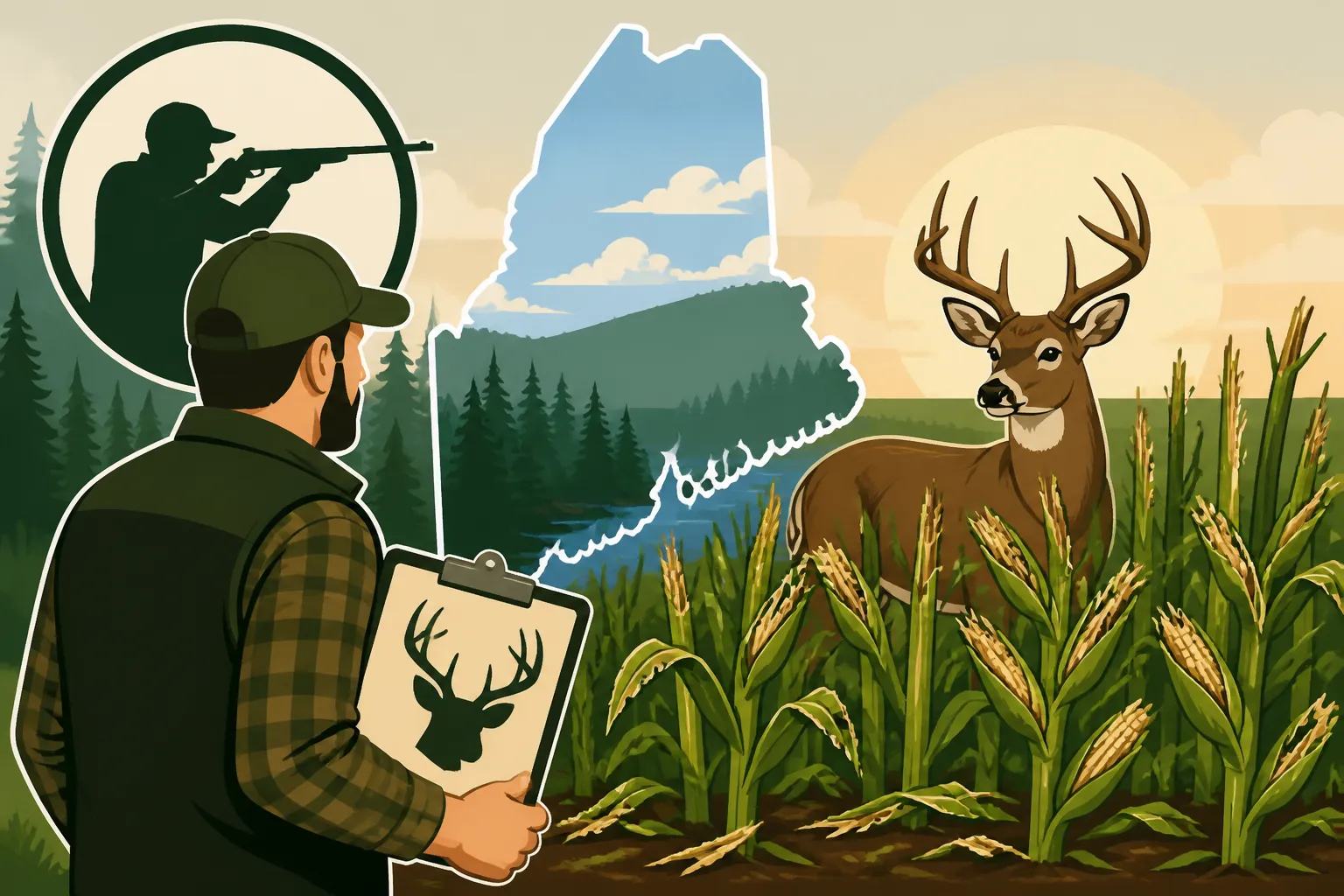
Maine's landscape, with its rich forests bordering fertile fields, creates an ideal habitat for white-tailed deer. While most Mainers appreciate the sight of these graceful animals, farmers experience a unique and deeply personal struggle. Year after year, significant portions of their harvests — whether it's corn, blueberries, potatoes, or various vegetable crops — can be decimated by deer, leading to substantial economic losses and immense frustration. It’s not just about a few nibbles here and there; we're talking about entire rows of corn flattened, blueberry bushes stripped bare, or potato plants chewed down to the stem, often right before harvest.
Think about a farmer in Aroostook County, renowned for its potato fields. A healthy deer population, while a testament to successful wildlife management in many ways, can converge on these nutrient-rich fields, especially as natural forage becomes less appealing or abundant. These deer aren't just passing through; they're setting up shop, often returning night after night to feast. The sheer volume of deer can be staggering, and their collective appetite can wipe out profits that a farmer depends on to feed their family and keep their business afloat. You might see firsthand how these deer interact with the landscape, making understanding White-Tailed Deer Across Maine and their habits crucial.
The problem isn't isolated to any single region. Downeast, blueberry farmers contend with deer browsing on their valuable fruit and the tender new growth. In central Maine, vegetable growers face similar challenges. It's a constant battle, and traditional deterrents like fences can be incredibly expensive and often aren't 100% effective against determined deer. Farmers often find themselves frustrated by the relentless pressure from deer, especially in prime agricultural regions like Aroostook County where deer densities can be substantial. Understanding these movements is critical, and some farmers even leverage tools like GoHunt to visualize satellite imagery and terrain features, trying to anticipate deer behavior and identify potential weak points in their property. It’s vital for farmers to grasp the larger picture of Deer Density by Maine Region to understand the scope of the issue they're facing locally.
Understanding Maine's Deer Damage Permit System
Recognizing the severe financial strain and hardship that deer can inflict on agricultural operations, the Maine Department of Inland Fisheries and Wildlife (MDIFW) offers a specialized program: the deer damage permit system. This system is designed specifically to help legitimate commercial farmers mitigate significant crop losses caused by deer. It’s important to understand that these aren't hunting tags in the traditional sense; they are a targeted wildlife management tool aimed at protecting agricultural livelihoods.
Unlike general hunting licenses or even Maine's Maine's Antlerless Permit System, which are part of broader population management efforts, deer damage permits are issued to address specific, documented agricultural damage. The primary purpose is not sport hunting but active relief for farmers. These permits allow for the removal of deer outside of regular hunting seasons, or with methods not typically allowed, strictly within the boundaries of the damaged property. This can be a game-changer when deer are decimating a crop that’s ripe for harvest, but the regular hunting season is still months away, or if they are consistently impacting an area like a Hunting a Standing Apple Orchard.
To be eligible for a deer damage permit, a landowner must meet several key criteria. First and foremost, they must be a bona fide commercial farmer, demonstrating that they derive a significant portion of their income from agricultural production. This isn't for hobby gardens; it's for operations that contribute to Maine's agricultural economy. Secondly, they must show clear and substantial evidence of deer damage to their commercial crops or agricultural products. This isn't just a few deer tracks; it's quantifiable loss that impacts their bottom line. The MDIFW takes these applications seriously, knowing that a farmer's income is at stake. The system acts as a crucial safety net for agricultural producers, allowing them to take necessary action when deer populations exceed what the land can sustainably support without impacting human enterprise.
The Application and Approval Process for Damage Permits
Navigating the application process for a deer damage permit can seem daunting, but it's a structured path designed to ensure legitimate claims are addressed efficiently. The first step for any farmer experiencing significant deer damage is to contact their regional MDIFW office. Don't wait until the damage is catastrophic; early intervention can make a big difference. When you call, you'll be connected with a wildlife biologist or game warden who will be your primary point of contact.
Once contacted, an MDIFW representative will typically schedule an on-site visit to your farm. This is a critical part of the process. During this visit, the biologist or warden will visually assess the damage, confirm the species responsible (it's almost always deer, but they need to confirm), and evaluate the extent of the crop loss. They'll look for tell-tale signs: tracks, droppings, browse lines, flattened crops, and the overall impact on your fields, such as if deer are routinely congregating around a Hunting a Potato Field Edge in Aroostook. It's incredibly helpful if you, as the farmer, have documented the damage yourself with photos, videos, and detailed records of estimated crop loss. This concrete evidence supports your claim and helps the MDIFW understand the severity of the situation. While the permit itself is a state-issued document, farmers can use platforms like GoHunt to complement their scouting efforts, mapping out specific fields, noting deer trails, and even assessing historical harvest data if available for their general region.
If the MDIFW biologist determines that the damage is indeed significant and warrants intervention, they will then issue a deer damage permit. These permits are highly specific. They will detail the number of deer that can be removed, the time frame during which the permit is valid, the specific area on your property where the permit applies, and often the legal methods (e.g., specific firearm types) that can be used. In many cases, the permit allows for the taking of antlerless deer, which are often the primary drivers of population growth and hence, damage. The permit will also specify the reporting requirements, ensuring accountability. Many farmers, once they receive a permit, will engage responsible, licensed hunters to help them fulfill the permit's requirements. This often involves discussions about Getting Landowner Permission in Maine and coordinating efforts, ensuring everyone understands the boundaries and objectives. Knowing how many deer are being harvested in the broader area, which you can often glean from Maine Deer Harvest Records, can give you a sense of local deer pressure.
Implementing Deer Damage Control and Permit Utilization
Once you have a deer damage permit in hand, the real work of mitigation begins. It's a huge step towards protecting your crops, but effective implementation requires careful planning, ethical considerations, and strict adherence to the permit's conditions. One of the most common and effective ways farmers utilize these permits is by recruiting skilled, responsible hunters. These aren't just any hunters; they need to be individuals who understand the gravity of the situation, the need for precision, and the specific rules outlined in your permit. Safety is paramount, especially on active farmland. Clear communication about property boundaries, safe shooting lanes, and the specific deer you're authorized to remove is essential. When selecting individuals to help, it's wise to consider hunters who are diligent, responsible, and understand the specific goals of a damage permit hunt. They might even use resources like GoHunt to scout access points and potential shot lanes remotely before setting foot on the property, ensuring they're prepared for the unique challenges of hunting on a farm.
Permit holders, or the hunters operating under the permit, must adhere to all legal requirements. This includes following any stipulations regarding weapon type, time of day for removal, and the exact location specified in the permit. Each deer taken under a damage permit must be reported to the MDIFW, often within a short timeframe, and may require tagging or registration similar to other harvested deer, though the process might be slightly different. The carcass of any deer taken under a damage permit is typically the property of the landowner, who can decide how to best utilize or dispose of it, often sharing the meat with the hunters or donating it. This allows for the valuable resource to be used rather than wasted.
Beyond the immediate relief of culling damaging animals, it's crucial for farmers to integrate permitted harvests into a broader deer management strategy. This might involve evaluating seasonal deer patterns, perhaps by consulting property mapping tools like GoHunt or other resources to understand why deer are drawn to their particular fields. It could also mean coordinating with neighbors if they are also experiencing deer damage, as deer don't respect property lines. Understanding the local Maine Deer Population Estimate and considering factors like Maine Deer Wintering Yards Explained can also help farmers predict deer movement and apply for permits proactively in future seasons. While permits offer a direct solution, they are often most effective when combined with other long-term strategies like improved fencing, crop rotation, or even exploring deer-resistant crop varieties. It's an ongoing effort, but the deer damage permit system provides a vital tool for Maine's agricultural community to protect their hard work and ensure their livelihoods. You can also explore how broader deer management strategies, such as understanding Maine Predator Impact on Fawn Recruitment, contribute to overall herd health and density.
Common Deer Damage and Permit Responses
Here's a quick overview of common agricultural damage caused by deer in Maine and how damage permits typically address these issues:
| Crop/Area Affected | Type of Damage | Timing of Damage | Typical Permit Response |
|---|---|---|---|
| Corn Fields | Eating developing ears, flattening stalks, browsing leaves. | Late summer/early fall, during milk stage and maturity. | Permits for multiple antlerless deer, focused on field edges and travel corridors, often prior to harvest. |
| Blueberry Barrens | Browsing on tender new growth, eating ripe berries. | Spring (new growth) and summer (berries). | Permits for antlerless deer, targeting specific damaged areas during active browsing. |
| Apple Orchards | Eating apples, browsing new shoots, rubbing antlers on young trees. | Summer (fruit), fall (fruit/rubbing), winter (browsing twigs). | Permits for antlerless deer, often throughout the growing season, potentially with specific conditions for antlered bucks for rubbing damage. |
| Potato Fields | Eating leaves and stems, digging up tubers (less common but possible). | Summer, as plants mature. | Permits for antlerless deer to reduce browsing pressure on foliage before tuber development. |
| Vegetable Gardens/Fields | Eating greens, fruits, root vegetables. | Throughout growing season, depending on crop. | Permits for specific numbers of antlerless deer, focused on the immediate damaged area. |
| Hay Fields/Forage | Grazing on new growth, reducing yield. | Spring/early summer. | Permits for antlerless deer, often used when other deterrents are insufficient for significant loss. |
Disclaimer
The information provided in this guide is for general informational purposes only and does not constitute legal advice. While we strive to provide accurate and up-to-date information, wildlife regulations and permit processes in Maine can change. Always consult the official Maine Department of Inland Fisheries and Wildlife (MDIFW) website or contact your local MDIFW regional office directly for the most current regulations, application forms, and specific guidance regarding deer damage permits for farmers. Adherence to all state and federal laws is the sole responsibility of the permit holder and any individuals acting under the permit.