Where Maine’s Moose Density Is Highest
Many hunters dream of a Maine moose hunt, picturing vast wilderness teeming with these magnificent animals. But the reality is, while Maine certainly has a healthy moose population, finding where they're concentrated can feel like searching for a needle in an enormous haystack. It’s easy to get discouraged when you’re scouting seemingly perfect habitat but seeing no sign. This guide is here to cut through the guesswork and show you precisely where Maine's moose density is highest, helping you focus your efforts for a successful hunt.
Understanding Maine's Moose Habitat Preferences
Before we dive into specific locations, it's crucial to understand what makes a place appealing to a moose. These are not creatures of open plains; they are forest dwellers through and through, and their lives revolve around finding food, water, and secure cover. If you understand these core needs, you'll start to recognize potential moose hot spots even on a map.
Moose are prodigious browsers, meaning they primarily eat the twigs, leaves, and buds of woody plants rather than grazing on grasses. This is why you'll often find them frequenting areas with young, regenerating forests – places that have been recently logged, burned, or even naturally disturbed. These areas explode with the succulent new growth of plants like willow, aspen, red maple, balsam fir, and various viburnums, all favorites on a moose's menu. They need a steady, abundant supply of this browse to sustain their massive bodies. Think about how much food it takes to keep an animal that can weigh over a thousand pounds healthy and thriving!
Beyond food, water is an absolute necessity. Moose are semi-aquatic, and they adore wetlands, bogs, beaver flowages, and shallow ponds. These watery havens provide not only a diverse array of aquatic vegetation, which is highly nutritious and a crucial part of their diet, but also offer respite from biting insects in the warmer months. You'll often see them wading neck-deep, stripping leaves off submerged plants or simply cooling off. These areas also offer escape routes and often provide excellent natural cover along their edges. The more water features, especially shallow ones with ample vegetation, the better.
Finally, moose need cover. This isn't just for hiding from predators, though that's certainly a factor, but also for thermal regulation. In summer, dense softwood stands (like spruce and fir) provide cool shade, and in winter, these same thickets offer crucial protection from harsh winds and deep snow, helping them conserve energy. A mix of these thick, mature conifer stands interspersed with younger, regenerating areas is often the ideal mosaic for high moose density. It provides the best of both worlds: food close to safety and comfort. You can learn more about their specific needs by checking out our deep dive into Moose Habitat in the North Woods.
Mapping the Highest Density Moose Zones
Alright, now for the million-dollar question: where do you actually find these areas in Maine? While moose are spread across the entire state, their densities vary dramatically. You won't find them in the same numbers in suburban woodlots as you will in the vast, remote stretches of the North Woods. The key is to focus your efforts on regions where the habitat factors we just discussed converge most favorably, and where human disturbance is minimal.
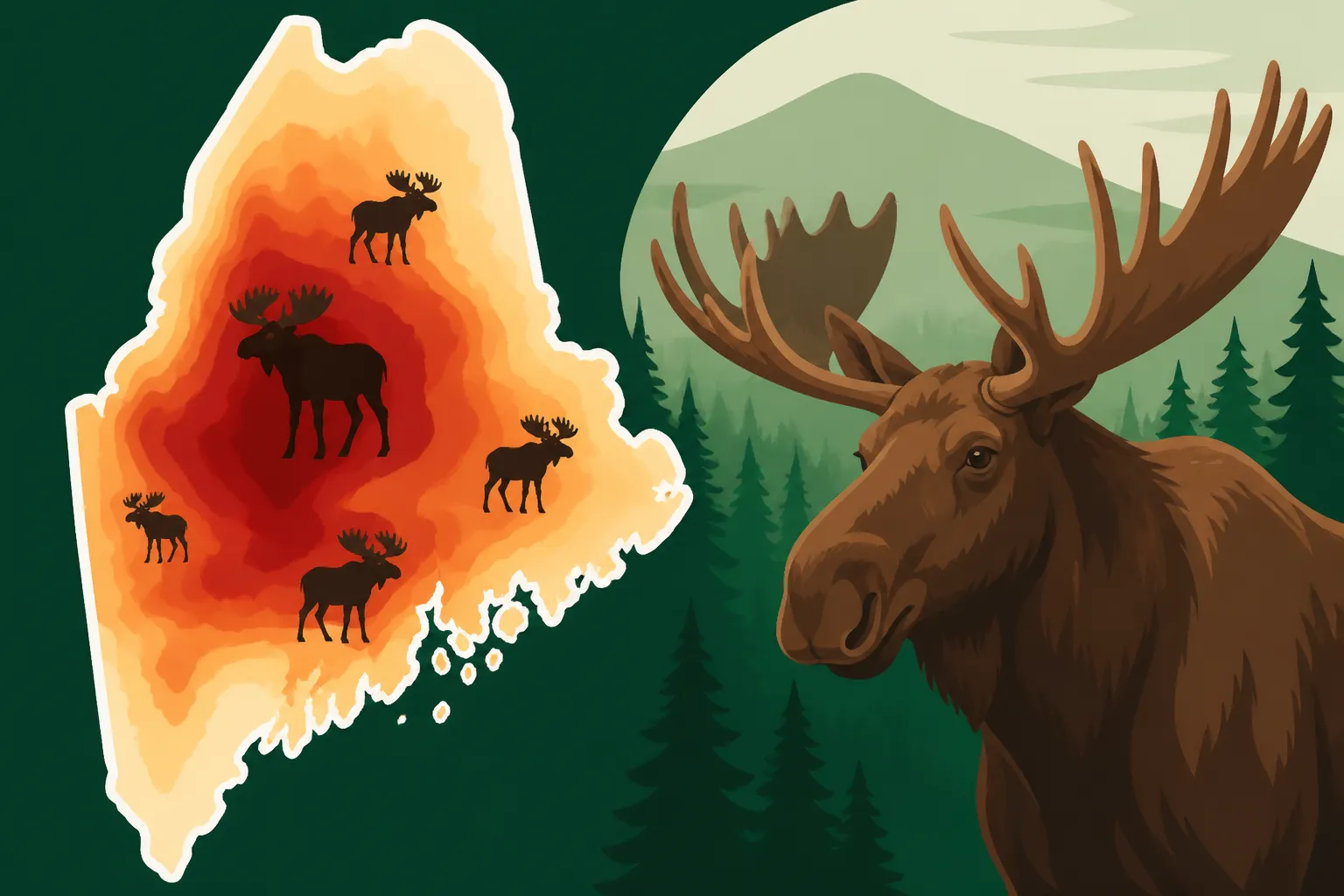
Historically and currently, the highest moose densities in Maine are found in the northern and western reaches of the state. This is where you find the expansive tracts of unbroken forest, the sprawling network of wetlands and logging clear-cuts that define prime moose country. These areas are characterized by vast wilderness, often miles from pavement or permanent human habitation.
Let's break down the general areas and some of the Wildlife Management Districts (WMDs) known for their higher concentrations:
| Region/WMD Type | Key Characteristics | Typical Moose Density |
|---|---|---|
| Northern Maine Woods (WMDs 1, 2, 3, 4, 5, 6) | Vast, remote industrial forest, extensive clear-cuts, numerous bogs & beaver flows, low human population. | Highest |
| Western Maine Mountains (WMDs 7, 8, 9) | Rugged topography, mix of hardwoods & softwoods, remote high-elevation basins, numerous lakes & ponds. | High |
| Downeast & Central (WMDs 10, 11, 18, 19, 28) | More fragmented but still significant timberlands, coastal boggy areas, transition zones. | Moderate to High |
| Southern Maine (Remaining WMDs) | Increasingly fragmented habitat, higher human population, limited large contiguous blocks of wilderness. | Lower |
WMDs 1, 2, 4, and 5, located deep in the famed North Maine Woods, consistently report some of the highest moose densities. These are the zones that often boast the best odds in the moose lottery and are where most hunters dream of drawing a tag. The sheer scale of the available habitat, combined with historic logging practices that have created an abundance of young browse, makes these areas a moose paradise.
When you're trying to visualize these zones, online mapping tools are your best friend. Services like GoHunt allow you to overlay different land types, identify wetlands, and zoom in on clear-cuts or regenerating timber stands. You can scout from your armchair before ever hitting the road, looking for those tell-tale patterns of mixed cover, water, and browse. This is invaluable when you're trying to figure out What a Drawn Moose Zone Assignment Means and plan your trip. Don't underestimate the power of these digital tools; they can save you countless hours of driving and on-the-ground scouting.
Factors Influencing Moose Distribution and Density
While historical habitat and remoteness are huge factors in Maine's moose distribution, several dynamic elements continuously shape where these magnificent animals choose to live and how many can thrive in a given area. Understanding these influences is key to predicting moose movements and densities, even within those traditionally high-density zones.
One of the most significant and heartbreaking factors impacting moose density, particularly in parts of Maine, is the proliferation of winter ticks. These tiny parasites can infest moose by the tens of thousands, literally sucking the life out of them over the long winter months. Calves are especially vulnerable, and biologists have noted direct correlations between high tick loads and declining calf survival rates in some areas. This is why you'll often hear discussions about Why Winter Ticks Are Killing Maine Moose Calves and the state's efforts to manage their impact. Higher tick burdens can lead to lower overall moose density in affected regions, even if the habitat looks ideal.
Logging practices also play a massive role. Modern forestry often involves clear-cutting, which, while sometimes controversial, actually creates a huge boom for moose. After a clear-cut, the forest floor is exposed to sunlight, and a riot of young, regenerating trees and shrubs sprouts up. This "salad bar" provides an incredible food source for moose for several years. Areas with a mosaic of different-aged clear-cuts and regenerating stands will almost always hold higher moose densities than unbroken, mature forest, which offers little browse within reach. This is a crucial element that contributes to the high numbers of moose found in the industrial forest lands of northern Maine.
Conversely, human disturbance can push moose out of otherwise suitable areas. While they can tolerate some level of logging activity, intense recreational use, heavy road traffic, or increasing residential development will cause moose to seek out more secluded havens. They are wild animals that prefer solitude. This is why the vast, sparsely populated regions tend to hold the most moose; there's simply less human pressure forcing them to move elsewhere. While Maine has an impressive Maine Moose Population Estimate, these animals are still sensitive to changes in their environment.
Lastly, predator populations, primarily coyotes and black bears, can influence calf survival rates, though they are rarely the sole driver of overall moose density. While a coyote might occasionally take a moose calf, it's not a primary factor in the broader distribution patterns across the state compared to habitat and tick loads. Deer densities in certain areas can also indirectly affect moose by impacting food availability through shared browsing, but this is less common given moose's specialized diet. Understanding these dynamics helps paint a more complete picture of How Many Moose Live in Maine and why they're found where they are.
Scouting and Strategies for High-Density Moose Areas
Knowing where the high-density moose zones are is just the first step; now you need to know how to effectively scout and hunt them. This isn't like deer hunting in a woodlot; you're dealing with vast tracts of land and an animal that can be incredibly elusive despite its size.
Your preparation starts long before you even step foot in the woods. Modern technology has revolutionized pre-season scouting. Using detailed topographic maps and satellite imagery (like those found in GoHunt, as we mentioned), you can identify key habitat features from the comfort of your home. Look for the confluence of young growth (often visible as lighter green patches or areas of distinct tree-size differences), wetlands, and mature timber. Identify potential travel corridors, pinch points, and areas where moose might feel secure. Rivers and streams, especially where they meander through mixed forest and wetland, are always worth a closer look. You can also research Applying for a Maine Moose Permit and specific WMD success rates to further refine your target areas.
Once you're on the ground, "boots on the ground" scouting is indispensable. You're looking for sign: large, elongated droppings, typically found in piles; rubbed trees, where bulls have scraped their antlers (often on small firs or alders); and moose trails, which are distinct, wide paths through the underbrush. Pay close attention to the edges of clear-cuts, around beaver ponds, and in dense softwood thickets. Moose will often feed heavily in the young growth and then retreat into thicker cover to rest and chew their cud. Look for tracks along muddy logging roads or near water sources. Remember, Packing for a North Woods Moose Hunt often means being prepared to cover a lot of ground in challenging terrain.
Another critical element, especially during the rut (typically late September into early October), is calling. Calling a Bull Moose in Late September can be incredibly effective in these high-density areas. Cow calls, grunts, and even antler rattling can bring a curious bull in, especially if you're in an area with a healthy population. The key is to be patient and to understand the specific calling sequences. Being able to hear a bull's response, even from a distance, helps confirm you're in an active area.
Finally, consider the option of a Registered Maine Guide. While many hunters successfully complete self-guided moose hunts, particularly residents, a guide can drastically increase your chances, especially if you're unfamiliar with the immense Maine wilderness. They know the terrain, the local moose movements, and often have private land access or extensive experience in public lands within the high-density WMDs. You can read more about Hiring a Registered Maine Guide to see if this is the right approach for you. Regardless of whether you go guided or self-guided, remember to have a solid plan for Field Dressing a Moose in the North Woods and Getting a Moose Out of the North Woods once you've successfully tagged out – it's a monumental task! For those considering the lottery, be sure to review the Maine Moose Lottery Application Process thoroughly. The journey is long, but the reward of a Maine moose is truly once-in-a-lifetime, especially if you focus your efforts where their populations thrive. You'll definitely want to understand everything that goes into Moose Hunting Maine's North Woods.
Disclaimer
This article is for general informational purposes only and does not constitute professional advice. Laws, prices and regulations vary by location and change over time. Consult a qualified professional for guidance on your specific situation.