Hunting Moosehead Lake Country
The Moosehead Lake region, with its sprawling forests, towering peaks, and intricate waterways, offers some of Maine's most challenging yet incredibly rewarding hunting experiences. For many, the sheer scale of this wilderness can be intimidating, leading to frustration and lost time trying to figure out where to even begin. This guide will walk you through the unique aspects of hunting this iconic central Maine landscape, helping you understand its terrain, its game, and the strategies needed to successfully navigate its vastness.
Unpacking the Moosehead Lake Wilderness Landscape
Hunting Moosehead Lake Country isn't like heading to a small woodlot behind your house; it's an immersion into true Maine wilderness. This region is defined by its massive lake, the largest in Maine, surrounded by an immense working forest, mountains like Mount Kineo, and countless smaller ponds, rivers, and streams. Understanding this mosaic is the first step to planning a successful hunt.
Forest Types and Topography
The dominant feature of Moosehead is its expansive, unbroken forest cover. You'll find a mix of mature hardwoods, particularly on the higher slopes and ridges, mixed with dense softwood stands of spruce and fir, especially in lower, wetter areas and within newer clear-cuts. This diversity creates varied habitat crucial for different game species.
The topography around Moosehead Lake is rugged in places, transitioning from rolling hills to steeper mountain slopes. Expect elevation changes, especially as you move away from the immediate lake shore. These changes often dictate deer movement, with bucks using ridge tops for travel and bedding, and lower, sheltered areas for wintering. Logging operations are continuous here, creating a constantly changing landscape of recent clear-cuts, young regrowth, and established logging roads. These cuts can be a hunter's best friend, offering new browse for deer and moose, but they also present challenging walking through thick, tangled saplings.
Waterways and Wetland Influence
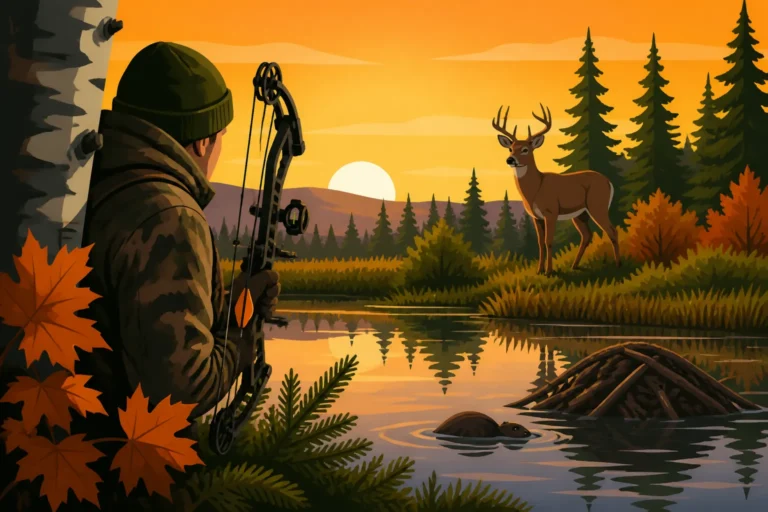
Beyond the lake itself, Moosehead Country is crisscrossed by an incredible network of rivers, streams, and beaver flowages. These waterways are far more than just aesthetic features; they are critical components of the ecosystem and heavily influence game movement and habitat. Beaver activity, in particular, creates diverse wetlands that are magnets for moose and provide important cover and food sources for deer.
Navigating this water-rich landscape means understanding how animals use these features. Deer and moose will often travel along stream beds, use beaver dam crossings as natural bridges, or bed down in the thick cover provided by a cedar swamp adjacent to a flowage. Hunters often find success by focusing on the edges of these wetlands, as animals frequently move in and out of them. These areas can also be extremely difficult to access and traverse, often requiring waders or careful planning to avoid getting bogged down.
Key Game Species in Moosehead Country
While the name might suggest otherwise, Moosehead Lake Country offers far more than just moose hunting. This region supports robust populations of several big game and upland species, each presenting its own unique challenge and reward. Knowing what you're targeting and where to find them is paramount.
Moose
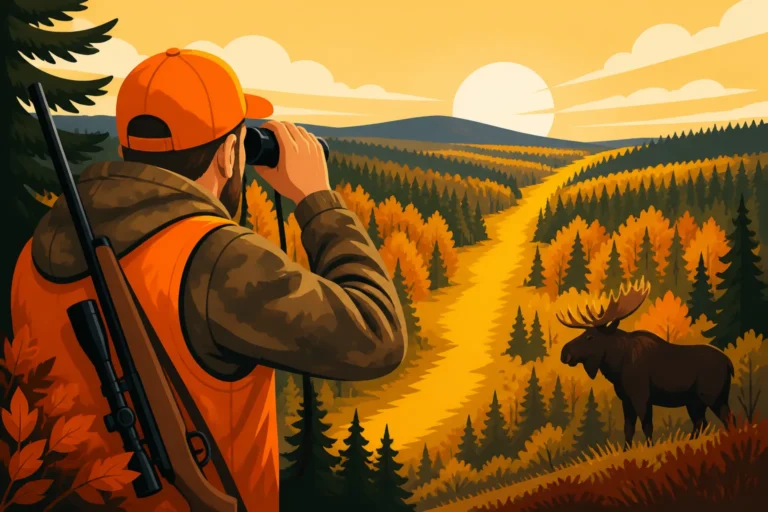
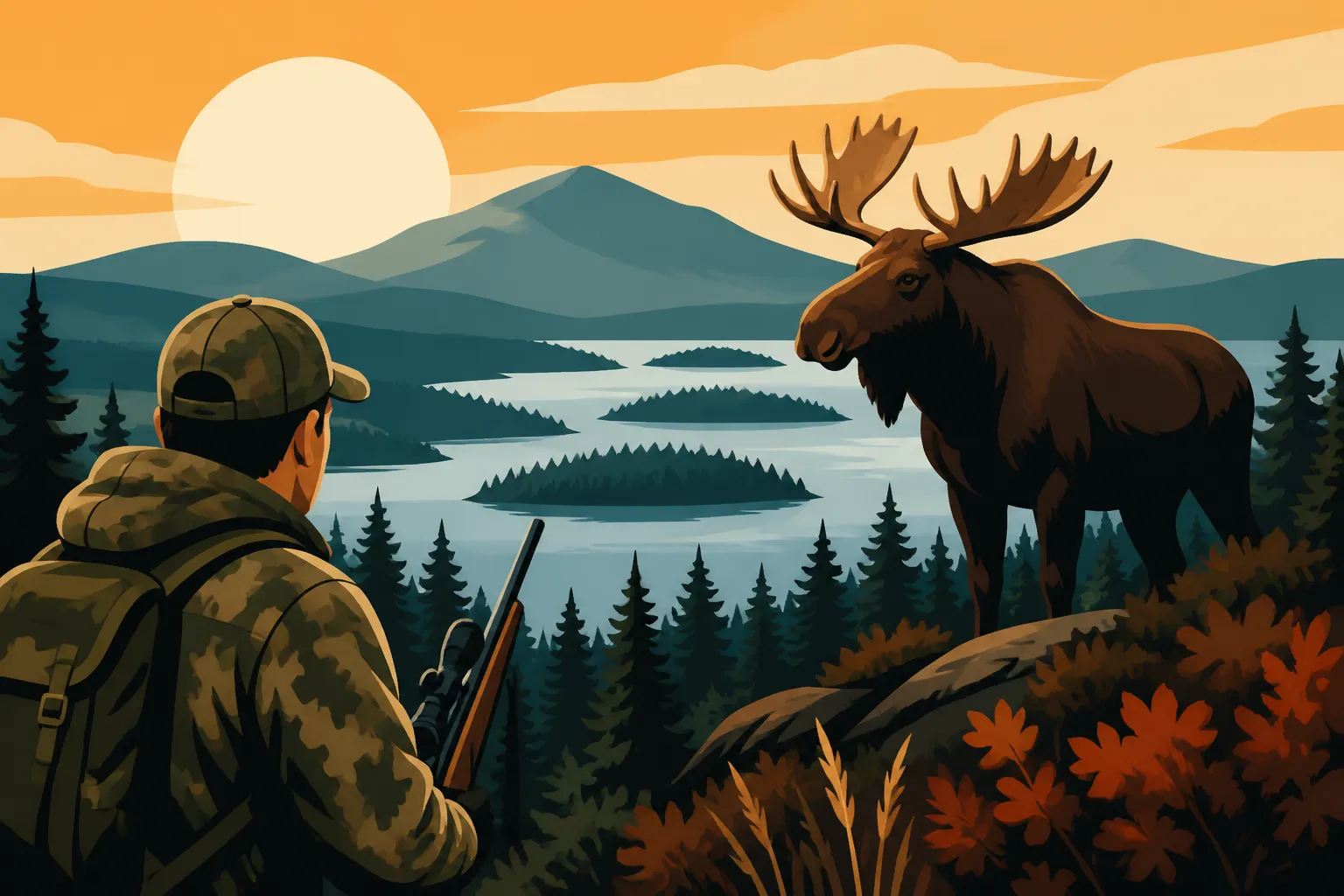
Unsurprisingly, moose are a major draw to this region. The vast tracts of working forest, with their regenerating clear-cuts providing abundant browse, make for prime moose habitat. Moose are often found in areas with young, regenerating timber, along the edges of beaver flowages, and in boggy lowlands where they can access aquatic vegetation. The sheer size of these animals means that a successful hunt isn't just about finding one, but also about the incredible logistical challenge of getting it out of the woods.
Hunting moose in Moosehead Country often involves a combination of calling, still-hunting, and patiently watching cuts and natural funnels. During the rut, the sound of a cow call echoing through the timber can be irresistible to a bull. For those lucky enough to draw a tag, preparation is key; having a plan for field dressing and extraction before you even set foot in the woods can save immense effort and heartache. Packing for a North Woods Moose Hunt is something you'll want to read up on.
White-Tailed Deer
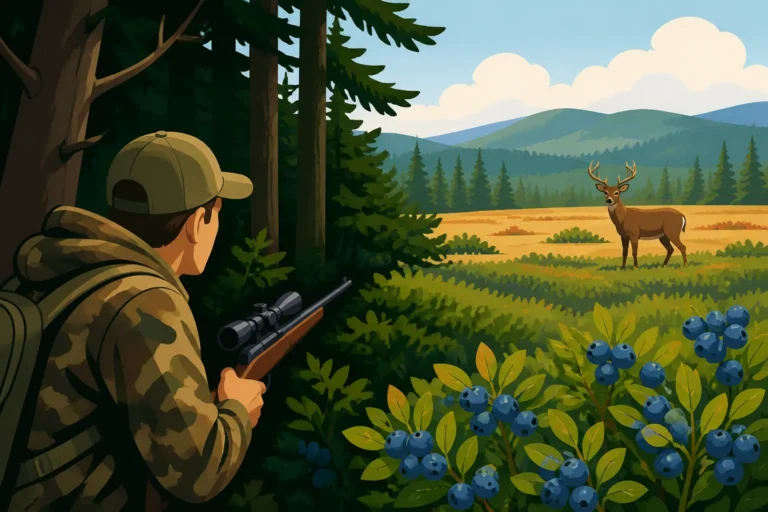
While often overshadowed by the moose, white-tailed deer are present throughout Moosehead Lake Country, though generally in lower densities than in southern Maine. These deer are often bigger-bodied and carry impressive antlers due to the colder climate and genetics. They are tough, resilient animals, accustomed to harsh winters and vast landscapes. Look for them in areas that offer a mix of cover and food: recent clear-cuts with plenty of browse, mature hardwood ridges for acorns (in good mast years), and thick conifer stands for wintering habitat.
Deer hunting here often involves extensive scouting, understanding buck movement patterns through vast timber, and recognizing subtle signs. Focus on travel corridors, pinch points between cover types, and areas with fresh rubs and scrapes. Where Maine Bucks Bed in Big Timber is a great resource for understanding their habits. The deer here are not accustomed to constant human pressure, so patience and quiet movement are often rewarded.
Black Bears
The Moosehead region is prime black bear country, boasting one of the healthiest bear populations in the state. Bears thrive in the thick, expansive forests, finding abundant food sources from berries and nuts to the plentiful regenerating browse in logging cuts. This makes Moosehead a popular destination for bear hunters.
Bear hunting methods often include baiting, hounding, or still-hunting. Baiting is a common and effective strategy, allowing hunters to pattern bears and assess their size. Hounding requires specialized knowledge and dogs, offering an exhilarating chase. Still-hunting or stalking through dense cover can also be productive, particularly in areas with natural food sources or near active logging operations. Remember, success often comes down to diligence and persistence. Baiting Black Bears Legally in Maine is a crucial topic to review if you're considering this method.
Upland Birds and Small Game
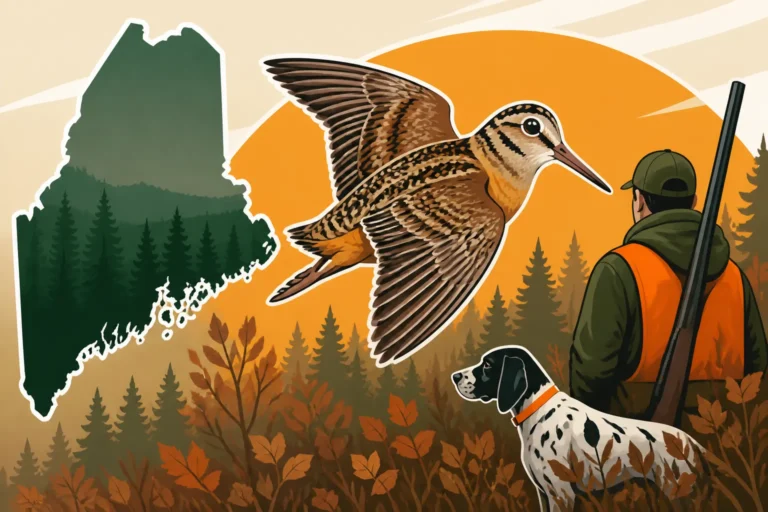
Don't overlook the incredible opportunities for upland bird and small game hunting in Moosehead Lake Country. Ruffed grouse thrive in the diverse timber stands, particularly along logging roads, clear-cut edges, and alder runs. Woodcock can be found in moist, young thickets and along stream bottoms, especially during their migration. Snowshoe hare are plentiful in dense conifer stands and regenerating clear-cuts.
These hunts offer a fantastic change of pace and an opportunity to explore the smaller, more intricate habitats of the region. A good bird dog can be invaluable for grouse and woodcock, helping to locate and flush birds in thick cover. For snowshoe hare, post-snowfall tracking can be an exciting way to pursue them. Always check the specific regulations for Upland Bird and Small Game Hunting in Maine before heading out.
Navigating Access and Land Ownership
One of the biggest hurdles for hunters heading to Moosehead Lake Country is understanding the complex mosaic of land ownership and access. Much of the land surrounding Moosehead is privately owned by large timber companies, but traditionally, most of it is open to public recreation under Maine's "implied permission" rule. However, navigating this vast, privately-owned working forest requires specific knowledge and tools.
The North Maine Woods System
A significant portion of the land north of Moosehead Lake falls under the purview of the North Maine Woods (NMW) gate system. This is a private, recreational management area that encompasses millions of acres of commercial forestland. While often open to hunters, specific gates and roads might require a day-use or multi-day fee for access. This system helps manage traffic, maintain roads, and prevent overuse of remote areas.
Understanding which gates provide access to your desired hunting areas, what the fees entail, and any specific rules for that region is absolutely critical. For example, some areas might have restrictions on camping, vehicle types, or even certain hunting activities. Always check the official NMW website or call their offices before planning your trip. Ignoring these rules can lead to fines or denial of access, ruining your hunt before it even begins. The North Maine Woods Gate System provides a deeper dive into this unique arrangement.
Private Timberland Access
Beyond the NMW system, vast amounts of private timberland owned by various companies surround Moosehead Lake. Maine has a long-standing tradition of implied permission for public access on unposted land, meaning you can generally hunt, fish, and recreate unless the land is explicitly posted with "No Trespassing" signs. However, "open" doesn't mean "unrestricted."
It's common for timber companies to temporarily close certain roads during mud season, active logging operations, or for fire safety. Always look for signage at road entrances. Having a reliable mapping application like onX Hunt is invaluable here. It allows you to see property boundaries, landowner names, and often, actively managed areas or recent timber cuts. This tool can literally be the difference between confidently hunting productive ground and unknowingly trespassing or stumbling into an active logging site. Always respect any posted land, and if in doubt, seek explicit permission. Maine's Private Land Access Tradition is worth reviewing for a full understanding.
Public Reserved Lands and Wildlife Management Areas
While less common than in other parts of Maine, there are also parcels of Public Reserved Land and a few Wildlife Management Areas (WMAs) scattered within or near the Moosehead region. These lands are managed by the state for various public uses, including hunting. Public Reserved Lands often offer excellent, unrestricted access, though they might be less intensively managed for specific game species than a WMA.
WMAs, on the other hand, are designed specifically for wildlife habitat and public recreation. They often have dedicated parking areas, trails, and sometimes even specific regulations or management initiatives. While they might be smaller in scope than vast timber company lands, they can be incredibly productive if you understand their management goals and target species. Always check the Maine Department of Inland Fisheries and Wildlife (MDIFW) website for specific regulations and maps of any Public Reserved Lands or WMAs you plan to visit.
Essential Gear and Planning for Moosehead Hunts
Hunting in Moosehead Lake Country is an expedition, not just a day trip. The remoteness, rugged terrain, and unpredictable weather demand thorough preparation and the right gear. Skimping on essentials here can turn an exciting adventure into a dangerous situation quickly.
Navigation and Communication
In such a vast and often remote area, reliable navigation and communication are paramount. Cell service is notoriously spotty or non-existent once you leave the main towns or paved roads. A GPS unit with pre-loaded maps or a smartphone app like onX Hunt loaded with offline maps is absolutely non-negotiable. Don't rely solely on your phone; always carry a physical map and compass as a backup, and know how to use them. Mark your truck, key turns, and any significant landmarks.
For communication, a satellite communication device (like a satellite messenger) is a smart investment, allowing you to send messages or an SOS even without cell service. A two-way radio might also be useful for communicating with hunting partners in close proximity, but understand its limitations in heavily forested or mountainous terrain. Always tell someone exactly where you're going and when you expect to return. This simple step could be a lifesaver.
Clothing, Footwear, and Shelter
Layering is key for Moosehead's unpredictable weather, which can swing from frosty mornings to mild afternoons, often with rain or even snow mixed in, especially during fall. Prioritize moisture-wicking base layers, insulating mid-layers, and a waterproof/windproof outer shell. Blaze orange is mandatory during firearms seasons, and you'll want plenty of it. How Much Blaze Orange Maine Requires should be top of your reading list.
Your footwear must be up to the task: sturdy, waterproof boots with good ankle support are essential for navigating uneven, wet, and often muddy terrain. Consider bringing spare socks. If planning multi-day hunts or even just extended day trips deep into the woods, having emergency shelter like a lightweight tarp or bivy sack, along with a fire-starting kit, can provide crucial protection if you get stuck out longer than planned.
Food, Water, and Emergency Supplies
Staying fueled and hydrated is critical for maintaining energy and focus during strenuous hunts. Carry more water than you think you'll need, or a reliable water filter/purifier if you plan to access natural water sources. Pack high-energy, non-perishable food that's easy to eat on the go.
Beyond basic first aid, your emergency kit should include items specific to a remote wilderness setting: a headlamp with extra batteries, an emergency whistle, signaling mirror, knife, cordage, and robust fire starters. It's also wise to carry a small repair kit for gear, extra game bags, and a substantial pack for hauling out meat if successful.
Strategies for Success in Moosehead's Big Woods
Hunting the vastness of Moosehead Lake Country demands a different approach than smaller, more fragmented habitats. Success often boils down to patience, perseverance, and a willingness to embrace the challenges of the big woods.
Scouting and Pre-Season Prep
Given the scale of the region, effective scouting is more about strategic analysis than walking every acre. Utilize aerial maps and topographic data to identify potential hotspots long before you arrive. onX Hunt is an incredible tool for this, allowing you to mark potential travel corridors, funnels, clear-cuts, and water sources from your couch. Look for areas where different habitat types converge, or where topography creates natural pinch points. Reading Aerial Photos for North Woods Deer can offer significant advantages.
Once on the ground, focus on finding fresh sign: tracks, droppings, rubs, and scrapes. Pay attention to food sources. What's the mast crop like this year? Are the berries ripe? Is there fresh browse in clear-cuts? Animals will always gravitate towards food and cover. Don't be afraid to walk, and walk a lot, to understand the lay of the land.
Still-Hunting and Stand Placement
Still-hunting is a highly effective method in Moosehead's big woods. It involves moving slowly and deliberately, stopping frequently to observe and listen. This allows you to cover ground while remaining aware of your surroundings, increasing your chances of spotting game before it spots you. Pay close attention to wind direction and thermals, which can be tricky in mountainous terrain. Move into the wind whenever possible, and use topography to your advantage, such as moving quietly along ridge lines or parallel to stream beds.
Stand placement, whether a portable treestand or a ground blind, requires careful thought. Unlike smaller woodlots where a well-used trail might suffice, in Moosehead, you're often looking for more subtle signs of consistent movement. Focus on funnels created by terrain features, edges of clear-cuts, or natural crossings over waterways. Consider longer sits in strategic locations, as deer and moose might travel long distances between feeding and bedding areas. Using a Ground Blind on Posted-Free Land can be a great tactic for concealed sits.
Understanding Game Behavior in Large Tracts
Animals in Moosehead Lake Country generally behave differently than those in more populated areas. They are often less pressured and can be less wary, but they also have immense areas to roam, making them harder to pattern precisely. Moose will move to find new browse in regenerating cuts or seek out aquatic vegetation in bogs. Deer will travel significant distances along ridges or through thick timber, especially during the rut. Hunting the Rut in Early November is prime time for this kind of movement.
Coyotes are also prevalent, so understanding predator-prey dynamics can offer insight. Fresh sign of coyote activity might indicate areas deer are avoiding, or conversely, areas where deer are more likely to be on high alert. Knowing how each species utilizes the vast landscape and responds to hunting pressure, or lack thereof, is key to developing effective strategies.
Considerations for Hiring a Guide or Outfitter
For many, the sheer scale and remoteness of Moosehead Lake Country make the idea of going it alone quite daunting. This is where a Registered Maine Guide or an established outfitter can be an invaluable asset, especially for first-timers or those seeking specific big game like moose or bear.
Benefits of a Guided Hunt
Hiring a Registered Maine Guide offers numerous advantages. These individuals possess an intimate knowledge of the local terrain, game movements, and access points that can take years to acquire on your own. They can navigate the complexities of timber company land, understand the nuances of the North Maine Woods system, and know precisely where different game species are likely to be found based on current conditions.
A guide can also provide crucial logistical support, from transportation into remote areas to assistance with field dressing and game extraction, which is especially critical for large animals like moose. They often have established camps or relationships with local sporting camps, taking the guesswork out of accommodations. For specific, high-demand hunts like moose, a guide can significantly increase your odds of success and provide an unparalleled learning experience. Hiring a Registered Maine Guide can shed more light on their qualifications.
Vetting Guides and Outfitters
Not all guides or outfitters are created equal, so due diligence is essential. Start by researching guides who specialize in the Moosehead Lake region and the specific game you intend to pursue. Look for references, read reviews, and don't hesitate to call and ask detailed questions about their experience, their typical hunting areas, and what's included in their packages.
Confirm that they are properly licensed by the state of Maine. Discuss success rates, but understand that "success" can mean different things – a guide might have a high success rate on bear baiting but a lower one on spot-and-stalk deer. Be clear about your expectations and budget. A good guide will be transparent about what they offer and what challenges you might face. Booking well in advance is often necessary, especially for prime moose or bear seasons, as the best guides fill their schedules quickly. Vetting a Maine Hunting Outfitter provides a comprehensive list of questions to ask.
Self-Guided vs. Outfitted Experience
Deciding between a self-guided hunt and an outfitted experience largely depends on your comfort level with wilderness navigation, your experience hunting in similar vast landscapes, and your specific goals. A self-guided hunt offers maximum independence and can be more cost-effective, but demands significant pre-trip research, robust navigation skills, and the ability to handle all logistical challenges. It's often suited for experienced hunters comfortable with remote wilderness.
An outfitted hunt provides peace of mind and significantly increases convenience and potential success, particularly for challenging species or if you have limited time. While more expensive, it removes much of the logistical burden, allowing you to focus purely on the hunt. For many, especially non-residents or those new to Maine's big woods, the investment in a quality guide is well worth it for the knowledge, experience, and increased chance of a successful and safe trip.
Here's a comparison of typical Moosehead hunting scenarios:
| Hunting Scenario | Species Targeted | Typical Terrain & Habitat | Key Challenges | Benefits of a Guide |
|---|---|---|---|---|
| Moose Lottery Hunt | Moose | Regenerating clear-cuts, bogs, logging roads | Huge animal extraction, vast range, finding a bull | Expert calling, extraction logistics, local knowledge |
| Deer Rifle Season | White-tailed Deer | Hardwood ridges, conifer swamps, cut-over areas | Low deer density, expansive timber, cold weather | Finding deer wintering areas, identifying subtle sign |
| Bear Bait Hunt | Black Bear | Thick forest, berry patches, logging areas | Bait maintenance, bear patterning, accurate shot | Established bait sites, bear behavior insights, safety |
| Grouse & Woodcock Hunt | Ruffed Grouse, Woodcock | Alder runs, logging roads, young aspens | Dense cover, fast-flying birds, finding good coverts | Knowledge of productive coverts, dog handling, access |
Disclaimer
This article is for general informational purposes only and does not constitute professional advice. Laws, prices and regulations vary by location and change over time. Consult a qualified professional for guidance on your specific situation.