Do You Need Written Permission in Maine?
Navigating the rules of hunting on private land in Maine can feel like deciphering an ancient map, especially if you're used to states with stricter permission requirements. Many hunters find themselves scratching their heads, wondering if that handshake deal is truly enough or if they need a signed document just to step foot in the woods. This guide aims to clear up all that confusion, outlining exactly when written permission is needed in Maine, when it's just a good idea, and how to best approach landowners.
The Maine Tradition of Implied Permission
Maine has a long-standing, somewhat unique tradition when it comes to accessing private land for recreational purposes, including hunting. It’s a custom rooted in respect and a historical understanding between landowners and outdoor enthusiasts, but it's crucial to understand its boundaries.
Understanding Maine's Unique Approach
For generations, Maine has operated on what's often referred to as a system of "implied permission." What this means, simply put, is that much of the private land in our beautiful state is open for recreational use, including hunting, unless it has been explicitly posted against such activity. This is a huge benefit for hunters, offering vast tracts of forest and field to explore that might be off-limits in other parts of the country. However, it’s also a point of considerable confusion, particularly for those new to Maine or hailing from states with "permission required" defaults. You might wonder, "So, I can just walk onto any unposted land?" In essence, yes, for most recreational activities. But this isn't a free pass, and it comes with immense responsibility to treat that land as if it were your own, if not better. The unwritten rule is that if you wouldn't do it on your own property, don't do it on someone else's.
This tradition underscores the importance of a respectful relationship between hunters and landowners. It’s a privilege, not an inherent right, and maintaining it relies heavily on the ethical behavior of everyone who steps into the woods. If we abuse this trust, this access can quickly disappear. The Maine Landowner Relations Program is a testament to the state's efforts to foster positive interactions and ensure this access continues.
The Importance of Knowing the Law
While the implied permission tradition is generous, it's not without its legal limits and crucial exceptions. The most fundamental rule is that land is open unless posted. But what does "posted" actually mean, and what other situations mandate a different approach? Firstly, "posted" in Maine requires specific signage or markings: signs must clearly prohibit entry and be placed not more than 100 feet apart, or the property boundaries must be marked with bright, distinct paint. If you see signs like "No Trespassing," "Private Property," or "No Hunting," or clearly painted boundaries, that land is legally posted, and your implied permission vanishes.
Beyond posted land, there are other situations where implied permission doesn't apply, or where extra caution is warranted. You generally cannot hunt within 100 yards of a residential dwelling, regardless of whether the land is posted. This is a common-sense safety measure. Additionally, specific types of land, like cultivated fields or those with commercial crops, often have different rules. While you might be able to retrieve game from a cultivated field, hunting in it might require explicit permission. It's vital to understand Maine Trespass and Permission Law thoroughly. While the general assumption is access, ignorance of the specific posting requirements or proximity rules won't protect you from legal consequences if you inadvertently trespass. Always know what you're stepping onto.
When Written Permission is Absolutely Required
While Maine's implied permission can feel wonderfully freeing, there are definite lines in the sand, and crossing them without proper authorization can lead to serious trouble. These are the scenarios where hoping for the best simply isn't an option.
Posted Land is Off-Limits Without Permission
This is the most straightforward rule, and there’s no getting around it: if land is legally posted, you must have permission from the landowner to be there for any recreational activity, including hunting. Period. As we discussed, "posted" means specific signs or markings are present, indicating that the landowner has explicitly revoked the general implied permission that otherwise exists. Ignoring these signs isn't just a minor infraction; it's a direct violation of the landowner's rights and Maine law. The consequences for hunting on posted land without permission can range from fines to confiscation of equipment, and in some cases, even loss of hunting privileges. It's a risk simply not worth taking.
When you see those bright orange or purple paint marks, or signs clearly stating "No Trespassing" or "Private Property – No Hunting," those are your clear signals. Don’t try to rationalize it or hope no one will notice. The landowner has made their wishes known, and respectful hunters abide by them. This is where a little upfront legwork can save you a lot of headache. Understanding What Posted Land Means in Maine is essential for every hunter. If you know the boundaries, you can ensure you stay on the right side of the law and maintain the positive image of hunters in the community.
Specific Scenarios and Land Types
Beyond clearly posted boundaries, there are other situations where common sense, safety, or specific legal stipulations necessitate explicit permission, even if the land itself doesn't appear "posted" in the traditional sense. Imagine you're eyeing a prime whitetail buck moving through a small woodlot directly adjacent to someone's backyard. While that woodlot might not have orange paint everywhere, hunting within 100 yards of a dwelling is generally prohibited without express permission from the owner of that dwelling. It's a safety zone, designed to protect homes and families. A quick knock on the door, explaining your intentions and asking for permission, can often resolve this.
Cultivated fields, such as those growing corn, hay, or blueberries, are another nuanced area. While many landowners tolerate retrieval of a downed animal, actively hunting in a productive field without permission is generally frowned upon and can be legally problematic. These are often commercial operations, and hunters can cause damage or disrupt farming activities. Likewise, certain commercial or industrial properties, even if vast and seemingly wild, might have internal policies that restrict hunting. Knowing who owns the land and what their preferences are is key.
This is where modern technology really shines. Tools like the onX Hunt app or GoHunt can be invaluable. These platforms allow you to overlay property ownership information onto maps, showing you precisely whose land you're on or looking to hunt. You can often see property lines, landowner names, and sometimes even contact information. This not only helps you avoid accidentally trespassing but also empowers you to proactively seek permission from the right person. If you're Finding Maine Property Lines with an app, you're halfway to having a responsible conversation with the landowner. It’s about being proactive and respectful, rather than just assuming.
The Smart Approach: Seeking Permission, Written or Otherwise
So, we’ve covered when you absolutely need permission. But what about all those unposted acres where implied permission reigns? Even then, the smartest, most ethical, and ultimately most successful approach is almost always to seek permission. It builds relationships and opens doors, sometimes quite literally.
Building Trust with Landowners
Maine’s tradition of implied permission is a gift, but it’s a fragile one. Every time a hunter abuses it, ignores posted signs, or leaves a mess, that gift is jeopardized. The best way to protect and expand hunting access is to actively build trust with landowners. Even if the law says you don't have to ask on unposted land, doing so shows respect, courtesy, and a genuine appreciation for their private property. Imagine being a landowner, seeing a hunter walking your back forty. If they’ve taken the time to introduce themselves, shake your hand, and ask if it’s okay, you're far more likely to feel comfortable.
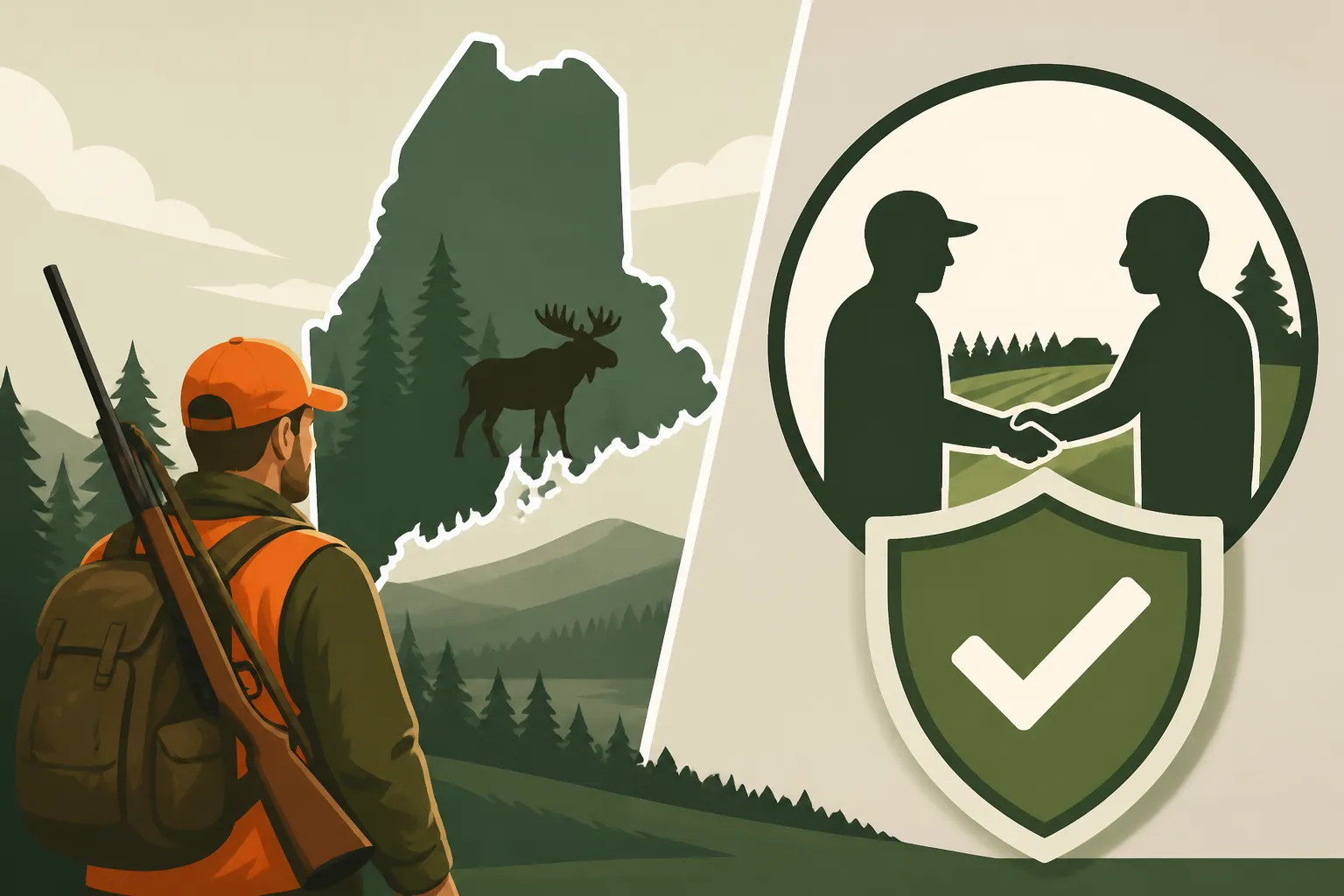
When you approach a landowner, be polite, well-groomed, and concise. Introduce yourself, explain why you'd like to hunt their land (e.g., "I've noticed some deer sign along your back field," or "I'm looking for a place to chase grouse"), and assure them you will respect their property. Offer to share some of your harvest, if successful. Reassure them you'll close gates, pick up any trash (even if it's not yours!), and report anything suspicious you see. A verbal agreement, sealed with a handshake, often holds immense weight in Maine and can be the start of a long-term relationship. Landowners often appreciate knowing who is on their land and why. Asking a Maine Landowner for Permission effectively is a skill every responsible hunter should cultivate.
The Benefits of Written Permission
While a friendly conversation and a handshake are often the norm in Maine for unposted lands, there are undeniable advantages to obtaining written permission, even when not strictly required by law. Think of it as an insurance policy for both you and the landowner. For the hunter, written permission provides undeniable proof that you have the right to be there, should any questions arise from other hunters, curious neighbors, or law enforcement. It eliminates any ambiguity. For the landowner, it can clearly define the scope of permission – what species can be hunted, what dates, where on the property, and any specific rules (e.g., no vehicles, specific entry points).
A simple written note can specify the hunter's name, the dates of permission, the specific parcel of land, and the landowner's signature and contact information. This might seem like overkill for a small woodlot, but for larger parcels or if you're Hanging a Stand on a Private Land Field Edge, having those details in writing can prevent misunderstandings. It's especially useful if you're hunting in an area where others might also be seeking access.
Again, leveraging technology can streamline this. If you've used GoHunt or onX Hunt to identify the landowner, you might be able to print out a map of their property directly from the app, and then use that map to delineate the specific area of permission on a written document. This kind of clear communication builds trust and professionalism, benefiting everyone involved and reinforcing Maine’s cherished tradition of land access. Remember, getting Retrieving Game From Private Land in Maine is also easier if you have already established a relationship with the landowner.
Navigating Permission in Different Maine Regions
Maine is a vast state, and the landscape, population density, and land ownership patterns vary dramatically from the densely forested north to the more populated southern counties and coastal areas. This diversity impacts how you might approach securing hunting permission.
Farmland, Woodlots, and Suburban Edges
In the more agricultural regions, particularly in parts of Aroostook County or central Maine, you'll encounter a patchwork of active farmland interspersed with small woodlots, hedgerows, and river bottoms. Here, landowners are often farmers, and their primary concern is the integrity of their crops, livestock, and property. While deer might be abundant on the edges of potato fields or in overgrown apple orchards, access can be more localized and sensitive.
When seeking permission in these areas, focus on respect for their livelihood. If you're hoping to hunt a field edge or a specific woodlot, always ask the farmer directly. Be prepared to discuss how you'll access the land without disturbing crops, what times you might be there, and how you’ll ensure gates are closed. A simple conversation can often grant you access to excellent hunting spots. However, be aware that landowners might be more cautious if they've had bad experiences with other hunters in the past. Your demeanor and professionalism are your best assets here. Hunting Aroostook County Farmland offers unique opportunities, but always requires a direct conversation. Similarly, if you are looking for deer in areas with more fragmented land, understanding how to approach Hunting Small Private Tracts in Maine is essential.
Industrial Timberlands and Lease Agreements
Shifting gears entirely, head north into what's known as the North Maine Woods, or other large industrial timberland holdings. This vast expanse of forest is primarily owned by timber companies, private land trusts, and large private landowners. While historically very open to public access, much of this land is managed actively for forestry, and access is often controlled. You'll find a system of gates and checkpoints, especially through the North Maine Woods Gate System, where day-use or multi-day fees might be required.
For these lands, "permission" often comes in the form of abiding by the rules set forth by the land management companies or associations, which can include paying access fees, adhering to road closure schedules, and respecting specific harvest areas. Written permission directly from an individual landowner isn't typically sought in the same way as it would be for a small private parcel. Instead, your "permission" is granted through compliance with their access policies. Some of these large landowners also lease hunting rights to outfitters or hunting clubs, in which case individual access might be restricted in those specific leased zones. Understanding the specific rules for a Hunting a North Maine Woods Checkpoint Tract or navigating areas with Maine Hunting Lease Costs is paramount. Always check current regulations and access policies for these extensive land holdings before planning your hunt.
Ultimately, while Maine's "implied permission" tradition offers an incredible amount of hunting opportunity, the most responsible and effective way to ensure long-term access and foster positive relationships is to always assume permission is required and proactively seek it. Whether it's a handshake or a formal written agreement, the effort will always pay off.
| Scenario | Is Written Permission Legally Required? | Best Practice for Hunters |
|---|---|---|
| Unposted Land (General Recreation) | No (Implied Permission) | Ask for verbal permission. Builds trust. |
| Legally Posted Land | Yes (Explicitly Required) | Obtain specific written permission from the landowner. |
| Within 100 Yards of a Dwelling | Yes (Explicitly Required) | Obtain explicit permission from the dwelling owner. |
| Cultivated Fields/Commercial Crops | Varies (Often explicit) | Always ask for permission, especially for active hunting. |
| Retrieving Game from Posted Land | Yes (Explicitly Required) | Obtain permission before entering, or contact local authorities for assistance. |
| Industrial Timberlands (Gated/Managed) | No (Access Fees/Rules Apply) | Follow published access rules, pay fees, respect closures. |
| Using a Tree Stand on Private Land | No (Implied on unposted) | Always ask for permission (written preferred) to avoid misunderstanding or damage. |
Disclaimer
This article is for general informational purposes only and does not constitute professional advice. Laws, prices and regulations vary by location and change over time. Consult a qualified professional for guidance on your specific situation.