Hunting Between Two Logging Cuts
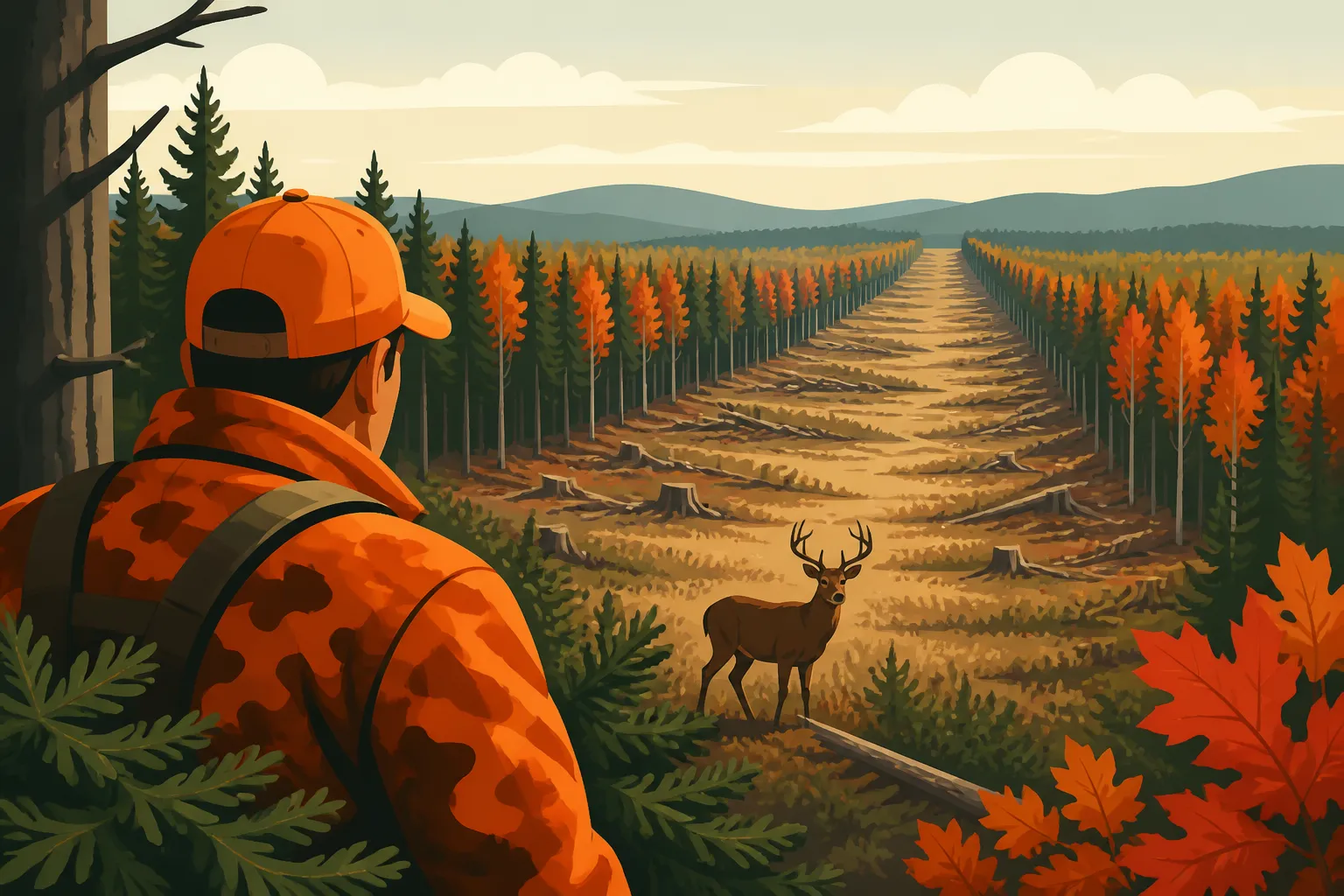
There's a specific kind of frustration many Maine deer hunters know all too well: you're walking through what looks like perfect timber, only to realize the deer sign is sparse, or you spend hours in a clear-cut that feels devoid of life. What often gets overlooked is the hidden gem that lies between these landscape features – the untouched or lightly timbered corridors separating two distinct logging cuts. These aren't just transition zones; they're often sanctuaries, travel lanes, and feeding grounds all rolled into one, and learning to find and hunt them can completely change your season.
Understanding the "Sweet Spot" Between Logging Cuts
Logging, while sometimes jarring to the landscape initially, actually creates incredible deer habitat over time. The problem is, many hunters focus solely on the clear-cuts themselves, or the mature timber that’s left behind. The real magic, though, often happens in those overlooked strips or islands of cover that exist between two different cutting operations. These aren't random; deer use them for very specific reasons that savvy hunters can exploit.
Why Deer Gravitate to These Corridors
Think about it from a deer's perspective. A fresh logging cut provides a sudden flush of new growth – tender shoots, browse, and eventually, thick regenerating cover that offers food and bedding. But walking out into a wide-open cut, especially a recent one, can feel exposed and vulnerable. Conversely, mature timber, while offering cover, often lacks the abundant food sources that deer need, particularly during lean times or late season.
The strip of timber between two cuts provides a unique blend of these elements. It's often dense enough to offer thermal cover from the harsh Maine winds and visual concealment from predators. It acts as a natural "safe zone" or funnel, allowing deer to move securely between different feeding and bedding areas without feeling completely exposed. They can browse the edges of one cut, slip into the timber for security, and then emerge on the other side to access another food source. It's like a deer superhighway with plenty of rest stops and snack bars. This kind of nuanced cover provides exactly what a whitetail needs: food, cover, and security.
How Different Cuts Create Unique Opportunities
Not all logging cuts are created equal, and neither are the spaces between them. A clear-cut next to a mature stand of softwoods offers a different dynamic than two partial cuts with differing levels of regeneration.
- Mature Timber Strip Between Two Recent Clear-Cuts: This is often a prime scenario. The mature timber provides excellent bedding and escape cover. Deer will use it as a sanctuary during the day, browsing along its edges, especially where it meets the regenerating growth of the clear-cuts. This setup creates distinct travel patterns as deer move from bedding within the strip to feeding in the surrounding cuts, often at dawn and dusk.
- Partial Harvest (Shelterwood/Selection) Between a Clear-Cut and Old Growth: Here, the partial harvest offers a mix of residual cover and new browse. The strip between this and a clear-cut becomes a more complex network of trails. Deer might bed in the old growth, move through the partial harvest for a quick bite, and then into the clear-cut for more extensive feeding. The partial cut itself, acting as the "between" zone, can be a fantastic place for deer to loaf and move throughout the day, especially if the canopy allows for some sunlight penetration to encourage undergrowth.
- Narrow Strips Along Waterways or Roads: Sometimes, logging operations leave narrow strips of timber along rivers, streams, or even old logging roads. When these strips separate two larger cut areas, they become critical travel corridors. Deer will instinctively stick to the linear cover, using it to navigate the landscape. These can be incredible pinch points, especially during the rut when bucks are cruising.
Understanding these subtle differences in habitat created by various logging practices is key to predicting deer movement. You're not just looking for "woods between cuts"; you're looking for the specific type of woods and how it relates to the food and security offered by the adjacent areas. This is where Reading Aerial Photos for North Woods Deer really comes into play.
Scouting and Identifying Key Areas
Finding these hidden corridors requires more than just driving by on a logging road. It demands a combination of digital reconnaissance, boots-on-the-ground effort, and understanding how deer interpret the landscape.
Digital Reconnaissance: Your First Step
Before you even tie on your boots, spend time with a good mapping app. Tools like onX Hunt or GoHunt are invaluable for this. Zoom in on areas with recent logging activity. Look for:
- Distinct Edges: Identify clear-cuts or other harvest areas that show up as different colors or textures on satellite imagery.
- Linear Features: See if there are distinct lines or fingers of unharvested timber separating these cut blocks. Sometimes it’s a property line, a natural drainage, or an unmarketable stand of timber.
- Topographical Features: Contours are your friend. A small ridge, a dip, or a bench that runs between two cuts can be a natural travel route. Deer often prefer to walk along contours rather than directly up or down steep slopes.
- Water Sources: Even a small stream or wet bog between cuts can be a magnet, providing water and unique vegetation.
Pay close attention to changes over time, too. If the satellite imagery is a few years old, that fresh clear-cut might now be dense regeneration, but the corridors between older cuts often remain valuable. Think about where deer might bed and where they might feed, and how they would move between those points under the protection of cover. Your map research will give you educated guesses about where to focus your ground scouting.
Boots on the Ground: Confirming the Sign
Once you've identified potential corridors on your map, it's time to hit the woods. This is where you confirm your theories and find the hard evidence of deer use.
- Entry and Exit Points: Look for primary trails leading into and out of these strips of timber from the surrounding cuts or other habitat. These will often be well-worn paths, especially in soft ground or snow.
- Rub Lines and Scrapes: Bucks use these corridors heavily, not just for travel but for communication. Look for rub lines along the edges of the timber or deeper within. Scrapes are often found at bottlenecks or where multiple trails converge. Scrape Lines Along a Logging Road gives a good overview of what to look for.
- Bedding Areas: Within the timber strip itself, search for areas with dense cover, often on a slight rise for good visibility, or against a thick cluster of conifers. Beds might be subtle depressions in the leaves or pine needles.
- Browsing and Droppings: Check the edges of the timber strip where new growth from the cuts is accessible, or look for preferred browse within the strip itself. Fresh droppings are a sure sign of recent activity.
- Funnels and Pinch Points: Identify where the corridor narrows or where topography forces deer into a tighter travel lane. These are prime locations for setting up. This is closely related to Hunting a Funnel Between Two Woodlots.
Remember, deer are creatures of habit. If they're using a particular corridor, the sign will be there. Don't just walk through; actively look for every clue.
| Scouting Sign | What it Tells You | Ideal Location | Best Time to Scout |
|---|---|---|---|
| Well-worn Trails | Consistent travel routes, high deer traffic | Leading into/out of cuts, along ridge lines | Pre-season, during light snow |
| Fresh Rubs | Buck activity, often associated with rut movement | Edges of timber, along main trails | Late summer through fall |
| Active Scrapes | Buck communication, seeking does | Trail intersections, under low-hanging branches | Early to mid-fall |
| Bedding Areas | Deer resting spots, often near good escape cover | Thick evergreens, high points for visibility | Mid-day, after a fresh snow |
| Fresh Droppings | Recent presence, feeding habits | Feeding areas, transition zones | Anytime, look for moisture/color |
| Preferred Browse | Food sources being utilized by deer | Edges of cuts, within timber gaps | Spring/Summer for identification |
Tactics for Hunting the Logging Cut Corridor
Once you've done your scouting, it's time to develop a hunting strategy. These corridors require careful planning, considering wind, deer behavior, and your chosen hunting method.
Stand Placement for Success
When hunting these corridors, your stand placement is paramount. You need to be where the deer are, but also where you're concealed and have the wind in your favor.
- Intersections and Funnels: Look for spots where two or more trails converge within the corridor, or where the timber strip naturally narrows. These are classic ambush points. Place your stand slightly downwind of these spots, offering a clear shot.
- Edge of Cover: Often, the best stand locations are actually just inside the dense cover of the timber strip, overlooking the edge where deer will step out into the younger growth of the cut. This allows you to catch deer as they transition from cover to feed.
- Topographical Advantages: If there's a slight rise or bench within the corridor, consider placing your stand there. Deer often travel along these features, and a higher vantage point gives you a better view.
- Prevailing Winds: This is crucial in Maine. Always, always consider the prevailing wind. You want your scent to blow away from where you expect deer to approach. If the wind shifts often, you might need multiple stand locations or be prepared to still-hunt. Understanding Wind and Thermals in Maine Hill Country is key here, as even subtle elevation changes can dictate air movement.
- Concealment: Use the natural structure of the timber to break up your silhouette. A big pine, a cluster of spruce, or a mature hardwood with thick branches can provide excellent cover. Make sure your entry and exit routes to the stand are quiet and don't spook deer.
Still-Hunting and Driving Strategies
While a stand can be effective, the dynamic nature of logging cuts and the corridors between them also lend themselves well to active hunting methods.
- Still-Hunting the Corridor Edges: This is a fantastic tactic for these areas, especially if you have a good understanding of deer movement patterns. Slowly and quietly move along the inside edge of the timber strip, peeking into the regenerating cut. Deer often feel secure just inside the thicker cover but will be browsing the accessible growth along the edge. Move into the wind, taking one step at a time, pausing to scan and listen for several minutes. Use binoculars to pick apart the dense cover. This method is highly effective for catching a deer that's bedded down or casually feeding. Still-Hunting Aroostook County Farmland shares principles that can be adapted here, focusing on edges and transitions.
- Small Drives: If you're hunting with a partner or a small group, these corridors are perfect for mini-drives. One or two hunters can slowly push through the timber strip, while others post at natural exit points or funnels. The goal isn't to run deer out, but to gently nudge them along their natural travel routes toward the posted hunters. Communication is key, and understanding the escape routes of deer in the area will make these drives much more productive. Consider the approach in Deer Drives With Three or Four Hunters for inspiration, scaling it down for these smaller, more focused areas.
Calling and Decoys
While not always necessary, calling and decoys can definitely increase your odds, especially during the rut.
- Rattling and Grunting: These corridors, being natural travel lanes, are excellent places to try rattling antlers or using a grunt tube. A cruising buck might be drawn in by the sound of a fight or a communicating buck. Rattling Volume in Thick Spruce Cover and Grunt Calls in Mature Maine Hardwoods offer great advice on how to use these effectively. Position yourself carefully, ideally with a thick backdrop, as bucks often circle downwind to investigate.
- Decoys: A single doe decoy, positioned visible from the corridor, can sometimes draw in a curious buck, especially during the peak of the rut. Ensure the decoy is set up so that you have a clear shot at the approaching deer. Don't overdo it; a simple setup can often be the most effective.
Navigating Challenges and Maximizing Success
Hunting between logging cuts isn't always straightforward. There are specific challenges, but with thoughtful preparation, you can turn them into opportunities.
Understanding Logging Schedules and Regeneration
The biggest challenge with these areas is their dynamic nature. What was a perfect corridor last year might be a new clear-cut this year, or the surrounding cuts might have grown so thick that they become impenetrable.
- Stay Current: The best way to deal with this is to stay incredibly current with logging activity. Many timber companies have public maps or harvest plans. Drive logging roads in the off-season, pay attention to fresh tracks, and use up-to-date satellite imagery on tools like onX Hunt. Newer imagery is constantly being updated.
- Regeneration Stages: Understand that deer use different stages of regeneration differently. Very young clear-cuts (0-5 years) are great for browse but offer little cover. Mid-stage regeneration (5-15 years) provides incredibly dense bedding cover and some browse. Older regeneration starts to thin out, providing less utility for bedding but still offering some food. The value of the timber strip will change based on what's happening around it. If both adjacent cuts are in a very dense mid-stage, the corridor might become less of a distinct funnel and more part of a larger, thick bedding area.
- Adaptability: Be prepared to adapt. If your chosen corridor changes significantly, you might need to find a new one or adjust your tactics completely. Flexibility is a hunter's best friend. This includes scouting for Timber Cuts and Where Deer Move After.
Access and Pressure Considerations
Logging areas can be tricky when it comes to access and hunter pressure.
- Industrial Forest Lands: Much of Maine's logging happens on large tracts of industrial forest land, often managed by companies like Weyerhaeuser or Plum Creek (now part of Weyerhaeuser). These lands are generally open to public recreation, but access might be via gated roads or through the North Maine Woods checkpoint system. Always respect posted signs and regulations. Knowing Hunting a Timber Company Access Road is crucial.
- Private Land Adjacent to Operations: Sometimes logging operations occur on private land that isn't openly accessible. Always verify land ownership using mapping apps or by checking with the town office. If it's private, you must gain permission. Asking a Maine Landowner for Permission is a fundamental skill.
- Hunter Pressure: Logging roads, by their very nature, make large areas accessible. This means hunter pressure can be significant, especially near main roads or on opening day. To find those less-pressured corridors, you might need to:
- Walk Deeper: Get away from the obvious access points. Most hunters won't walk more than a mile or two from their vehicle.
- Hunt Mid-Week: Weekends often see the most pressure. If your schedule allows, hunting on a Tuesday or Wednesday can significantly reduce encounters with other hunters.
- Hunt Obscure Access: Look for old skidder trails, forgotten logging spurs, or even walk-in access points that aren't obvious on the main roads. Use your GoHunt or onX Hunt app to spot these faint lines.
Leveraging the Edges
Regardless of your chosen tactic, always pay close attention to the edges of the timber corridor. This is where the world of dense cover meets the world of food and new growth. Deer will often skirt these edges, feeling safe with immediate escape cover nearby.
- Parallel Travel: Bucks, especially mature ones, often parallel main deer trails just inside the thick cover. They're moving with the does but keeping a buffer zone of safety. Learn to look for these "ghost trails" that are less defined but still show signs of travel.
- Browse Lines: The height of the browse line along the edge of the timber strip can tell you a lot about deer density and how heavily the area is used. A distinct browse line indicates heavy feeding pressure.
- Visibility: Use the natural breaks in the cover to your advantage. A small opening, a downed tree, or a cluster of less dense timber can create a shooting lane. Don't be afraid to discreetly clear a few small branches for a better shot, but always minimize your impact.
Hunting the often-overlooked spaces between logging cuts is a true art form in Maine deer hunting. It requires diligence, patience, and a keen eye for how deer interact with their environment. By using mapping tools, thorough scouting, and adapting your tactics to these unique habitats, you might just find your next big buck hiding in plain sight.
Disclaimer
This article is for general informational purposes only and does not constitute professional advice. Laws, prices and regulations vary by location and change over time. Consult a qualified professional for guidance on your specific situation.