Hunting a Log Landing Edge
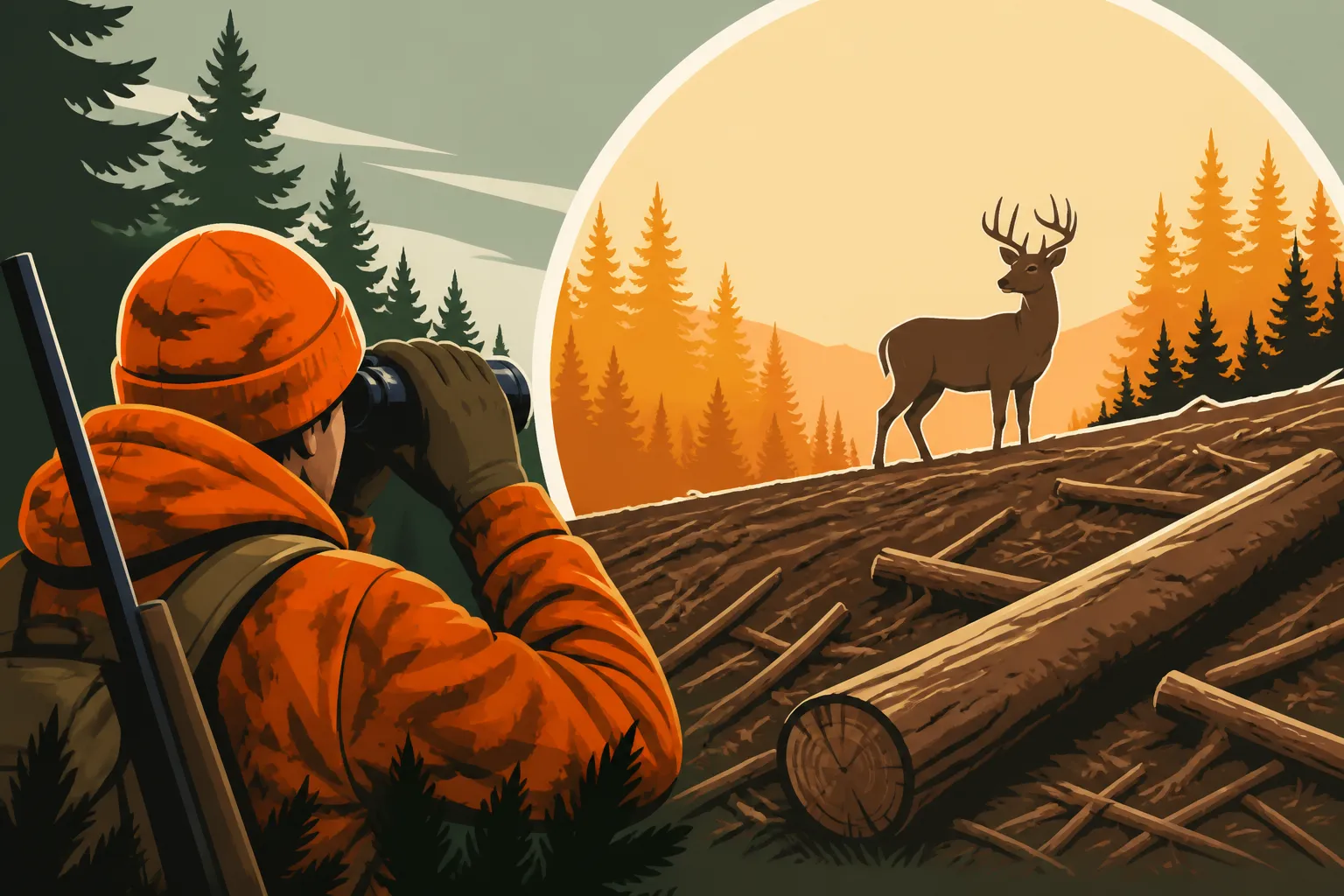
When you're slogging through Maine's vast timberlands, especially after a recent harvest, it can feel like you're just wandering through a maze of stumps and slash. But amidst that apparent chaos lies some of the most consistent deer sign and overlooked hunting opportunities: the edges of log landings. These transition zones, where the forest meets an open clearing, are magnets for whitetails, offering a unique blend of food, cover, and travel corridors. This guide will walk you through exactly why log landing edges are so productive, how to scout them effectively, and the best strategies to turn them into your next successful hunt.
Why Log Landing Edges Attract Deer
Log landings, those open staging areas where timber is sorted and loaded, might look bare and uninviting to the casual observer. But to a whitetail deer, they represent an irresistible smorgasbord and a strategic advantage. It's all about the intersection of factors that create prime deer habitat, even if it's temporary.
A Buffet of New Growth and Browse
Think about what happens when an area is clear-cut or even selectively harvested. Sunlight, which was once blocked by a dense canopy, now floods the forest floor. This sudden influx of light stimulates an explosion of new growth – tender saplings, shrubs, and herbaceous plants that were previously dormant or struggling. The edges of log landings, where this dramatic change is most pronounced, become an immediate buffet. Deer are constantly looking for high-quality browse, and these regenerated areas, particularly the transition zone where the open landing meets the standing timber, provide just that. You'll often find deer nipping at young aspen, maple, oak, and various berry bushes. This isn't just a temporary snack bar; it's a critical food source, especially in the late season when other forage might be buried under snow or scarce. It's like a grocery store appearing overnight in their backyard, and they're going to take advantage of it.
Optimal Cover and Security
Deer need to eat, but they also need to feel safe. Log landing edges provide the perfect blend of feeding opportunities and security cover. The slash piles left behind from logging operations, while a nuisance to walk through, offer incredible bedding and hiding spots for deer. A mature buck might bed down in a thick pile of tops and limbs on the sunny side of a landing, enjoying the warmth while being virtually invisible. Adjacent to these slash piles, the standing timber, often a mix of mature conifers and hardwoods, provides thermal cover and a sense of deep woods security. The deer can browse openly on the landing edge, then quickly melt back into the thick cover or the deeper woods at the first sign of danger. This creates a natural "edge effect" where two distinct habitat types meet, and these edges are almost always high-traffic areas for all kinds of wildlife, especially deer. It's not just about the food; it's about feeling secure while they eat, and these edges deliver that perfectly.
Natural Travel Corridors and Funnel Points
Deer are creatures of habit, and they prefer the path of least resistance when moving between bedding, feeding, and watering areas. Log landing edges, particularly those adjacent to old logging roads or existing deer trails, naturally become travel corridors. They often offer easier walking than busting through dense, un-cut forest or navigating the deepest parts of a clear-cut. Deer will follow these edges, using the cover of the timber while still being close enough to nip at browse or scan the open landing. Furthermore, a log landing can act as a natural funnel. Imagine a large block of timber with a landing cut into one side. Deer moving through that timber might be funneled along the edges of the cut, particularly if those edges lead to another block of cover or a different food source. It condenses their movement, making their travel patterns more predictable for a hunter. Using mapping tools like onX Hunt can reveal these subtle funnels and corridors, helping you predict exactly where deer might cross or emerge. You're essentially looking for the deer equivalent of a highway exit ramp leading to a diner.
Scouting Productive Log Landing Edges
Finding a log landing edge is one thing; finding a productive one is another entirely. Effective scouting is key to identifying those specific spots that deer are consistently using, rather than just passing through occasionally. It's about putting on your detective hat and learning to read the subtle clues the deer leave behind.
Reading the Landscape with Technology and Boots on the Ground
Before you even lace up your boots, start your scouting mission from home. Satellite imagery and topographic maps, especially those found on apps like onX Hunt or GoHunt, are invaluable. Look for recent timber harvests – these will show up as lighter green or brown patches contrasting with the darker, mature forest. Identify the edges of these clearings that connect to dense cover, water sources, or natural funnels like saddles or creek bottoms. Pay attention to changes in elevation, as deer often prefer to travel ridges or the edges of slopes. Once you've identified a few promising areas from your armchair, it's time for boots on the ground. Walk the perimeter of the landing, looking for where deer are entering and exiting the clearing. Don't just focus on the obvious; sometimes a subtle dip in the terrain or a small clump of trees provides a hidden entry point. Look for signs of older, established trails that might have been impacted by logging but are still being used. These might be slightly obscured by new growth but will often show worn earth or broken twigs. Understanding Reading Aerial Photos for North Woods Deer can drastically cut down your in-person scouting time.
Identifying Fresh Sign and Deer Behavior
Once you're walking the log landing edges, you need to be meticulous in your search for fresh deer sign. This includes:
- Tracks: Look for fresh tracks along the edge, especially where the ground is softer or where deer are crossing smaller open areas. Pay attention to the direction of travel and the size of the tracks. Large, spread-out tracks often indicate a heavier animal – a mature buck.
- Droppings: Fresh deer scat is a clear indicator that deer are actively feeding or resting in the area. The size and consistency can even tell you a bit about their diet.
- Rubs and Scrapes: During the rut, log landing edges can become prime locations for bucks to leave their scent. Look for rubs on small saplings or larger trees along the edge, indicating a buck marking his territory. Scrapes, often found under low-hanging branches, are another strong sign of buck activity. These are typically pawed-out spots on the ground where a buck has urinated and left scent from glands on his legs. Finding these fresh indicators means you're in an active area. Understanding Scrape Lines Along a Logging Road will give you a leg up.
- Browsing: Examine the new growth for signs of deer browsing. Look for clipped twigs and leaves, especially on preferred species like aspen, maple, and cedar. The height and freshness of the browsing can tell you how recently deer have been feeding there.
Pay attention to patterns. Are most tracks headed into a specific thicket? Are the rubs concentrated on one corner of the landing? These observations will guide your setup. You'll learn a lot by simply Finding Sign in Big North Woods Timber in these high-contrast areas.
Seasonal Considerations and Timing
The attractiveness of a log landing edge can vary throughout the season.
- Early Season (September/October): Deer might be more nocturnal, feeding on lush new growth at dawn and dusk before retreating to thick cover. These edges provide excellent opportunities for ambush hunting as deer move from deeper woods to feed.
- Mid-Season (November – Rut): This is when log landing edges can be absolute hotspots. Bucks are cruising, scent-checking, and looking for does. These open areas offer good visibility for them to scan for rivals or potential mates. A buck might use the edge to travel, scent-checking for does without exposing himself too much in the middle of the clearing. The activity around rubs and scrapes will intensify. This is a prime time for Hunting the Rut in Early November.
- Late Season (December): As snow deepens and temperatures drop, deer will focus on high-energy browse and thermal cover. Log landing edges with plenty of regenerating woody browse and nearby conifer stands become crucial. If the snow isn't too deep, deer might yard up in nearby cedar swamps, only venturing out to these edges for food.
A tool like GoHunt can provide insights into seasonal deer movements and habitat preferences, helping you fine-tune your timing. Combine this knowledge with local observations of food availability and weather patterns.
| Log Landing Edge Type | Prime Hunting Time | Why it's Productive | Best Approach |
|---|---|---|---|
| Freshly Cut (1-2 years) | Early & Mid-Season | Abundant new browse, minimal thick cover yet | Ambush from cover on windward side |
| Regrowing (3-7 years) | Mid & Late Season | Dense security cover, established trails, good browse | Stands near defined trails or funnels |
| Old Growth Adjacent | All Season | Reliable bedding in old growth, feeding on edge | Focus on transition zones, pinch points |
| Near Water Source | Early & Late Season | Combines food/cover with essential water | Watch morning/evening travel to/from water |
Effective Hunting Strategies for Log Landings
Once you've identified a promising log landing edge, it's time to put a solid hunting strategy into action. This involves careful consideration of your setup, your timing, and how you interact with the deer in their environment.
Optimal Stand and Blind Placement
Setting up your stand or blind correctly is paramount. You need to be able to see the areas deer are using, have a clear shot, and, most importantly, manage your scent and entry/exit.
- Tree Stands: Position your stand within the standing timber, 15-25 yards back from the edge of the landing. This allows you to observe the edge and the open landing without being silhouetted. Pick a tree that offers good cover and ideally has some larger branches to break up your outline. Consider the prevailing wind direction; you want your scent blowing away from where you expect deer to approach or feed. A good spot might be on a small knoll or a point of timber that extends slightly into the landing, offering a wider field of view. Think about how you'll get in and out silently, ideally using a route that avoids disturbing the main deer activity areas. For specific guidance on stand placement, you might check out Hanging a Stand on a Private Land Field Edge.
- Ground Blinds: If suitable trees are scarce or if you prefer hunting from the ground, a ground blind can be highly effective. Place it inside the edge of the timber, brushing it in meticulously with local vegetation. Again, concealment and wind direction are key. Ground blinds are excellent for hunting with a crossbow or for providing comfort during colder weather. They also offer more flexibility if deer patterns change slightly, allowing you to re-orient your shot without repositioning a treestand. Ensure your entry and exit routes are totally concealed and quiet. For brushing in, remember Brushing In a Blind on a Field Edge.
Timing Your Hunt and Managing Wind
Deer activity on log landing edges often peaks during the low light hours of dawn and dusk. This is when they feel safest moving between bedding and feeding areas. If you're hunting during the rut, however, midday activity can be excellent as bucks are constantly on the move, checking for does.
- Morning Hunts: Get in well before first light, moving slowly and quietly. Position yourself to watch the landing edge where deer might be returning to bedding cover after feeding all night.
- Evening Hunts: Arrive in the early afternoon, giving the woods time to settle before deer start moving out to feed. Focus on areas where deer will emerge from cover onto the landing to browse.
- Wind and Thermals: Maine's varied topography means Wind and Thermals in Maine Hill Country play a huge role. Always hunt with the wind in your favor. On calm mornings, thermals tend to drop downhill. In the evenings, they often rise. Pay attention to how the wind eddies around the edges of cuts and timber. A swirling wind can ruin a hunt quickly, so it's often better to sit out if conditions aren't right. Use a wind checker frequently.
Subtle Calling and Decoying Tactics
Sometimes, a little persuasion can turn a slow sit into an exciting encounter.
- Grunt Calls: A subtle grunt can pique a buck's curiosity, especially during the rut. If you see a deer moving along an edge, a soft grunt might be just enough to make him pause or even come investigate. Avoid aggressive calling unless you're sure there's a dominant buck in the area and you're ready for him to come in hard. For more on this, consider Grunt Calls in Mature Maine Hardwoods.
- Doe Bleats: A doe bleat, particularly a fawn bleat, can attract does, which can in turn draw in a buck. This can be effective in areas where deer are scattered or not very vocal.
- Decoys: A single doe or buck decoy placed strategically on the edge of the landing can be incredibly effective, especially during the rut. Position it so the deer approaching will be focused on the decoy, giving you time to draw or shoulder your weapon. Ensure your decoy isn't going to get you mistaken for a deer by another hunter, especially on public land. Always use caution with decoys, particularly during firearms season.
Navigating Challenges and Maximizing Success
Hunting log landing edges can be incredibly rewarding, but it's not without its specific challenges. Being prepared for these can make all the difference in your success.
Understanding Hunting Pressure
In many parts of Maine, particularly on easily accessible timber company lands or public access areas, log landings can experience significant hunting pressure, especially during the firearms season. Deer are smart, and they quickly learn to avoid areas where they encounter hunters.
- Weekends vs. Weekdays: Weekends will almost always see more hunter activity. If you can hunt mid-week, you'll often find deer more relaxed and active on landing edges.
- Finding Secluded Spots: Don't just hunt the most obvious landing closest to the main road. Use your mapping apps to find landings that require a longer walk, deeper into the woods. Often, a quarter-mile further in can mean the difference between seeing other hunters and having the woods to yourself. Deer that are pressured on easily accessible edges will often retreat to these less-traveled areas. Your goal is to find Finding Ground Others Walk Past.
- Adjusting Tactics: If a landing is getting hammered with pressure, deer may become entirely nocturnal or avoid it altogether during daylight hours. In such cases, shift your focus to thicker cover or funnel points leading to or from the pressured landing, rather than sitting directly on its edge.
Access and Permission Considerations
Most of Maine's timberlands are privately owned but allow public access for recreation, including hunting, thanks to a strong tradition of Maine's Private Land Access Tradition. However, it's critical to know the rules.
- Industrial Timberland: Companies like Huber, Weyerhaeuser, and others own vast tracts. Many permit hunting without explicit permission, but it's always wise to check their specific guidelines or gate information. Some areas, like the North Maine Woods, might have gate fees for access. Understanding Hunting a North Maine Woods Checkpoint Tract is crucial if you venture north.
- Small Private Woodlots: For smaller, privately owned woodlots with log landings, you absolutely need to obtain permission from the landowner. A knock on the door and a respectful conversation can often open up some fantastic hunting opportunities. Always carry proof of permission, if given.
- Staying Legal: Always respect posted land and be aware of property lines, especially if using an app like onX Hunt. Never assume access. Know Maine Trespass and Permission Law.
- Dealing with Active Logging: Be aware that logging operations can be ongoing during hunting season. Give loggers a wide berth, and never interfere with their work. It's unsafe and disrespectful. Their presence, however, means fresh cuts, which can lead to new landing edges becoming productive next season.
Post-Harvest Habitat Changes
The dynamics of a log landing edge are not static. Habitat changes rapidly after a harvest, and what was a hotspot one year might be less productive the next, or productive in a different way.
- Year 1-2: Abundant new herbaceous growth and tender saplings. Excellent for early season browse. Slash piles provide immediate cover.
- Year 3-7: The new growth becomes denser, creating thickets and excellent security cover. Trails become more defined as deer navigate the thicker vegetation. Still good browse, but more challenging to hunt due to reduced visibility. This is prime habitat for Hunting a Clear-Cut Regrowth Edge.
- Year 8-15+: As saplings mature, the understory may thin out, and some browse species might grow out of reach. The area may transition from a primary feeding zone to more of a bedding or travel corridor.
Successful log landing hunting means being adaptable. What you learned last year might need tweaking this year based on the stage of regrowth. Always be scouting, always be observing, and always be ready to adjust your strategy. It’s an ongoing dance with nature, but one that can yield incredible rewards if you pay attention.
Disclaimer
This article is for general informational purposes only and does not constitute professional advice. Laws, prices and regulations vary by location and change over time. Consult a qualified professional for guidance on your specific situation.