Still-Hunting Western Maine Mountain Slopes
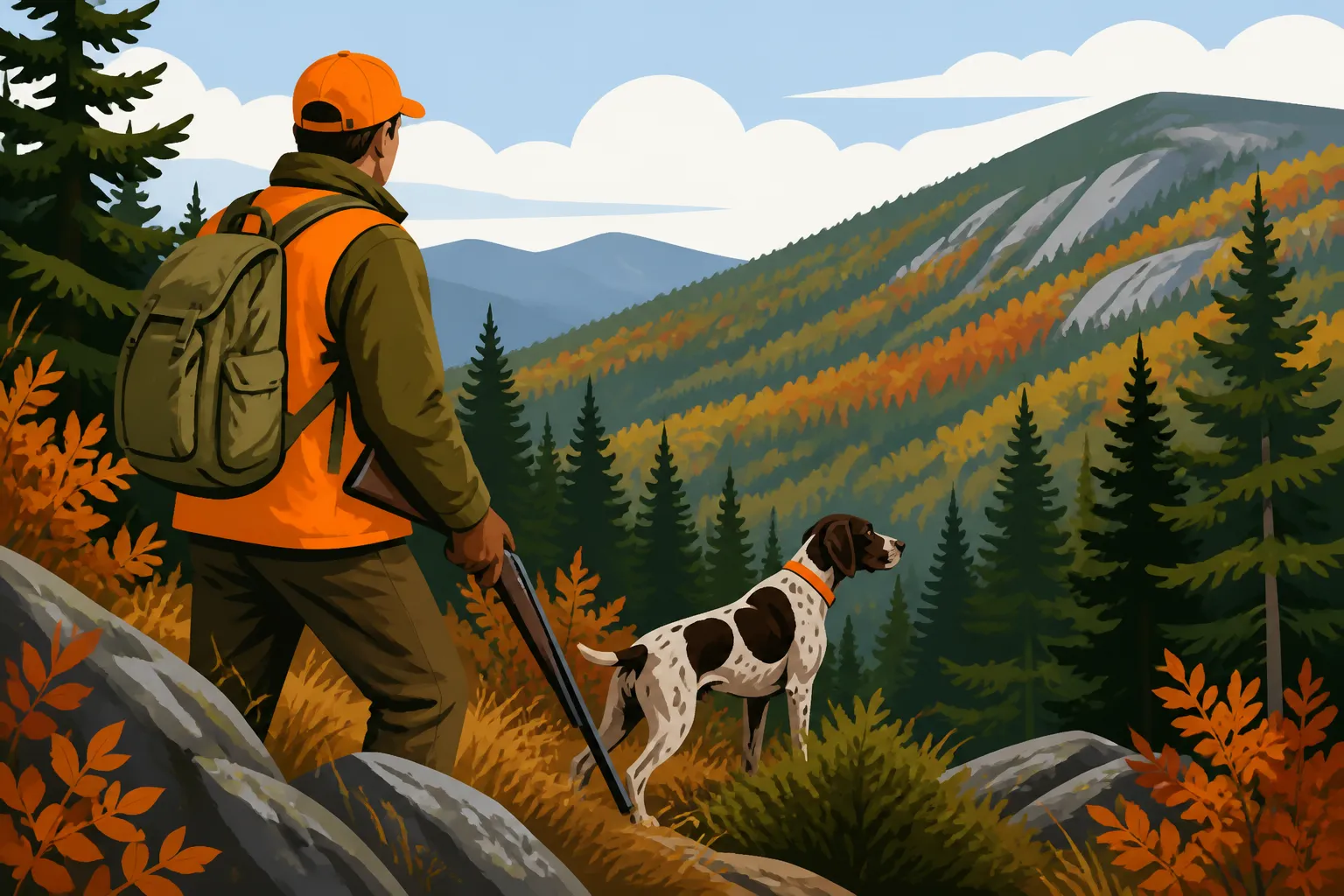
There's a special kind of challenge that comes with pursuing whitetails in Western Maine's mountain country. The deer are fewer, the timber is thicker, and the elevations can make you feel like you're climbing a vertical ladder. If you've ever felt overwhelmed by the sheer scale of those vast, rugged slopes, this guide is for you. We're going to dive deep into the art of still-hunting, breaking down how to move quietly, read the land, and stack the odds in your favor against the wariest mountain bucks.
Understanding the Western Maine Mountain Landscape
Western Maine isn't just picturesque; it's a unique and demanding hunting environment. Unlike the flatter, more agricultural lands elsewhere, this region presents a different set of rules for both deer and hunters. The mountains here, from the foothills of the western peaks stretching towards the Appalachian Trail, create a tapestry of diverse habitats and challenges.
The Rugged Terrain and Timber Types
The sheer ruggedness of Western Maine's mountains is often underestimated. You'll encounter steep inclines, rocky outcrops, and dense timber that can swallow sound and hide deer within feet of you. The forest cover is a mix of mature hardwoods – think towering maples, beeches, and oaks – interspersed with thick stands of spruce, fir, and hemlock, especially at higher elevations or in damp drainages. This varied timber provides excellent cover and browse for deer, but it also makes visibility a constant struggle for hunters. Those dark, damp softwood thickets, for instance, are classic deer bedding areas, offering thermal cover and security from predators and human disturbance. Understanding these timber types isn't just academic; it's crucial for predicting where deer will be, especially during colder weather or when seeking refuge.
How Elevation Impacts Deer Behavior
Elevation isn't just about how high you climb; it profoundly influences how deer live their lives in this region. During the early season, deer might be found higher up on the mountain slopes, enjoying cooler temperatures and a wider variety of browse. As the weather turns colder and snow begins to accumulate, they'll often "yard up" or move to lower elevations, particularly into those dense softwood thickets or south-facing slopes that offer more thermal protection from the biting winds and deep snow. The subtle benches and saddles between ridges become critical travel corridors, especially during the rut when bucks are actively searching for does. Recognizing these shifts in behavior, often dictated by just a few hundred feet of elevation change, is paramount to successful still-hunting.
Identifying Core Deer Habitat on Slopes
Finding core deer habitat on these sprawling slopes can feel like searching for a needle in a haystack. Deer aren't everywhere; they concentrate in specific areas that offer food, water, and cover. On a mountain slope, look for areas where these three elements converge. South-facing slopes, for example, often get more sunlight, meaning snow melts faster and early-season browse or late-season green-ups might be present longer. Water sources, whether they're small springs, seeps, or trickling streams, are magnets for deer. Then there are the transition zones: the edges where hardwoods meet softwoods, where an old logging road cuts through a thick stand, or where a clear-cut is regenerating with fresh browse. These aren't just random spots; they're the highways and havens where deer spend their time, and they're exactly where a still-hunter needs to focus their efforts. If you're using a mapping tool like GoHunt, zooming in on these terrain features and satellite imagery can reveal subtle benches, drainage bottoms, and vegetation changes that are invisible from the ground.
The Art of Still-Hunting: More Than Just Walking Slowly
Still-hunting is often misunderstood. It's not just "walking slowly through the woods." It's a deliberate, methodical approach that combines extreme stealth with constant observation, relying on your senses as much as your knowledge of the landscape. In the rugged, vast expanses of Western Maine's mountains, it's often the most effective way to intercept a wary whitetail that has likely already seen or heard other hunters.
The Mindset of a Mountain Still-Hunter
To truly master still-hunting in the mountains, you need to adopt a specific mindset. Forget the idea of covering miles; think in terms of covering ground effectively. This means being patient, observant, and always anticipating. You're not just looking for a deer; you're looking for parts of a deer – a flick of an ear, the horizontal line of a back against vertical trees, a patch of brown hair, or the glint of an antler. Every step you take should be quiet and deliberate, almost like a predator stalking its prey. It’s about merging with the environment, becoming part of the forest, rather than an intruder passing through. This mental discipline is what separates a casual walker from a successful still-hunter.
Patience and Purposeful Movement
The core principle of still-hunting is often described as "stop, look, and listen." In the mountains, this becomes even more critical. You might only take 10-20 steps before pausing for several minutes, scanning every shadow, every cluster of branches, every inch of terrain in front of you. This isn't wasted time; it's actively hunting. Deer in mountainous regions are accustomed to quick movements from small game, but anything sustained or out of place will put them on high alert. The goal is to move so slowly and deliberately that you don't spook deer, but instead, catch them off guard, either feeding, bedding, or traveling. Each pause gives you an opportunity to re-evaluate the wind, listen for distant sounds like a snapping twig, or simply let your eyes adjust to subtle anomalies in the forest.
Blending In and Maximizing Your Senses
Blending into the mountain environment is more than just wearing camouflage. It's about minimizing your scent, reducing noise, and breaking up your outline. Your clothing should be quiet, avoiding anything that rustles or scrapes loudly against brush. Scent control is paramount, especially when you're moving through varied air currents on a slope. But most importantly, it's about actively engaging all your senses. Your eyes should be constantly scanning, not just directly ahead, but side to side, up and down, looking for the tell-tale signs of a deer. Your ears should be tuned to the rustle of leaves, the distant call of a crow, or the soft blowing of a deer. Even your nose can be a valuable tool, sometimes catching the musky scent of a nearby buck. The more you immerse yourself in these sensory details, the more likely you are to detect a deer before it detects you.
Key Strategies for Mountain Still-Hunting
Once you've adopted the right mindset, it's time to put those principles into action. Still-hunting in Western Maine's mountains requires specific strategies to maximize your chances of success in such challenging terrain.
Pace and Pauses: The 20-Step Rule
A good rule of thumb for still-hunting, especially in dense mountain timber, is the "20-step rule," though this is more of a guideline than a strict measure. It means you take a handful of steps – perhaps 10 to 20, or even fewer depending on the cover – then stop completely for several minutes. During your pauses, stay absolutely still, scanning the woods with your binoculars (or even just your naked eye), listening intently, and letting the forest settle around you. This deliberate, start-and-stop rhythm does several things: it allows you to cover ground silently, it gives deer time to forget your last movement, and it offers you the critical opportunity to spot a deer that might be feeding, walking, or even bedded nearby. Often, a deer will reveal itself in these moments of quiet vigilance, assuming you've passed by. This methodical approach is far more effective than simply walking at a slow, steady pace, which often results in bumping deer before you even know they're there. For more on navigating these complex landscapes, consider checking out resources on Hunting Western Maine Mountain Notches.
Using Contour Lines and Natural Funnels
Mountain terrain is full of natural highways and bottlenecks that deer use, and a savvy still-hunter learns to identify and exploit them. Contour lines, especially subtle benches or flat spots on a slope, are often preferred travel routes for deer because they require less energy than traversing directly up or down. Similarly, natural funnels formed by converging ridges, narrow saddles between peaks, or pinch points created by thick cover or rocky cliffs are prime locations to intercept deer movement. Deer will naturally gravitate to these areas, especially during the rut when bucks are cruising. Using a GPS with topographic maps, or an app like GoHunt, can help you visualize these contour lines and funnels before you even step foot in the woods, allowing you to plan your still-hunting route strategically to cross or parallel these key travel corridors.
Hunting the Edges and Transition Zones
Just as in flatter terrain, edges are king in the mountains. However, mountain edges take on a different character. Think about the transition between dense softwood cover and more open hardwood ridges. Deer often bed in the thick, thermal protection of the softwoods but will venture out into the hardwoods to feed on acorns, beechnuts, or other browse. Still-hunting along these edges, especially where a bench or saddle runs parallel to the transition, can be incredibly productive. Old logging roads, clear-cuts with regenerating growth, or even the edges of old burn areas can create these valuable transition zones. Deer feel secure operating along these lines, always having quick access to deep cover if alarmed. By focusing your still-hunting efforts on these specific features, you're placing yourself in areas where deer are more likely to be moving or feeding. Knowing Where Maine Bucks Bed in Big Timber is key to understanding which edges will be most productive.
Reading Sign and Predicting Deer Movement
Western Maine's mountains might be vast, but deer still leave clues. Learning to read these signs, often subtle and easily missed, is a critical skill for any still-hunter. It allows you to piece together the story of deer movement and predict where they might be next.
Interpreting Tracks in Varied Terrain
Tracks tell a story, but interpreting them in mountain terrain can be a bit different. On rocky ground, you might only find partial prints, or none at all. In softer soil, mud, or snow, however, tracks can be a goldmine of information. Look not just for the presence of tracks, but their direction, freshness, and the gait they indicate. A buck often drags its feet slightly, especially a heavy one, and its tracks might appear more splayed. Tracks that are fresh, with sharp edges and no debris in them, indicate recent activity. Pay attention to how tracks lead up or down a slope. Are they following a subtle bench? Are they heading towards a thick bedding area or a known food source? Analyzing these details can help confirm you're still-hunting in a productive area and point you towards where deer are headed. A great resource for this is learning about Reading Maine Mud for Fresh Deer Movement.
Locating Rubs and Scrapes on Slopes
Rubs and scrapes are territorial markers left by bucks, and finding them in mountain country can indicate the presence of a mature buck. Rubs, where a buck has polished its antlers on a tree, tend to be found along travel corridors or near bedding areas. On a slope, pay attention to rubs on trees along benches or saddles. The height and diameter of the rub can give you a clue about the size of the buck. Scrapes, patches of bare earth pawed by a buck, often with a licking branch overhead, are communication hubs. While less common on steep, rocky ground, look for them on flatter sections, old logging roads, or near transition zones. A cluster of rubs and scrapes, especially if fresh, signals a buck's active presence and can guide your still-hunting route through his core territory during the rut.
Identifying Bedding and Feeding Areas
The goal of reading sign is to ultimately identify bedding and feeding areas. In the mountains, bedding areas are typically found in thick, secure cover that offers good visibility downwind or downhill. This could be a dense spruce thicket on a ridge, a cluster of hemlocks on a south-facing slope getting sun, or a rocky outcrop that provides a vantage point. Deer will often bed with the wind at their back, allowing them to detect anything approaching from behind, and relying on their eyesight for anything approaching from the front. Feeding areas, conversely, are where deer find their sustenance. This might be a patch of oak trees dropping acorns, a beech stand offering nuts, or regenerating clear-cuts with abundant browse. Identifying these areas, often through droppings, chewed browse, and fresh tracks, allows you to connect the dots and still-hunt the pathways deer use between them, especially at dawn and dusk. For broader insights into deer populations, understanding the Maine Deer Population Estimate can give you context for your local area.
Navigating Wind, Thermals, and Weather
In Western Maine's mountains, wind and thermals are not just factors to consider; they are paramount. Ignoring them is a surefire way to alert deer to your presence, no matter how quiet you are.
Understanding Thermals on Inclines
Thermals are air currents created by temperature changes, and they are incredibly pronounced in mountainous terrain. As the sun rises and warms the earth, air begins to flow uphill. In the late afternoon and evening, as the sun sets and the earth cools, air begins to flow downhill. This is a critical concept for still-hunting. If you are hunting uphill in the morning, your scent will be carried ahead of you by the rising thermal, potentially spooking deer above. Conversely, if you're hunting downhill in the evening, your scent will travel ahead of you with the falling thermal. The smart still-hunter uses these thermals to their advantage, planning their ascent and descent to keep their scent blowing behind them, or at least across, rather than ahead. This intricate dance with air currents is a cornerstone of effective mountain hunting. If you really want to dive into this, learning more about Wind and Thermals in Maine Hill Country is a game-changer.
Playing the Prevailing Wind in Mountain Country
While thermals dictate vertical scent movement, the prevailing wind handles horizontal movement. In the mountains, however, prevailing winds can be highly unpredictable. They can swirl in saddles, be channeled by valleys, or get deflected by steep ridges, creating micro-eddies that make scent control challenging. Always, always check your wind. Use a wind checker (talcum powder, milkweed seeds, or a commercial product) frequently. Plan your still-hunting route to keep the wind in your face or quartering, ensuring your scent is blowing away from where you anticipate deer to be. When the wind is swirling erratically, it might be best to still-hunt very slowly into the thickest cover, minimizing your movement and maximizing your observation time, or even to adjust your hunt location entirely.
Adapting to Maine's Mountain Weather Swings
Maine weather, especially in the western mountains, can be notoriously unpredictable. A mild, sunny morning can quickly turn into a cold, wet, or even snowy afternoon. Still-hunting requires constant adaptation. During cold snaps, deer will often seek dense, south-facing cover to conserve energy. After a fresh snow, tracks become easier to read, and the quiet cushion of snow can aid in stealth, though deer will be more alert. Rain can dampen sound and reduce deer's ability to smell, but it also makes conditions miserable for hunters. Being prepared for these swings with appropriate gear is essential, but also recognizing how weather impacts deer behavior will inform your still-hunting strategy. The general context of the Maine's Four-Week Firearms Deer Season highlights the variety of weather conditions hunters can face.
Gear and Preparation for Western Maine Mountains
Success in still-hunting Western Maine's mountains isn't just about technique; it's also about having the right gear and being properly prepared for the challenges of the terrain and weather.
Essential Clothing and Footwear
Your clothing and footwear choices are critical for comfort, stealth, and safety. Layers are your best friend in Maine's variable climate. Start with a moisture-wicking base layer, add insulating mid-layers (fleece or synthetic down), and top it with a quiet, waterproof/windproof outer shell. Wool or fleece are excellent choices for their quietness. Blaze orange is required during firearms season; make sure it's visible from all directions. For footwear, durable, waterproof boots with excellent ankle support are non-negotiable. The rocky, uneven terrain of Western Maine demands a stiff sole to prevent fatigue and twisting ankles. Break in your boots well before your hunt to avoid blisters. Don't forget quiet gloves and a warm hat, as much heat is lost through your head and hands.
Navigation and Safety Tools
Getting lost in the vast, often remote mountains of Western Maine is a real possibility without proper navigation tools. A reliable GPS unit or a smartphone with a dedicated hunting app like GoHunt is essential. Download offline maps of your hunting area before you go, as cell service can be spotty or non-existent. Familiarize yourself with how to mark waypoints, track your route, and navigate back to your vehicle or camp. Always carry a physical compass and a paper map as a backup. A headlamp or flashlight, a first-aid kit, fire-starting materials, a knife, and extra food and water are non-negotiable safety items. Remember, even a short still-hunt can take you deep into unfamiliar territory. Knowing how to use an app for Using an App for North Maine Woods Land Status is invaluable here, as much of Western Maine has similar land management.
Optics and Firearm Considerations
Good optics are invaluable for still-hunting. Binoculars (10×42 are a popular choice) allow you to glass distant cover, pick apart thickets, and verify what you're seeing without moving your body. Carry them comfortably on a harness so they're easily accessible. For firearms, a rifle chambered in a cartridge suitable for deer (e.g., .270, .30-06, .308) is appropriate. Accuracy is key, so ensure your rifle is sighted in and you're proficient with it. A scope with variable power (e.g., 3-9x or 4-12x) offers versatility for both close-quarters shots in thick timber and longer shots across mountain saddles. Muzzleloaders are also a popular choice for their dedicated season. Regardless of your weapon, practice shooting from various positions – standing, kneeling, and sitting – as you might not always have a perfect rest in the uneven mountain terrain. Make sure you're up to date on all state requirements like Maine Hunter Education Requirements.
Disclaimer
This guide is intended for informational purposes only and does not supersede official hunting regulations. Always consult the most current Maine Department of Inland Fisheries and Wildlife (MDIFW) regulations before heading into the field. Safety should always be your top priority when hunting.