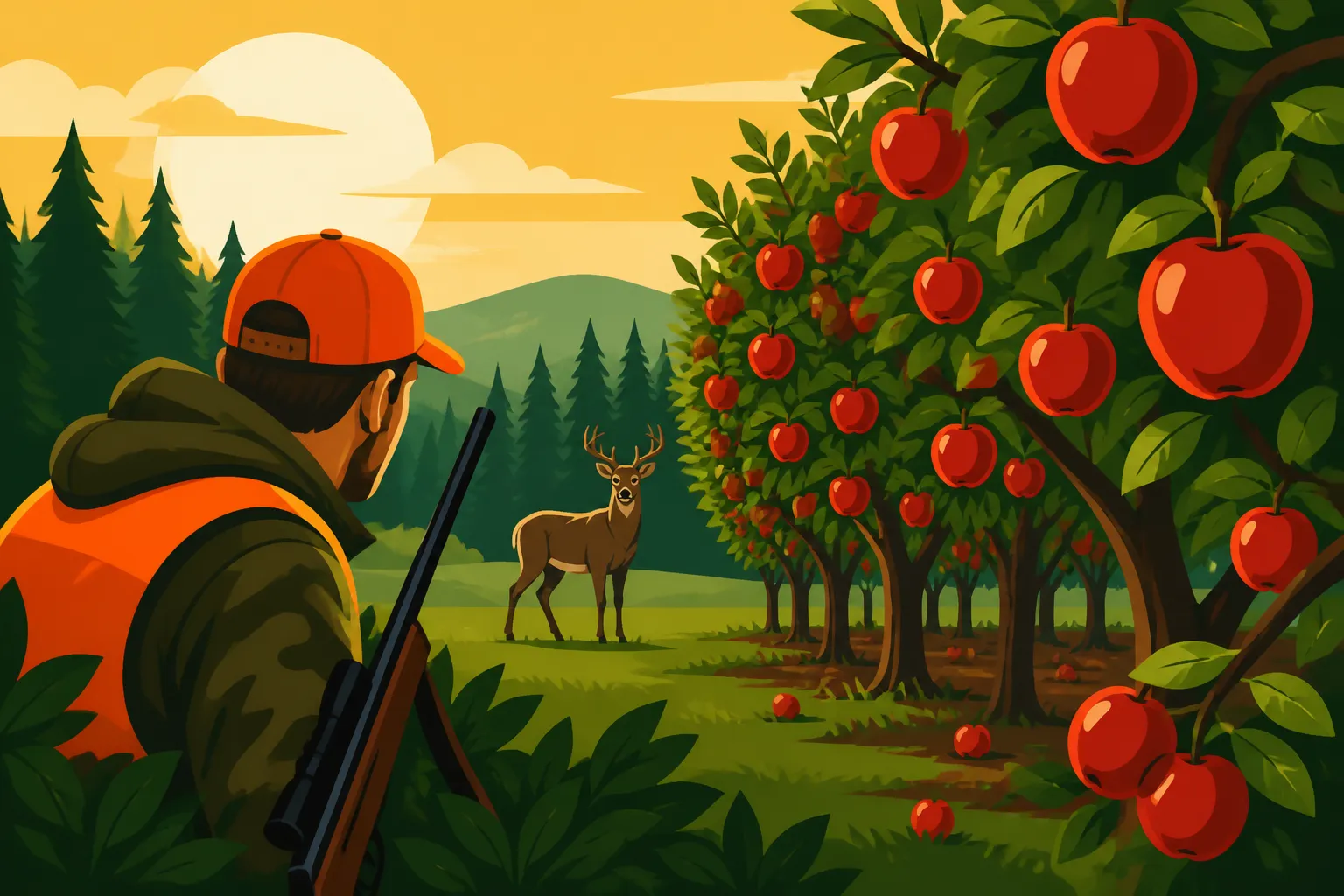
Hunting a Standing Apple Orchard
There's a special kind of frustration that comes with tirelessly scouting big timber or vast clearcuts, only to feel like you're missing something, like there's a secret honey-hole you just can't pinpoint. Many hunters overlook one of Maine's most consistent, yet often forgotten, deer magnets: the standing apple orchard. These forgotten gems, whether a century-old farm plot or a wild apple tree thicket, can be absolute goldmines for whitetail activity if you know how to find them and, more importantly, how to hunt them effectively. This guide will walk you through everything you need to know to transform these overlooked spots into your next successful hunt, from understanding why deer crave them to the precise tactics that will put you in position for a shot.
Why Apple Orchards are Deer Magnets in Maine
When you think about prime deer habitat in Maine, your mind probably goes straight to dense cedar swamps, sprawling hardwood ridges, or fresh clearcuts with browse. And you wouldn't be wrong – those spots are vital. But tucked away, often hidden by encroaching alders or forgotten by modern agriculture, are old apple orchards. These aren't just pretty spots; they are consistent, high-energy food sources that deer absolutely can't resist, making them prime real estate for hunters willing to put in the legwork.
The Irresistible Draw of Fresh Apples
Imagine you're a deer. You've spent all summer browsing on leaves, twigs, and whatever green shoots you could find. As autumn rolls in and the first hard frosts hit, suddenly, there's a new, sweet, high-calorie treat dropping from the sky: apples. These aren't just any food source; they're packed with sugars and carbohydrates that deer need to put on weight for the upcoming winter and to fuel the rigorous demands of the rut. For a whitetail, a ripe apple is like a kid finding a candy store, and they will go out of their way to get to them.
The great thing about apples in Maine is their consistency. While acorn crops can be feast or famine year to year, and other soft mast like berries comes and goes quickly, apples tend to be a more reliable food source, especially for early to mid-fall hunting. When you're dealing with a poor acorn year, for example, the local apple orchard becomes even more critical for deer. They'll flock to them, sometimes traveling significant distances, because the nutritional payoff is so high. This makes hunting a standing apple orchard a fantastic strategy, particularly as When Maine's Archery Season Opens and through the early weeks of the firearms season.
Timing is Everything for Orchard Action
Understanding when deer hit the apples hardest is crucial. Early in the fall, after the first apples start to drop, deer will begin to frequent the orchards. This activity picks up dramatically after a good frost, which sweetens the apples and causes more to fall. You'll often see the heaviest daytime use in the weeks leading up to the peak of the rut, as deer are actively trying to pack on calories. This period often coincides perfectly with the archery season and the early part of the firearms season in October and early November.
However, don't write off an orchard just because it's getting later in the season. Some hardier apple varieties can persist on the trees or on the ground well into late fall, even into early December. If you find a patch of apples still dropping or holding on after the leaves have fallen, you've found a gold mine for Late-Season Food Sources for Maine Whitetails. Deer, especially mature bucks, will be conserving energy and will gravitate towards any accessible, high-energy food source. Snow can even protect apples on the ground, keeping them viable longer.
Beyond Just Food – Cover and Sanctuary
It's not just the food that draws deer to old orchards; it's the entire package. Many abandoned orchards are overgrown with thick saplings, thorny brush, and dense undergrowth that surrounds the apple trees themselves. This creates an incredibly appealing environment for deer, offering both food and crucial cover. The gnarled, low-hanging branches of older apple trees often provide natural canopy cover, making deer feel secure as they browse.
This combination of food and cover means that deer aren't just visiting the orchard for a quick bite; they might be bedding down nearby, staging in the thickets surrounding it, or even using the dense orchard interior as a sanctuary during hunting pressure. It's not uncommon to find rub lines and scrape lines along a logging road that borders an old orchard, indicating that bucks are not only feeding there but also marking their territory and searching for does. This nuanced understanding of deer behavior in and around these spots is what separates a casual apple orchard hunter from a truly successful one.
Scouting and Locating Productive Orchards
Finding a standing apple orchard in Maine that holds deer can feel like uncovering a hidden treasure. These aren't always manicured commercial operations; more often, they're forgotten remnants of old homesteads, wild apple tree thickets, or small, scattered patches of trees that a landowner might have planted decades ago. The process of locating and then thoroughly scouting these areas is where success truly begins.
Unearthing Forgotten Orchards on Maps
The first step in finding these productive areas often starts long before you ever step foot in the woods – it starts with maps. Topographic maps, aerial imagery, and modern hunting apps like GoHunt are invaluable tools. Look for old farmsteads or clearings that might have once supported a dwelling. Even if the house is long gone, the apple trees might remain. On aerial photos, look for clusters of trees with a distinct, often circular or somewhat uniform canopy shape that stands out from the surrounding wild forest. These often indicate old apple trees.
Old logging roads and trails can also lead you to these spots. Sometimes, a single, isolated apple tree might be visible on an aerial photo along an old track. While a single tree isn't an orchard, it's still a valuable food source. Pay close attention to county records or historical maps if available, as they might mark old property lines or agricultural areas. When you're Scouting With the Maine Hunting App, utilize its various layers—satellite, topo, and property lines—to identify potential orchard locations and understand the surrounding terrain. This digital reconnaissance can save you countless hours of unproductive walking.
Ground Scouting for Sign and Tree Health
Once you've identified potential spots on your maps, it's time to hit the ground. This is where you confirm your suspicions and truly assess the orchard's potential. First, look for the trees themselves. Are they apple trees? How many are there? Are they still producing fruit? A healthy, producing apple tree is obviously more valuable than one that's struggling or dead. Check the ground under the trees for fallen apples. Even if it's late in the season and the apples are shriveled, their presence confirms the tree's identity and productivity.
Crucially, look for deer sign. Fresh tracks in the mud around the orchard perimeter, droppings under the trees, rub lines on saplings, and especially distinct trails leading into and out of the orchard are all major indicators. You're looking for signs of consistent deer use. A heavily used apple orchard will often have a "deer line" visible on the lower branches, where deer have browsed heavily. The more sign you find, the more confident you can be that this is a productive spot. Also, observe the surrounding cover. Does it offer good bedding close by? Is there dense escape cover adjacent to the apples? This combination of food and sanctuary is the gold standard.
Access Considerations and Landowner Relations
Many of Maine's older apple orchards are on private land, sometimes parcels that have been passed down through generations. This makes Getting Landowner Permission in Maine absolutely essential. Maine has a unique tradition of Maine's Private Land Access Tradition, but "implied permission" doesn't extend to hunting on posted land or, generally, to actively seeking out and exploiting specific, high-value spots like orchards without talking to the landowner first. Always ask. Be polite, offer to share some of your harvest if successful, and leave the property better than you found it.
For non-residents, understanding Maine Landowner Relations Program rules is especially important. If the orchard is on public land, which is less common but certainly possible within larger parcels of public reserved land or even some wildlife management areas, you still need to understand the access points and regulations. Consider where you'll park, how far you'll need to walk, and any potential issues with other hunters or non-hunting recreationalists. Having a good relationship with the landowner, if applicable, can make or break your ability to hunt a prime orchard year after year.
| Strategy Component | Pros | Cons |
|---|---|---|
| Finding Orchards | – Digital mapping (GoHunt) saves time. | – Old maps may be outdated. |
| – Aerial imagery reveals hidden spots. | – Difficult to distinguish apple trees from other hardwoods from above. | |
| – Ground scouting confirms sign and tree health. | – Requires physical effort and time. | |
| Hunting Setups | – Treestands offer height, scent dispersal. | – Limited placement options if trees are sparse. |
| – Ground blinds provide concealment, warmth. | – Limited visibility; deer may spot movement or scent easily if not brushed in well. | |
| – Still-hunting allows adaptability. | – Requires extreme stealth and patience; higher risk of bumping deer. | |
| Timing | – Early fall (bow season) for fresh drops. | – Warm weather can make deer nocturnal. |
| – Mid-fall (firearms) for peak activity. | – Increased hunting pressure from other hunters. | |
| – Late fall for lingering apples. | – Fewer apples available; weather can be harsh. |
Strategic Setups for Orchard Hunting
Once you've found a promising apple orchard and secured permission (if needed), the real fun begins: planning your setup. This isn't just about throwing up a stand; it's about understanding how deer use the orchard, anticipating their movements, and positioning yourself to intercept them without being detected. The unique layout of an orchard, with its mixture of open lanes and dense cover, requires a thoughtful approach.
Reading Deer Entry and Exit Routes
Deer are creatures of habit, and they typically use the path of least resistance. In an apple orchard, this means they'll have established entry and exit routes. During your scouting, pay close attention to where the heaviest trails lead into and out of the apple trees. Do they come from a nearby cedar swamp or a dense woodlot where deer bed? Do they cross an old logging road or follow a creek bottom? These are your key zones of movement.
Look for pinch points or funnels that might concentrate deer movement. This could be a narrow strip of timber between the orchard and a field, or a gully that deer use to travel unnoticed. Often, deer will skirt the edges of the orchard before committing to entering the more open feeding areas. Setting up along one of these well-traveled edges, especially where good cover meets the apples, can be incredibly effective. Consider using a Hanging a Stand on a Private Land Field Edge strategy here, placing your stand or blind where you can intercept deer as they transition. The goal is to be in their travel corridor, not directly in their feeding zone, which allows you to catch them a bit more relaxed.
Treestand Versus Ground Blind Placement
Deciding between a treestand and a ground blind depends on the specific orchard, the available trees, and your hunting style.
Treestands
If the orchard has mature trees around its perimeter or within a staging area, a treestand can be highly effective. The elevated position offers several advantages:
- Scent Control: Being higher off the ground helps your scent dissipate over a wider area, making it less likely to be detected by deer below. This is especially important when considering Wind and Thermals in Maine Hill Country, as thermal currents can carry scent downhill or through low-lying areas.
- Visibility: From a treestand, you'll have a better vantage point to spot deer moving through the sometimes dense orchard undergrowth or approaching from a distance.
- Shot Angle: Elevated shots are generally safer and offer a better angle for a clean kill, especially with archery equipment.
When choosing a tree, look for one that provides good cover (e.g., a pine, hemlock, or even a leafy hardwood early in the season) and overlooks a primary travel route or a particularly productive cluster of apple trees. Always ensure you have a safe shooting lane toward the most likely approach angles.
Ground Blinds
In many old Maine orchards, mature trees suitable for a treestand might be scarce or too open. This is where a ground blind shines. A well-placed and properly brushed-in ground blind offers:
- Concealment: If you take the time to brush it in thoroughly with natural vegetation, a ground blind can become virtually invisible. This is an excellent option for Using a Ground Blind on Posted-Free Land where you might not want to leave a permanent stand.
- Comfort and Warmth: Ground blinds provide protection from the elements, which can be a huge advantage during colder weather or rainy days, especially if you're planning a full day sit.
- Flexibility: You can set up a ground blind in almost any location, even in open areas, as long as you have enough cover to integrate it naturally.
When deploying a ground blind, position it downwind of the primary travel routes and in a spot that offers a clear view of the most active apple trees or trails. Brushing In a Blind on a Field Edge with local foliage is critical to breaking up its outline and making it blend seamlessly into the environment. Give yourself a few days, or even a week, after setting it up before you hunt to let deer get accustomed to its presence.
Playing the Wind and Thermals in Orchard Settings
Regardless of whether you choose a treestand or ground blind, understanding Wind and Thermals in Maine Hill Country is non-negotiable for success in an apple orchard. Deer have an incredible sense of smell, and a shifting wind can quickly betray your presence.
- Wind Direction: Always approach and set up your stand or blind with the wind in your favor, blowing your scent away from where you expect deer to approach or feed. Monitor wind forecasts closely and have multiple stand locations or adjust your plans based on the prevailing winds. If you hunt a particular orchard in the morning, you might need a different setup for the evening hunt due to wind shifts.
- Thermals: In hilly or undulating terrain, thermals play a significant role. In the morning, as the air warms, thermals tend to rise, carrying your scent uphill. In the evening, as the air cools, thermals drop, carrying your scent downhill. Consider how the topography around the orchard will affect these air currents. If the orchard is in a low-lying area, your scent might sink and pool, potentially spooking deer before they even get close. Conversely, if it's on a ridge, morning thermals could carry your scent up and away.
It's often beneficial to have a mental map of wind and thermal patterns for your chosen orchard. This might mean scouting it multiple times in different weather conditions to truly understand how the air moves through the area. Never compromise on scent control; even a slight advantage here can be the difference between seeing a deer and going home empty-handed.
Tactics for Success in Maine Apple Orchards
Once your setup is in place, the real hunting begins. Apple orchards, while productive, require specific tactics to maximize your chances. Deer visiting these spots can be wary, especially if they've been pressured. Patience, stealth, and a keen understanding of deer behavior are your greatest allies.
Still-Hunting the Perimeter and Interior
Still-hunting is a highly effective, yet often underutilized, tactic for apple orchards, particularly for the bowhunter or during quieter parts of the firearms season. Instead of sitting and waiting, you slowly, deliberately, and quietly move through the orchard, pausing frequently to observe and listen. This is not about walking around; it's about hunting your way through the area, taking a step or two, then stopping for several minutes to scan.
When still-hunting an orchard, focus on the edges first. Deer often stage in the denser cover just outside the main apple-bearing area before stepping out. Work your way slowly along these edges, constantly looking for movement, deer beds, or fresh sign. If the orchard interior has enough cover, such as thick brush or small conifers, you can also move slowly through the apple trees themselves, always keeping the wind in your face or crosswind. This allows you to cover more ground and potentially intercept deer that are already feeding or moving through. Remember, the key is to be incredibly slow and observant; you're essentially becoming a slow-moving predator, using the terrain and trees for cover as you search.
Using Calls and Decoys in Orchard Settings
While apple orchards are primarily a food source, they can also be prime locations for using calls and even decoys, especially as the rut approaches. Bucks will often cruise through these feeding areas looking for does, and does will be there to feed.
Calls:
- Grunt Calls: A soft buck grunt can pique the interest of a buck cruising for does. They might investigate the sound, thinking another buck is with a receptive doe. This can be especially effective if you hear movement in the thickets surrounding the orchard. Grunt Calls in Mature Maine Hardwoods are often subtle, and the same principle applies here; don't overdo it.
- Doe Bleats: A subtle doe bleat can attract both bucks and other does. If you see does feeding, a soft bleat can sometimes calm them or draw them closer. If a buck hears it, he might assume a doe is nearby and ready to be checked out.
- Rattling: While Rattling Volume in Thick Spruce Cover needs to be tempered, light rattling can be used in an orchard, particularly if it's surrounded by decent cover. Mimic two small bucks sparring. This can draw in curious bucks who want to see who's fighting over territory or a doe. However, be cautious; rattling can also alert deer to your presence if they pinpoint the sound.
Decoys:
A single doe decoy placed realistically in an orchard setting can be incredibly effective, especially during the pre-rut and rut phases. A buck might see the decoy and approach, assuming it's a real doe. Place the decoy where it's visible but not too exposed, preferably facing away from your position, simulating a relaxed deer. This gives an approaching buck the impression that he needs to walk past you to get to the "doe," offering a better shot angle. Always be mindful of other hunters if using a decoy, especially during firearms season.
Hunting Pressure and When to Back Off
Apple orchards, especially easily accessible ones, can attract a lot of hunting pressure in Maine. If multiple hunters are in the same general area, deer will quickly become nocturnal or abandon the orchard entirely during daylight hours. Recognizing and adapting to hunting pressure is vital for long-term success.
Signs of Pressure:
- Lack of Fresh Sign: If you scout and notice old tracks but no new droppings or fresh rubs, it could mean deer are avoiding the area.
- No Daytime Sightings: If your trail cameras show deer only at night, or if you're consistently not seeing deer during legal hunting hours, pressure might be a factor.
- Other Hunters: Obvious signs of other hunters, like parked vehicles, marked trails, or visible stands, are clear indicators.
Adapting to Pressure:
- Hunt the Edges: Instead of setting up directly in the orchard, back off to the deeper cover where deer might be staging before dark or waiting until after legal shooting light to enter.
- Hunt Midday: Often, when morning and evening pressure is high, deer will still move through an orchard during the quiet midday hours, especially if it's overcast or rainy.
- Give it a Rest: If an orchard is getting too much pressure, sometimes the best thing you can do is back out and let it cool down for a few days or even a week. Deer will often return once they feel safe again.
- Find a New Spot: If an orchard consistently sees high pressure, it might be time to move on to a less-pressured area. Use your
GoHuntapp to scout for other, more remote or overlooked orchards that might not be on everyone's radar.
By understanding the allure of apples, diligently scouting, strategically setting up, and employing smart tactics while managing pressure, you can turn Maine's forgotten apple orchards into incredibly productive hunting grounds. It's a classic example of focusing on specific, high-value food sources, which often leads to the most rewarding hunts.
Disclaimer
Please note that hunting regulations, seasons, and licensing requirements in Maine are subject to change. Always consult the most current regulations published by the Maine Department of Inland Fisheries & Wildlife (MDIFW) before planning any hunting trip. Ensure you have all necessary licenses and permits and adhere to all safety guidelines. Landowner permission is critical for hunting private land.