Maine Antlerless Permit Districts
Navigating Maine's deer hunting regulations can sometimes feel like trying to untangle a particularly stubborn fishing line, especially when it comes to the antlerless permit system. Many of us have been there, scratching our heads over Wildlife Management Districts (WMDs), application deadlines, and wondering if we even need one. This comprehensive guide is here to demystify the Maine antlerless permit districts, helping you understand their purpose, how to apply, and ultimately, how to make the most of your deer season.
Understanding Maine's Antlerless Permit System
The Maine Department of Inland Fisheries and Wildlife (MDIFW) utilizes an antlerless permit system as a critical tool for managing the state's white-tailed deer population. It's designed to maintain a healthy balance between the deer herd, their habitat, and the concerns of landowners and agricultural producers across various regions of the state. Without such a system, certain areas could quickly become overpopulated, leading to increased disease, habitat degradation, and more deer-vehicle collisions.
What is an Antlerless Deer?
First things first, let's clarify what an "antlerless deer" actually is in Maine's hunting lexicon. While the name might make you think of a doe (female deer), it's a bit more nuanced. In Maine, an antlerless deer is legally defined as any deer without antlers, or a deer with antlers less than three inches in length. This means it primarily refers to does, but it can also include fawn bucks and even adult bucks that may have shed their antlers early or have stunted antler growth. The primary intent, however, is to allow for the harvest of female deer to help control population growth. Understanding this definition is crucial before heading into the woods, especially during the general firearms season.
The Purpose of the Permit System
The core purpose of the antlerless permit system is population control. Deer populations, left unchecked, can grow exponentially, leading to several ecological and societal problems. Overpopulation can result in overbrowsing, where deer consume too much vegetation, damaging forest regeneration and impacting other wildlife species that rely on the same food sources. Furthermore, dense deer populations increase the risk of disease transmission, such as Chronic Wasting Disease (CWD), though Maine has diligently maintained its Maine's CWD-Free Status Explained.
From a human perspective, too many deer can cause significant agricultural damage, destroying crops and landscaping. They also contribute to a higher incidence of deer-vehicle collisions, which pose risks to both drivers and the animals themselves. By issuing a limited number of antlerless permits in specific areas, the MDIFW can fine-tune the harvest pressure, ensuring that the deer herd remains within the carrying capacity of the land and minimizes conflicts with human activity.
Distinguishing Antlerless Permits from Any-Deer Permits
It’s easy to get an "antlerless permit" confused with an "any-deer permit," but in Maine, these terms are used somewhat interchangeably. Historically, Maine has referred to these permits as "Any-Deer Permits" because they allow the hunter to harvest "any deer," which includes antlerless deer. However, the common vernacular often leans towards "antlerless permit" to emphasize the primary target of the tag: a deer without antlers. Essentially, when you apply for an "Any-Deer Permit" in Maine, you're applying for the privilege to harvest an antlerless deer in a specific WMD. If you don't draw one of these permits, you're generally restricted to harvesting only antlered bucks during the general firearms and muzzleloader seasons, unless you're hunting in an expanded archery zone or certain WMDs that allow antlerless harvest without a permit (more on that later!). This distinction is vital for planning your season and understanding your legal harvest options.
Why Antlerless Permits Matter for Deer Management
The antlerless permit system isn't just bureaucratic red tape; it's a dynamic and science-backed approach to wildlife management that has real, tangible impacts on Maine's deer herd and ecosystem. It’s a carefully balanced act, trying to meet biological goals while also considering recreational opportunities for hunters.
Controlling Deer Populations
At its heart, the antlerless permit system is the MDIFW's primary mechanism for directly influencing deer population numbers. Bucks are typically limited by male-to-male competition and factors like antler growth, but doe populations are the engine of herd growth. Each year, a healthy doe can produce one or two fawns, sometimes even triplets in prime habitat. Without a regulated harvest of does, a population can rebound incredibly quickly, doubling or even tripling in just a few years under ideal conditions.
By setting specific quotas for antlerless permits in each WMD, wildlife biologists can precisely control how many female deer are removed from the population. If a WMD has too many deer, more permits are issued. If the population is struggling due to harsh winters, habitat loss, or other factors, fewer permits (or even none at all) might be issued to allow the herd to recover. This localized control prevents widespread overpopulation or underpopulation, keeping the herd robust and resilient across diverse landscapes, from the heavily forested North Woods to the more agricultural southern counties.
Balancing Herd Health and Habitat
A healthy deer herd is intrinsically linked to healthy habitat. When deer numbers exceed the carrying capacity of their environment, they essentially eat themselves out of house and home. This "overbrowsing" can lead to a decline in preferred food sources, forcing deer to consume less nutritious vegetation. The consequences are far-reaching: deer become less healthy, more susceptible to disease, and fawns have lower survival rates. The MDIFW monitors various indicators, such as browse impact surveys and deer health assessments, to inform their permit allocations.
Furthermore, overbrowsing can drastically alter forest ecosystems. It can prevent the regeneration of certain tree species, impacting biodiversity and future timber production. The antlerless permit system helps mitigate these impacts, ensuring that enough food and cover remain for the deer and other wildlife. It's about maintaining an ecological equilibrium, allowing forests to regenerate and diverse plant and animal life to thrive. This management strategy considers everything from Maine Deer Wintering Yards Explained in critical areas to the availability of Late-Season Food Sources for Maine Whitetails.
Impact on Hunting Opportunities
From a hunter's perspective, the antlerless permit system directly influences your hunting opportunities and experiences. In WMDs where permits are allocated, it provides a chance to harvest additional deer beyond a single antlered buck, contributing to freezer meat and reducing game waste. It also introduces a lottery system, adding an element of excitement and anticipation to the preseason. Many hunters actively research the Maine Antlerless Permit Draw Odds by District to maximize their chances of securing a tag.
However, in WMDs where no permits are issued, hunters are limited to antlered bucks during the general seasons, which can sometimes be a source of frustration, especially for those looking to fill their freezer quickly. This intentional restriction encourages hunters to focus on buck harvest in areas where doe populations need to recover or grow. The system creates a dynamic landscape where hunting strategies must adapt to the specific regulations of each WMD, making tools like GoHunt invaluable for understanding local regulations and herd dynamics. It ensures that while the MDIFW works to manage the overall herd, hunters still have diverse opportunities within the established framework.
Navigating Maine's Wildlife Management Districts (WMDs) for Antlerless Hunting
Maine is a large state with incredibly diverse habitats, from coastal regions to vast northern forests and agricultural lands. It wouldn't make sense to apply a one-size-fits-all deer management strategy. That's where Wildlife Management Districts, or WMDs, come into play.
How WMDs Are Established and Monitored
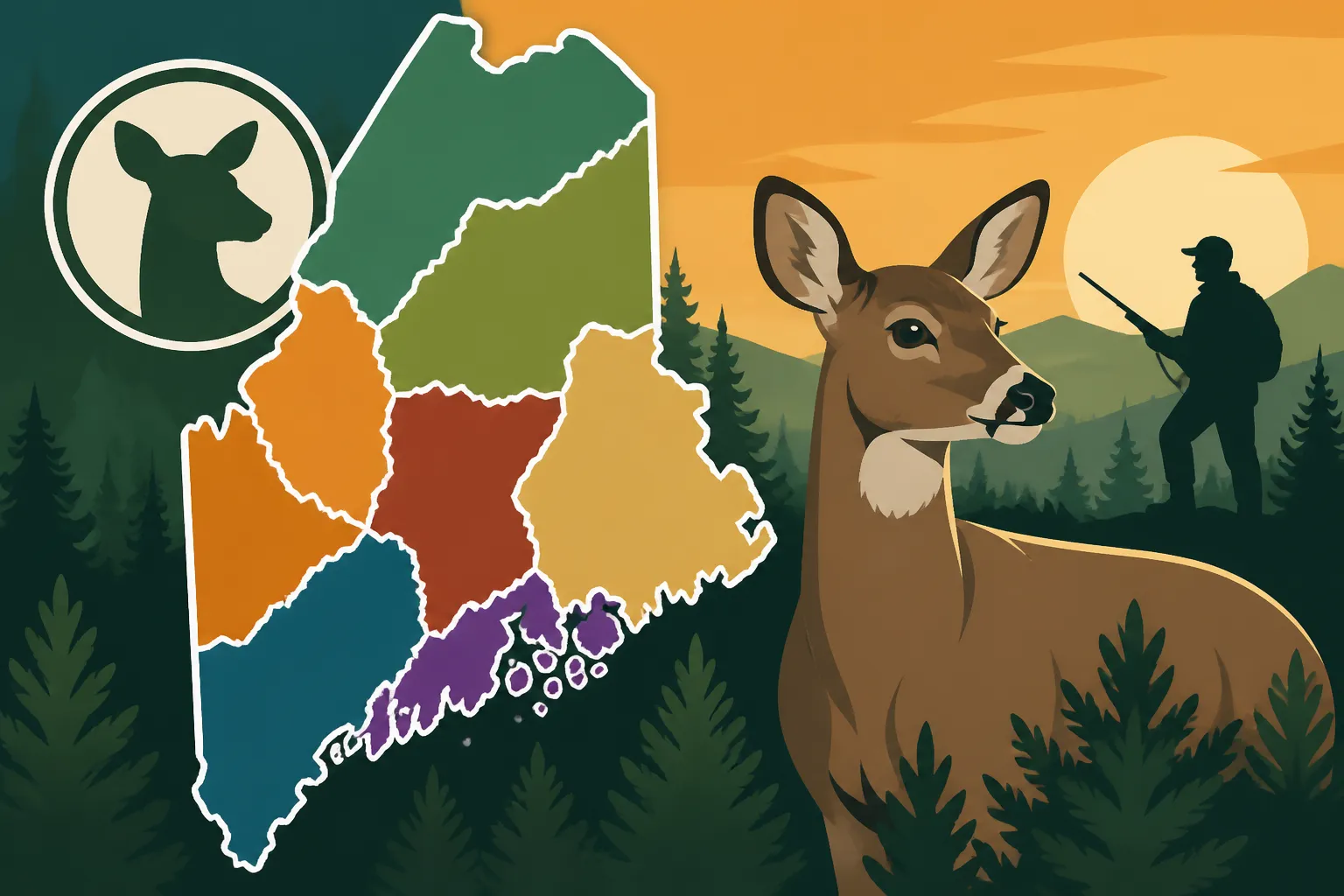
Maine is divided into 29 distinct WMDs. These districts aren't arbitrary lines on a map; they are carefully drawn geographic areas based on biological, ecological, and sociological factors. Biologists consider habitat types, deer population densities, winter severity, human population density, road networks, and agricultural activity when defining these boundaries. Each WMD represents a unique deer management unit where specific goals can be set and achieved.
The MDIFW constantly monitors deer populations within each WMD. This involves various methods, including aerial surveys, deer registration data (when hunters successfully harvest and register a deer), winter tick impact assessments, and public feedback. They track trends in herd health, fawn recruitment, and buck-to-doe ratios. This rigorous data collection is what allows them to make informed decisions about permit allocations for the upcoming season, ensuring management strategies are responsive to local conditions. Understanding these regions is key, whether you're Scouting With the Maine Hunting App or learning Reading aerial photos for North Woods deer.
WMD-Specific Permit Allocations
Because each WMD has unique characteristics and population goals, the number of antlerless permits allocated varies significantly from one district to another, and even year to year within the same district. For example, a WMD in southern Maine with abundant agricultural land and a high deer density might receive a large allocation of permits to reduce crop damage and control population growth. Conversely, a WMD in the more severe northern Maine, where winter mortality can be high and deer density naturally lower, might receive a very limited number of permits, or even none at all, to protect the breeding stock.
This localized approach is what makes the system so effective. It allows the MDIFW to address specific challenges and opportunities within each area. Hunters often strategize their permit applications by researching which WMDs have historically offered more permits and therefore higher draw odds. You can often find this information on the MDIFW website or through hunting resources like GoHunt, which compiles historical draw data. This careful allocation is critical for achieving the state's overall deer management objectives.
Finding Your WMD and Permit Availability
Knowing your WMD is paramount, not just for antlerless permits but for all hunting regulations in Maine. Your hunting license might specify your residence WMD, but you're not restricted to only hunting there. You can apply for an antlerless permit in any WMD you choose.
To find specific WMD boundaries, you can consult official MDIFW maps, which are available online and sometimes in print. Many mapping applications, including the Scouting With the Maine Hunting App and platforms like GoHunt, now feature WMD overlays that make it incredibly easy to see where you are and what district you're in. This is particularly useful when scouting new areas or hunting near WMD borders.
When it comes to permit availability, the MDIFW releases the permit allocation numbers for each WMD annually, typically in the late summer before the application period opens. This announcement is eagerly anticipated by hunters across the state. These numbers will tell you exactly how many antlerless permits will be issued for each district, giving you a clear picture of where your chances might be best. Always double-check the current year's allocations, as they can change significantly from previous years based on the latest biological data.
Here's a quick look at some WMDs where residents historically may not need an antlerless permit to take an antlerless deer during the regular firearms season, though this is subject to change annually and often applies only to residents and specific dates. Always confirm with current regulations!
| WMD Number | General Location | Typical Antlerless Permit Requirement (Resident, General Firearms) | Notes/Reason |
|---|---|---|---|
| WMD 1 | Extreme North Maine (Allagash) | Often NO Permit Needed | Lower deer density, harsher winters. |
| WMD 2 | Extreme North Maine (St. John River) | Often NO Permit Needed | Lower deer density, harsher winters. |
| WMD 3 | Extreme North Maine (Fort Kent) | Often NO Permit Needed | Lower deer density, harsher winters. |
| WMD 4 | North-Central Maine | Often NO Permit Needed | Lower deer density, harsher winters. |
| WMD 5 | North-Central Maine | Often NO Permit Needed | Lower deer density, harsher winters. |
| WMD 6 | North-Central Maine | Often NO Permit Needed | Lower deer density, harsher winters. |
| WMD 7 | Northern Maine | Often NO Permit Needed | Lower deer density, harsher winters. |
| WMD 8 | Northern Maine | Often NO Permit Needed | Lower deer density, harsher winters. |
| WMD 9 | Northern Maine | Often NO Permit Needed | Lower deer density, harsher winters. |
| WMD 10 | Northern Maine | Often NO Permit Needed | Lower deer density, harsher winters. |
| WMD 11 | Central Maine | Often NO Permit Needed | Moderate deer density, winter severity. |
| WMD 18 | Western Mountains | Often NO Permit Needed | Moderate deer density, winter severity. |
Disclaimer: This table is for illustrative purposes and based on historical trends. Always refer to the current year's official MDIFW hunting regulations guide for the most up-to-date and accurate information on specific WMD antlerless permit requirements. Regulations can change annually.
Applying for a Maine Antlerless Permit: The Process
Once you understand the "why" and "where" of antlerless permits, the next step is the "how": actually getting one. The application process is straightforward but requires attention to deadlines and details.
Eligibility and Application Period
First off, to be eligible to apply for an antlerless permit, you must be a licensed hunter in Maine for the current year. This means you need your basic Maine Resident License Options or Maine Nonresident License Options in place before you can submit an application for the permit. You'll also need to have successfully completed your Maine Hunter Education Requirements, unless you fall under an exemption such as being a mentored youth hunter.
The application period for antlerless permits typically opens in late summer, often in July or August, and closes in late September or early October. These dates are firm, and late applications are not accepted, so mark your calendar! The MDIFW announces the exact dates well in advance, usually through their website and local media. Don't be that hunter who misses out because they forgot the deadline; set a reminder on your phone!
You can apply online through the MDIFW's licensing portal. It's usually a quick process, costing a small application fee, regardless of whether you draw a permit or not. When applying, you'll be asked to select your preferred WMDs. You can often list multiple WMDs in order of preference. The system will then try to award you a permit in your first choice, then move to your second, and so on, if your first isn't available.
The Lottery System Explained
Since the demand for antlerless permits almost always exceeds the supply in many WMDs, Maine uses a lottery system to fairly distribute the available tags. It's a true game of chance, but one that rewards consistent participation.
Here’s how it generally works: For every year you apply for an antlerless permit and don't get one, you earn a "point" for the following year. These points increase your odds of drawing a permit in subsequent lotteries. The more points you accumulate, the better your chances become. This system is designed to give long-time applicants who've been unlucky in the past a greater shot at success. For instance, if a WMD has 100 permits and 10,000 applicants, and you have 5 points, your name theoretically goes into the hat 5 times (plus your base entry), while someone with no points only gets one entry. It rewards persistence, which is a core value in hunting anyway!
However, it's important to remember that points are WMD-specific. If you apply for WMD 17 one year and WMD 23 the next, your points don't carry over between them. Your points accrue for the first WMD you list. If you are awarded a permit, your points reset to zero for that WMD. This system ensures fairness while still giving dedicated applicants a boost. Many hunters will stick to the same high-demand WMD for years, hoping their accumulated points eventually pay off.
Checking Your Application Status and Permit Delivery
The drawing for antlerless permits typically happens in mid-October, just before the general firearms season begins. You'll usually be able to check your application status online through the MDIFW's website. They’ll have a dedicated portal where you can enter your license number or application ID to see if you were successful.
If you are one of the lucky hunters to draw a permit, the actual permit will usually be mailed to you shortly after the draw. It’s a physical tag that you must have in your possession when hunting. This tag will specify the WMD for which it is valid and clearly state that it's for an antlerless deer. Make sure to keep it safe and secure, as losing it could mean losing your opportunity. Remember, these permits are generally non-transferable; the permit is issued to you, and only you can use it.
Maximizing Your Chances and Hunting Your Antlerless Tag
Drawing an antlerless permit is just the first step. The real fun begins when it's time to hit the woods. But there are strategies you can employ both before and during the season to make the most of your permit.
Strategic WMD Choices for Higher Odds
When you're filling out that application, don't just pick a WMD out of a hat. Do your homework! As mentioned, each WMD has different draw odds based on population goals and applicant numbers. The MDIFW often publishes a summary of Maine Antlerless Permit Draw Odds by District from previous years. Analyzing this data can be a game-changer.
If your primary goal is simply to get an antlerless tag, you might consider applying for WMDs that traditionally have higher success rates or lower competition. These are often WMDs with higher deer densities, particularly in southern and central Maine, or those that have larger harvest quotas to address specific management needs. On the other hand, if you have a specific hunting spot in mind and that WMD has historically low draw odds, you'll need to weigh your desire for that specific location against your desire for a permit.
Tools like GoHunt often compile this data into user-friendly interfaces, allowing you to easily compare WMDs and make an informed decision based on your priorities. Consider applying for a high-odds WMD as your first choice and then listing a WMD where you frequently hunt as a second or third option, just in case.
Hunting Tactics for Antlerless Deer
Hunting antlerless deer shares many similarities with hunting antlered bucks, but with a few key differences in focus. Your primary goal is to locate and harvest a doe or a fawn, which often means paying closer attention to feeding areas and bedding cover where family groups are likely to be found.
- Scouting is still king: Even for antlerless deer, knowing the land, fresh sign, and travel corridors is essential. Look for areas with abundant food sources like acorns, beechnuts, apples (if Hunting a Standing Apple Orchard), or agricultural fields (especially if Hunting Aroostook County Potato Country). Does and fawns will be heavily reliant on these consistent food sources.
- Focus on family groups: Does often travel in small family units, consisting of a mature doe, her fawns, and sometimes a yearling doe from the previous year. If you spot one deer, slow down and observe; there are likely more.
- Be patient in feeding areas: Setting up a ground blind or treestand overlooking a prime food source, especially in the late afternoon or early morning, can be highly effective. Using a Ground Blind on Posted-Free Land can offer excellent concealment.
- Move slowly and deliberately: Still-hunting through prime cover, especially during the Maine's Four-Week Firearms Deer Season, can also be productive. Pay attention to wind direction and thermals, especially in Wind and Thermals in Maine Hill Country.
Remember, while you're specifically targeting an antlerless deer, you might still encounter a trophy buck. Always be prepared for any opportunity the woods might present.
Field Dressing and Registration Requirements for Antlerless Deer
Once you've successfully harvested an antlerless deer, the process doesn't end there. Proper Field Dressing a Deer in Cold Weather is crucial to preserve the meat, especially if you're deep in the woods or the temperatures aren't cooperating. Get the guts out quickly to allow the carcass to cool down.
Maine has strict Maine Deer Registration Requirements. Every deer harvested, whether antlered or antlerless, must be registered with the MDIFW within 18 hours of harvest or within 24 hours if you're in the North Maine Woods. This can be done at an official deer registration station, and increasingly, through the Reporting a Deer Through Maine's App. Make sure you have your hunting license and antlerless permit (if applicable) handy, as this information will be needed for the registration process. The registration agent will collect data like the date of kill, WMD, sex of the deer, and sometimes age. This data is vital for the MDIFW's ongoing deer management efforts, providing real-time information on harvest rates and herd health. Always follow the specific instructions on your antlerless permit and the general hunting regulations for accurate and timely registration.
Common Questions and Misconceptions About Antlerless Permits
The antlerless permit system can sometimes be a bit confusing, leading to common questions and even some misunderstandings. Let's clear some of those up.
Can I Hunt Antlerless Without a Permit?
This is perhaps the most common question, and the answer is: it depends! In many of Maine's WMDs, especially those in the northern and western parts of the state where deer densities are lower or winters are more severe, residents are often allowed to harvest an antlerless deer during the general firearms season without needing a specific antlerless permit. These WMDs are designated by the MDIFW to allow for a more liberal harvest in areas where the deer population can sustain it or needs additional harvest pressure.
However, in other WMDs, primarily in the central and southern regions where deer populations are higher and habitat is more robust, an antlerless permit is absolutely required for anyone (resident or nonresident) to harvest an antlerless deer during the general firearms season. You must check the current year's hunting regulations and map out your WMD of choice to know the specific rules for that area. The MDIFW explicitly lists Which WMDs Allow Antlerless Without a Permit each year, so there's no excuse for not knowing before you head afield. Always consult the official regulations or a trusted resource like GoHunt's interactive maps for the most current information. If in doubt, assume you need a permit!
Are There Special Rules for Youth or Landowners?
Maine recognizes the importance of encouraging youth hunters and acknowledging the contributions of landowners to wildlife habitat. As such, there are sometimes special considerations within the antlerless permit system.
- Youth Hunters: Maine has a dedicated Maine Youth Deer Hunt Rules weekend, typically held prior to the general firearms season. During this weekend, properly licensed youth hunters (usually aged 10-16) accompanied by a mentor can often harvest one deer of either sex (antlered or antlerless) without needing an antlerless permit, regardless of the WMD. This provides a fantastic opportunity for young hunters to gain experience and contribute to the harvest. Always check the specific dates and rules for the youth hunt weekend, as mentor requirements and other stipulations apply.
- Landowners: In some cases, landowners who own a certain acreage and meet specific criteria might have different antlerless permit considerations or even a slight preference in the lottery system, particularly in WMDs where deer damage is a significant concern. While not a universal exemption, it's worth checking the regulations if you are a substantial landowner. This is often part of broader Maine Landowner Preference Rules designed to foster good landowner-hunter relations and address specific management challenges on private lands. However, it's crucial to understand that simply owning land doesn't automatically grant an antlerless tag; specific applications and requirements still apply.
Understanding Antlerless Tag Transfer Rules
Generally speaking, antlerless permits in Maine are non-transferable. When you apply for and receive an antlerless permit, it is issued directly to you, and you are the only person legally allowed to use it. You cannot give your permit to a friend or family member, even if you decide not to hunt or if you've already filled your buck tag. This strict rule prevents misuse of the permit system and ensures that harvest quotas are accurately tracked to the individual hunter.
There are very limited exceptions, such as specific landowner permit rules in some instances, but for the vast majority of hunters, your antlerless permit is yours alone. It's important to be aware of this, especially if you're hunting in a group or a traditional Maine Deer Camp Traditions. Each hunter must possess their own valid license and any required permits for the game they intend to harvest. Attempting to transfer or use another hunter's permit can lead to serious legal consequences, including fines and loss of hunting privileges. Always abide by these regulations to ensure a legal and ethical hunt.
Disclaimer
Please remember that hunting regulations, including those pertaining to Maine Antlerless Permit Districts, can change annually. While this guide provides comprehensive information, it is always your responsibility to consult the official Maine Department of Inland Fisheries and Wildlife (MDIFW) website or the current year's printed hunting regulations handbook for the most up-to-date and accurate information before planning and executing your hunt.