Ruffed Grouse in Maine
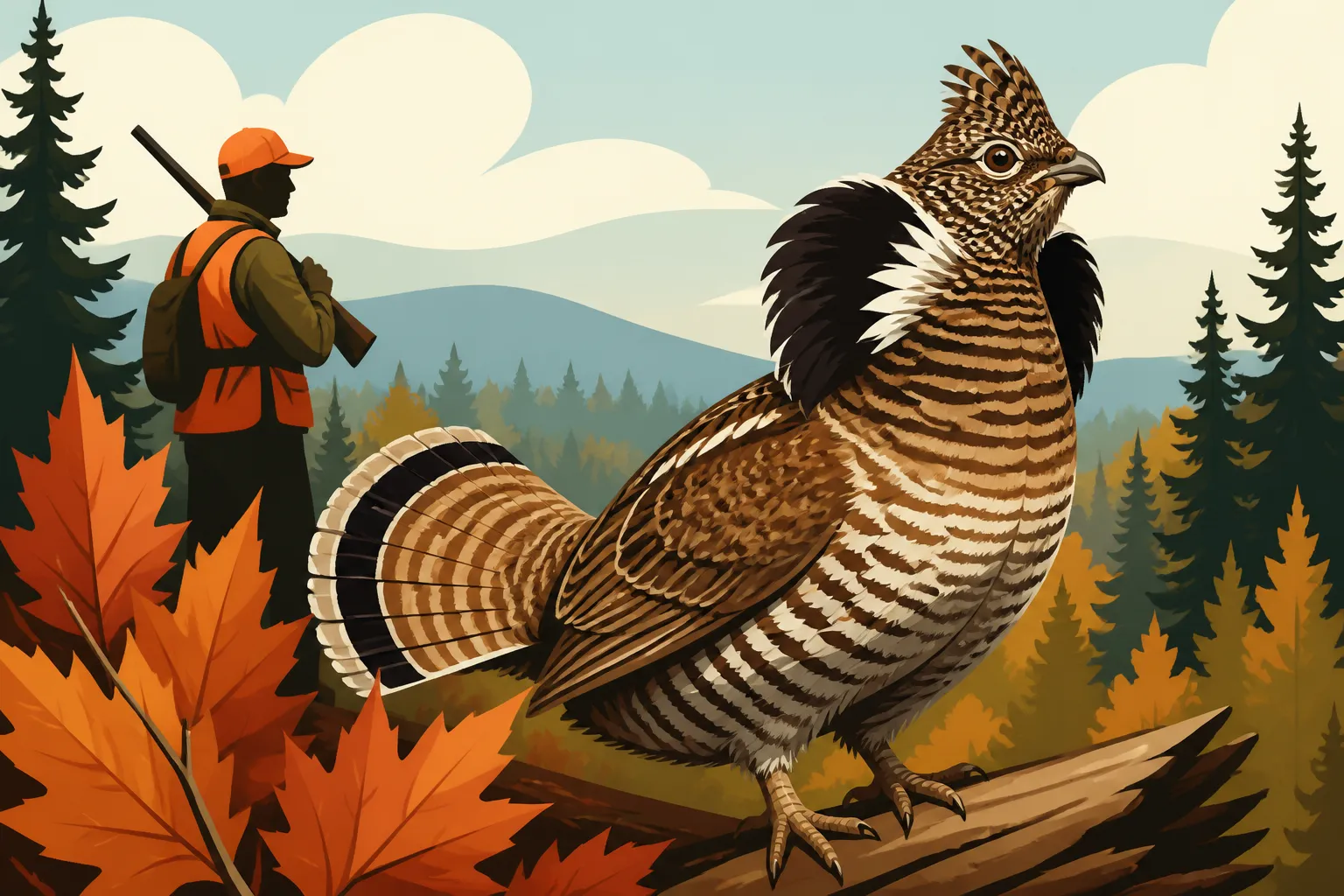
There’s nothing quite like the heart-stopping explosion of a ruffed grouse from beneath your feet, sending a rush of adrenaline through your veins and making your shotgun swing a split second too late. We’ve all been there, stumbling through thick Maine coverts, hoping for that tell-tale thump-thump-thump of powerful wings. This guide is dedicated to unraveling the mysteries of grouse hunting in our beautiful state, from understanding their habits to mastering the techniques that put these elusive birds in your game vest.
The Allure of Maine Ruffed Grouse: Why We Chase the Thunder Chicken
For many, grouse hunting isn't just a pursuit; it's a deep-rooted tradition, a way to connect with Maine's wild landscapes, and an annual pilgrimage that marks the true beginning of fall. There’s a magic to it that other forms of hunting sometimes can’t quite capture, a blend of physical exertion, mental focus, and the sheer unpredictability of the encounter. It's a sport that celebrates the simple beauty of the outdoors and the wildness of a bird often referred to as the "King of Upland Birds."
The Thrill of the Flush
Imagine the scene: you’re slowly picking your way through a dense stand of young popple, your shotgun carried at the ready. The air is crisp, the leaves are brilliant, and your dog, if you're lucky enough to have one, is working twenty yards ahead, nose to the ground. Suddenly, a whirring explosion erupts almost directly underfoot, a flurry of brown and gray feathers rocketing away through the timber. That sudden, violent burst from cover is the ultimate adrenaline jolt, the moment every grouse hunter lives for.
It's the unexpected nature of the flush that makes it so exhilarating. You might walk for an hour, your senses heightened, before a bird breaks cover, often when you least expect it. The quick reaction needed, the snap shot through a tangle of branches, and the uncertainty of whether you connected or just heard the bird vanish into the woods – it’s a pure, unadulterated rush. This isn't long-range rifle shooting; it's an intimate, close-quarters engagement that demands fast reflexes and a cool head.
Even if you miss, the memory of that flush, the sound of the wings, and the sheer surprise of it all often stays with you longer than a successful retrieve. It’s a testament to the wildness of the bird and the challenge it presents, ensuring that every successful shot feels truly earned. The constant anticipation, coupled with the sudden burst of activity, makes every step in the woods a potential adventure.
Habitat and Aesthetics
Maine offers some of the most stunning backdrops for grouse hunting imaginable. We’re talking about vast tracts of timberland ablaze with autumn colors, quiet alder swales bordering clear streams, and forgotten apple orchards slowly being reclaimed by the forest. These aren't just places to hunt; they are places to immerse yourself in the raw beauty of the Maine wilderness, to breathe deeply of the pine-scented air, and to watch the changing seasons unfold.
Walking through these grouse havens, you're not just looking for birds; you're appreciating the intricate tapestry of the ecosystem. You might cross paths with a meandering deer, hear the chatter of squirrels, or spot a flash of blue from a jay. The act of scouting for and hunting grouse naturally draws you into these vibrant habitats. It forces you to pay attention to the subtle details – the mix of tree species, the presence of berry bushes, the flow of water – all elements that define quality grouse cover.
Many hunters find as much satisfaction in the journey through these beautiful landscapes as they do in the actual harvest. It's a chance to unplug from the daily grind, to experience solitude, and to witness Maine's wild places in their full glory. The aesthetic experience is a huge part of the allure, transforming a simple hunt into a memorable outdoor adventure that rejuvenates the spirit.
Culinary Delights and Tradition
Let’s be honest, part of the joy of hunting is bringing delicious, wild game to the table. And when it comes to flavor, ruffed grouse are truly in a league of their own. Their lean, tender meat has a delicate, slightly earthy flavor that’s a far cry from anything you’ll find in a grocery store. It’s a gourmet experience that elevates a simple meal into something special, a direct result of your efforts in the field.
Preparing a grouse can be as simple as pan-frying the breasts with a little butter and herbs, or as elaborate as creating a sophisticated culinary masterpiece. Many hunters have their favorite camp recipes, passed down through generations, making the meal itself a continuation of the hunting tradition. It’s a chance to share the bounty of your hunt with family and friends, telling the stories of the flushes and misses that led to the meal. You might want to consider the broader topic of Best-Eating Game in Maine as you explore options beyond grouse.
Beyond the plate, grouse hunting is steeped in tradition. It's about crisp autumn mornings, the smell of gunpowder and fallen leaves, the camaraderie of hunting partners, and often, the silent wisdom of a well-trained bird dog. These traditions create lasting memories, forge stronger bonds, and connect us to a heritage of self-sufficiency and respect for the natural world. It’s not just about the bird; it’s about the entire experience and the stories that come with it.
Understanding Maine's Ruffed Grouse Population and Cycles
Ruffed grouse populations are fascinating, often described as cyclical, with booms and busts that can greatly influence a hunter’s success year to year. Maine is historically a fantastic state for grouse, and while some areas consistently hold birds, understanding these broader population dynamics is key to anticipating your hunting prospects and appreciating the challenges these birds face.
Population Dynamics and Trends
The ruffed grouse population in Maine, like in much of its range, is known for its roughly 10-year boom-and-bust cycle. This cycle is often linked to the population fluctuations of various small mammals, particularly snowshoe hare, which in turn affect predator populations like bobcats, coyotes, and foxes. When hare numbers are high, predators focus on them, leaving grouse relatively unmolested. As hare populations decline, predators switch to grouse, causing their numbers to drop.
Currently, Maine’s grouse population is considered stable, though local numbers can vary significantly based on habitat availability and local conditions. We aren't seeing the extreme highs and lows that some other states experience, largely due to a more diversified predator base and habitat across the state. However, persistent trends of habitat loss in some regions due to development and maturing forests do put pressure on local grouse numbers.
Understanding these cycles is more than just academic; it influences how you approach your season. If you're in a predicted "down" cycle, you might need to cover more ground or focus on the most prime, undisturbed coverts. Conversely, during a "up" cycle, birds might seem to be everywhere, offering more opportunities. For a deeper dive into these patterns, you can read more about Maine Ruffed Grouse Population Cycles.
The Role of Habitat in Grouse Numbers
More than any other factor, habitat dictates grouse density. Ruffed grouse are creatures of early successional forest – that is, young, regenerating woodlands. Think about areas that have been clear-cut a decade or two ago, now growing up into a dense tangle of saplings, shrubs, and brush. This dense cover provides essential protection from aerial predators like hawks and owls, as well as ground predators. It also offers a bounty of food in the form of buds, catkins, and berries.
Without this specific type of habitat, grouse simply can't thrive. Mature, old-growth forests, while beautiful, lack the dense understory and food sources grouse need for survival and reproduction. This is why active forest management, including selective logging and clear-cutting (when done responsibly), is actually beneficial for grouse populations in the long run. It creates the diverse age-classes of forest that these birds depend on.
Areas with a mix of different age classes of forest, interwoven with alder runs and small openings, are ideal. The more "edge" habitat – where different types of cover meet – the better. These edges provide travel corridors, feeding areas, and escape cover, all vital for a robust grouse population. Conservation efforts focusing on maintaining and creating these young forest habitats are crucial for ensuring future grouse hunting opportunities.
Maine Ruffed Grouse Harvest Numbers
Maine consistently ranks among the top states for ruffed grouse harvest in the Northeast, reflecting a healthy population and strong hunting interest. While specific numbers fluctuate year to year, thousands of grouse are typically harvested each fall across the state. These harvest numbers provide valuable data for the Maine Department of Inland Fisheries and Wildlife (MDIFW) to monitor the health of the grouse population and ensure sustainable hunting seasons.
The majority of the harvest occurs in the vast timberlands of central and northern Maine, where expansive tracts of suitable habitat exist. However, productive grouse hunting can be found even in more southern, agricultural regions where woodlots and old fields provide pockets of cover. Hunter effort, as much as bird numbers, influences the harvest; the more hunters are out, the more birds are likely to be taken.
It’s important to remember that these harvest figures are estimations based on hunter surveys and registrations. They reflect the overall health of the population and the success rates of hunters, providing a snapshot of the season’s productivity. MDIFW uses this data to make informed decisions about season lengths and bag limits, always with the long-term sustainability of the grouse resource in mind.
Prime Grouse Habitat in the Pine Tree State
Knowing where to look is half the battle when it comes to grouse hunting. These birds aren't just anywhere in the woods; they have very specific preferences. Maine’s diverse landscape, from its northern forests to its more settled southern regions, offers a variety of habitats that are ideal for ruffed grouse. Learning to "read the land" for these key features will dramatically increase your chances of success.
Young Forest Stands and Early Successional Growth
This is perhaps the quintessential ruffed grouse habitat. We're talking about areas that have been logged or have experienced a natural disturbance (like a fire or ice storm) within the last 5 to 25 years. These areas are characterized by a dense, almost impenetrable growth of saplings, often aspen (popple), birch, maple, and various shrubs. This thick cover, often referred to as "dog hair" by hunters, provides excellent protection from predators and a continuous food supply.
Grouse thrive in these regenerating stands because the dense canopy provides overhead cover, while the intertwining branches and brush below create a physical barrier that ground predators struggle to navigate. They feed on the buds and catkins of young trees, as well as the berries and seeds from various understory plants. When you're looking at a map, try to identify recent clear-cuts or areas marked for timber harvesting in the past decade or two. These are prime candidates.
Accessing these areas can be tough, requiring sturdy boots and a willingness to push through tangles. But the effort is often rewarded. Don't be afraid to walk logging roads that cut through these areas, or to penetrate deeper into the thickets. Birds often hold tight in the thickest stuff, so a slow, methodical approach is key. You might find similar habitat when Hunting a Clear-Cut Regrowth Edge.
Alder Runs and Streamsides
Another hotspot for grouse in Maine is the dense, wet thickets of alders that often line streams, wetland edges, and low-lying areas. These "alder runs" create an almost tunnel-like environment, providing excellent escape cover and consistent food sources, particularly in the form of alder catkins and the associated insects. Grouse love these areas, especially as the season progresses and other food sources become scarcer.
These linear strips of cover are often easy to identify on aerial maps as dark, dense lines snaking through the landscape. They act as natural travel corridors for grouse, linking different patches of upland habitat. When hunting them, you can often "walk the edge," with a dog working in the alders, or sometimes, you’ll have to plunge right in, knowing that the birds will often hold tight before flushing.
The damp ground underfoot can make for challenging walking, but the rewards are often worth it. Alders provide year-round cover, and their persistent catkins offer a reliable food source even into winter. Don't overlook these areas, especially on sunny days when birds might move out to sun themselves on the edges, or during periods of wet weather when they seek drier ground just outside the thickest cover.
Abandoned Orchards and Old Farmsteads
Maine has a rich history of agriculture, and scattered throughout its woodlands are countless abandoned apple orchards and old farmsteads slowly being consumed by the forest. These forgotten pockets are absolute goldmines for ruffed grouse. The gnarled apple trees, often still bearing fruit, provide a critical food source, especially in the early and mid-season. The surrounding brush, old stone walls, and regenerating fields offer ideal cover.
Grouse are drawn to the fallen apples, but also to the dense growth that inevitably surrounds these neglected areas. You'll often find a mix of thorny bushes, wild grapevines, and young hardwoods, all providing both food and protection. These spots can be smaller, more isolated coverts, so you might need to do some research or talk to locals to pinpoint them. Digital mapping tools, like those found on GoHunt, can be excellent for identifying old clearings, power lines, or anomalies in the forest canopy that might suggest a forgotten farm.
When hunting these areas, approach them slowly and deliberately, paying close attention to any old structures or dense thorn bushes where birds might be hiding. Grouse in orchards often flush into the surrounding woods, so be ready for a quick shot as they transition from open ground to dense cover. These historical remnants offer not only great hunting but also a fascinating glimpse into Maine's past.
Essential Gear for Maine Grouse Hunting
Grouse hunting in Maine isn't a gear-heavy sport, but having the right tools can make a significant difference in your comfort, safety, and success. From the perfect shotgun to the right clothing, thinking through your kit will ensure you're prepared for whatever the Maine woods throw at you.
Shotguns and Ammunition Choices
For ruffed grouse, lightweight, fast-handling shotguns are preferred. Over-unders, side-by-sides, and semi-automatics in 20-gauge or 28-gauge are very popular choices due to their lighter weight and quicker swing. While a 12-gauge can certainly be effective, it often feels a bit cumbersome during a long day of walking through thick cover. Many hunters opt for an open choke, like improved cylinder or skeet, given the close-quarters nature of most grouse flushes.
Ammunition-wise, smaller shot sizes are the standard. #7.5 or #8 lead shot is ideal for grouse. These smaller pellets create a dense pattern, which is crucial for hitting a fast-moving target in tight cover. You're not looking for knockdown power at long ranges; you're looking for pattern density at 15-30 yards. Carrying a few different loads isn't usually necessary; a good all-around upland load will serve you well.
Here’s a quick comparison of common shotgun choices:
| Shotgun Type | Gauge Recommendation | Choke Recommendation | Pros | Cons |
|---|---|---|---|---|
| Over/Under | 20, 28, 16 | IC/Mod or SK/IC | Balanced, often lightweight, quick point | Higher cost, two shots only |
| Side-by-Side | 20, 28, 16 | IC/Mod or SK/IC | Classic aesthetic, fast swing, two shots | Higher cost, can be less balanced |
| Semi-Automatic | 12, 20 | IC or Skeet | Less recoil, three shots (if legal) | Heavier, can be longer, sometimes finicky |
| Pump-Action | 12, 20 | IC or Skeet | Durable, affordable, versatile | Slower follow-up shots, often heavier |
Always check local regulations for magazine capacity restrictions. In Maine, generally, you cannot hunt migratory birds with more than a three-shell capacity (plugged to 2+1), but for upland birds like grouse, typical capacity rules apply.
Footwear and Clothing for Maine Terrain
Maine grouse hunting means walking, a lot of walking, often through wet, uneven, and brushy terrain. Your feet are your most important tool, so good footwear is non-negotiable. Waterproof, comfortable boots with excellent ankle support are essential. Look for boots designed for upland hunting or serious hiking, as they'll provide the necessary grip on slippery leaves and rocks, and keep your feet dry when crossing damp areas.
Clothing should be layered, breathable, and durable. You'll be exerting yourself, so you want to avoid cotton which holds moisture. Synthetic blends or merino wool are excellent base layers. Outer layers should be briar-resistant, especially your pants. Brush pants or chaps are highly recommended to protect against thorns and thick brush. A good upland vest or jacket with plenty of pockets for shells, water, and harvested birds is also a must-have.
And don't forget blaze orange! While not always legally required for upland birds during certain seasons, it’s always a good idea to wear blaze orange, especially when hunting public lands or in areas with multiple hunters. A blaze orange hat and vest can significantly increase your visibility to other hunters and even your hunting partners, promoting safety above all else. Maine Blaze Orange Requirements is a great resource to ensure you're always legal and safe.
Navigation and Safety Tools
Getting turned around in the Maine woods, especially in dense grouse cover, is easier than you might think. A reliable navigation system is crucial. While a traditional map and compass are always wise backups, modern GPS devices or smartphone apps (like GoHunt) are invaluable. These tools allow you to pinpoint your exact location, track your path, mark bird flushes, and navigate back to your vehicle with confidence.
Beyond navigation, a few safety essentials should always be with you. A small first-aid kit, a whistle, a fire starter, and some emergency food are good ideas. Carry plenty of water, especially on warmer early-season days. A fully charged phone (in a waterproof case) can be a lifeline, but remember that cell service can be spotty or non-existent in many prime grouse areas.
If you’re hunting with a dog, a GPS collar is an absolute game-changer. It allows you to track your dog's location, ensuring it doesn't get lost or out of range, and can even provide data on how far it's ranged. For those venturing into the more remote parts of the state, a satellite messenger device can provide critical communication capabilities even when outside of cell service. Preparedness is paramount for a safe and enjoyable hunt.
Effective Strategies for Hunting Ruffed Grouse in Maine
Grouse hunting is an art form, a blend of woodsmanship, patience, and quick reflexes. There are several proven strategies that Maine hunters employ, each with its own advantages and best-suited conditions. The most successful hunters are often those who can adapt their approach to the specific covert and the behavior of the birds on any given day.
Still-Hunting and Pushing Coverts
For those who hunt without a dog, or even those who prefer a more deliberate pace, still-hunting is an incredibly effective technique. This involves moving very slowly and deliberately through prime cover, often pausing for several minutes to listen and observe. Grouse have incredible camouflage and will often hold incredibly tight, relying on their ability to blend in. By pausing, you often make a nervous bird believe it's been spotted, prompting it to flush.
When still-hunting, pay close attention to the ground for tracks, droppings, or signs of feeding. Look for natural breaks in cover, small openings, or the edges of dense thickets where a bird might be sunning itself. It's a game of patience and heightened senses, moving almost imperceptibly, scanning every shadow and branch. The goal isn't to walk birds up, but to make them flush while you're ready.
Alternatively, "pushing" coverts involves systematically working through an area, often in a line with one or more partners. This is particularly effective in dense, larger coverts where you want to ensure you've covered the ground thoroughly. One or two hunters might act as "blockers" at the end of the covert, while others "walk through" and push birds toward them. Communication is key here, and safety dictates clear understanding of shot zones. Even small woodlots can be effectively "posted" using this method, especially if you have a team.
Hunting With Dogs: Pointers vs. Flushers
Hunting with a well-trained bird dog elevates the grouse experience to another level. The dog's nose can find birds you'd walk right past, making for more opportunities and often cleaner retrieves. The choice between a pointing dog and a flushing dog depends largely on personal preference and the type of cover you typically hunt.
Pointing Dogs (e.g., Brittanys, English Setters, German Shorthaired Pointers): These dogs are trained to "point" or freeze when they scent a bird, holding it in place until the hunter arrives. This allows the hunter to get into position for a shot before the bird flushes, often resulting in a more controlled, albeit fast, shooting opportunity. Pointers cover ground efficiently and systematically, making them excellent for larger, more open coverts or when you want to minimize the chance of a "wild flush."
Flushing Dogs (e.g., English Springer Spaniels, Labrador Retrievers): These dogs are trained to push birds out of cover, retrieving them after the shot. Flushers work closer to the hunter, busting through thick cover to get birds airborne. This style of hunting can be incredibly exciting, with birds flushing directly in front of you. Flushers are fantastic for dense alder runs and impenetrable thickets where a pointing dog might have trouble holding a bird. Regardless of the breed, a well-trained dog working methodically is a joy to behold and a huge asset. For those interested in working their dogs on other species, consider Running Beagles on a Maine Hare for a different type of experience.
Reading the Land and Seasonal Movements
Successful grouse hunters are keen observers of their surroundings. They understand that grouse don't just stay in one spot all season; their movements and preferred locations change with food availability, weather, and hunting pressure. Learning to "read the land" means understanding what specific features grouse favor and why.
In early season, birds might be more spread out, feeding on a variety of berries and insects. Look for areas with wild raspberries, blueberries, or dogwood berries. As the season progresses and fall foliage drops, they'll often concentrate more heavily in dense evergreen cover, like spruce and fir thickets, or in the aforementioned alder runs, for thermal protection and reliable food. Knowing how to identify these "hot spots" on an aerial map or through scouting is critical.
Consider how recent weather impacts bird behavior. After a hard rain, grouse might move to higher, drier ground. On a cold, windy day, they’ll tuck into thick, sheltered cover. Learning to anticipate these movements allows you to target your efforts more effectively. Using resources like GoHunt to analyze topography, water features, and vegetation types before you even step foot in the woods can give you a significant advantage, helping you pinpoint likely holding areas for Scouting With the Maine Hunting App.
Timing Your Maine Grouse Hunt for Success
The Maine grouse season is generous, extending for several months, but optimal hunting conditions and bird behavior change dramatically from the early fall through the onset of winter. Understanding these seasonal shifts allows you to adjust your tactics and increase your chances of finding birds.
Early Season: Foliage Challenges and Food Sources
The early part of Maine's grouse season, typically from October 1st, presents its own unique set of challenges and opportunities. The most obvious challenge is the dense foliage. With leaves still on the trees and shrubs, visibility is severely limited, making shooting opportunities fleeting and difficult. Birds often flush silently or appear and disappear in a blink, leaving you frustrated. This is where patience and quick gun handling become absolutely critical.
Despite the visual challenge, the early season offers a bounty of food for grouse. They'll be found foraging on a wide variety of wild berries – think wild raspberries, blueberries, partridgeberry, and dogwood. Insects are also still prevalent, providing an additional food source. Focus your efforts on areas where these foods are abundant, often found along old logging roads, clear-cut edges, and forest openings. Birds tend to be more spread out during this time, so covering ground is important.
This is also a great time to hunt with a dog, as their nose isn't hampered by the foliage. A pointing dog can hold a bird long enough for you to get into position, or a flushing dog can effectively push birds into the air, even if the shot is tough. The weather can be milder, making for comfortable walking, but be prepared for anything from warm, sunny days to cold, damp conditions.
Mid-Season: Falling Leaves and Active Birds
Mid-season, typically from late October through mid-November, is often considered the prime time for grouse hunting in Maine. The leaves have largely fallen, dramatically improving visibility in the woods. This means you have more time to react to a flush and clearer shooting lanes, leading to higher success rates for many hunters. The crisp autumn air invigorates both hunter and dog, and the birds themselves often seem more active.
During this period, grouse will shift their feeding habits as berries become less available. They'll focus more on tree buds, catkins (especially alder and birch), and leftover mast crops like acorns (if it's been a good acorn year, a rare occurrence in many parts of Maine this season). Concentrate your efforts on classic grouse coverts: young aspen and birch stands, dense alder runs, and areas with mixed conifers providing good thermal cover. The birds might start to "bunch up" a bit more in prime spots.
This is when you can really start to implement more strategic hunting patterns, working edges, and pushing specific coverts. The cooler temperatures mean dogs can work harder for longer periods, and scenting conditions are often at their best. This period also coincides with the peak of the deer rut in some areas, so be mindful of other hunters if you're out. While you're focusing on grouse, it’s worth noting that Hunting the Rut in Early November is a popular pursuit for many Maine hunters.
Late Season: Snow and Thermal Cover
As November turns into December and the first snows begin to fall, Maine grouse hunting transitions into its late-season phase. This can be some of the most challenging, yet rewarding, hunting of the year. The biggest advantage of snow is the ability to track birds. Fresh snow can reveal where birds are feeding, roosting, and traveling, allowing you to narrow down your search areas significantly.
Grouse behavior also changes. They become much more concentrated in dense thermal cover, primarily thick spruce, fir, and cedar swamps, or in extremely dense young hardwoods that still provide some overhead protection. They'll be feeding heavily on tree buds and catkins to build fat reserves for winter. Look for them along the edges of these dense areas, or tucked deep within them, especially during cold, windy days.
Hunting in deep snow requires specialized gear and can be physically demanding. Snowshoes might be necessary, and proper layering to stay warm and dry is paramount. However, the stark beauty of a snow-covered forest, combined with the chance to track and connect with a late-season grouse, makes it a truly unique experience. Birds will often hold incredibly tight in the cold, so a slow, methodical approach is key. You might find similar cold-weather strategies useful when Hunting Into the December Muzzleloader Close.
Regulations, Licenses, and Responsible Grouse Hunting in Maine
Hunting ruffed grouse in Maine is a privilege that comes with the responsibility of knowing and adhering to all state regulations. This ensures not only your safety and legality but also the long-term health of the grouse population and positive relations with landowners. Don't let ignorance be an excuse for a mishap or violation.
Maine Grouse Season Dates and Bag Limits
Maine offers one of the longest upland bird seasons in the country, giving hunters ample opportunity to pursue grouse. The season typically opens on October 1st and runs all the way through December 31st. This extended season allows hunters to experience grouse hunting in various conditions, from colorful fall foliage to crisp, snowy winter days.
The daily bag limit for ruffed grouse in Maine is generally 4 birds per day. The possession limit, which refers to the maximum number of birds you can have on your person or in your possession (e.g., at home, in camp, in your vehicle) at any one time, is typically 8 birds. It's crucial to confirm these dates and limits each year with the official Maine Hunting and Trapping Laws booklet, published by MDIFW, as regulations can occasionally change. Staying informed is your responsibility as a hunter. For the most current information, consult the official Maine Grouse Season Dates.
These generous limits reflect a healthy and sustainable grouse population in the state, managed carefully by wildlife biologists to ensure future generations can enjoy the same opportunities. Always count your birds carefully and never exceed your legal limits.
Licensing Requirements for Residents and Non-Residents
Before you even step into the woods, you need to ensure you have the proper licenses and permits. For both residents and non-residents, a valid Maine hunting license is required to hunt ruffed grouse. There are different options available, depending on your residency and other hunting interests.
For Maine Residents: You'll need a Resident Big Game Hunting License, or a Small Game Hunting License if you're only targeting grouse and other small game. If you're planning on hunting deer, bear, or moose, the big game license covers upland birds. There are also combination licenses available that bundle hunting and fishing privileges. For specific costs and options, check out Maine Resident License Options.
For Non-Residents: A Nonresident Big Game Hunting License or a Nonresident Small Game Hunting License will be required. These are typically more expensive than resident licenses. If you've never held a hunting license before, or haven't had one within a certain number of years, you may also need to show proof of having completed a hunter education course or its equivalent from another state. Maine also offers apprentice hunter licenses for those hunting with a mentor.
All hunters, regardless of residency, must comply with Maine's hunter education requirements. If you haven't completed a hunter education course, you'll need to do so, or present a previous license showing you've hunted legally. Maine Hunter Education Requirements outlines exactly what you need to know. Licenses can be purchased online through the MDIFW website, at various licensing agents (like town clerks or sporting goods stores), or by mail. Always carry proof of your license while hunting.
Ethical Hunting Practices and Landowner Relations
Responsible grouse hunting goes beyond just following the law; it encompasses ethical behavior and a deep respect for the land, wildlife, and other outdoor users. Always practice safe firearm handling, keeping your muzzle pointed in a safe direction and being absolutely certain of your target and what lies beyond it. Never shoot at sound or movement.
Respect for landowners is paramount in Maine, where a significant portion of hunting occurs on private land. While Maine has an "implied permission" tradition for unposted land, it’s always best to seek explicit permission, especially if hunting near homes or cultivated areas. Always leave gates as you found them, pack out all your trash (and maybe a little extra), and avoid damaging property. If land is posted, respect those signs without question. To learn more about land access, look into What Posted Land Means in Maine. Building good relationships with landowners helps ensure continued access for all hunters.
Ethical treatment of game is also key. Strive for clean, quick kills, and always make a diligent effort to recover any bird you shoot. This means having a good dog, or carefully marking the fall and thoroughly searching the area. Field dressing your bird quickly helps preserve the meat. By practicing these principles, you not only uphold the integrity of the hunting tradition but also secure its future in Maine.
Beyond the Hunt: Processing and Preparing Your Grouse
The hunt doesn't truly end until that delicious bird is on your plate. Properly processing and preparing your ruffed grouse is just as important as the hunt itself. It ensures the meat is at its best and honors the animal you've harvested.
Field Dressing and Transporting Your Bird
Immediately after harvesting a grouse, especially on warmer days, it's a good idea to field dress it. This involves removing the internal organs to allow the carcass to cool down quickly, preventing spoilage. You can either make a small incision and remove the guts, or simply cut the breast out entirely, leaving the rest of the bird. Most grouse hunters opt for the latter, as the breast and leg meat are the primary targets.
To breast out a grouse, lay the bird on its back. Pluck a small area of feathers directly over the breastbone. Using a sharp knife, make an incision directly down the center of the breastbone, just through the skin. Then, pull the skin back on either side. You'll expose the white breast meat. Carefully cut along one side of the breastbone, separating the meat from the bone. Repeat on the other side. This method is quick, clean, and leaves you with the prime cuts.
Once field dressed or breasted, place the meat in a game bag or a breathable container to allow air circulation. Avoid plastic bags if possible, as they can trap heat and moisture, leading to faster spoilage. Transport your birds quickly and keep them cool, ideally in a cooler with ice, especially if you have a long drive home or plan to hunt for multiple days. Proper handling in the field directly translates to better tasting meat at home.
Plucking vs. Breast Filleting
When you get your grouse home, you have two primary options for further processing: plucking the entire bird or simply filleting the breasts.
Plucking: This method preserves the entire bird, including the skin, and gives you the dark meat from the legs and thighs in addition to the breasts. It's often preferred by those who enjoy roasting or braising whole game birds, as the skin adds flavor and helps keep the meat moist. Plucking can be a bit tedious, requiring patience and a gentle touch, especially with the delicate skin of a grouse. You can either dry-pluck or scald the bird first to make the feathers easier to remove.
Breast Filleting: This is by far the most common and fastest method for grouse. As described in field dressing, you simply remove the breast meat from either side of the keel bone, discarding the rest of the carcass. Many hunters also choose to remove the leg and thigh meat, which is often done by simply twisting the leg off at the hip joint, or carefully cutting around the joint. The leg meat, being darker and tougher, often benefits from slow cooking or braising.
The choice depends on your culinary plans and how much effort you want to put in. If you're aiming for quick weeknight meals, just filleting the breasts is perfect. If you want a more traditional presentation or want to utilize all available meat, plucking might be worth the extra effort.
Simple and Delicious Grouse Recipes
Grouse meat is versatile and takes well to many preparations. The key is not to overcook it, as the lean meat can dry out quickly. Here are a few simple, delicious ideas:
- Pan-Seared Grouse Breasts: This is a classic. Pat the breasts dry, season with salt, pepper, and herbs (like thyme or rosemary). Heat a cast-iron skillet with butter or olive oil over medium-high heat. Sear the breasts for 2-4 minutes per side, depending on thickness, until golden brown and cooked through (internal temperature of 160-165°F). Serve immediately with wild rice or roasted vegetables.
- Grouse Scallopini: Slice the breasts thinly, dredge in seasoned flour, and quickly pan-fry in butter. Deglaze the pan with white wine or chicken broth, a squeeze of lemon, and maybe some capers for a bright, flavorful sauce. This preparation cooks very quickly and keeps the meat tender.
- Grouse and Wild Mushroom Risotto: Dice the grouse breasts and brown them in butter. Remove and set aside. Use the same pan to build a creamy wild mushroom risotto, adding the grouse back in during the last few minutes of cooking. The richness of the risotto complements the delicate flavor of the grouse beautifully.
- Braised Grouse Legs: If you've harvested the legs, these are best slow-cooked. Brown the legs in a Dutch oven, then add aromatic vegetables (onions, carrots, celery), herbs, and enough chicken or game stock to mostly cover. Braise in a low oven (300°F) for 1.5-2 hours, or until fork-tender. The meat will fall off the bone, perfect for shredding into a stew or serving over polenta.
No matter how you prepare them, enjoy the fruits of your labor and the connection to the wild that grouse hunting provides.
Disclaimer
Please note that hunting regulations, season dates, and bag limits are subject to change. Always consult the official Maine Department of Inland Fisheries and Wildlife (MDIFW) website or their current Hunting and Trapping Laws booklet for the most up-to-date and accurate information before planning your hunt. This guide is for informational purposes only and should not be considered a substitute for official legal documents or professional guidance.