Maine Turkey Harvest Numbers by WMD
The complex dance of understanding Maine's wild turkey populations and how to successfully hunt them often feels like trying to read tea leaves. With varying bag limits and regulations across different Wildlife Management Districts (WMDs), it can be incredibly frustrating to figure out where to focus your energy for the best chance at a gobbler or a fall flock. This comprehensive guide will peel back the layers of Maine's turkey harvest numbers by WMD, equipping you with the knowledge to interpret this crucial data and make informed decisions for your next hunting adventure.
Understanding Maine's WMD System for Turkey Hunting
Before we dive into the nitty-gritty of harvest numbers, it's essential to grasp the framework that Maine Inland Fisheries and Wildlife (MDIFW) uses to manage its diverse wildlife populations: the Wildlife Management Districts (WMDs). These aren't just arbitrary lines on a map; they are the backbone of how game populations are monitored, managed, and ultimately, how hunting seasons and bag limits are set.
What Exactly is a WMD?
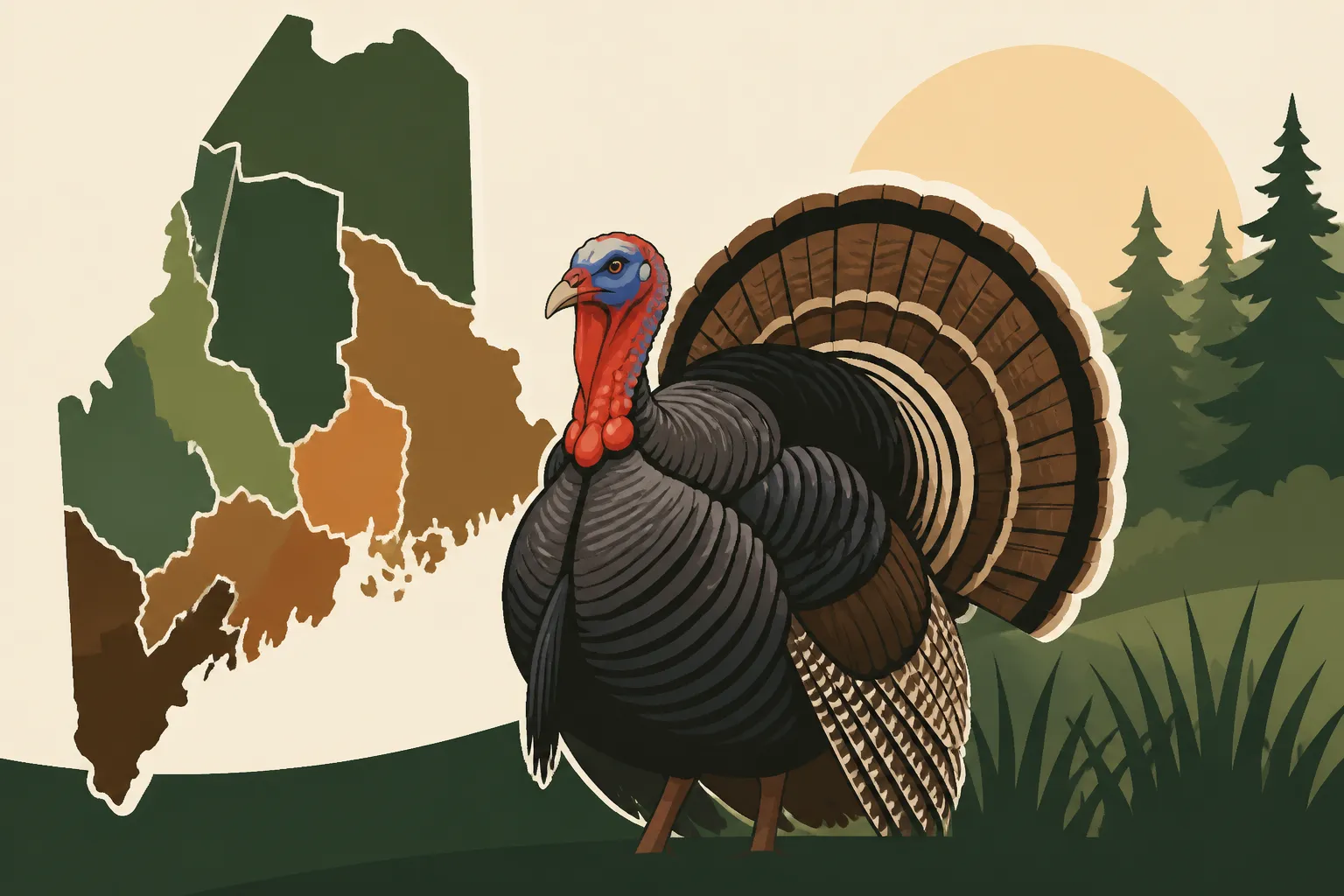
A Wildlife Management District, or WMD, is a geographically defined area that MDIFW uses for specific wildlife management purposes. Think of them as individual management units. Maine is carved into 29 distinct WMDs, each with its own set of characteristics in terms of habitat, human population density, and wildlife populations. For turkeys, these boundaries might follow major rivers, highways, power lines, or even county lines, creating distinct zones for management. For instance, WMD 15 in central Maine, near the Augusta area, will have very different habitat features and turkey densities than, say, WMD 4 in the remote North Maine Woods. These distinctions are critical because they allow MDIFW to tailor regulations to the specific needs and conditions of the local turkey population, ensuring sustainable hunting opportunities.
Why Turkey Regulations Vary by WMD
The primary reason why turkey regulations, especially bag limits, vary so much from one WMD to another comes down to population health and management goals. When turkeys were first reintroduced to Maine in the 1980s, primarily in the southern and central parts of the state, their populations grew and expanded at different rates. Areas with ideal habitat—a mix of agricultural fields, mature hardwoods for roosting, and diverse forest cover—saw faster and denser population growth. Consequently, MDIFW was able to establish more liberal bag limits in these thriving regions to allow for greater harvest, such as the Maine's WMD-Based Turkey Bag Limits that outline these differences.
Conversely, WMDs where turkeys are still establishing themselves, or where habitat might be more marginal, tend to have more conservative regulations to protect the breeding population. This adaptive management approach allows the state to carefully steward the resource, responding to factors like breeding success, winter survival, and habitat availability on a regional basis. For a deeper look into this, consider exploring historical Maine Turkey Population Trends to see how these populations have grown and shifted over time, directly influencing today's regulations. It's a testament to good wildlife management that we have such robust turkey hunting opportunities across the state today.
Dissecting Spring Turkey Harvest Data
Spring turkey hunting is arguably the most popular time for chasing gobblers in Maine, filled with the thrill of crisp mornings and booming calls. But what do the harvest numbers really tell us about where to find success? Diving into the data can reveal a lot about past performance and potential future hot spots.
Key Trends in Spring Harvest Success
Over the past decade, Maine's spring turkey harvest has shown generally robust and often increasing numbers, especially in the central and southern WMDs. These are the areas where turkey populations have had the longest to establish and grow. We're talking about districts like WMDs 15, 17, and 20, which consistently show high harvest figures year after year. This trend isn't just about more birds; it also reflects increasing hunter participation and improving hunter skill. The weather, of course, plays a massive role—a mild spring with an early green-up can mean active birds and better hunting conditions, while a late, cold spring can slow things down.
It's crucial to distinguish between WMDs that allow for a two-bird spring limit versus a one-bird limit. For instance, many of the prime southern and central WMDs fall under Maine's WMDs With Two-Bird Spring Limits, offering hunters the chance to fill two tags. This naturally contributes to higher total harvest numbers in those districts. In contrast, other WMDs, often in the northern or more sparsely populated areas, might be designated as Maine's WMDs With One-Bird Spring Limits to encourage continued population growth and stability. Understanding these distinctions is fundamental to interpreting the raw harvest data.
Interpreting Spring Gobbler Harvest Reports
Official harvest reports from MDIFW are a treasure trove of information, but you need to know how to read them. Typically, these reports break down the total number of turkeys harvested by WMD, and sometimes even by week or sex. When you look at these reports, pay attention not just to the total number of birds, but also to the trend over several years. Is a WMD consistently high, or does it fluctuate wildly? A consistent performer suggests a stable population and good habitat. You might also find data on average gobbler weight or beard length, which can give you a clue about the age structure of the flock in that area.
To access this data, the MDIFW website is your first stop. They usually publish annual harvest summaries after each season. Once you have the raw numbers, cross-referencing them with a detailed WMD map is key. Tools like GoHunt can be incredibly useful for overlaying WMD boundaries with satellite imagery and historical harvest data points, allowing you to visualize which areas within a WMD might be most productive. This kind of research helps transform abstract numbers into actionable intel for your scouting efforts.
The Importance of Hunter Participation and Effort
Here's a critical point that often gets overlooked: high harvest numbers don't always equate to the densest turkey population. Sometimes, they simply reflect higher hunter participation and effort in a particular WMD. Areas closer to population centers like Portland, Bangor, or Augusta might see more hunters because of easier access, even if the turkey density per square mile isn't as high as a more remote WMD. More boots on the ground can lead to more birds harvested, even if individual hunter success rates remain moderate.
This dynamic means that while harvest data points you to overall productivity, it doesn't always tell you how much hunting pressure you'll encounter. A WMD with moderately high harvest numbers but lower hunter density might offer a more rewarding, less crowded experience than a WMD with top-tier harvest numbers but where you're constantly hearing other calls. Balancing turkey density with the potential for hunting pressure is an art. For many, the pure excitement of Calling an Early May Gobbler Off the Roost outweighs any crowd concerns, but for others, solitude is paramount. It’s all about finding that sweet spot for your personal hunting style.
Analyzing Fall Turkey Harvest Numbers
Fall turkey hunting in Maine offers a completely different experience than the spring season. Instead of eager gobblers responding to calls, you're often targeting scattered flocks, and the strategies shift dramatically. Consequently, the harvest data for fall turkeys tells a distinct story, one that highlights unique challenges and opportunities for hunters.
Fall Hunting's Unique Challenges and Opportunities
The fall turkey season is characterized by generally lower harvest numbers compared to the spring. This isn't necessarily due to fewer birds, but rather the nature of the hunt itself. In spring, hunters capitalize on the gobbler's breeding instincts, making them vocal and responsive. In fall, turkeys are in family groups or bachelor flocks, focused on foraging for winter. The primary tactic often involves locating a flock, breaking it up, and then calling individual birds back together – a very different game! This distinct challenge means fewer hunters participate in the fall season, and those who do often require specialized skills.
Maine Fall Turkey Permit Rules often reflect these differences, sometimes offering more generous bag limits in certain WMDs to encourage participation and manage populations. For instance, in areas designated as Maine's Five-Bird Fall Turkey Districts, hunters can take a significant number of birds, provided they can locate and work multiple flocks. These districts often correspond to areas with historically strong and expanding turkey populations. In contrast, districts designated as Maine's One-Bird Fall Turkey Districts are usually managed more conservatively, often in areas where populations are still growing or where habitat is less abundant.
Regional Differences in Fall Turkey Harvest
Just like in spring, fall turkey harvest numbers show clear regional differences. The WMDs that perform well in the spring often, but not always, lead in the fall harvest too. These are typically the areas with the most extensive mix of mature hardwoods for roosting, agricultural fields providing consistent food sources, and diverse forest cover offering protection. Central and southern Maine WMDs continue to dominate fall harvest reports, as these are the same regions with the highest turkey densities.
However, some WMDs that might not be top-tier for spring gobblers could still offer decent fall hunting, especially if they have significant agricultural land. Farmers' fields, whether cut corn, soybeans, or even hay, provide crucial late-season food, drawing in large flocks. This concentration of birds can make breaking up a flock and calling them back a more viable strategy. It's worth noting that Which WMDs Close to Fall Turkey Hunting can also impact the distribution of hunter effort, pushing hunters into open districts. Therefore, understanding both current regulations and historical data is crucial for selecting a productive fall hunting zone.
The Impact of Acorns and Other Mast Crops
A significant factor influencing fall turkey distribution and harvest success is the annual mast crop. Turkeys are highly dependent on hard mast like acorns, beechnuts, and even soft mast like wild apples and berries. A bumper crop of acorns, for example, can spread turkeys out across the landscape, as food is abundant everywhere. This can make them harder to locate and concentrate, potentially leading to lower overall harvest numbers, even if the population is thriving. Hunters might find themselves working harder to find birds because they don't have to congregate in specific feeding areas.
Conversely, in years with a poor mast crop, turkeys tend to concentrate in areas where food is available, such as agricultural fields, specific oak stands that still produced, or private land food plots. This concentration can make them easier for hunters to locate and pattern, potentially leading to higher harvest numbers in those specific, food-rich locations. So, when you're looking at fall turkey harvest data, it's always wise to consider what kind of mast year it was. Hunters often spend time in late summer scouting for mast production, as it can give them a huge advantage in predicting where fall flocks will be spending their time.
Factors Influencing Turkey Harvest Success Beyond Numbers
While looking at harvest numbers by WMD is a fantastic starting point for planning your hunt, it's far from the only piece of the puzzle. Turkeys are complex creatures, and their presence and vulnerability to harvest are influenced by a myriad of environmental and human factors. Truly successful hunters understand these underlying elements.
Habitat Quality and Food Availability
The old adage "habitat is king" holds profoundly true for wild turkeys. A WMD might have impressive historical harvest numbers, but if the habitat isn't ideal, or if it's changing, those numbers could eventually dwindle. What constitutes good turkey habitat in Maine? It's a mosaic: mature hardwoods for robust roost trees and mast production, interspersed with open fields or clearings for strutting, bugging, and dusting. They also need good cover for nesting and protection from predators. Think of a patchwork of forests, old fields, and edges rather than vast, uniform timber.
Consistent harvest in a WMD is a strong indicator of consistent, high-quality habitat that supports strong turkey populations. Areas with a diverse range of food sources, from acorns and beechnuts to agricultural grains, are going to hold more birds throughout the year. If you're using tools like GoHunt, pay attention to the aerial and topographical maps within those high-performing WMDs. Look for these diverse habitat features. Smart hunters also utilize resources like Scouting With the Maine Hunting App to pinpoint potential turkey haunts by identifying prime habitat features, regardless of specific harvest numbers. Finding that perfect mix of food, cover, and roosting sites is often more important than just knowing a WMD had a high harvest last year.
Weather Patterns and Their Effect
Maine's weather is notoriously unpredictable, and it plays a significant, often underappreciated, role in turkey populations and hunter success. Severe winters, especially those with deep, prolonged snow cover, can negatively impact turkey survival, particularly for juvenile birds. Turkeys struggle to forage when snow is deep and crusted, making them more vulnerable to starvation and predation. A series of harsh winters in a specific WMD can lead to a noticeable dip in harvest numbers a year or two later.
Conversely, mild winters with less snow allow more birds to survive into the breeding season, leading to potentially higher recruitment of poults and, eventually, more birds for hunters. Spring weather is also critical: a cold, wet spring during the crucial nesting and brooding period can lead to high poult mortality, impacting fall populations. While you can't control the weather, understanding these historical weather patterns in relation to harvest data can provide a deeper understanding of population health. If a WMD saw a record-breaking harvest after a mild winter and ideal spring, it might be worth noting for future planning.
Hunting Pressure and Land Access
Harvest numbers can sometimes mask the true hunting experience. A WMD might have high overall harvest figures, but if it's also experiencing immense hunting pressure, your individual chances of success, or at least a peaceful hunt, might be diminished. WMDs with a high percentage of public land or private land with liberal access tend to draw more hunters. This increased pressure can make birds warier, often leading them to go quiet earlier in the day, or move to less accessible areas.
Conversely, WMDs with significant private land where permission is required, or more remote areas, might have lower overall harvest numbers but could offer a more spread-out hunting experience. This is where researching Maine's Private Land Access Tradition and understanding local land use becomes vital. While Maine has an implied permission law, some landowners choose to post their land. Knowing how to read a Reading a Maine Harvest Report in conjunction with knowing where hunters concentrate is key. Furthermore, in areas with high pressure, implementing smart tactics like strategic Decoy Placement for Pressured Maine Birds or focusing on less-traveled woodlots can significantly increase your odds. It's about finding that balance between available birds and avoiding the crowds if that's your preference.
Using Harvest Data to Inform Your Maine Turkey Hunt
Harvest data isn't just a collection of numbers; it's a powerful tool that, when understood and applied correctly, can significantly enhance your hunting strategy and increase your chances of success. It's about using past performance to predict future opportunities, but always remembering that wildlife is wild, and no two seasons are ever exactly alike.
Researching WMDs for Your Next Hunt
The first step in leveraging harvest data is to make it a central part of your pre-season research. Instead of just picking a WMD because it's familiar or close, dive into the MDIFW harvest reports for the last three to five years. Look for WMDs that show consistent, high harvest numbers for both spring and fall, depending on your target season. These are your "powerhouse" WMDs, indicating strong, stable turkey populations. Don't just look at the absolute highest numbers; sometimes a WMD that is consistently in the top 5-10, but not number one, might offer slightly less pressure.
Once you've identified a few promising WMDs, it's time to get specific. Use a mapping application, and definitely consider GoHunt's capabilities here, to overlay these WMD boundaries with land ownership maps, topographical features, and habitat types. Within a high-performing WMD, look for those areas with the ideal mix of agriculture, mature hardwoods, and water sources. Are there public lands within that WMD? How is access to private lands? This deeper dive moves beyond just numbers and helps you pinpoint specific hunting parcels or tracts that align with the WMD's overall success. Remember that Maine Turkey Population Estimate and specific WMD breakdowns can also help you narrow down your focus.
Balancing Data with Personal Experience and Scouting
While harvest data provides an invaluable big-picture view, it's only a starting point. You cannot, and should not, rely solely on statistics. The most successful hunters balance data-driven insights with their own personal experiences and, most importantly, boots-on-the-ground scouting. Harvest reports tell you where birds were taken, but not why or how they were taken. Your own scouting fills in those crucial gaps.
For example, harvest data might show a specific WMD has been excellent for fall turkeys, but your recent scouting trip reveals that a key oak flat had a mast crop failure this year. This local, real-time information would cause you to adjust your strategy, perhaps focusing on nearby agricultural fields instead. Conversely, you might scout an area in a WMD with only moderate historical harvest numbers, but find abundant fresh sign, active strut zones, or large flocks. This is where your intuition and direct observation override the generalized data. Always tie the numbers from a Reading a Maine Harvest Report back to what you see and hear in the woods yourself.
Crafting Your Strategy Based on Harvest Insights
Ultimately, all this research and analysis should culminate in a well-thought-out hunting strategy. If you've identified a WMD with consistently high spring gobbler harvest and a two-bird limit (e.g., Hunting a Two-Bird Spring WMD), your strategy might be more aggressive, focusing on covering ground and calling in multiple birds. You might feel confident attempting Run-and-Gun Turkey Tactics on Private Land or public land with good access.
On the other hand, if your research points you to a WMD with a more conservative one-bird limit and perhaps higher pressure, your approach might be more patient, relying on stealth and perfecting your setup like Setting Up Against a Big White Pine. For fall hunting, knowing if you're in a Hunting a Five-Bird Fall Turkey District vs. a single-bird zone will drastically change your flock-breaking and calling strategies.
Here's a simplified table illustrating how WMD data can inform your strategy:
| WMD (Example) | Spring Average Harvest (Last 3 Years) | Fall Average Harvest (Last 3 Years) | Spring Bag Limit | Fall Bag Limit | Hunter Density (General) | Recommended Strategy Considerations |
|---|---|---|---|---|---|---|
| WMD 15 | High (e.g., 200+) | Medium (e.g., 50-70) | 2 Birds | 5 Birds | Medium | Aggressive spring calling, fall flock breakup in ag fields |
| WMD 20 | High (e.g., 180+) | High (e.g., 80-100+) | 2 Birds | 5 Birds | Medium-High | Focus on high-traffic areas, precise decoy placement, consider scouting remote pockets |
| WMD 4 | Low (e.g., 10-20) | Very Low (e.g., 1-5) | 1 Bird | 1 Bird | Low | Focus on specific travel corridors/feeding areas, quiet approach, highly scouted for one bird |
| WMD 17 | Medium-High (e.g., 150+) | Medium (e.g., 40-60) | 2 Birds | 5 Birds | Medium | Blend aggressive and patient tactics, exploit varied habitat |
This table provides a snapshot of how harvest numbers, combined with bag limits and hunter density, can guide your decision-making, ensuring you're not just hunting, but hunting smart.
Disclaimer
The information provided in this guide is for general informational and educational purposes only. Hunting regulations and conditions can change rapidly. Always consult the official Maine Department of Inland Fisheries and Wildlife (MDIFW) website and current hunting law book for the most up-to-date and accurate regulations, season dates, and WMD-specific rules before planning any hunt. Hunting carries inherent risks, and it is the responsibility of each individual hunter to prioritize safety and abide by all laws.