Maine Coyote Range and Density
Many hunters and landowners across Maine share a common frustration: coyotes seem to be everywhere, yet pinning down their exact numbers or understanding their movements can feel like chasing a ghost. You hear their calls at dusk, spot them slinking across a distant field, or find their tracks in the snow, leaving you to wonder just how many there truly are and what impact they're having. This comprehensive guide will explore the eastern coyote's range and density in Maine, helping you better understand these adaptable predators and their place in our diverse ecosystem.
Understanding the Eastern Coyote in Maine
The eastern coyote, often a subject of intense debate and fascination, is a resilient and adaptable animal that has firmly established itself across Maine. It's not the same animal you might find out west; our Maine coyotes are larger, often exhibiting characteristics that suggest some historic interbreeding with wolves, which contributes to their impressive size and formidable hunting prowess. They've earned their reputation as intelligent, opportunistic predators, and understanding them is key to appreciating their role in the landscape.
A Brief History of Maine's Coyote Colonization
It might surprise some, but coyotes are not native to Maine in the same way deer or moose are. Their colonization of the state is a relatively recent phenomenon, largely occurring over the last century as forests were cleared and populations of larger predators like wolves were extirpated from the region. As timber operations opened up the landscape and prey species like deer began to rebound, coyotes, expanding their range from the west, found an ecological niche ready to be filled. They moved into Maine from the west and south, gradually spreading across the entire state. This expansion was a testament to their incredible adaptability, allowing them to thrive in varied environments, from dense northern forests to agricultural lands and even the fringes of suburban areas. This historical context is vital when considering Maine's Eastern Coyote Origins and how they've shaped our current wildlife dynamics.
Physical Characteristics and Adaptations
Maine's eastern coyotes are distinct. They are noticeably larger than their western counterparts, often weighing between 30 to 50 pounds, with some individuals pushing even heavier. Their coats vary, typically a grizzled gray or brownish-gray, sometimes with reddish tints on their legs and ears, and a black tip on their bushy tail. This larger size isn't just for show; it's a critical adaptation that allows them to hunt larger prey, especially in areas where deer are abundant. They possess keen senses of smell, sight, and hearing, making them incredibly difficult to sneak up on. Their lithe, muscular build allows for bursts of speed and remarkable endurance, essential for chasing down game in thick cover or across open fields.
Dietary Habits and Opportunistic Nature
Coyotes are true omnivores and incredibly opportunistic eaters, which is a major factor in their widespread success and varying densities across Maine. While they are highly effective predators of deer, especially fawns in the spring and weakened adult deer in harsh winters, their diet is incredibly diverse. They'll readily consume snowshoe hares, ruffed grouse, wild turkeys, and an array of rodents like voles and mice. Berries, apples, and other fruits become important seasonal staples. What makes them particularly adaptable is their willingness to scavenge, feeding on carrion from roadkill or animal carcasses left by other predators or hunters. This flexibility means that even if a preferred prey species has a down year, coyotes can often switch their diet to whatever is most available, allowing them to maintain stable populations. This broad diet means that understanding their presence often gives you clues about the health of other Maine Small Game Season Rules animals in the area.
Geographic Range and Distribution Across Maine
If you've spent any time outdoors in Maine, chances are you've either seen a coyote, heard one, or at least seen signs of their presence. Their adaptability allows them to exist virtually anywhere there's enough food and cover, but their numbers aren't evenly distributed. Understanding these patterns is critical for hunters, farmers, and anyone interested in wildlife management.
Statewide Presence: From Coast to North Woods
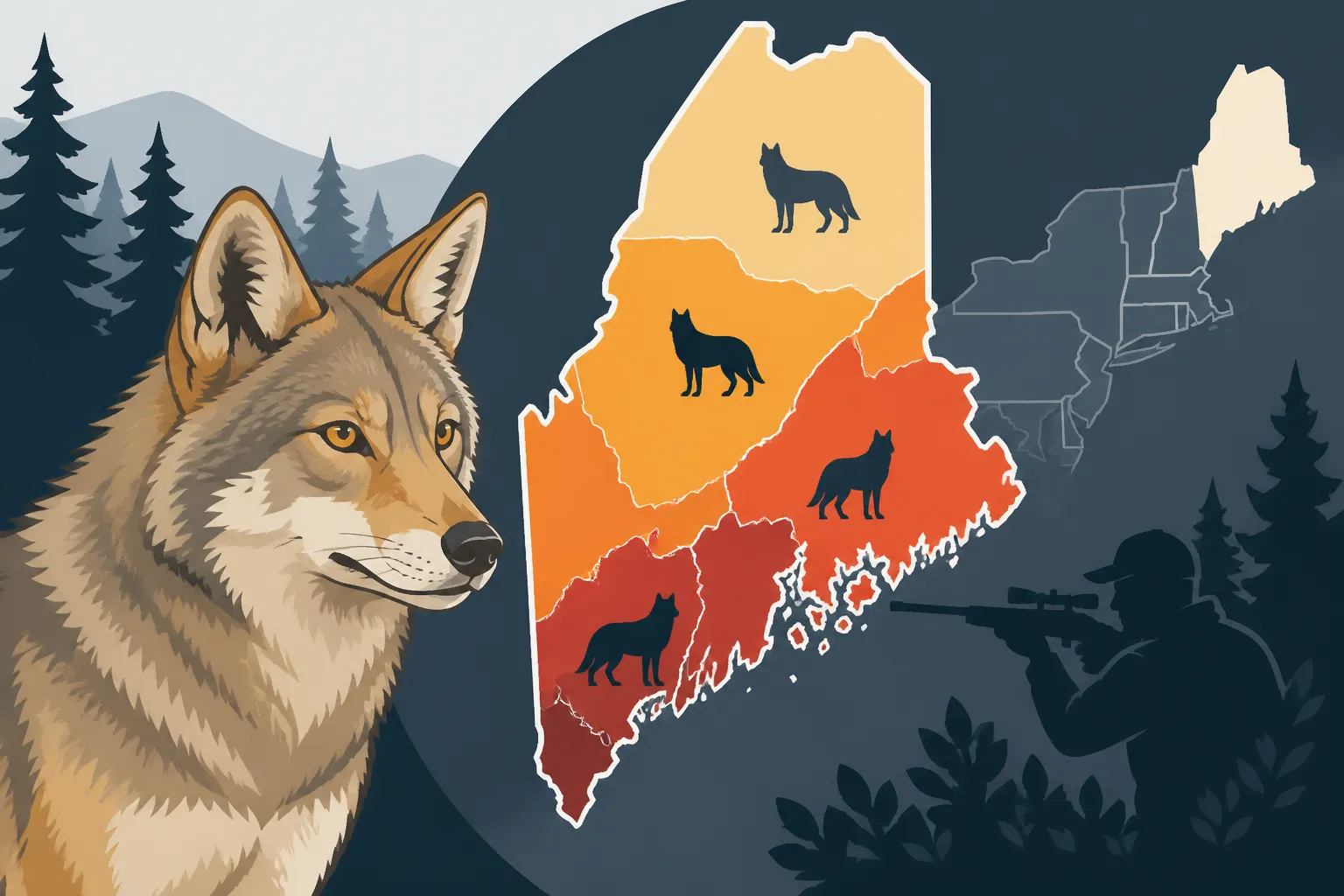
The eastern coyote has successfully colonized every corner of Maine, from the remote reaches of the North Woods, down to the bustling coastal regions, and throughout the agricultural heartland. There isn't a single Wildlife Management District (WMD) or county where coyotes are absent. However, their density can vary dramatically. In the vast, remote timberlands of northern Maine, for instance, coyotes are present, but their populations tend to be more spread out due to the sheer size of the landscape and generally lower prey densities for some species compared to more developed areas. They thrive in areas with a mix of forest and open land, using the cover for security and the open spaces for hunting.
Regional Variations in Coyote Distribution
While coyotes are ubiquitous, their numbers tend to be higher in areas that offer a rich mosaic of habitat and food sources. For example, central and southern Maine, with their blend of agricultural fields, regenerating woodlots, and proximity to human development, often exhibit higher coyote densities. These areas provide abundant prey like deer, turkeys, and small mammals, along with easy access to alternative food sources, including agricultural waste or even unsecured garbage. Conversely, the dense, unbroken spruce-fir forests of some extreme northern regions might support slightly lower densities simply because the habitat is less diverse in its food offerings, although they are still present. Tools like GoHunt can be incredibly useful here, allowing you to examine aerial photos and topographic maps to identify these varied habitat types and predict where coyote populations might be more concentrated.
Human-Wildlife Interface: Coyotes in Suburban and Rural Settings
One of the most noticeable aspects of coyote distribution in Maine is their increasing presence in areas adjacent to human habitation. It’s no longer uncommon to hear coyotes howling on the outskirts of towns or even see them crossing roads in residential areas. These environments offer a bounty of resources: abundant deer populations, discarded food, and often less hunting pressure than rural areas. While coyotes generally maintain a healthy fear of humans, their adaptability means they learn to navigate these landscapes with remarkable stealth. This can lead to conflicts with domestic animals, particularly free-roaming cats and small dogs, and highlights the need for responsible pet ownership and proper waste management in these interface zones.
Factors Influencing Coyote Density in Maine
The number of coyotes per square mile isn't static; it's a dynamic figure constantly influenced by a complex interplay of environmental factors. Understanding these drivers helps explain why one area might seem overrun with coyotes, while another, seemingly similar, has fewer.
Food Availability and Prey Abundance
Perhaps the most significant factor influencing coyote density is the availability of food. Areas with robust populations of white-tailed deer, especially where fawns are plentiful, will naturally support more coyotes. Deer fawns represent a critical food source, particularly in the spring and early summer, providing a high-calorie meal for lactating females and their pups. Similarly, regions rich in snowshoe hare, wild turkeys, or even agricultural rodents can sustain higher coyote numbers. When prey populations fluctuate due to harsh winters or disease, coyote densities may see a corresponding dip or dispersal as animals seek new territories with better food prospects. Hunters often notice this cycle, linking Maine Deer Herd Size to the prevalence of other predators.
Habitat Quality and Cover
Coyotes are masters of utilizing varied habitat, but certain features enhance their ability to thrive and thus increase their density. Dense thickets, regenerating clear-cuts, and mixed hardwood-conifer forests provide excellent cover for resting, denning, and ambushing prey. Swamps and wetlands can also offer secure travel corridors and hunting grounds. Areas with a mosaic of these cover types interspersed with open fields or logging roads create ideal conditions, allowing coyotes to move undetected, hunt efficiently, and raise their young. Conversely, vast, unbroken mature forests, while still home to coyotes, might support slightly lower densities simply because they lack the diverse cover and edge habitat that coyotes so effectively exploit.
Human Activity and Hunting Pressure
Human activity plays a dual role in shaping coyote densities. On one hand, human development, with its associated food waste and fragmented landscapes, can inadvertently provide more resources, leading to higher localized densities in some areas. On the other hand, hunting and trapping pressure can directly impact coyote numbers. In Maine, coyotes are classified as a small game species, and hunters can pursue them year-round, with specific Predator and Furbearer Hunting in Maine regulations in place. While studies suggest that hunting alone often struggles to significantly reduce overall coyote populations over the long term due to their high reproductive rates and compensatory mechanisms, consistent pressure in specific areas can lead to localized reductions or shifts in their distribution. This is especially true for Night Hunting Rules for Maine Coyotes, where targeting them at night can be effective.
| Region | Typical Coyote Density | Key Influencing Factors | Common Prey | Hunting Pressure |
|---|---|---|---|---|
| North Maine Woods | Lower (Widespread) | Vast unbroken forest, limited agricultural edges, harsh winters | Deer (fawns), snowshoe hare, moose (calves), small rodents | Moderate (primarily recreational hunters, trappers) |
| Central Maine Farmland | High (Concentrated) | Mix of agriculture, woodlots, abundant deer and small game | Deer, wild turkey, small mammals, domestic animals, agricultural waste | Moderate to High (seasonal hunting, landowner complaints) |
| Southern Maine/Coastal | High (Concentrated) | Fragmented forest, suburban interface, high deer density | Deer, small mammals, domestic animals, human refuse | Low to Moderate (less accessible hunting land, residential areas) |
| Western Maine Mountains | Moderate | Mixed forest, varied topography, good cover | Deer, snowshoe hare, grouse, moose (calves) | Moderate (recreational hunters) |
| Downeast/Washington County | Moderate | Mixed forest, blueberry barrens, coastal influence | Deer, snowshoe hare, small birds, rodents | Moderate (recreational hunters, trappers) |
Coyote Behavior and Habitat Preferences
To truly understand where coyotes live and why their numbers fluctuate, it’s essential to delve into their daily lives, how they interact with their environment, and what specific habitat elements they seek out. These behaviors are finely tuned to survival in Maine's varied landscape.
Denning Habits and Family Structure
Coyotes are monogamous, forming strong pair bonds, and typically breed in late winter. After a gestation period of about 60-63 days, pups are born in early spring, usually April, in a den. These dens are often found in secluded areas, beneath tangled roots of fallen trees, in rock crevices, under dense brush piles, or sometimes in abandoned burrows of other animals. The male and female parents are highly protective of their pups, and both participate in raising the litter, which can range from 4 to 8 pups, sometimes more depending on food availability. Knowing where coyotes might den can give hunters an edge when scouting, especially during the spring and summer months before pups disperse. These family groups often operate within a defined territory.
Seasonal Movements and Territoriality
Coyote movements are often dictated by food availability and the needs of their family unit. During the denning season, parents will stay relatively close to their den site, expanding their hunting range as the pups grow and require more food. As fall approaches and pups begin to disperse, individual coyotes may travel significant distances to establish their own territories. Adult coyotes, particularly breeding pairs, are territorial, marking their boundaries with scent and vocalizations. This territoriality means that while overall density might be high, the actual distribution can be somewhat spread out, with different family groups claiming specific areas. Understanding these seasonal shifts is crucial for any hunter interested in Coyote Calling Maine Farm Country or tracking patterns.
Preferred Cover Types and Travel Corridors
Coyotes are masters of stealth and concealment, and their preferred habitat types reflect this. They gravitate towards areas with dense undergrowth, such as regenerating clear-cuts, young conifer stands, and alder thickets, which provide excellent cover from both prey and humans. These areas also often harbor high densities of small game like snowshoe hares. They use natural linear features like logging roads, old stone walls, wooded fencerows, and creek bottoms as efficient travel corridors, especially at dawn and dusk. When scouting using mapping software, look for these "edges" where different habitat types meet – a forest edge bordering a field, a swamp meeting an upland, or a river corridor. These are often prime areas for coyote activity and where you might find significant sign. GoHunt, for instance, offers robust map layers that can highlight these very features, aiding in your scouting efforts.
Impact of Coyotes on Maine's Ecosystem and Other Wildlife
The presence of a widespread, adaptable predator like the eastern coyote inevitably has ripple effects throughout Maine's ecosystem. While often viewed through the lens of predation on game species, their role is far more complex, extending to competition with other carnivores and even disease dynamics.
Predation on Deer and Other Game Species
One of the most talked-about impacts of coyotes in Maine is their predation on white-tailed deer. While healthy adult deer are formidable, coyotes are particularly effective predators of fawns, especially in the first few weeks of their lives. In some areas, fawn survival rates can be significantly impacted by coyote predation. They also prey on deer weakened by severe winters or disease. However, it's important to remember that coyotes are just one factor influencing Maine Fawn Survival Rates; habitat quality, winter severity, and other predators also play roles. Beyond deer, coyotes will also prey on wild turkeys, especially poults and nesting hens, and various small game like snowshoe hares and ruffed grouse. Their consistent presence means they exert a constant pressure on these prey populations, which can contribute to population cycles.
Competition with Other Predators
With the return of some of Maine's larger predators, such as the bobcat and even recovering fisher populations, coyotes sometimes find themselves in direct competition for food and territory. Historically, red foxes were a dominant small- to medium-sized predator in many areas, but the arrival of coyotes has often led to a decline in fox numbers. Coyotes are larger and more aggressive, and will displace or even kill foxes, impacting the delicate balance of mesopredators. This dynamic illustrates the complex web of interactions that unfold when a new dominant predator like the coyote becomes established. While our bobcat populations are strong, competition for resources can still occur, especially during lean times.
Disease Dynamics and Public Health Concerns
Coyotes, like all wildlife, can carry and transmit diseases that can affect other animals, including domestic pets, and in rare cases, humans. Rabies, canine distemper, and parvovirus are among the more common diseases found in coyote populations. While outbreaks can occur, the Maine Department of Inland Fisheries and Wildlife actively monitors wildlife health, including these predators. The presence of these diseases can sometimes lead to localized population declines and can be a concern for hunters who handle harvested animals or dog owners whose pets might encounter coyotes. Additionally, coyotes can carry parasites like ticks and tapeworms. It’s a good reminder for hunters to practice safe handling of game and for pet owners to keep vaccinations current. Understanding how these diseases spread is part of a broader Maine Wildlife Disease Monitoring Program.
How Wildlife Biologists Monitor Maine's Coyote Population
Accurately gauging the population size and health of a species as widespread and elusive as the eastern coyote is a significant challenge. Wildlife biologists employ a variety of methods to collect data, which helps inform management decisions and provides a clearer picture of their ecological role.
Tracking Methods and Population Estimation
Biologists don't have an exact head count for every coyote in Maine, but they use a combination of direct and indirect methods to estimate populations and track trends. Live-trapping and radio-collaring coyotes allows researchers to study their movements, home ranges, survival rates, and reproductive success. This invaluable data helps understand how they utilize different habitats and adapt to environmental changes. Other indirect methods include track counts, scat surveys, and using remote trail cameras to document presence and activity. These methods, while not giving a precise number, provide crucial indices of population trends, indicating whether numbers are stable, increasing, or decreasing in specific areas. This long-term data collection is essential for sound wildlife management.
Harvest Data and Citizen Science
Data collected from hunters and trappers also plays a vital role in monitoring coyote populations. Each year, hunters and trappers contribute to harvest reports, providing information on the number of coyotes taken, the location of the harvest, and sometimes even biological samples. While harvest data doesn't directly translate to population size, it can indicate trends in coyote distribution and abundance over time. For instance, an increase in harvest reports from a particular WMD might suggest a rising coyote population or increased hunter effort in that area. Additionally, citizen science efforts, where members of the public report coyote sightings or observations, can offer supplemental information, especially regarding their presence in more populated areas. This kind of data complements more intensive scientific studies and contributes to a broader understanding of Reading a Maine Harvest Report for various species.
Research into Eastern Coyote Ecology
Ongoing research is continually expanding our understanding of the eastern coyote in Maine. Scientists study everything from their genetics to understand their wolf ancestry and population structure, to their diet through scat analysis, and their interactions with other wildlife. This research is crucial for developing effective wildlife management strategies that consider the coyote's role as a top predator. For instance, studies on Maine Predator Impact on Fawn Recruitment help managers understand how coyotes influence deer populations. This scientific approach helps move beyond anecdotal observations to a more evidence-based understanding of how coyotes fit into Maine's intricate and ever-changing wild landscapes. By continuously collecting and analyzing data, biologists strive to maintain healthy ecosystems for all species in Maine.
Disclaimer
This article is for general informational purposes only and does not constitute professional advice. Laws, prices and regulations vary by location and change over time. Consult a qualified professional for guidance on your specific situation.