Aroostook County Versus Southern Maine Deer
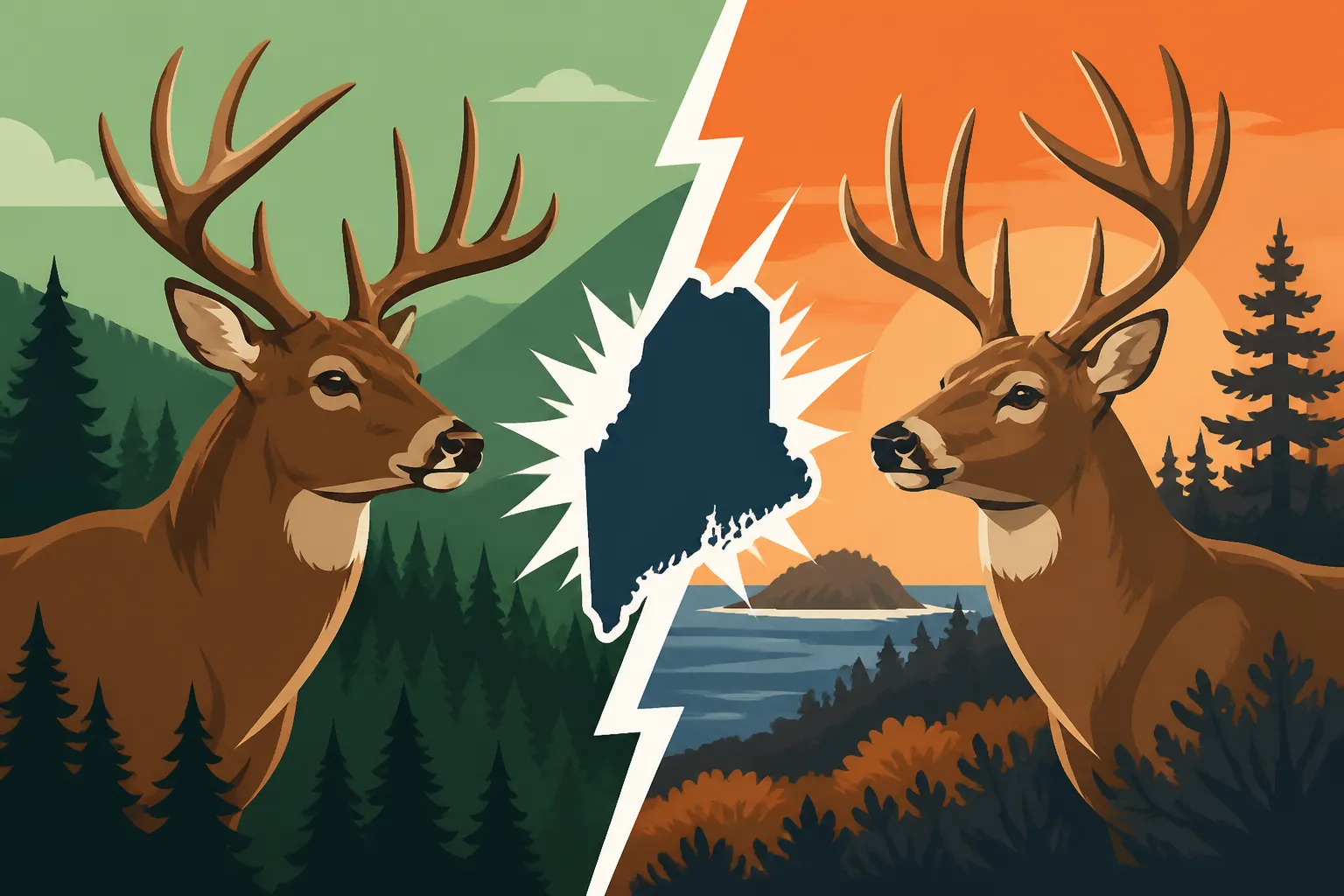
Trying to decide where to chase whitetails in Maine can feel like you're choosing between two entirely different planets. Hunters often find themselves scratching their heads, wondering whether to trek to the vast, wild expanses of Aroostook County or stick closer to the more settled, yet equally challenging, woods of Southern Maine. This guide is here to untangle that conundrum, diving deep into the unique characteristics, challenges, and rewards of deer hunting in both these distinct regions.
Understanding Maine's Deer Population Dynamics
Maine is a big state, and the deer herds within its borders are far from uniform. What you find in the northern reaches, particularly in Aroostook County, is often a stark contrast to what you'll encounter down south. This geographical variation isn't just a matter of different scenery; it profoundly impacts deer numbers, behavior, and ultimately, your hunting experience.
Northern Versus Southern Deer Density
When we talk about deer density, we're talking about how many deer are living in a given area. In Aroostook County, especially as you get into the vast stretches of commercial timberland or the true North Maine Woods, deer densities are generally lower than in the southern parts of the state. This isn't to say there aren't deer, but they're typically more spread out, often concentrated in specific pockets of suitable habitat. A lot of this comes down to the harsher winters, which can be brutal on deer survival, and the sheer scale of the landscape. When you're glassing a clear-cut or working a logging road, you might not see the sheer numbers you'd expect closer to civilization.
Southern Maine, on the other hand, often boasts a much higher deer density. Areas around towns like Gorham, Falmouth, and even further inland in places like Turner or Leeds, have robust deer populations. The milder winters, combined with more abundant and diverse food sources closer to agricultural lands and suburban fringes, allow deer to thrive. This means more deer sightings, more sign, and often, more opportunities, though these come with their own set of challenges we'll explore. If you're looking for sheer numbers, the southern counties often take the lead in the Maine Deer Population Estimate.
Historical Factors Shaping Deer Distribution
The current distribution of Maine's deer isn't just a modern phenomenon; it's deeply rooted in history. Decades, even centuries, of land use, logging practices, and human settlement have shaped where deer populations have flourished or struggled. In Aroostook, the historical pattern of logging created a patchwork of regenerating forests, providing browse, but the vastness meant deer couldn't always escape the deep snows of winter. Historically, deer populations have always been more tenuous in the far north.
Down in Southern Maine, as agriculture expanded and towns grew, so did the availability of diverse food sources and cover. Old orchards, abandoned farm fields, and the mix of hardwood and softwood forests provided excellent habitat. Furthermore, less extreme winters in the south meant better fawn survival rates and generally healthier deer, allowing populations to expand and persist even with increasing human development. Understanding this history helps explain why you'll find Northern Maine Deer Density significantly lower than in other parts of the state.
The Impact of Winter Severity
There's no getting around it: Maine winters are tough, and they play an absolutely critical role in shaping deer populations, especially in the north. Deep snow, prolonged cold, and limited access to food are major stressors for whitetails. In Aroostook County, where snow depths can easily reach several feet and linger for months, deer congregate in traditional wintering yards, often in dense cedar or spruce swamps. These Maine Deer Wintering Yards Explained are vital for survival, offering thermal cover and some protection from predators. However, even within these yards, deer burn through their fat reserves rapidly, and severe winters can lead to significant mortality, particularly among fawns and older deer. This is a key reason Why Deep Snow Limits Northern Maine Deer.
In Southern Maine, while winters are still cold and snowy, they are generally less severe. Snowfall tends to be lighter, thaws are more frequent, and the duration of deep snow cover is shorter. This allows deer to move more freely, access a wider range of food sources, and experience less physiological stress. The less intense winter pressure means a higher survival rate for fawns and adults, contributing directly to the higher deer densities seen in places like York and Cumberland counties. Hunters in these regions often see the results in healthier, more numerous deer in the fall.
Habitat and Landscape Differences
The physical landscape of Aroostook County versus Southern Maine is dramatically different, and these differences dictate everything from how deer live to how hunters approach them. Understanding these distinct environments is crucial for developing an effective hunting strategy and knowing what to expect when you step into the woods.
Aroostook County's Big Woods and Farmland
Aroostook County is often synonymous with "the big woods." It's characterized by vast tracts of privately owned commercial timberland, interspersed with agricultural fields, particularly potato and broccoli farms. When you head north, you're looking at mile after mile of mixed growth forest—spruce, fir, cedar swamps, and regenerating clear-cuts. This creates a challenging but rewarding environment for deer. Deer in these big woods are often more nomadic, covering vast distances between feeding and bedding areas. They can be incredibly wary, as human encounters are less frequent, allowing them to revert to more natural, wild behaviors.
However, Aroostook also has its iconic farmland. The open potato fields and dense bordering woods create fantastic edge habitat. Deer will utilize these fields heavily, especially after crops are harvested, feeding on leftover tubers or greens. This offers a different kind of hunting opportunity, often involving long sits overlooking fields or still-hunting the thick cover along the edges. Learning to hunt Aroostook County Potato Country or Setting Up on an Aroostook Farmland Edge requires different skills than navigating the deep timber. The key here is scale; everything feels bigger, and deer have ample room to disappear.
Southern Maine's Fragmented Forests and Suburban Edges
Southern Maine, particularly the coastal and central regions, presents a much more fragmented landscape. Here, you'll find a mosaic of smaller woodlots, agricultural fields (often corn or hay), suburban developments, and a higher density of roads and human activity. The forests are still extensive in many areas, but they are often broken up by private property lines, making access a major consideration. Deer in these areas are highly adaptable and often live in close proximity to humans. They become masters of using small pockets of cover, thickets, and even residential areas for bedding and travel.
Hunting in Southern Maine often means navigating these smaller tracts, understanding intricate property boundaries, and dealing with higher hunter density. You might find yourself Hunting Small Private Tracts in Maine or Working a Fencerow for Late-Season Deer that abuts someone's backyard. The deer here are accustomed to human presence and often become nocturnal or move during low-light hours. While there's a good chance of seeing deer, they can be incredibly pressured and difficult to pin down.
Food Sources and Their Influence
The availability and type of food sources also differ significantly between these regions, directly influencing deer behavior and health. In Aroostook's big woods, deer rely heavily on natural browse—twigs, buds, and regenerating saplings in cuts. Cedar swamps provide critical winter browse. When mast crops like beechnuts or acorns are good in the limited hardwood stands, deer will concentrate there. However, widespread mast failures can force deer to rely even more heavily on browse, which is less nutritious. The potato and other agricultural fields provide a rich, seasonal food source when available.
Southern Maine enjoys a more diverse and often more abundant buffet for deer. Besides natural browse and mast, deer here have access to a wealth of agricultural crops like corn, soybeans, and alfalfa. Abandoned orchards are prevalent, providing highly sought-after apples. Even suburban landscaping offers an easy meal. This consistent access to high-quality forage contributes to healthier deer, often with larger body weights and better antler development, especially in areas with robust acorn crops or where Hunting a Standing Apple Orchard is an option. When Hunting After a Poor Acorn Year, the differences in food availability between north and south become even more pronounced.
Hunting Strategies and Challenges
Given the vast differences in landscape, deer behavior, and access, the way you approach hunting in Aroostook County will be fundamentally different from how you hunt in Southern Maine. Each region demands specific strategies and a particular mindset to be successful.
Aroostook County Tactics: Big Woods and Field Edges
Hunting the big woods of Aroostook County is a test of endurance and woodcraft. Still-hunting vast tracts of timber, navigating regenerating clear-cuts, or posting on active logging roads are common methods. Success often comes down to covering ground, finding fresh sign, and having the patience to sit through long periods without seeing deer. Knowing how to Reading a North Woods Deer Yard is critical for finding winter concentrations. Hunters might spend days covering territory before finding a productive area. Long shots are more common here due to the open nature of some cuts and roads, so being proficient with your rifle out to 200+ yards is a definite advantage. Using a scouting app like GoHunt can be invaluable for pinpointing remote timber cuts, identifying potential bottlenecks along streams, or finding access points deep within the North Maine Woods.
When hunting the farmland edges, the strategy shifts. Early morning and late afternoon sits in ground blinds or treestands overlooking fields are popular. Knowing where deer enter and exit fields, often through Entry Routes Through a Cut Cornfield or along a specific tree line, is key. Hunters might also employ deer drives, but the vastness of the cover often makes them challenging to execute effectively. The cold can be a significant factor, so proper layering and extreme cold-weather gear are non-negotiable for long sits.
Southern Maine Tactics: Adapting to Pressure and Smaller Tracts
Southern Maine hunting requires a more nuanced, adaptable approach, often focused on precision rather than covering vast distances. Given the higher hunter pressure and fragmented landscape, deer become incredibly elusive. Hunters often focus on small woodlots, travel corridors between properties, or thick bedding areas. Setting up on funnels, pinch points, and natural deer crossings is paramount. This might mean Hunting a Funnel Between Two Woodlots or placing a stand on a field edge on private land. Scouting extensively to understand localized deer movement patterns is more critical than ever. Trail cameras become invaluable tools for understanding movement timing and patterns. GoHunt can assist by providing detailed property boundaries and identifying hidden cover pockets often overlooked by others.
Many southern Maine hunters utilize treestands or ground blinds, often positioned in thick cover to capitalize on short-range opportunities. Archery hunting is very popular in the expanded archery zones, which extend into December in some areas, offering a longer season closer to home. When the Maine Firearms Season Dates arrive, dealing with increased hunter presence becomes a factor, requiring even more careful planning and selection of low-pressure areas. Deer drives can be highly effective in smaller, defined woodlots, often involving fewer hunters than northern drives due to the limited space.
Gear and Preparation for Each Region
Your gear list will certainly vary depending on which part of Maine you're heading to. For Aroostook County, especially if you're venturing into the deep woods, rugged, warm, and waterproof gear is paramount. Think high-quality boots for trudging through snow and mud, durable outerwear that can stand up to thick brush, and a reliable backpack for carrying extra layers, food, water, and emergency supplies. Navigation tools, whether a GPS unit or a reliable mapping app like GoHunt, are essential because it's easy to get turned around in the vast, unmarked timberland. Consider a satellite communication device as cell service is often non-existent.
In Southern Maine, while warmth and waterproofness are still important, stealth and adaptability might take precedence. Quieter fabrics, lighter packs for shorter treks, and gear that allows for quick adjustments to changing conditions or property access are beneficial. You'll still need good optics for scanning denser cover, and perhaps more compact treestand setups for negotiating tighter woodlots. A mapping app that details property ownership is especially critical here for avoiding accidental trespass. Regardless of where you hunt, always have a quality first-aid kit, a sharp knife, and the means to quickly and cleanly field dress your deer.
Deer Quality and Success Rates
Every hunter dreams of that big buck, and while Maine is known for its impressive whitetails, the characteristics of those deer, and your chances of success, can vary significantly between Aroostook and Southern Maine. It's important to set realistic expectations based on the region you choose.
Antler Size and Body Weights by Region
There's a persistent myth that all the biggest bucks come from the "big woods" of northern Maine. While Aroostook certainly produces some absolute giants, these are often the exception rather than the rule. Deer in Aroostook, due to harder winters and more challenging forage, tend to have average body weights that can be slightly lower than their southern counterparts, especially if you're not in prime agricultural areas. Antler development can also be influenced by these factors. However, the deer that do survive multiple harsh winters in the north are often mature, robust animals that have learned to be incredibly wary. The bucks that grow large racks in Aroostook are truly survivors.
Southern Maine, surprisingly to some, is where many of the state's biggest bucks, in terms of body weight and antler mass, are consistently harvested. This is due to a combination of milder winters, abundant and diverse food sources (including agricultural crops and suburban browse), and often, a slightly older age structure in specific WMDs due to less intense hunting pressure on mature bucks in fragmented areas. For instance, counties like York, Cumberland, and Kennebec regularly produce impressive deer. If your goal is to harvest a truly large-bodied deer or a buck with significant antler mass, looking at regions known for Why Southern Maine Grows Bigger Bucks might be a smart move, and checking out Maine's Best Maine WMDs for Big Bucks is highly recommended.
Harvest Data and Hunter Success Expectations
Looking at Maine Deer Harvest Records by region can give you a clearer picture of what to expect. Generally, Southern and Central Maine WMDs tend to have higher overall deer harvests due to their higher deer densities. This translates to more opportunities for hunters, and often, higher hunter success rates for filling a tag. You might see more deer, and therefore have more chances to pick the deer you want.
In Aroostook County, while the overall harvest numbers might be lower, the success stories often involve more challenging hunts for very mature, elusive animals. A successful hunt in the north often feels like a greater accomplishment precisely because of the lower deer density and the vastness of the territory. It's not uncommon for hunters to go days without seeing a legal deer in the deep woods of Aroostook. However, for those who seek the true wilderness experience and the challenge of a "big woods" buck, the north holds an undeniable allure. Success here is often measured by the quality of the hunt as much as the tag filled.
Applying for Antlerless Permits in Different Zones
Maine uses an antlerless permit system (often called "Any-Deer permits") to manage deer populations and keep them in balance with available habitat. The availability of these permits, and your chances of drawing one, vary wildly between Aroostook and Southern Maine. Generally, WMDs in Southern and Central Maine have more antlerless permits available, reflecting the higher deer densities and the need to manage herd growth. Your odds of drawing a permit in these areas are often much higher, especially when you know which Maine Antlerless Permit Districts to target. You can typically find detailed odds when Applying for a Maine Antlerless Permit.
In Aroostook County, particularly the deep woods WMDs, antlerless permits are often very limited or even non-existent in certain years, especially after severe winters. This is a direct reflection of the lower deer densities and the state's efforts to allow the herd to grow. If you're hunting in Aroostook, you should generally expect to be hunting for an antlered buck, unless you've specifically drawn one of the scarce antlerless tags. Understanding these differences is crucial when planning your hunt and deciding where to focus your permit applications.
Accessibility and Hunter Pressure
One of the most significant differences between deer hunting in Aroostook County and Southern Maine lies in access to land and the amount of hunter pressure you're likely to encounter. This impacts how you plan your hunt, where you can go, and what kind of experience you'll have.
North Maine Woods Access and Remote Hunting
Aroostook County, for a large part, falls within or is adjacent to the North Maine Woods. This is a vast, privately owned working forest that offers unparalleled access to remote hunting experiences. While much of it is accessible via an extensive network of logging roads, there are gates and fees involved. Understanding The North Maine Woods Gate System and paying your day-use or overnight fees is part of the deal. Once you're in, you can often drive for miles, park, and walk into truly wild country. This setup allows for incredible solitude and the feeling of being miles from anywhere, which is a major draw for many hunters.
The challenge, however, is that "remote" also means fewer amenities and less immediate assistance if things go wrong. Cell service is spotty at best, and it's easy to get lost if you don't have good navigation skills and tools like GoHunt. The sheer scale of the landscape means you might be sharing vast areas with relatively few other hunters, but finding deer can be like finding a needle in a haystack. For those seeking a true wilderness hunt, the North Maine Woods of Aroostook offers an experience like no other, but it demands self-sufficiency and careful preparation.
Public versus Private Land in Southern Maine
Southern Maine presents a completely different access paradigm. While there are some excellent public lands, such as Wildlife Management Areas and Public Reserved Lands, a significant portion of the huntable ground is privately owned. Maine has a unique tradition of Maine's Private Land Access Tradition where permission is often implied for undeveloped land, but it's always best to ask, especially for cultivated or residential areas. This means knocking on doors, building relationships with landowners, and respecting posted signs. Understanding What Posted Land Means in Maine is absolutely vital, as trespassing can lead to serious legal issues and erode landowner goodwill.
Hunter pressure in Southern Maine, especially during the peak of the Maine's Four-Week Firearms Deer Season, can be quite high. You'll likely encounter more hunters, especially on accessible public lands or larger private tracts. This necessitates careful scouting to find less-pressured pockets, often those requiring a bit more effort to reach or those overlooked by others. Hunters in Southern Maine often find themselves Scouting Maine Private Land Before Season to secure access and identify prime spots.
Navigating Different Hunting Seasons and Regulations
While the core firearms deer season runs statewide, there are nuances in archery and muzzleloader seasons that affect hunting in both regions. Southern Maine, particularly the more populated WMDs, often features expanded archery zones, which allow for a longer archery season, sometimes extending well into December. This gives bowhunters a significant advantage and more opportunities closer to urban centers. Conversely, some WMDs in Aroostook and other northern regions may have shorter or different muzzleloader seasons.
Understanding the specific regulations for the WMD you plan to hunt is paramount. The availability of antlerless permits is a prime example of a regulation that varies greatly, as discussed earlier. Always double-check the current year's hunting law book or the Maine Department of Inland Fisheries and Wildlife (MDIFW) website. Tools like GoHunt can help you quickly identify WMD boundaries and research specific regulations for each zone, ensuring you're always hunting legally and effectively, no matter if you're chasing a late-season deer after Hunting the Muzzleloader Close in Mid-December in southern Maine, or heading into Aroostook.
Disclaimer
Please remember that hunting regulations, seasons, and land access rules can change annually. Always consult the most current Maine Department of Inland Fisheries and Wildlife (MDIFW) regulations before planning and embarking on any hunting trip in Maine. This guide provides general information and insights, but specific legal requirements always take precedence.