Glassing a Cut for a Bull Moose
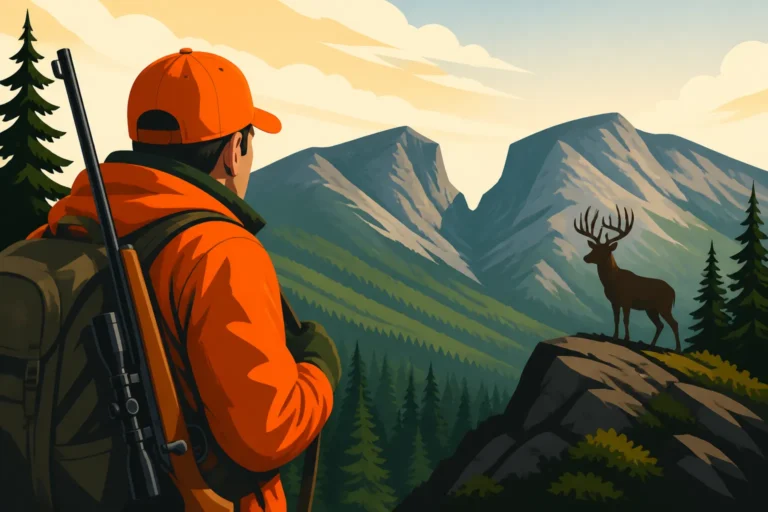
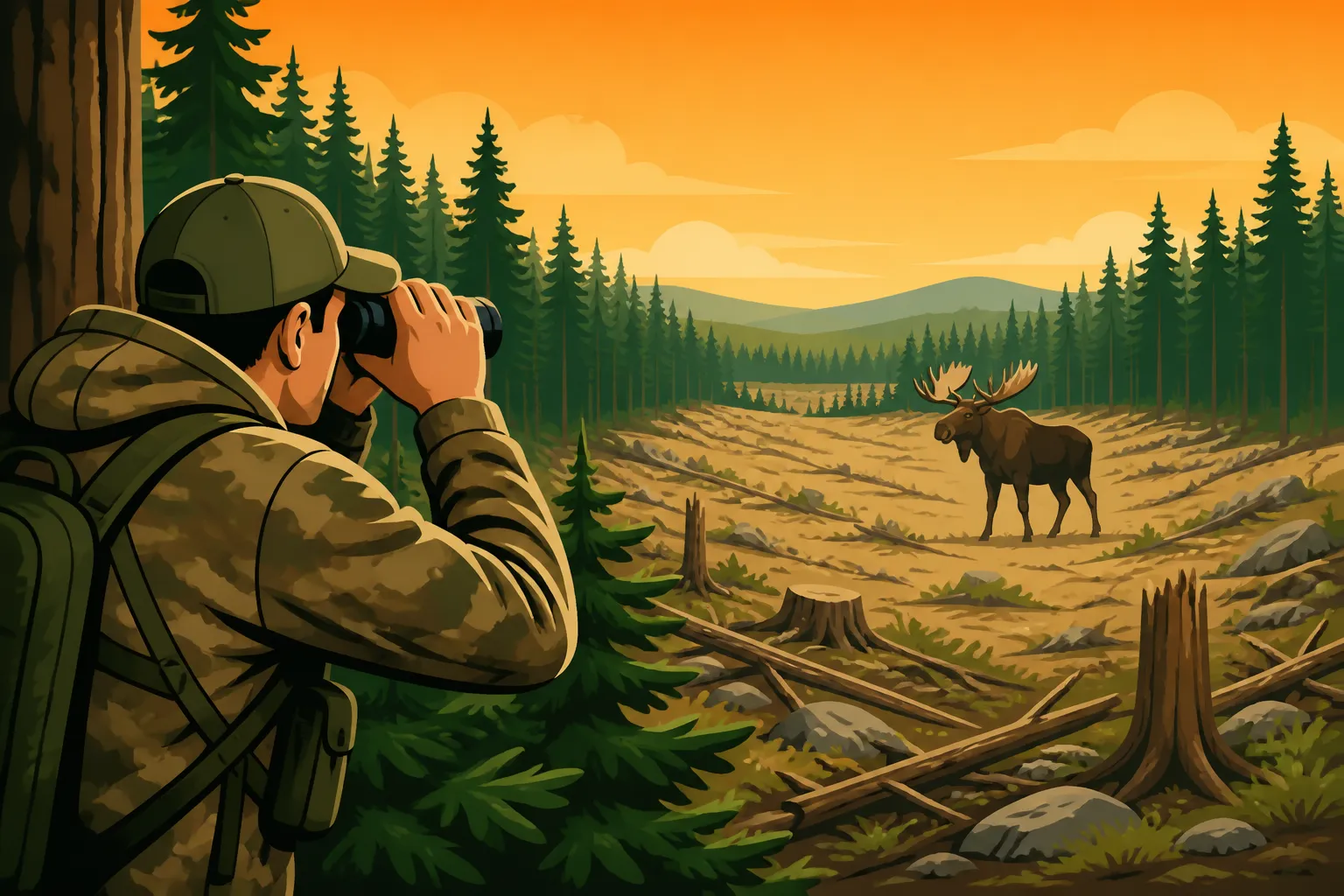
The sheer scale of Maine's North Woods can be incredibly intimidating, especially when you're on a mission to find one of its most majestic creatures, the bull moose. Spotting a bull moose in a sprawling clearcut, where they love to feed, often feels like searching for a needle in a massive, regenerating haystack. This guide is all about equipping you with the strategies, gear, and mindset you need to effectively glass those vast cuts and dramatically increase your chances of finding that elusive bull.
Understanding Moose Habitat in Maine Cuts
When you think about the North Woods, you probably picture endless spruce and fir. While that's certainly a part of it, the logging industry has created a mosaic of landscapes, including clearcuts. These "cuts" are where the magic often happens for moose hunters.
Why Clearcuts and Regeneration Zones Attract Moose
Moose are browsers, and they thrive on young, regenerating forest growth. After an area has been harvested, sunlight floods the forest floor, stimulating an explosion of new growth – tender shoots, saplings, and shrubs that are packed with nutrients. This isn't just a snack bar; it's an all-you-can-eat buffet for a moose. You'll find a smorgasbord of their favorite foods: aspen, willow, red maple, birch, and various softwoods. These areas provide the perfect blend of food and cover as the forest begins to reclaim the land.
Furthermore, these regenerating zones often hold water, whether it's small puddles, seeps, or low-lying areas that retain moisture, especially important during the late summer and early fall before the ground freezes. Moose need a lot of water, and these clearcuts can often funnel moisture, creating microclimates that keep vegetation lush longer. They'll frequent these areas not just for food, but also for thermal regulation on warmer days, seeking out cooler, moister pockets within the regenerating growth. When you're looking for Moose Habitat in the North Woods, these fresh cuts are absolutely paramount.
Identifying Prime Feeding and Bedding Areas within a Cut
Not all parts of a clearcut are created equal. Just because it's a "cut" doesn't mean moose are everywhere. Bulls, especially, have specific preferences. They'll often feed heavily in the thickest, most succulent growth, typically on the fringes of the older timber, or in low-lying pockets within the cut that retain more moisture and hence, more palatable browse. Think about areas where small streams trickle through, or where the topography creates natural depressions.
Bedding areas are usually close to these prime feeding zones but offer more security. Look for islands of un-cut timber within the clearcut, or the dense, mature forest edges that border the opening. A bull wants to feed out in the open, but he also wants to be able to duck back into thick cover quickly if danger approaches. These edges provide that perfect balance. Sometimes, a bull will even bed down in the thickest, tallest regenerating growth within the cut itself, especially if it’s offering enough visual obstruction. Understanding the nuances of Maine Moose Population Estimate and their distribution can also help narrow down which WMDs might offer more pristine cuts.
Essential Gear and Techniques for Effective Glassing
Glassing is an art, and like any art, it requires the right tools and a practiced hand. You can’t just glance at a cut and expect to see a moose. It takes patience, precision, and the right optics.
Optics Selection: Binoculars, Spotting Scopes, and Tripods
This is where your investment really pays off. For general scanning, a good pair of 10x or 12x binoculars is indispensable. They offer a wide field of view and are quick to deploy. Look for binoculars with excellent low-light performance, as moose are most active at dawn and dusk. Brands like Vortex, Leupold, and Maven are popular choices, offering a range of quality that fits various budgets.
However, for picking apart distant clearcuts, a spotting scope mounted on a sturdy tripod is your absolute best friend. A 20-60x or 25-75x spotting scope allows you to magnify an area extensively, distinguishing a branch from an ear, or a stump from a shoulder. The tripod is non-negotiable; you simply cannot hold a spotting scope steady enough for prolonged, detailed observation without one. It reduces fatigue and allows for fine-tuning your view. When you're spending hours staring at vast landscapes, stability is everything. For long-duration glassing, having a comfortable perch and a solid setup will make all the difference in spotting subtle movements or identifying a dark shape that is indeed a bull moose.
Strategic Glassing Patterns and Time Management
Don't just randomly sweep your binoculars or scope across the landscape. Develop a system. Start with the closest areas of interest and slowly work your way out. Break the clearcut into smaller, manageable grids. Begin at one edge, scan meticulously, move a few feet, scan again, and repeat. Pay close attention to the shaded areas, the interfaces between young growth and mature timber, and any variations in topography.
Moose are most active during the low-light hours of dawn and dusk. This means your prime glassing windows are often the first two hours after sunrise and the last two hours before sunset. During midday, especially if it's warm, they'll often be bedded down in thick cover, making them much harder to spot. Plan your day around these peak activity times. Get into your glassing position well before first light, and stay until legal shooting light is almost gone. Many a big bull has been spotted just as the sun dips below the horizon. Remember, it's not just about spending time glassing; it's about spending effective time glassing. Utilizing mapping tools like the ones available on GoHunt can help identify potential cuts and plan your approach beforehand, maximizing your time in the field.
Reading the Landscape: What to Look For
The Maine woods are master illusionists. What looks like a rock or a shadow one minute can suddenly morph into a moose the next. Training your eyes to discern subtle clues is crucial.
Recognizing Moose Sign and Movement Patterns
Beyond just seeing the moose itself, look for secondary signs that indicate their presence. Fresh tracks in mud, disturbed vegetation where they've browsed, rub marks on small trees (especially in the rut), and even fresh droppings can tell you a moose is in the vicinity. If you find these signs, it's a good bet to spend more time glassing that particular area.
When glassing, don't just look for a full-bodied moose. Often, you'll only catch a glimpse of an ear twitch, a flick of a tail, the darker line of a back above the saplings, or the shine of an antler. Their camouflage is incredible, and they can blend seamlessly with the regenerating forest. Look for anything that seems "out of place." A large dark mass that doesn't quite look like a tree stump, a horizontal line in a vertical world of saplings, or a reflective surface that could be an eye or wet nose. Sometimes, all you’ll see is a shimmer as they shift their weight. These subtle indicators are what separate the sharp-eyed hunter from the one who walks by an opportunity. For those keen on Reading Aerial Photos for North Woods Deer, many of those same principles apply to understanding moose movement patterns across clearcuts.
Overcoming Environmental Challenges: Wind, Thermals, and Light
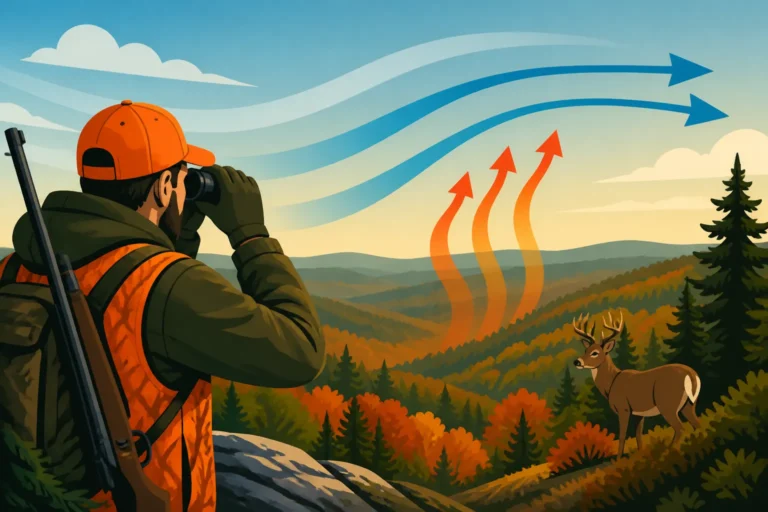
Maine's weather and topography present constant challenges. Wind can rustle leaves, making it harder to discern actual movement from natural sway. Always try to glass from a position where the wind is in your favor – coming from the direction you expect the moose to be, or across the cut, to carry your scent away from them.
Thermals are another factor, especially in hill country. As the sun rises, warm air pushes up; as it sets, cool air descends. Understanding these air currents helps you predict how your scent will travel. Position yourself so rising thermals carry your scent upwards and away, or descending thermals push it safely downhill past the moose.
Light conditions are critical. Early morning and late evening often provide the best contrast. However, glaring sun can wash out details, and shadows can obscure vision. Consider how the sun will hit the cut throughout the day and plan your glassing angles accordingly. You might need to move your position several times during a single session to keep the light at your back or side, never directly in your face. This is particularly important when trying to Hunting a Drawn Moose Zone in the North Woods, where varied terrain presents all these challenges.
Common Mistakes and Advanced Tips for Moose Glassing
Even seasoned hunters can make mistakes. Recognizing them and building on successes is part of the journey.
Patience and Persistence: The Keys to Success
This cannot be stressed enough: glassing for moose is not a quick endeavor. It demands extreme patience. You might sit for hours, meticulously picking apart a clearcut, only to see nothing. Then, suddenly, a moose appears from seemingly nowhere. Many hunters give up too soon, or they scan too quickly, overlooking subtle clues. Set yourself up comfortably, bring snacks and water, and be prepared to commit significant time to one spot.
It's tempting to constantly move, thinking the grass is greener elsewhere. While covering ground is important, effective glassing requires dedication to a vantage point. The biggest bulls often reveal themselves when you're least expecting it, simply because you've been sitting long enough for them to feel secure in emerging from cover. Embrace the stillness and the quiet observation. It's a fundamental aspect of Moose Hunting Maine's North Woods.
Using Technology to Enhance Your Glassing Strategy
Modern technology has revolutionized how we scout and hunt. Satellite imagery and topographic maps available through platforms like GoHunt are invaluable for pre-season scouting. You can identify potential clearcuts, discern regeneration stages, locate bottlenecks, and pinpoint likely travel corridors and bedding areas long before you even set foot in the woods. These tools allow you to virtually "walk" the terrain, understanding elevation changes and vegetation patterns.
Once in the field, GPS devices or smartphone apps like the Maine Hunting App can help you mark specific points of interest, track your movements, and navigate safely, especially in vast timber company lands where landmarks can be scarce. Utilize these tools to plan your approach to glassing spots, ensuring you get there quietly and efficiently, and to mark where you spot any moose or significant sign. This blend of traditional patience and modern tech is a powerful combination. For more on this, check out Scouting With the Maine Hunting App.
By combining these techniques, embracing the patience required, and understanding the behavior of Maine's majestic moose, you'll be well on your way to a successful hunt.
| Optic Type | Magnification Range | Best Use Case | Pros | Cons |
|---|---|---|---|---|
| Binoculars | 8x-12x | General scanning, closer distances, quick views | Portable, wide field of view, good for initial sweeps | Limited magnification for detail, can cause fatigue without rest |
| Spotting Scope | 20x-75x | Detailed examination of distant cuts, identifying antlers | High magnification, excellent for resolving detail | Requires a tripod, narrower field of view, less portable |
| Tripod | N/A | Stabilizing optics for prolonged glassing | Essential for clear, steady views at high magnification | Added weight, can be cumbersome to set up quickly |
Disclaimer
Hunting is an inherently dangerous activity. Always prioritize safety, adhere to all Maine hunting regulations, and ensure you have the appropriate licenses and permits. The information provided in this guide is for educational purposes only and should not replace professional guidance or personal judgment. Be aware of your surroundings, properly identify your target, and know your backstop.