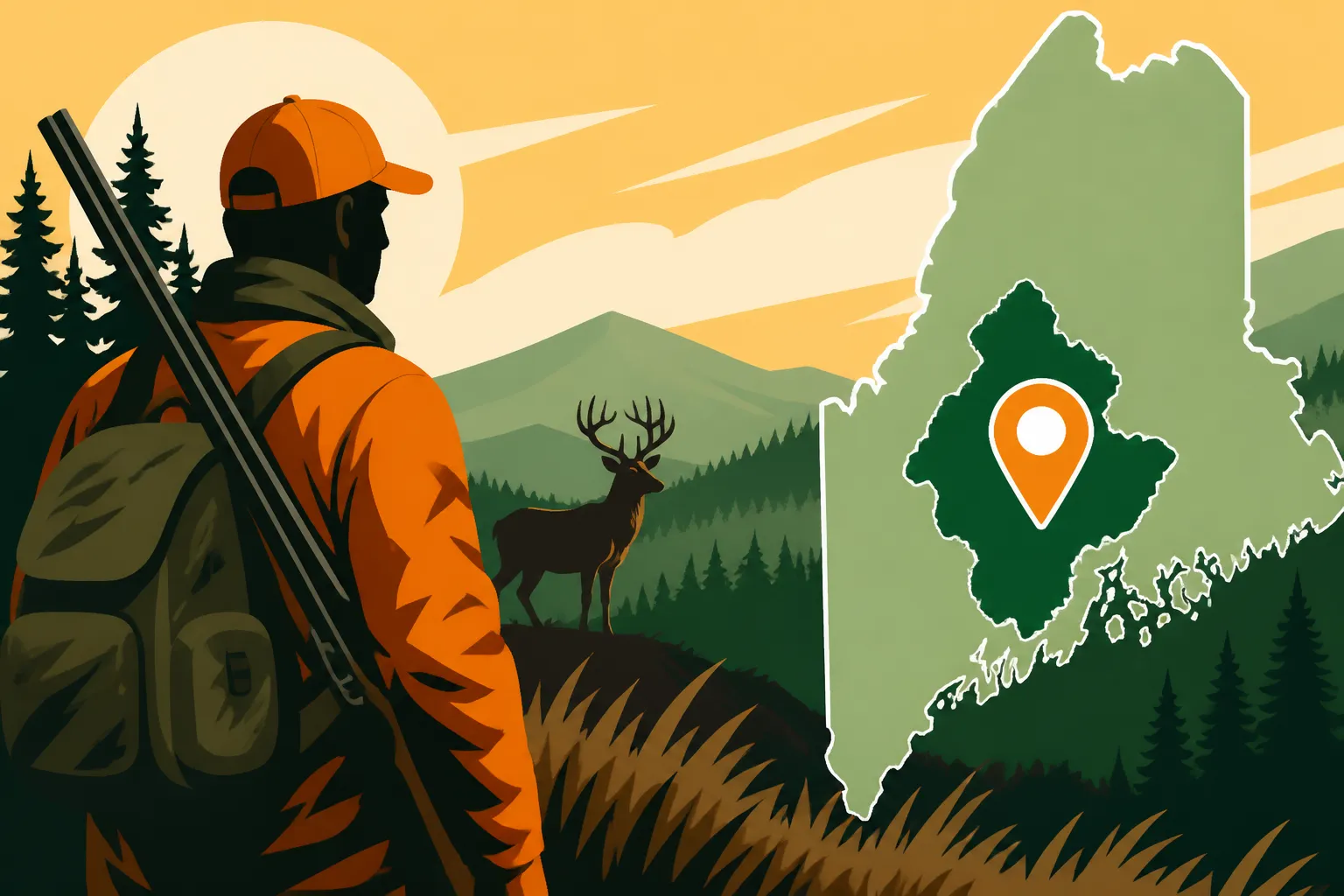
Sagadahoc County Public Land Access
Hunting in a county like Sagadahoc, nestled along Maine's beautiful coast, presents a unique set of challenges compared to the vast timberlands up north. Many hunters often feel overwhelmed trying to pinpoint accessible public ground amidst a more developed landscape, worrying about unknowingly crossing onto private property or running afoul of local ordinances. This comprehensive guide aims to unravel the complexities of public land hunting in Sagadahoc County, offering practical advice and detailing key areas where you can pursue your passion.
Understanding Public Land in Sagadahoc County
Sagadahoc County, while undeniably picturesque with its rivers, coves, and rolling woodlands, isn't known for sprawling, contiguous blocks of public land in the same way Aroostook or Piscataquis counties are. Instead, public access here tends to be more fragmented, consisting primarily of state-managed Wildlife Management Areas (WMAs), a few state parks (with specific hunting rules), and potentially some smaller parcels of Public Reserved Land. The key to successful hunting in this region lies in meticulous scouting, understanding property boundaries, and respecting the diverse usage of these precious public spaces.
The Nature of Public Access in Southern Maine
Unlike the North Maine Woods, where industrial timberlands often allow access for a fee or under specific conditions, Sagadahoc's landscape is a mosaic of smaller woodlots, agricultural fields, and residential areas interspersed with natural habitats. This means that public land parcels are often surrounded by private holdings. For hunters, this necessitates a more cautious approach, relying heavily on mapping tools and visual markers to ensure they stay on legal ground. The "implied permission" tradition that is strong in many parts of Maine still exists, but it becomes more nuanced in areas with higher population density, making it crucial to be absolutely certain of your location. How Many Acres of Private Land Maine Opens to Hunters touches on the scale of private land, but in Sagadahoc, the puzzle pieces are simply smaller.
Primary Public Land Types for Hunting
In Sagadahoc County, your main avenues for public land hunting will revolve around a few distinct categories. These areas are managed with wildlife in mind, but they also serve various recreational purposes, so hunters need to be aware of other users and specific regulations.
- Wildlife Management Areas (WMAs): These are perhaps your best bet for consistent public hunting access. Maine's Department of Inland Fisheries and Wildlife (MDIFW) manages WMAs specifically for wildlife habitat and public recreation, including hunting. While they aren't always massive, they are often strategically located to provide good habitat for deer, turkey, and small game. Examples might include areas near the Merrymeeting Bay, which also offers excellent waterfowl opportunities. MDIFW's website is an invaluable resource for locating these areas and understanding their specific rules. Maine Wildlife Management Areas delves into the general management of these lands.
- State Parks and Public Reserved Lands: While some state parks have restrictions or special hunts, others may offer limited opportunities. Public Reserved Lands are generally open to hunting, but again, these parcels in Sagadahoc are typically smaller and scattered. It's essential to check the rules for each specific park or reserved land unit you're considering. Don't assume. Always verify.
- Coastal Access Points: For sea duck hunting, there are often public boat launches and coastal access points that allow you to reach open water or tidal areas. These are critical for anyone looking to pursue sea ducks, which are abundant along Maine's coast. However, specific regulations for firearm discharge near dwellings and boating rules apply.
Navigating Specific Hunting Areas in Sagadahoc
Finding success in Sagadahoc County often comes down to intimate knowledge of smaller tracts of land and understanding how game moves through these fragmented habitats. It's not about covering miles of timber, but rather understanding the nuances of small woodlots, agricultural edges, and coastal marshlands.
Merrymeeting Bay WMA and Surrounding Areas
Merrymeeting Bay is a truly unique inland delta where six rivers converge, eventually emptying into the Kennebec River. The surrounding marshes and wetlands, including the Merrymeeting Bay WMA, provide incredible habitat, particularly for waterfowl and deer. Hunting here requires specific knowledge of tides, boat access, and often calls for specialized equipment like mud motors or canoes in shallow areas.
- Waterfowl Paradise: For duck and goose hunters, Merrymeeting Bay is legendary. The vast tidal flats and marsh edges attract thousands of migratory birds. Hunters often set up decoys along marsh edges or in shallow water, timing their hunts with the tides. Maine Sea Duck Season and Zones can provide a broader context, though Merrymeeting is primarily an inland waterfowl destination.
- Deer Hunting in the Edges: While known for waterfowl, the wooded uplands and islands bordering Merrymeeting Bay also hold deer. These areas can be tricky to hunt due to the water, but they offer secluded pockets where deer feel safe. Accessing these spots often involves a boat or careful navigation through marshy terrain. Patience and stealth are paramount here. You might find deer moving between islands or along the less-pressured fringes of the bay.
- Small Game Opportunities: The diverse habitat around Merrymeeting Bay also supports various small game species. Rabbit and squirrel hunting can be productive in the brushier uplands and woodlots.
Inland Woodlots and State Parks
Beyond the bay, Sagadahoc County has numerous smaller, often isolated, patches of public woods. These are the places that often get overlooked but can offer surprisingly good hunting, especially for deer and turkey.
- Scouting for Hidden Gems: Many of these smaller woodlots might not appear as significant on a large map, but they can be key travel corridors or bedding areas for deer. Look for parcels managed by the state, even if they're only a few hundred acres. These might be part of a larger state park system or a standalone public reserve. Using mapping apps like onX Hunt is incredibly valuable here. You can layer property boundaries, satellite imagery, and topographic maps to identify these smaller public parcels and understand the surrounding private land. This allows you to plan your approach and exit carefully, ensuring you respect private property.
- Turkey and Deer Hotspots: In recent decades, wild turkeys have made a remarkable comeback across Maine, including in Sagadahoc County. Public woodlots adjacent to agricultural fields can be prime spots for both spring and fall turkey hunting. Deer will also frequent these areas, especially where there's a mix of mature timber for mast crops and thick cover for bedding. Spring Turkey Hunting in Maine provides a general overview, but apply those tactics to smaller, more fragmented landscapes.
- Leveraging Road Access and Funnels: In smaller tracts, roads and natural funnels become even more critical. Deer and turkey will often use the path of least resistance. Identifying these travel routes through public land, especially those that connect to adjacent private land food sources or bedding areas, can greatly increase your odds. Don't underestimate the power of a narrow strip of woods that connects two larger parcels, even if one is private.
Coastal Public Access for Sea Ducks
For those hardy souls drawn to the challenge of sea duck hunting, Sagadahoc's coastline, particularly where it meets the Kennebec and Sheepscot Rivers, offers opportunities.
- Boat Launches and Ledges: Public boat launches are your gateway to the coastal waters. From there, hunters can access various ledges, islands, and open water areas where sea ducks like eiders, scoters, and long-tailed ducks congregate. Decoying Eiders On a Falling Tide and Hunting Scoters in Maine's Open Water offer specific tactics that can be applied here. Remember that setting up decoys and hunting from a boat or blind along the shore requires specific gear and a keen understanding of tides and weather.
- Navigating Tidal Zones: Understanding the tides is crucial. Low tide might expose prime feeding areas or make certain ledges accessible for setting up, while high tide could cover them. Wind and sea conditions are also major factors, impacting safety and the ability to effectively hunt. Always prioritize safety on the water.
- Respecting Coastal Communities: Many coastal areas have year-round residents or seasonal camps. Be extra mindful of setback distances for discharging firearms and always practice ethical hunting that respects other users of the coast. A strong understanding of Maine Firearms Discharge Setback Distance is non-negotiable here.
Permits, Rules, and Regulations for Sagadahoc Hunting
Hunting in Sagadahoc County, like anywhere else in Maine, means adhering to specific regulations. Given the county's blend of natural beauty and residential areas, knowing the rules is not just good practice, it's essential for a safe and legal hunt.
Required Licenses and Permits
Before you even step foot in the woods or launch your boat, make sure your paperwork is in order. This starts with your basic hunting license.
- General Hunting License: You'll need a valid Maine hunting license. Depending on whether you're a resident or non-resident, the costs and requirements differ. Maine Resident License Options and Maine Nonresident License Options cover the specifics.
- Species-Specific Permits: For certain species, additional permits or tags are required.
- Deer: Maine's deer season is generally open, but if you plan to harvest an antlerless deer in a WMD that requires a permit, you'll need to apply for an Any-Deer Permit (ADP) during the annual lottery. Sagadahoc County's WMAs usually have limited ADPs, so check the specific WMD. Applying for a Maine Antlerless Permit is a key resource.
- Turkey: Both spring and fall turkey seasons require a specific turkey permit. Maine Spring Turkey Permit Rules and Maine Fall Turkey Permit Rules will have the details.
- Migratory Birds: If you're hunting ducks or geese, you'll need a federal duck stamp and Maine's migratory bird hunting certification (HIP). This is critical for Merrymeeting Bay waterfowl hunters. Maine Federal Duck Stamp Requirement outlines one of these needs.
- Hunter Education: If you're a first-time hunter or haven't met Maine's hunter education requirements, make sure to get that done well in advance. Maine Hunter Education Requirements explains who needs it and how to fulfill it.
Understanding Local and State Regulations
Beyond the permits, understanding the specific rules for public land, firearm discharge, and game recovery is paramount.
- Blaze Orange Requirements: Maine has strict blaze orange rules, especially during the firearms deer season. This is crucial for safety, particularly in areas that see varied recreational use. How Much Blaze Orange Maine Requires details these mandates.
- Firearm Discharge Setbacks: In more populated areas like Sagadahoc, knowing the legal distances for discharging a firearm from dwellings, roads, and other structures is absolutely critical. Violating these can lead to serious legal trouble. Always err on the side of caution.
- Game Registration: Any deer or moose harvested must be registered. While many traditional tagging stations exist, Maine now offers online registration through its mobile app, which can be convenient for hunters in remote spots or outside of business hours. Registering a Maine Deer Online provides insights into this process.
- Trespass Laws and Permission: Even on public land, understanding adjacent private property is vital. Maine's implied permission law is often misunderstood; it means you can generally cross unposted private land for recreation, but hunting specifically benefits from explicit permission if you're ever in doubt. For Sagadahoc, where property lines are often closer to residences, always know where you are. Mapping applications like onX Hunt are invaluable for displaying property ownership lines, helping you avoid accidental trespass. Many experienced hunters also use GoHunt to research general hunting conditions, access, and potential hotspots, though its primary focus isn't Maine-specific, the principles of research apply.
Here's a quick overview of some common regulations:
| Regulation Category | Key Point for Sagadahoc County | Importance |
|---|---|---|
| Hunter Education | Required for first-time hunters. Be certified. | Legal requirement, promotes safety. |
| Blaze Orange | Mandatory during specific seasons (e.g., firearms deer season). Check regulations for exact dates. | Critical for hunter safety, especially in popular areas. |
| Firearm Setback | Strictly enforced. Know the legal distances from dwellings, buildings, and roads. | Avoids legal issues, protects property and people. |
| Game Registration | All harvested deer, moose, and bear must be registered. Use online app or a physical check station. | Legal requirement, provides vital biological data for MDIFW. |
| Private Land Access | Know your boundaries. Use mapping apps. Seek explicit permission if you're unsure or on posted land. | Respects landowners, prevents trespass. |
| Migratory Bird Stamps | Federal Duck Stamp & Maine HIP required for waterfowl. | Legal requirement for waterfowl hunting. |
| State Park/WMA Rules | Always check specific rules for hunting in State Parks or WMAs, as they can have unique restrictions. | Ensures compliance with local management plans, avoids fines. |
Ethical Considerations in Populated Areas
Hunting in Sagadahoc County means you're often closer to non-hunters and residential areas. Maintaining the highest ethical standards is crucial for public perception and the future of hunting access.
- Visibility and Courtesy: Be highly visible and courteous to other recreational users, whether they are hikers, birdwatchers, or ATV riders. A friendly wave goes a long way.
- Noise and Disturbances: Be mindful of noise, especially early in the morning or late in the evening. Avoid unnecessary loud calls or vehicle noise near residences.
- Game Recovery: If a deer runs onto private land, even if unposted, the best practice is to immediately contact the landowner for permission to retrieve it. Having a plan for Retrieving Game From Private Land in Maine is essential. Be prepared to explain your situation calmly and politely.
- Leaving No Trace: Pack out everything you pack in. Leave the woods cleaner than you found them. This helps maintain positive relationships with landowners and other public land users.
Maximizing Your Hunt in a Populated Area
Hunting in Sagadahoc County requires a different mindset than venturing into the deep wilderness. It demands more finesse, better scouting, and a strategic approach to finding and pursuing game in often smaller, more pressured environments.
Advanced Scouting and Mapping Tools
In Sagadahoc, where public land is fragmented, detailed scouting is your most potent weapon.
- Digital Mapping is Your Friend: Rely heavily on digital mapping applications. onX Hunt is a fantastic tool that allows you to see property lines, landowner names, and various land classifications. You can also mark waypoints for sign, trails, and potential stand locations. Before you even leave home, you can identify public parcels, see how they connect to potential food sources or bedding areas on adjacent private land, and plan your entry and exit routes. This is indispensable for avoiding accidental trespass.
- Boots on the Ground: While digital maps are powerful, there's no substitute for walking the ground. Even small public woodlots can hold overlooked pockets of cover, mast trees, or subtle terrain features that funnel deer. Look for natural barriers like creeks, rock walls, or thick briar patches that might deter other hunters but offer sanctuary for game. This ground truthing is also where you confirm access points and identify any physical obstacles that the map might not clearly show.
- Understanding Pressure Points: Observe where other hunters tend to go. Often, the easiest access points get the most pressure. By studying maps and scouting, you might find a slightly harder, less obvious entry point into a public parcel that leads to undisturbed game. Finding Ground That Sees Fewer Hunters is all about this strategy.
Adapting Hunting Tactics for Smaller Tracts
The scale of the land dictates your tactics. You won't be still-hunting for miles; instead, you'll focus on precision and patience.
- Stand and Blind Hunting: For deer and turkey, setting up a portable stand or ground blind in a strategic location can be highly effective. Focus on natural funnels, pinch points, or feeding areas that lie within public boundaries but are close to private food sources. Consider areas where thick cover meets a field edge. For waterfowl, a well-brushed-in blind along a marsh edge or a layout boat in the bay can be critical for success. Using a Ground Blind on Posted-Free Land offers practical advice.
- Still-Hunting and Mini Drives: If a public parcel is large enough, slow, methodical still-hunting can work, especially during the firearms season. For smaller woodlots, a quiet, two-person "mini-drive" can sometimes push deer towards a waiting hunter, but this requires careful planning and communication to ensure safety and ethical hunting. Deer Drives With Three or Four Hunters discusses larger group options, but the principle can be scaled down.
- Leveraging Water Access: Don't underestimate the role of water. Rivers, large creeks, and the bay itself can provide excellent access to otherwise difficult-to-reach public lands or can be natural escape routes for game. Using a canoe or small boat to access secluded islands or shorelines can open up new opportunities, especially for waterfowl and even deer along the edges. Hunting a Beaver Flowage Edge at Dusk for general concepts.
Time of Day and Season Considerations
The timing of your hunt can be even more critical in areas with diverse human activity.
- Early Morning and Late Evening: These low-light hours are often your best bet, as game animals tend to be most active and human disturbance is at its minimum. Being in your spot well before dawn and staying until after sunset can pay off.
- Mid-Week Advantage: If you have the flexibility, hunting mid-week often means encountering fewer other hunters, especially on smaller public parcels. Weekends, particularly during peak deer season, can see increased pressure.
- Late Season Opportunities: After the initial rush of firearms season, game can become extremely wary. However, late-season muzzleloader or archery hunts can be productive if you find undisturbed pockets of public land, especially those with reliable food sources. Hunting Into the December Muzzleloader Close provides context for this time of year. Deer will be focused on finding calories before winter, making food sources key.
- Weather Conditions: Don't shy away from less-than-ideal weather. A light rain, fog, or even a bit of snow can keep other hunters home, giving you an advantage. Wind, however, needs to be carefully considered for scent control and safety, particularly near water or residential areas. Wind and Thermals in Maine Hill Country offers good advice for reading the air.
Hunting in Sagadahoc County might not offer the vast, untouched wilderness experience of Maine's northern regions, but it provides rewarding opportunities for those willing to scout diligently, understand the regulations, and adapt their tactics to the unique coastal and fragmented landscape. With careful planning and respect for the land and its people, you can enjoy some truly memorable hunting experiences.
Disclaimer
This article is for general informational purposes only and does not constitute professional advice. Laws, prices and regulations vary by location and change over time. Consult a qualified professional for guidance on your specific situation.