Nonresident Access to Maine Public Land
One of the biggest hurdles for nonresident hunters eyeing Maine is figuring out where, exactly, they can legally hunt without a guide or explicit private land permission. It's a common frustration, especially when you hear about Maine's vast wilderness and seemingly endless forests. This guide will walk you through the various types of public lands available to nonresidents, how to identify them, and critical considerations for planning a successful, legal hunt in the Pine Tree State.
Understanding Maine's Unique Land Access Landscape
Maine holds a special place in the hearts of hunters, but its land access rules can feel a bit like a tangled spruce thicket to outsiders. Unlike many other states with vast tracts of federal public land, Maine's landscape is predominantly privately owned, often by large timber companies. This doesn't mean you're out of luck, but it does mean you need to understand the nuances.
Historically, Maine has had a strong tradition of "implied permission," where private landowners generally allowed access for recreation unless the land was explicitly posted. While this tradition still exists, it’s far more complex and risky for nonresidents. Most nonresidents aren't going to have the time or local connections to knock on doors and secure permission on small private parcels. Therefore, focusing on designated public lands or large commercial timberlands that permit public access becomes paramount. The key is to know where these opportunities lie and what the specific rules are for each. For a deeper dive into general access, you might want to read Maine's Private Land Access Tradition.
The Reality of Private Ownership for Nonresidents
Let's be real, as a nonresident, walking up to a farmhouse and asking to hunt might feel daunting, and the chances of success are often lower than for a local face. Landowners, while generally friendly, are naturally more wary of individuals they don't know, especially with increased hunting pressure and sometimes, unfortunate incidents. This isn't to discourage anyone from trying, but it highlights why a clear strategy for public access is so important.
Moreover, many of Maine's prized hunting grounds, particularly for deer, moose, and bear, are found in the expansive, sparsely populated regions that are indeed largely owned by timber companies. These companies often allow access for recreational purposes, sometimes for a fee, making them a hybrid of "public access on private land" that nonresidents can utilize effectively. Knowing which areas fall into this category and how to navigate them is crucial for your trip.
Navigating Public Land Types for Nonresidents
When we talk about "public land" in Maine for nonresidents, we're really talking about a few distinct categories, each with its own set of rules, access points, and characteristics. It's not a one-size-fits-all situation, and understanding these differences will dramatically improve your scouting and hunting success.
Maine Wildlife Management Areas (WMAs)
Maine has a network of Wildlife Management Areas, managed by the Department of Inland Fisheries & Wildlife (MDIFW), specifically for wildlife habitat and public recreation, including hunting. These are excellent places to start your search. They are designed to support a variety of game species, from deer and bear to upland birds and waterfowl, often with specific habitat improvements.
WMAs are typically well-marked, and maps are usually available online or at regional MDIFW offices. The beauty of WMAs is that they are explicitly open for hunting without needing further permission, as long as you adhere to state hunting laws and WMA-specific regulations. Nonresidents can hunt these areas just like residents. They vary greatly in size and character, from vast forested tracts to smaller wetlands. Knowing your target species and the type of habitat it prefers will help you narrow down which WMAs might be a good fit. Check out Maine Wildlife Management Areas for more general information.
Public Reserved Lands
In addition to WMAs, Maine also manages a significant amount of "Public Reserved Lands." These are state-owned lands, often comprising large forest blocks, mountains, and water bodies, managed by the Maine Bureau of Parks and Lands (BPL). Their primary purpose is to provide recreational opportunities while also allowing sustainable timber harvesting.
Hunting is generally permitted on Public Reserved Lands unless explicitly prohibited by posted signs in specific areas (like developed campsites or trailheads). These lands are often less intensively managed for specific game species than WMAs, but they can offer fantastic opportunities for big game and small game alike, especially for those willing to venture deeper into the woods. Access is typically via logging roads or undeveloped trails. Understanding the specific regulations for these lands is vital; you can find maps and guidelines through the BPL website. Maine Public Reserved Land Explained delves into this type of land in more detail.
The North Maine Woods (NMW)
This is perhaps the most significant and often misunderstood category for nonresident hunters. The North Maine Woods is not technically "public land" in the federal or state sense. It's a vast tract of over 3.5 million acres, primarily owned by private timber companies and managed as a working forest. However, these landowners have historically allowed public access for recreation, including hunting, through a unique system of checkpoints and fees.
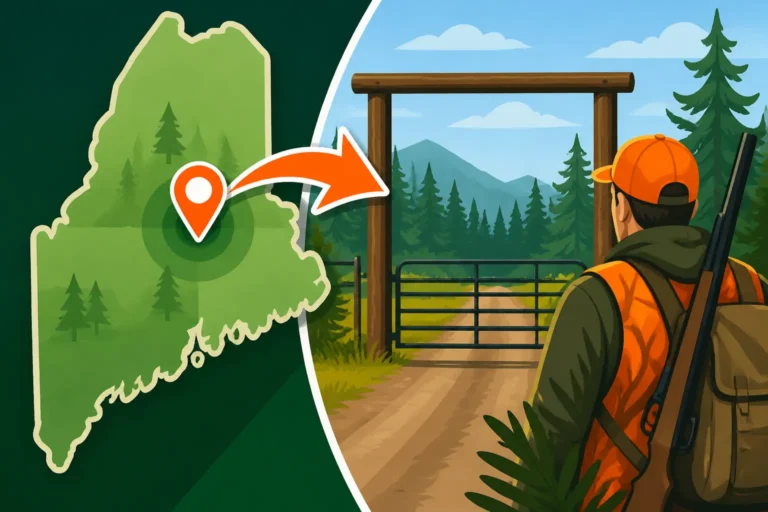
For many nonresidents, the NMW represents the quintessential "Maine hunting experience"—remote, wild, and challenging. To access these lands, you typically enter through a manned gate, pay a day-use or multi-day fee (which varies depending on your residency and length of stay), and receive a permit. This system helps manage traffic, provides a measure of safety (they know who's in the woods), and contributes to road maintenance. It's crucial to understand that while you're paying a fee, you are still on private land, and respecting the rules of the timber companies (e.g., road closures, fire restrictions) is paramount. The North Maine Woods Gate System and North Maine Woods Day-Use Fees offer valuable insights into this system. If you plan to camp, also review Camping Rules Inside North Maine Woods.
Federal Public Lands
While not as abundant as in some Western states, Maine does have some federal public lands, primarily managed by the U.S. Fish and Wildlife Service as National Wildlife Refuges (NWRs). These refuges are focused on conservation, but many do allow hunting for certain species under specific regulations that often differ from statewide rules.
It's absolutely critical to research each individual NWR thoroughly. Hunting seasons, allowed species, and even weapon restrictions can be highly specific and change frequently. For example, some might allow deer hunting but only with archery equipment, or only during certain weeks. Always check the refuge's official website or contact them directly before planning a hunt. These areas, while smaller, can offer unique opportunities, especially for waterfowl and some small game.
| Public Land Type | Management Authority | Typical Characteristics | Nonresident Access | Key Considerations |
|---|---|---|---|---|
| Wildlife Management Areas (WMAs) | MDIFW | Diverse habitats, managed for wildlife, well-marked, varying sizes | Generally unrestricted | Check WMA-specific rules; often popular spots. |
| Public Reserved Lands | Maine Bureau of Parks & Lands | Large forest blocks, mountains, water access; multi-use | Generally unrestricted | Respect timber operations; check for local prohibitions. |
| North Maine Woods (NMW) | Private Timber Companies (managed by NMW) | Vast, remote working forest, extensive logging roads, few services | Fee-based access | Mandatory gate fees; permits required; adhere to company rules. |
| Federal Refuges (NWRs) | U.S. Fish and Wildlife Service | Conservation focus, specific habitats (e.g., wetlands) | Highly regulated | Strict, often unique rules for species, seasons, weapons. |
Tools and Tips for Finding Public Access
Alright, so you know the types of public land. Now, how do you actually find them and navigate them effectively as a nonresident? This is where modern technology and a bit of old-school preparation really shine.
Digital Mapping Applications: Your Best Friend
In today's hunting world, a good mapping app on your phone is non-negotiable, especially for nonresidents trying to decipher Maine's mixed ownership landscape. Apps like onX Hunt and GoHunt are game-changers. They overlay property ownership data, including public versus private land boundaries, over topographic and aerial maps.
With onX Hunt, for example, you can literally see parcel lines, landowner names (sometimes), and clearly differentiate between state, federal, and private lands. This is invaluable for identifying legal access points, ensuring you don't accidentally trespass, and understanding the lay of the land before you even set foot in Maine. You can drop waypoints, measure distances, and track your movements. I highly recommend spending time with an app like this during your planning phase. The "Private Lands" and "Public Lands" layers are your bread and butter here. onX Layers for Maine Land Status has more details on how to use these tools.
Similarly, other platforms like GoHunt provide detailed mapping solutions that can help you scout from home. While primarily known for Western draw odds, their mapping features are robust and offer similar capabilities for identifying land ownership in states like Maine. Leveraging these tools means you can essentially "scout" thousands of acres from your living room, focusing your physical boots-on-the-ground time on the most promising areas. Learn more about general app use with Using an App for North Maine Woods Land Status.
State Resources and Contacting the MDIFW
Don't underestimate the power of direct information from the source. The Maine Department of Inland Fisheries & Wildlife (MDIFW) website is a treasure trove of information. They often have interactive maps, downloadable PDFs of WMA boundaries, and detailed regulations. Their regional biologists are also often incredibly helpful if you have specific questions about an area or a species. A quick phone call can often clarify regulations or point you towards underutilized spots.
Always download the latest rule book and review it thoroughly, paying special attention to the "General Hunting Laws" and any specific sections related to the areas you plan to hunt. Remember, your nonresident license allows you to hunt in Maine, but you'll need to know the state's specific rules, including Maine Hunter Education Requirements.
Pre-Season Scouting (Virtual and Physical)
For a nonresident, extensive physical scouting isn't always feasible, but virtual scouting is. Spend hours pouring over satellite imagery on your mapping app. Look for terrain features that concentrate game, such as pinch points, saddles, water sources, and changes in timber type. Identify potential access roads, parking areas, and likely bedding or feeding areas.
If you can swing a pre-season trip, even a short one, it's worth its weight in gold. Nothing beats seeing the terrain with your own eyes, identifying fresh sign, and understanding the local foliage. Drive the access roads you identified virtually, walk some potential entry routes, and get a feel for the solitude or pressure of an area.
Respecting Private Land and Laws
Even when hunting public land, understanding and respecting Maine's private land laws is crucial. Boundaries can be fuzzy, and inadvertently crossing onto posted land can lead to serious consequences and give all hunters a bad name.
Maine's Posted Land Rules
Maine law is clear about "posted" land. If a landowner has clearly marked their property with "No Trespassing" signs, purple paint on trees, or other clear indicators, you absolutely cannot enter without explicit permission. For nonresidents, the safest bet is to treat any private land that isn't explicitly marked as open by a known entity (like a timber company with a public access policy) as off-limits unless you have direct, written permission.
Even if you're on public land and game you shot runs onto posted private land, retrieving it requires permission from the landowner. This can be an awkward conversation, so knowing your boundaries is key. Familiarize yourself with Maine Posted Land Rules to avoid any headaches.
Ethical Hunting Practices and Land Stewardship
Whether you're on a WMA, Public Reserved Land, or paying to access the North Maine Woods, the principles of ethical hunting and land stewardship remain the same. Pack out everything you pack in, and then some. Don't litter. Respect closed gates, even if they seem inconvenient. Avoid damaging roads or cutting fences. Drive slowly on logging roads and be considerate of other users, including hikers, anglers, and timber workers.
Leaving a positive impression is vital. The continued allowance of hunting on both public and privately-owned but publicly accessible lands depends on hunters demonstrating respect and responsibility. Your actions reflect on the entire hunting community, so be a good ambassador for the sport and for nonresidents visiting Maine.
Navigating Maine's hunting lands as a nonresident requires a bit more homework than in some other states, but the reward of hunting in such a wild and beautiful place is immeasurable. By understanding the different land types, utilizing modern mapping tools, and always respecting land access laws, you'll be well on your way to a memorable Maine hunting adventure.
Disclaimer
This article is for general informational purposes only and does not constitute professional advice. Laws, prices and regulations vary by location and change over time. Consult a qualified professional for guidance on your specific situation.