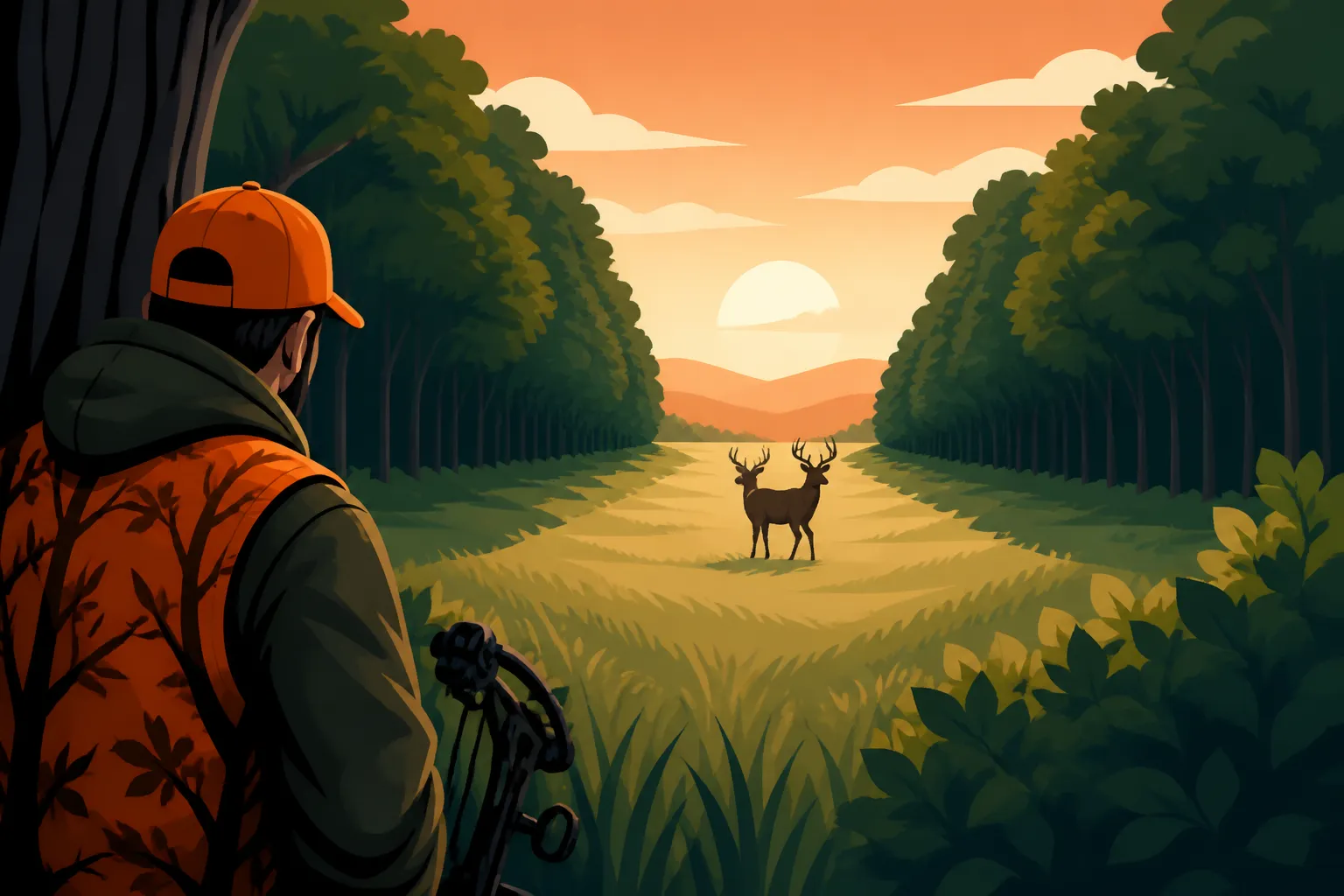
Hunting a Funnel Between Two Woodlots
Hunting a deer can often feel like a game of hide-and-seek where the deer are always winning, especially when they disappear into the vastness of Maine's woodlands. One of the most common frustrations is knowing deer are in an area but struggling to predict where they'll move. This guide is all about demystifying those tricky travel corridors known as funnels, specifically focusing on how to identify and effectively hunt the narrow strips of cover that connect two larger woodlots, increasing your chances of intercepting a cruising buck or a moving herd.
Understanding the Deer Funnel Concept in Maine's Landscape
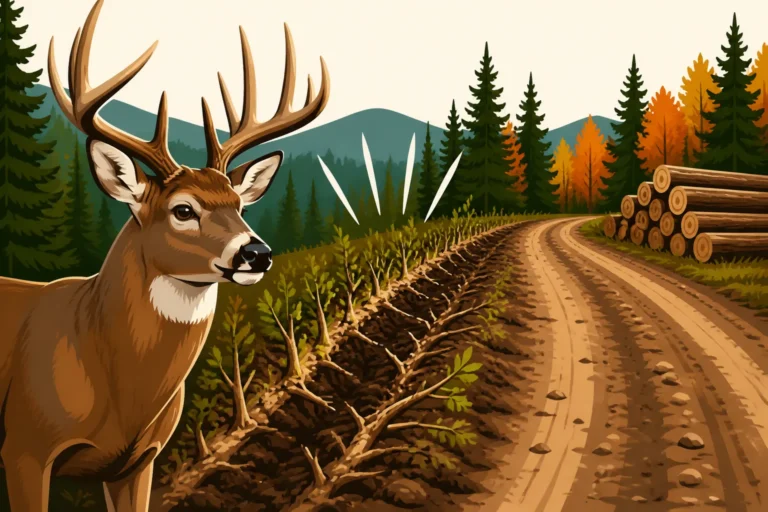
Deer, like most creatures, are inherently efficient. They seek the path of least resistance or the path that offers the most security. This fundamental behavior is what makes funnels such goldmines for hunters. A "funnel" in deer hunting isn't just a narrow patch of woods; it's any geographical or vegetative feature that naturally funnels deer movement into a concentrated area, forcing them through a predictable pinch point.
In Maine, our landscape is a beautiful mosaic of dense timber, open agricultural fields, regenerating clear-cuts, and even suburban fringes. This variety, while stunning, often fragments larger expanses of deer habitat into smaller, more manageable woodlots. Deer need to move between these woodlots for various reasons: to access different food sources, seek bedding areas, escape pressure, or simply during the rut when bucks are actively searching for does. When these movements are constricted by terrain, thick cover, or human-made obstacles, a funnel is created.
The importance of these funnels cannot be overstated. Instead of trying to guess where a deer might cross a sprawling hundred-acre woodlot, you're focusing your efforts on a choke point that might only be fifty yards wide. This drastically improves your odds. It's about letting the deer's natural behavior work for you, positioning yourself in a spot where you know, with a high degree of certainty, they must pass through.
What Makes a Good Funnel?
Not all narrow strips between woodlots are created equal. A truly effective deer funnel possesses certain characteristics that increase its appeal and utility to deer, and thus, its value to you as a hunter. Understanding these features is the first step in successful funnel hunting.
One of the primary drivers of a good funnel is topography. Look for low saddles or dips in ridgelines where deer naturally find easier passage over elevated terrain. Creek bottoms or dry washes that connect two higher wooded areas also serve as natural highways. Even subtle changes in elevation, like a slight draw, can create a funnel, especially if it offers sheltered travel during inclement weather. These topographical features often hide deer movement from open areas, giving deer a sense of security.
Vegetation plays an equally crucial role. Deer favor moving through thicker cover, even if it means taking a slightly longer route, because it provides concealment from predators – including us. A narrow strip of dense young growth, a thick stand of evergreens like spruce or cedar, or even just a particularly brushy fencerow can create an excellent funnel. These pinch points offer visual and thermal cover, making deer feel safe as they traverse between larger bedding or feeding zones. An often-overlooked funnel type is a simple line of mature hardwoods connecting two larger blocks of timber, especially if the understory is relatively open, allowing for quiet movement.
Finally, human impact, while often seen as detrimental, can ironically create some of the most effective funnels. Old stone walls, remnants of Maine's farming past, can guide deer movement. A brushy fencerow running between two cultivated fields is a classic example. Even seldom-used logging roads or ATV trails, if they offer a concealed path between larger woodlots, can act as funnels. Powerline cuts, while open, often have brushy edges that deer use to travel, creating linear funnels that can stretch for miles. The key is to recognize how these features manipulate deer movement patterns.
Identifying Natural and Man-Made Funnels
Identifying these critical deer highways starts long before you ever step foot in the woods with your hunting gear. It begins with intelligent scouting, often from the comfort of your own home, using modern tools.
Aerial maps are your best friend here. Services like GoHunt offer high-resolution satellite imagery that can reveal the subtle nuances of the landscape that might not be obvious on a topo map alone. Look for those narrow timber strips connecting larger blocks of woods. Trace creek beds, power lines, and old farm lanes. Identify where a dense swamp or a steep, rocky ridge forces deer into a narrower travel corridor. Pay close attention to agricultural fields – deer often stick to the wooded edges or brushy fencerows when moving between feeding and bedding areas across open land. Even in the thickest parts of the North Maine Woods, you can spot where dense cedar swamps meet higher ground, creating natural pinch points. This digital reconnaissance allows you to mark potential hot spots on a map, saving you countless hours of aimless wandering in the field. To further refine your digital scouting, consider Reading Aerial Photos for North Woods Deer.
Once you've identified potential funnels from above, it's time for boots on the ground. Nothing beats physical scouting for confirming what you see on a map and uncovering subtle details. Walk these suspected funnels and look for actual deer sign. Are there fresh tracks? Old rubs from previous seasons? Scrape lines along the edges? The presence of consistent sign validates your funnel theory. Pay attention to the ground cover – is it conducive to quiet travel for deer, or is it too noisy? Is there fresh browse? Remember, deer aren't just moving through the funnel; they might also be browsing or leaving scent markers. This on-the-ground inspection is crucial. Don't forget to incorporate Scouting Maine Private Land Before Season into your routine, as many prime funnel locations can be found on these accessible lands.
For example, imagine two large timber blocks separated by a hundred yards of open pasture in central Maine. If a 20-foot wide strip of dense alders and young hardwoods connects these two blocks, running parallel to an old stone wall, you've likely found a major funnel. Another common scenario might be a winding river with steep banks, forcing deer to cross at one of the few shallow, brushy points – that crossing is your funnel. Even something as simple as a narrow strip of spruce cover between a clear-cut and a mature hardwood stand can be a highly productive funnel, especially if deer are seeking thermal cover in colder weather.
Scouting Strategies for Funnels Between Woodlots
Effective funnel hunting is built on a foundation of thorough scouting. It’s not just about finding a narrow spot; it’s about understanding why deer use it, when they use it, and how they move through it. This requires patience and a keen eye for detail.
Interpreting Deer Sign in a Funnel
When you're physically scouting a suspected funnel, you're not just looking for deer; you're looking for evidence of their consistent passage. Start by walking the entire length of the funnel, searching for tracks. Fresh tracks indicate recent activity, telling you not only that deer are using the funnel but also the direction of travel. Are they mostly headed one way in the morning and the other in the evening? This can give you clues about bedding and feeding patterns. Don't just look in the mud; check soft dirt, leaf litter, and even lightly packed snow during the late season for subtle indentations. If you want to dive deeper into this, check out Reading Maine Mud for Fresh Deer Movement.
Next, look for rubs and scrapes. Rubs, where bucks have rubbed their antlers on trees, are territorial markers and tell you bucks are using the area. Fresh rubs are bright and shiny, indicating current activity. Scrapes, patches of bare earth where deer paw and urinate, are communication hubs. Both rubs and scrapes, especially if found consistently along the funnel, scream "buck activity!" If a scrape line runs through or along the edge of your funnel, you've hit the jackpot. These signs confirm that the funnel is not just a casual travel route but an established corridor.
It's also important to differentiate between bedding areas and travel corridors. While a funnel is primarily a travel route, deer may bed in thick cover adjacent to a funnel. Look for flattened grass or leaves where deer have rested. If you find bedding close by, it suggests deer are using the funnel to move directly from bed to feed, or vice-versa, making their movement even more predictable. Remember that Where Maine Bucks Bed in Big Timber can give you insights into their daytime hideouts.
Trail cameras are invaluable tools for gathering intelligence in a funnel. Place cameras on well-used trails within the funnel, especially near fresh rubs or scrapes. Position them to capture deer moving through the funnel, not just pausing. The data you collect – time of day, direction of travel, and even specific deer – is priceless. A camera set up for a week or two can confirm your theories and help you fine-tune your stand placement. You can also use GoHunt's property line tools to ensure your cameras are on accessible land, or combine their mapping with public land layers to verify boundaries.
Timing Your Scouting Missions
When you scout is almost as important as how you scout. Each season offers unique advantages for understanding a funnel's potential.
-
Post-Season (Late Winter/Early Spring): This is arguably the best time for initial scouting. With no leaves on the trees, visibility is at its maximum, allowing you to see the lay of the land, thickets, and subtle terrain features clearly. Snow cover can highlight deer trails, showing you exactly where they preferred to travel. You can also find shed antlers, which confirms buck presence. Since hunting pressure is off, deer are less likely to be spooked by your presence. This is the time to identify the structural integrity of the funnel.
-
Pre-Season (Late Summer/Early Fall): As leaves begin to turn and before the hunting season opens, this is the time to look for fresh sign. New rubs and scrapes indicate current buck activity. Deer patterns might be shifting as food sources change, so you can see if the funnel is still being actively used. Be more cautious with your scent and noise during this time, as deer are already sensitive to human intrusion. Your goal here is to confirm present usage and identify current preferred routes within the funnel.
-
During the Season: In-season scouting should be minimal and highly strategic to avoid educating deer. If you're not seeing activity, a quick, quiet walk through the funnel during the midday lull, keeping wind in your favor, can help you identify if a new food source or pressure has shifted deer movement. Sometimes, you'll discover a secondary, less obvious trail being used that you missed during pre-season scouting. However, this is more about tweaking your setup than broad exploration.
By timing your scouting missions strategically, you build a comprehensive understanding of your funnel, increasing your confidence when you finally settle into your stand.
Effective Stand Placement and Hunting Tactics
Once you've poured hours into scouting and feel confident about a particular funnel, the next crucial step is executing a smart hunting strategy. This means not just where you set up, but also how you approach and hunt the area, always keeping the deer's senses in mind.
Optimal Stand Locations and Entry/Exit Routes
The cardinal rule of stand placement in a funnel is to be downwind of where you expect deer to travel. Deer rely heavily on their sense of smell, and a swirling wind can quickly bust your hunt. Use apps like GoHunt's wind checker to monitor current and forecasted wind direction, not just at your house, but specifically at your hunting location. This will inform your decision on which side of the funnel to set up on. Sometimes, a funnel is narrow enough that a slight shift in wind can be detrimental, so having a secondary stand location or a ground blind option can be a lifesaver. Keep in mind that Wind and Thermals in Maine Hill Country can create unpredictable air currents, even on seemingly flat terrain, so always err on the side of caution with your wind direction.
Concealment is paramount. Whether you're in a tree stand or a ground blind, you need to break up your outline. For tree stands, choose a tree that offers good cover from both the front and back, and ideally, some overhead canopy to help with visibility from above. Trim shooting lanes before the season, making sure not to overdo it and remove too much cover. When hanging your stand, consider that Hanging a Stand on a Private Land Field Edge shares similar principles regarding access and concealment.
Your entry and exit routes are just as important as your stand location. You must be able to get to and from your stand without alerting deer. This means using natural cover, walking into the wind (if possible), and avoiding known bedding or feeding areas. An ideal route might involve using a ditch, a thick tree line, or even a logging road that you know deer aren't actively using during your approach. For example, if your funnel connects two woodlots with a field in between, you might walk the far edge of the field, staying out of sight, and then cut into the timber only when you're close to your stand. Think about Entry Routes Through a Cut Cornfield for similar approaches in agricultural settings. Always remember to clear your path of noisy sticks or debris during scouting if possible.
Finally, consider the sun. In the morning, you generally want the sun at your back so it's in the deer's eyes. In the evening, the opposite is true. While you can't always control this, being mindful of sun position can give you an edge, especially during critical first and last light hunting hours.
Hunting Different Phases of the Season
Deer behavior changes throughout the hunting season, and your funnel hunting tactics should adapt accordingly.
-
Early Season (September – Mid-October): During the early archery season, deer movement is often highly patterned and food-driven. Focus on funnels that connect bedding areas to preferred early-season food sources like apple orchards, clover plots, or early mast crops. Deer will typically move in predictable patterns at dawn and dusk. This is a good time to be patient and let the deer come to you. Maine's long archery season offers ample opportunity for this.
-
The Rut (Late October – Mid-November): This is often the most exciting time to hunt funnels. Bucks are on their feet, actively cruising for does, and they'll use funnels as efficient travel routes. During the rut, deer movement can occur throughout the day, not just at dawn and dusk. Funnels that previously only saw does might now have a steady parade of bucks. Don't be afraid to stay on stand longer, especially around the peak of Hunting the Rut in Early November. Light rattling or grunting can sometimes draw a curious buck into the funnel during this period.
-
Late Season (Late November – December): After the main firearms season, deer become more elusive and focus heavily on survival. Funnels that offer thermal cover, especially those connecting to late-season food sources like standing corn (if available) or deer wintering yards, become prime locations. Deer movement might shift to midday as they try to conserve energy during colder temperatures. This is when Hunting Into the December Muzzleloader Close can be particularly productive in these overlooked funnels. Ground blinds can be very effective now, offering warmth and concealment, especially in areas where leaves have fallen. Consider Using a Ground Blind on Posted-Free Land if hunting private ground that may not allow permanent stands.
By understanding how deer use funnels in each phase of the season, you can fine-tune your approach and increase your success rate.
Gear and Practical Considerations for Funnel Hunting
Hunting a funnel effectively in Maine requires not just knowledge and scouting, but also the right equipment and a realistic understanding of the challenges our state presents. Being prepared for anything will make your time in the woods more enjoyable and more successful.
Equipment Choices for Success
When it comes to gear, your choices for funnel hunting are largely dictated by whether you're using a tree stand or a ground blind, and the specific terrain.
Tree Stands:
- Hang-on stands: These are versatile and relatively light, allowing you to get into a wide variety of trees. They require climbing sticks or screw-in steps for access. Ideal for mobile hunters who want to adapt to changing deer patterns.
- Climbing stands: Best for areas with straight, limbless trees, often found in mature hardwood stands. They offer excellent mobility, allowing you to adjust your height easily.
- Ladder stands: Offer great comfort and stability but are less mobile. Best for semi-permanent setups in high-confidence funnels where you expect to hunt repeatedly.
Regardless of the type, always use a safety harness when hunting from a tree stand. No deer is worth a fall.
Ground Blinds:
- A pop-up ground blind can be an excellent option, particularly in areas with limited suitable trees or for late-season hunting when concealment is crucial. They offer warmth, protection from the elements, and can provide excellent concealment if brushed in properly. Remember, Brushing In a Blind on a Field Edge is key to making it disappear into the landscape.
Optics: A good pair of binoculars (8×42 or 10×42) is essential. Funnels are about detecting subtle movement, and quality optics will help you pick out a twitching ear or a flicking tail in dense cover long before you can see the whole deer. A rangefinder is also critical for accurately gauging distances to potential shot opportunities.
Scent Control: Deer in funnels are often on the move and vigilant. Scent control is paramount. This includes scent-free laundry detergent for your hunting clothes, scent-eliminating sprays, and careful attention to showering and hygiene before your hunt. Store your hunting clothes in airtight containers or bags with natural scent absorbers like pine boughs. Minimizing your scent footprint is one of the most critical elements of success in these close-quarters setups.
Adapting to Maine's Varied Terrain and Weather
Maine is a state of diverse and often challenging terrain, and its weather can be famously unpredictable. Funnel hunting here means being ready for anything.
Dealing with Thick Woods: Many of Maine's funnels are located in dense, regenerating clear-cuts or thick conifer stands. This means shots might be close and shooting lanes restricted. Practice shooting at various angles and distances, especially in dense cover. A fast-handling rifle or a crossbow might be more suitable in some of these tighter spots. When recovering deer from such cover, especially if it's a cedar swamp, methods like Recovering a Deer From a Cedar Swamp become incredibly relevant.
Snow, Rain, and Cold: Maine's hunting seasons often stretch into cold, wet, or snowy conditions. Layering your clothing is essential to stay warm and dry. Waterproof outer layers are a must. Hand warmers, insulated boots, and a warm hat can make a significant difference in your ability to sit comfortably for hours. Snow can be a double-edged sword: it makes tracking easier, but it can also make your approach noisier and make deer more visible against the white background. Plan your movements accordingly.
Planning for Recovery: One of the most critical, yet often overlooked, aspects of hunting funnels is planning for game recovery. If you harvest a deer in a thick, remote funnel, how will you get it out? Maine's woods can be unforgiving. Consider your exit strategy: is there an ATV trail nearby? Can you get a cart in? If hunting deep in the North Woods, knowing how to get a harvested animal out is vital. Many successful funnel hunters carry a good quality rope or a deer cart, or even use a game sled in snowy conditions. Always let someone know where you are hunting and when you expect to return.
| Funnel Type | Characteristics | Best Hunting Approach |
|---|---|---|
| Vegetation Strip | Narrow band of thick cover (alders, spruce, saplings) | Set up inside the cover, facing the predominant travel path. |
| Topographical Pinch | Saddle, creek bottom, natural draw between hills | Position on the downwind side, slightly elevated if possible. |
| Man-Made Corridor | Fencerow, old stone wall, powerline edge, logging road | Use brushy edges for concealment, focus on deer crossing points. |
| Swamp Edge | Narrow, drier ground bordering a dense swamp | Hunt where deer move from bedding in swamp to higher ground. |
Hunting funnels between two woodlots in Maine is a highly effective strategy that leverages deer's natural behavior. By meticulously scouting, understanding deer sign, strategically placing your stand, and being prepared for Maine's unique challenges, you can significantly increase your chances of a successful hunt. Remember, patience and persistence are your greatest allies in the Maine woods.
Disclaimer
Please remember that hunting regulations and seasons in Maine can change. Always consult the most current Maine Department of Inland Fisheries and Wildlife (MDIFW) regulations before heading into the field. This guide is for informational purposes only and does not supersede official regulations.