Hunting Into the December Muzzleloader Close
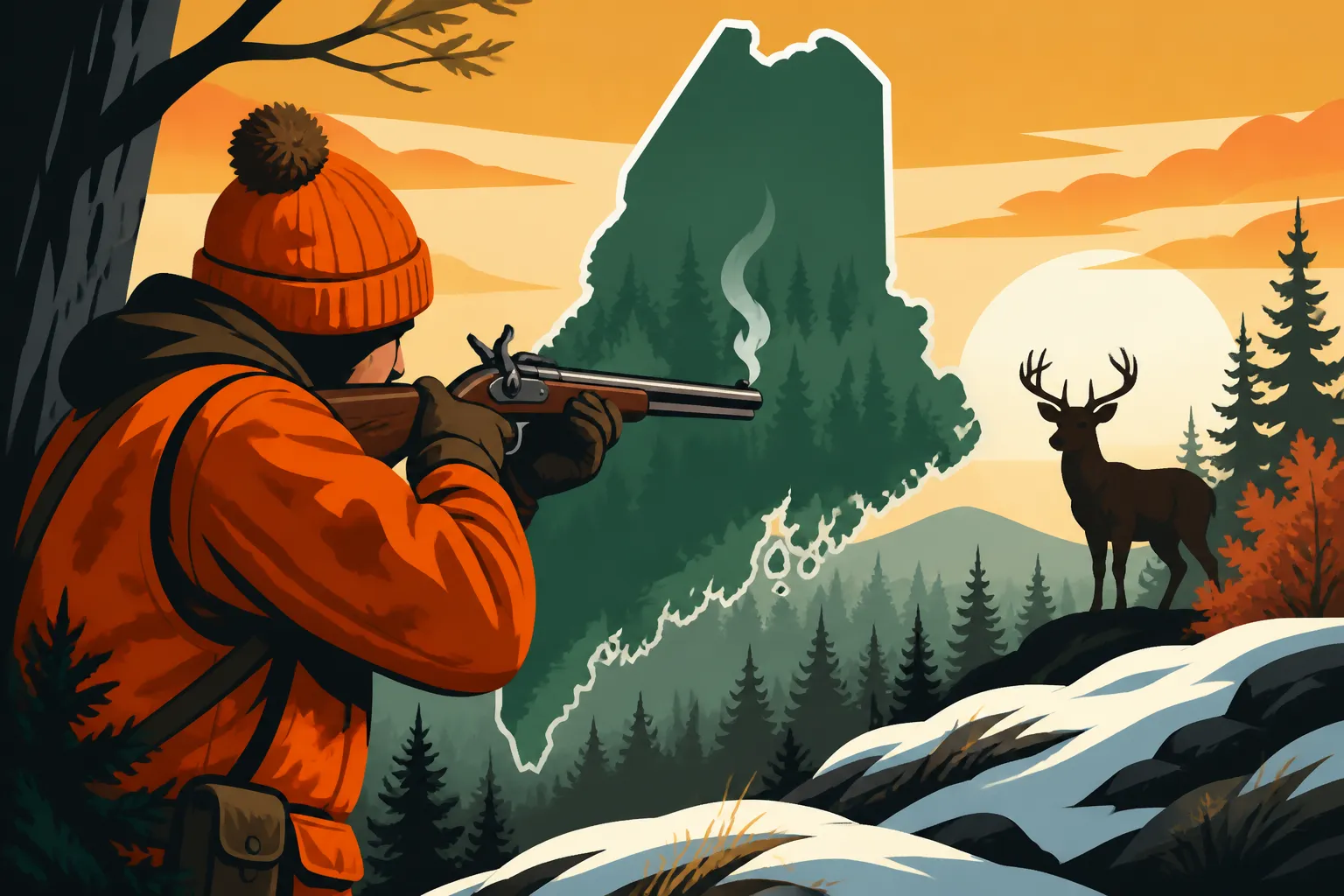
The crisp, cutting air of December in Maine can truly test a hunter's resolve, often leading many to hang up their bows and rifles until next season. But for those dedicated enough to embrace the elements, the extended muzzleloader season, pushing well into mid-December, offers an unparalleled opportunity. This guide is your compass through the challenges and immense rewards of hunting into the December muzzleloader close, equipping you with the knowledge and strategies to pursue whitetails in Maine's beautiful, yet formidable, late-season wilderness.
Embracing the Chill of Maine's December Muzzleloader Season
The Unique Appeal of Late-Season Muzzleloading
There's something incredibly special, almost spiritual, about hunting in Maine when winter truly begins to settle in. Most of the pressure from the general firearms season has dissipated, leaving the woods quiet, often covered in a pristine blanket of snow. This is the period when deer are no longer distracted by the rut; their entire existence revolves around survival. They’re focused on conserving energy and finding every last available calorie to sustain them through the deepening cold. For a muzzleloader hunter, this means a different kind of challenge, but also a chance at a solitary, deeply rewarding experience where you truly feel connected to the wild heart of Maine.
The conditions are undeniably tough. We're talking about temperatures that often plummet into the single digits or even below zero, icy patches that can make every step treacherous, and snowfalls that can range from a light dusting to a full-blown blizzard. Your gear needs to be meticulously prepared, and your mental fortitude must be as strong as the ice on a North Woods pond. But for those who persist, who understand the rhythm of the late-season woods, the satisfaction of harvesting a whitetail in these conditions is a memory that truly lasts a lifetime. It’s a testament to patience, resilience, and a deep respect for the raw beauty and unforgiving nature of a Maine winter.
Navigating Specific WMD Dates and Regulations
One of the most critical aspects of planning your December muzzleloader hunt is understanding the specific season dates and regulations for your chosen Wildlife Management District (WMD). While the general Why the Firearms Season Runs Four Weeks through November, the muzzleloader season typically extends into the first two weeks of December, and in some WMDs, it can go even longer. This isn't a one-size-fits-all approach across the entire state, so a thorough check of the current year's hunting regulations from the Maine Department of Inland Fisheries and Wildlife (IFW) is absolutely essential. Don't rely on last year's dates; they can and do change!
You'll often find that Which WMDs Get Extended Muzzleloader Season are concentrated in central and southern Maine, where deer populations might be higher and access generally easier. Conversely, more remote or northern WMDs might have a shorter or no extended muzzleloader period. Furthermore, pay very close attention to bag limits and permit requirements. While you might have a muzzleloader permit, some extended seasons, particularly for antlerless deer, might require a specific Maine Antlerless Permit System or bonus tags. Make sure you understand whether you're hunting for an antlered buck only, or if you can legally harvest an antlerless deer with the appropriate tag. Being informed prevents disappointment and ensures you're hunting ethically and within the law. A quick look at Maine Muzzleloader Season Dates by WMD will give you a clear picture of what to expect where.
How Deep Snow and Extreme Cold Influence Deer Behavior
By the time December arrives, deer in Maine have transitioned entirely into survival mode. The frenetic energy of the rut is a distant memory. Their metabolism has slowed, and every movement, every calorie expended, is a calculation against the encroaching cold and dwindling food supply. When snow depths begin to exceed a foot, deer will instinctively seek out areas of thermal cover, often referred to as "deer yards" or "deer wintering areas." These are typically dense stands of conifers—cedar swamps, spruce thickets, or hemlock groves—that intercept snowfall, creating shallower conditions on the forest floor and providing crucial shelter from the biting winds.
Learning Reading a North Woods Deer Yard becomes an invaluable skill. Within these yards, deer establish intricate networks of trails, moving between sheltered bedding areas and any available browse. These networks can become prime locations for patient muzzleloader hunters. Outside of these thermal refuges, deer movement will be minimal, typically short bursts between bedding cover and Late-Season Food Sources for Maine Whitetails. A severe cold snap, especially with temperatures dropping well below zero, will make deer movement largely nocturnal. They will conserve energy during the day, moving only when absolutely necessary to feed, making daytime encounters challenging but not impossible if you position yourself precisely along their travel routes. Understanding these behavioral shifts is the key to late-season success.
Gearing Up for the December Freeze: Muzzleloader and More
Muzzleloader Selection and Cold-Weather Care
Your choice of muzzleloader for December hunting is paramount, as reliability in cold, potentially damp conditions can make or break your hunt. Modern inline muzzleloaders generally outperform traditional flintlocks or percussion caps in extreme weather, thanks to their sealed primer systems. However, even they demand meticulous attention. Black powder substitutes like Pyrodex or Triple Seven are often preferred over traditional black powder because they are less hygroscopic, meaning they absorb less moisture from the air, which is a huge advantage when humidity and condensation are concerns. Always store your powder in a dry, sealed container and ensure your pre-measured charges are kept in waterproof tubes until ready for loading.
The primer itself is a crucial, often overlooked, component. Invest in hotter primers specifically designed for cold-weather ignition; they can significantly improve your chances of a reliable shot in frigid conditions. Consider the materials of your rifle as well: a synthetic stock and stainless steel barrel will be far more resilient against the elements than blued steel and wood, which can swell, warp, or rust. Most importantly, Hunting the Muzzleloader Close in Mid-December effectively means practicing with your chosen setup in conditions as close to the real thing as possible. What functions flawlessly on a warm autumn day might present issues when your hands are cold and your rifle is chilled to the bone. Don't skip this critical preparation step.
Layering for Extreme Cold and Essential Accessories
Staying warm isn't just about comfort; it's a matter of safety and the ability to maintain focus throughout a long, cold day in the woods. Hypothermia is a genuine and serious threat in Maine's December wilderness. The most effective defense against the cold is intelligent layering. Begin with a high-quality, moisture-wicking base layer directly against your skin to draw sweat away. Crucially, avoid cotton, as it absorbs moisture and loses all insulating properties when wet, chilling you rapidly. Next, add multiple insulating layers—fleece, wool, or down are excellent choices—to trap warm air close to your body. Finish with a waterproof and windproof outer shell to protect against snow, sleet, and the piercing Maine wind. Insulated bibs and a heavy, quiet parka are often game-changers.
Your extremities demand equal attention. Invest in warm, waterproof boots with substantial insulation; aim for ratings suitable for extreme cold. Layered wool or synthetic socks will help, but always carry a spare dry pair. Your head and hands are major points of heat loss, so don't skimp on quality insulated gloves, mittens, or a warm hat and balaclava. Chemical hand warmers and foot warmers can dramatically extend your comfort and sitting time, especially if you're executing a Cold-Weather Sitting Strategy in Maine. A wide-mouth thermos filled with hot coffee, tea, or hearty soup can provide a vital internal warm-up. And always, always carry an extra set of dry insulating layers in a waterproof bag in your pack. A small mishap that gets you wet can turn dangerous quickly.
Navigation and Communication in Remote Winter Woods
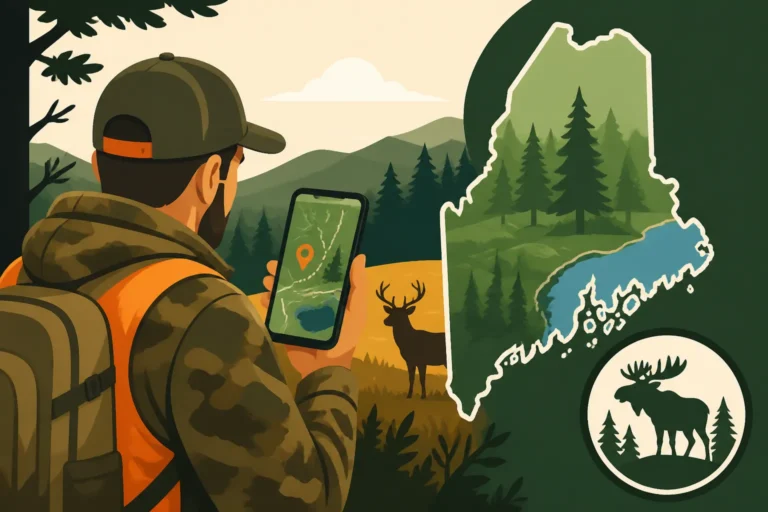
Hunting in December often means navigating challenging, snow-covered terrain where familiar summer landmarks are obscured. Reduced visibility from snow, fog, or early dusk can compound the problem. A reliable GPS unit or a feature-rich hunting app like GoHunt on your smartphone is an absolute non-negotiable. These tools are critical for accurately pinpointing your location, marking fresh sign or a downed animal, and safely finding your way back to your vehicle when daylight is short and shadows deepen. GoHunt, for example, offers detailed topographic maps, private and public land parcel data, and even real-time weather and wind overlays, which can be immensely helpful for Scouting With the Maine Hunting App and planning your approach.
Beyond navigation, reliable communication is essential. Cell service is notoriously spotty, or completely absent, in many remote parts of Maine. Ensure your phone or GPS has a full charge and carry a powerful portable charger. If hunting solo or venturing deep into the backcountry, consider a satellite messenger or a personal locator beacon (PLB) for emergencies. Always inform someone of your detailed hunting plan: where you'll be, your expected return time, and who to contact if you don't check in. A basic survival kit, including fire-starting materials, an emergency blanket, a headlamp, and extra high-energy food, should be standard issue in your pack. In these conditions, minor disorientation can quickly escalate into a life-threatening situation.
Strategies for Connecting with Late-Season Whitetails
Identifying Prime Late-Season Food Sources
As the cold deepens and snow accumulates, identifying consistent Late-Season Food Sources for Maine Whitetails becomes the singular most important aspect of your hunt. Deer are now solely focused on calorie intake. While some hard mast, like acorns, might still be available in areas not completely covered by deep snow, persistent food sources are often found elsewhere. Look for regenerating clear-cuts or thickets of young saplings (often maple, cedar, or young apple trees) where deer can browse. These areas provide both food and dense cover from the wind.
Agricultural fields, especially those with standing corn, brassicas, or even leftover potatoes in Aroostook County, become high-value targets. Even after harvest, deer will return to glean overlooked kernels or dig for remaining roots. If you have access to private land adjacent to these fields, focus your efforts on the edges, funnels, and transition areas where deer move from dense bedding cover to feed. Scouting is absolutely paramount here: look for fresh tracks in the snow leading to and from these areas, fresh droppings, and browse lines on twigs. Remember, in deep winter, deer will minimize travel, so prime food sources will be close to their thermal cover. Utilize the GoHunt app to identify potential agricultural areas or recent timber harvests near dense conifer stands.
Mastering Still-Hunting and Tracking in the Snow
For many seasoned December muzzleloader hunters, still-hunting and Tracking a Deer in Fresh Maine Snow are the most productive and rewarding methods. The snow transforms the forest floor into a giant canvas, displaying every movement a deer makes. A fresh, light snowfall not only allows you to read deer sign with incredible clarity but also mutes your footsteps, allowing for much quieter movement through the woods.
When tracking, your focus should be on fresh, distinct tracks – those that appear sharp-edged, not wind-blown or partially melted. Follow the direction of travel slowly and deliberately, constantly scanning ahead not just for the deer itself, but for any subtle changes in the track pattern that might indicate the deer has stopped to browse, bedded down, or become aware of your presence. Look for overturned leaves, broken twigs, or fresh droppings to confirm you're on a hot trail. Always try to move into the wind when tracking, utilizing terrain features and dense cover to conceal your approach. Patience is your ultimate virtue; still-hunting is not about covering miles quickly, but about covering ground quietly and observing every detail. A good pair of binoculars is critical for picking apart thick cover before you step into it, potentially bumping a bedded deer.
Effective Stand Placement and Ground Blind Tactics
While still-hunting shines for active deer, a well-placed stand or ground blind can be incredibly effective when deer patterns are predictable, or you've identified a consistent food source or key travel corridor. Late-season stand placement should prioritize both thermal cover and food. Look for locations that overlook a known deer yard entrance or exit, or a bottleneck funnel leading to an agricultural field. Remember that daylight movement is often limited to the first and last hours of light, so your stand must be positioned to intercept deer during these crucial periods.
Using a Ground Blind on Posted-Free Land or a carefully brushed-in blind on a field edge can be particularly advantageous in December. The enclosed nature of a blind provides welcome shelter from the brutal wind and cold, allowing you to sit longer and more comfortably. Ensure your blind is thoroughly brushed in and set up well in advance, if possible, to allow deer to acclimate to its presence. Always pay meticulous attention to wind direction; even in a blind, scent control is paramount. GoHunt's wind overlay feature can help you plan your approach and setup for optimal scent dispersal. Consider Entry Routes Through a Cut Cornfield or along a dense treeline to avoid alerting deer to your presence when approaching or leaving your stand.
Ethical Harvest and Winter Recovery
Blood Trailing in Snow and Ice
Recovering a harvested deer in December presents its own unique set of challenges. While a fresh blanket of snow can initially make Blood Trailing After Dark in Maine easier, a sudden crust of ice, ongoing snowfall, or even a blizzard can quickly obscure a blood trail. After taking a shot, resist the urge to immediately pursue the deer. Give it ample time: at least 30 minutes for a suspected good lung shot, and several hours for a gut shot, especially in cold weather where deer often bed down quickly. The cold will help preserve the meat.
When you begin trailing, move slowly and methodically. Mark the last confirmed blood sign with flagging tape or biodegradable toilet paper. Having multiple hunters can be a significant asset, spreading out slightly to look for tracks, disturbed snow, or the deer itself. If the blood trail becomes sparse, expand your search in concentric circles around the last known sign. Pay attention to subtle clues like overturned leaves, broken twigs, or scuff marks in the snow. If you're confident in your shot but lose the trail entirely, consider returning the next morning with fresh eyes and the benefit of full daylight. The freezing temperatures will help preserve the meat, allowing for a successful recovery the following day. When facing a particularly challenging recovery, such as Recovering a Deer From a Cedar Swamp, a solid plan and patience are your best tools.
Caring for Your Harvest in Freezing Temperatures
Once you've successfully recovered your deer, the freezing December temperatures actually become your ally in meat preservation, but proper care is still essential. Field dressing immediately is paramount to allow the carcass to cool down as quickly as possible, preventing bacterial growth and spoilage. Remove all entrails and, if practical, use snow or cold water to rinse out the body cavity, further accelerating the cooling process and removing any lingering debris. The cold air will quickly chill the meat, acting as a natural refrigerator.
If you find yourself deep in the woods, far from your vehicle, consider bringing a deer sled or a specialized game drag. Trying to Dragging a Deer Out of a Cedar Swamp or through deep snow without proper tools can be an exhausting, if not impossible, task. Once you've transported the deer, get it to a cool, dry, and secure location, like a garage or shed, where it can hang and age for a few days if desired, without freezing solid. Ensure it's protected from scavengers. Be prepared for Butchering a Deer at Camp yourself or taking it to a local meat processor promptly to avoid issues that can arise from repeated freezing and thawing cycles, which can negatively impact meat quality. The cold simplifies some aspects of preservation, but the physical demands of harvest and transport are often magnified.
Final Steps: Registration and Reflecting on the Season
After all your hard work, the final, crucial step is to register your deer. Maine law mandates that all harvested deer must be registered within 18 hours. This can be done in person at a designated deer registration station or, increasingly, online through the Maine IFW's digital platform. This isn't just a legal requirement; it's a vital part of the state's wildlife management efforts, as these harvest numbers provide critical data that helps track population trends, informs future hunting regulations, and ensures the health of Maine's deer herd. You can easily find a list of registration stations on the IFW website or within the GoHunt app.
Hunting into the December muzzleloader close is truly an experience reserved for the most dedicated. It demands resilience, a deep understanding of the environment, and a willingness to confront nature on its most challenging terms. But for those who embrace it, it offers a profound connection to the wild heart of Maine and the incomparable satisfaction of a hard-earned reward. Every successful late-season hunt is a testament to preparation, perseverance, and a deep respect for the game and the unique beauty of the winter woods. Take a moment to appreciate the journey, the silent majesty of the frosted landscape, and the incredible privilege of being a Maine hunter. It’s a truly special way to cap off the hunting year.
Disclaimer
Please remember that hunting regulations, season dates, and WMD boundaries can change annually. Always consult the most current official Maine Department of Inland Fisheries and Wildlife (IFW) hunting law book and website before heading afield. This guide is for informational purposes only and does not supersede official state regulations.