Hunting a Beaver Flowage Edge at Dusk
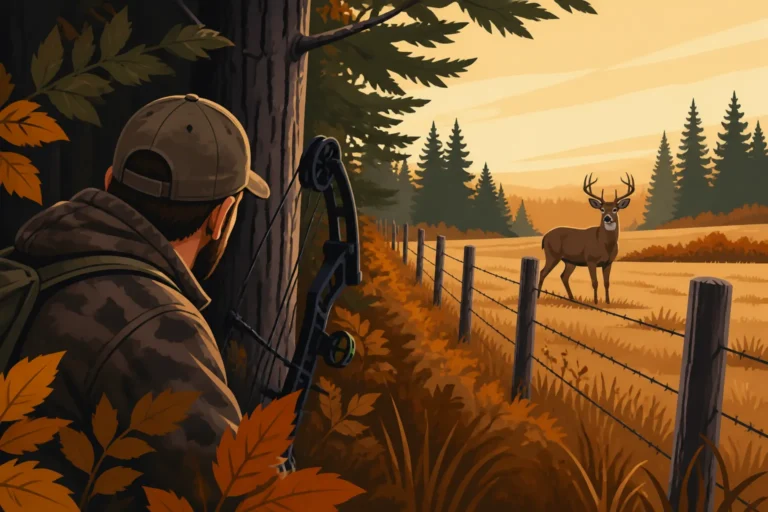
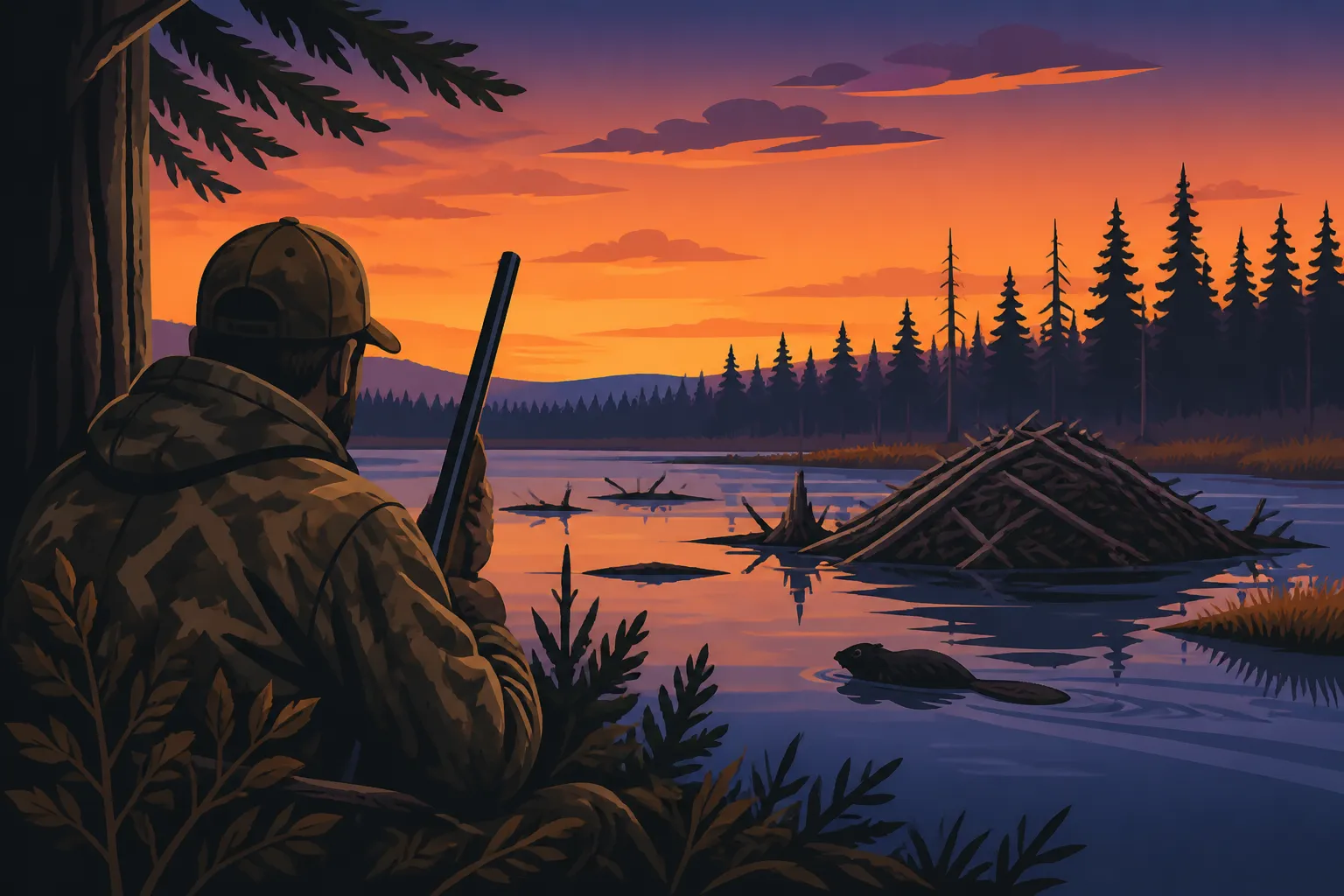
There's nothing quite like the fading light of a Maine evening, the calls of evening birds quieting down, and the rising anticipation of a deer emerging from the cover. For many hunters, this magical time often leads them to a beaver flowage edge, a natural magnet for whitetails, but hunting these spots effectively at dusk requires a keen understanding of deer behavior, terrain, and how to position yourself for success. This guide will walk you through everything you need to know to make your next evening hunt around a Maine beaver flowage a productive one.
The Allure of Beaver Flowages for Evening Deer Movement
Beaver flowages, with their patchwork of open water, regenerating forest, and boggy edges, are truly unique ecosystems in Maine's landscape. These aren't just pretty spots; they are absolute hubs of activity for whitetail deer, especially as the sun begins to dip below the horizon. If you've ever wondered where deer disappear to and why they seem to suddenly appear out of nowhere, often it's because they're using these subtle, yet incredibly productive, habitats.
Why Flowages Are Natural Deer Magnets
Think about what a deer needs: food, water, and cover. A beaver flowage often provides all three in abundance. The fluctuating water levels, the work of the beavers themselves, and the subsequent regrowth create a diverse array of vegetation. You’ll find tender shoots, aquatic plants, and edge browse that deer absolutely crave, especially after a long day of bedding down. This isn't just one type of plant; it's a buffet that changes with the seasons, from lush greens in summer to woody browse that deer will readily utilize as Late-Season Food Sources for Maine Whitetails. The water itself is a crucial element, providing a constant, clean source of hydration without the deer needing to travel far. Plus, the irregular edges, dense alders, and pockets of regenerating timber surrounding a flowage offer incredible thermal and escape cover. Deer can often bed down in these thickets, feeling secure, knowing they are just a few steps from a fresh meal or a drink.
Beyond the essentials, these areas often serve as natural travel corridors and funnels. Deer will often skirt the edges of the water, rather than pushing through dense, impenetrable woods or crossing large open areas. These edges provide relatively easy travel and cover, creating predictable pathways. They can also connect different parcels of woods, creating a natural highway system that deer use daily. If you're looking for where deer move between bedding and feeding, the edge of a flowage is often a prime candidate.
The Magic Hour: Why Dusk is Prime Time
There's a reason hunters often refer to the time around sunset as the "magic hour." For deer, it's a period of increasing activity. As the day's heat dissipates and the light begins to fade, deer feel more comfortable moving from their daytime bedding areas to their preferred feeding grounds. This is particularly true for mature bucks, who are often more nocturnal and cautious during daylight hours. As the shadows lengthen, they feel a sense of security that encourages them to step out.
Another critical factor at dusk, especially in the undulating terrain often found around flowages, is the behavior of thermals. Throughout the day, thermals rise as the sun heats the earth. But as the sun sets, the ground cools, and the thermals reverse, beginning to fall. This means that scent, which might have been carried upwards earlier in the day, will now sink and drift downwards or along the contours of the land. Understanding Wind and Thermals in Maine Hill Country is paramount here, as a poorly placed stand can instantly give your position away. Deer moving into a flowage from higher ground will likely be doing so as the thermals fall, making it essential to position yourself where your scent will be carried away from their likely approach. It’s a delicate dance with nature, but mastering it is key to success.
Decoding the Landscape: Scouting a Flowage Edge
You can't just walk into any beaver flowage and expect success. The real work, and often the most rewarding part, happens long before you ever carry your rifle or bow into the woods. Scouting a flowage edge is about becoming a detective, piecing together clues to understand how deer are using the area and predicting their movements.
Reading the Sign
When you're walking the perimeter of a flowage, you need to be constantly looking for sign. Start by identifying fresh tracks in the mud along the waterline or in any damp depressions. Pay close attention to the size and direction of the tracks. Are there tracks from multiple deer, indicating a family group? Or do you see a single, larger track, possibly from a mature buck? Freshness is key – clear, undisturbed tracks indicate recent activity. Beyond tracks, look for browse lines. This is where deer have nipped off twigs and leaves, creating a noticeable "trim line" on vegetation. Different heights of browse can tell you if fawns, does, or bucks are feeding there. If you see signs of heavy browsing on specific plants, like certain saplings or shrubs, that's a good indication of a consistent food source.
Don't overlook rubs and scrapes, particularly during the pre-rut and rut phases. Rubs, where bucks have rubbed their antlers on small trees or saplings, indicate territory marking and can show you a buck's travel route. Scrapes, patches of bare earth where a buck has pawed away leaves and often urinated, are communication hubs. While a single rub or scrape might not mean much, a series of them, known as a "scrape line," along the edge of a flowage, is a major indicator of a buck's presence and travel patterns. As you gain experience, you'll learn to differentiate between fresh and old sign, a skill that's critical to understanding current deer movement. This is a big part of Reading Maine Mud for Fresh Deer Movement.
Using Technology for Smart Scouting
In today's hunting world, technology is your friend. Before you even set foot in the woods, use satellite imagery and topographic maps to get a bird's-eye view of the flowage. Tools like GoHunt or the Maine Hunting App offer invaluable insights. Look for bottlenecks, pinch points, and areas where the cover is particularly dense, forcing deer into narrower travel corridors. A beaver flowage itself often acts as a natural barrier, creating a Hunting a Funnel Between Two Woodlots that deer must use to navigate. Identifying these natural funnels will narrow down your focus.
For example, a satellite map might reveal a small finger of high ground extending into the flowage, or a narrow strip of dry land between the water and an impassable swamp. These are prime locations where deer will cross or travel, as they offer the easiest path. You might also spot old logging roads or trails that parallel the flowage, which deer frequently use. Topographic maps will show you elevation changes, which are crucial for predicting thermal movement. By cross-referencing these maps with your ground scouting, you can confirm your theories and identify the most promising ambush points. Pay attention to bedding areas, often dense evergreen thickets or areas of tangled blowdowns, which are typically found on slightly higher ground adjacent to the flowage. Knowing where the deer are coming from will help you place your stand effectively for their evening migration.
Strategic Setup for the Dusk Ambush
Once you've done your homework and identified the prime spots around the beaver flowage, the next critical step is your setup. This isn't just about hanging a stand; it's about minimizing your presence and maximizing your chances in that short, intense window of opportunity.
Wind and Thermals: Your Guiding Principles
I cannot stress this enough: wind and thermals are everything when hunting a beaver flowage at dusk. As we discussed, thermals fall in the evening, meaning scent will drift downwards. You absolutely must position yourself so that your scent cone is blowing away from where you expect deer to approach and from their bedding areas. If you anticipate deer coming from a ridge above the flowage, you want to be positioned so that the falling thermals carry your scent down into the flowage, or away into an open area, not directly towards their approach. This is more than just a general wind direction; it's about understanding the micro-thermals of the specific terrain around your chosen spot. A light breeze can be completely overridden by a strong thermal pull. Always bring a wind checker, those little squeeze bottles with powder, and use it often, especially as the light begins to change.
Consider where the deer will likely be coming from, often a Where Maine Bucks Bed in Big Timber or a dense cedar swamp, and plan your approach and stand placement with that in mind. Your entry and exit routes should also be chosen to avoid blowing your scent into these areas, both when you walk in and when you leave after dark. A quiet, scent-free approach is just as important as your stand location itself.
Choosing Your Stand Location
The actual spot you choose for your stand or blind is critical. You're looking for a confluence of factors: good visibility, cover for yourself, and positioning for a clean shot. Along a flowage edge, ideal spots are often pinch points where the dry land narrows, natural crossings where deer regularly enter or exit the water, or near specific food sources they're targeting. For example, if you've found an old apple tree near the flowage, or an area with heavy browse, setting up to intercept deer heading to that spot is smart.
You have a couple of options: a tree stand or a ground blind. A tree stand gives you an elevated advantage, allowing your scent to dissipate better and providing a wider view. Make sure the tree you choose offers ample cover from limbs and leaves. However, sometimes the terrain around a flowage doesn't offer suitable trees, or the cover is too sparse. In these cases, a ground blind can be incredibly effective. Whether you're Using a Ground Blind on Posted-Free Land or on public ground, a well-placed and brushed-in ground blind can offer excellent concealment and warmth, which is a bonus as the evening chill sets in. Whichever you choose, ensure it allows for clear shooting lanes to the most likely deer paths.
Brushing in and Concealment
Even the best-placed stand or blind is useless if you're silhouetted or easily spotted. For a tree stand, position yourself against a thick trunk or cluster of branches. Break up your outline with natural foliage. For a ground blind, especially one you set up yourself, take the time to brush it in thoroughly with local vegetation. Cut branches, deadfall, and grasses can be woven into the blind's structure to make it disappear into the background. The goal is to become an invisible part of the environment.
Remember that deer are constantly looking for anomalies. A perfectly straight line, a sudden splash of color, or an unusual shape will catch their eye. Your gear, from your backpack to your bow, should be camouflaged and blend in. Wear dark, muted colors or full camouflage, and consider a face mask or face paint as the light fades. This attention to detail will significantly increase your chances of not being detected by an approaching deer.
Maximizing Your Chances During the Hunt
You've scouted, you've set up, and now you're in the stand or blind as the sun dips. This is where patience, discipline, and quick thinking come into play. The dusk window can be incredibly productive, but it's also often fleeting.
Patience and Persistence
Hunting at dusk is a waiting game. Deer often won't move until the last sliver of daylight, sometimes even after legal shooting hours begin to wane. It’s easy to get antsy or discouraged if nothing shows up right away. Resist the urge to fidget, check your phone, or stand up too early. The biggest buck of the day might be the one that steps out just before it's too dark to shoot. The whole point of hunting this time is understanding their reluctance to move in full daylight.
You need to be prepared to sit until the very last minute of legal light, and sometimes even beyond, just to observe and learn. Every sit is a lesson, even if you don't pull the trigger. Being persistent means understanding that sometimes you'll be treated to a spectacular show, and other times, it will be quiet. But if you've done your homework, the odds are in your favor for at least a sighting.
Minimizing Disturbance
Your entry and exit are critical components of a successful dusk hunt. You want to slip in quietly, ideally using a route that takes you away from prime bedding and feeding areas. Avoid making unnecessary noise or leaving behind strong human scent. If possible, use the cover of topography or thick vegetation to mask your approach. Tools like GoHunt can help you plot these routes digitally, ensuring you’re not crossing fresh sign or disturbing areas you plan to hunt later.
What if deer are already present when you arrive at your stand, or they approach while you’re in it but before legal light? Stay absolutely still. Don't risk spooking them. Sometimes, a deer that sees you will just skirt around and keep going, but a deer that smells you will be gone in a flash and likely warn others. If deer are feeding nearby, sometimes they will just move through and not notice you, allowing you to settle in. If they are close, wait until they move off before adjusting your position or getting comfortable. Your exit strategy is just as important. Once legal shooting light has passed, wait a good 15-30 minutes before climbing down or exiting your blind. This allows any deer still in the area to disperse naturally, ensuring you don't blow out your spot for future hunts.
Shot Opportunity and Recovery
When a deer finally presents itself in the fading light, ethical shot placement becomes paramount. Visibility is reduced, and shadows can play tricks. Make sure you can clearly identify your target and have a clean shot at the vitals. Do not rush. Take a deep breath, control your nerves, and focus on your aiming point. If you have any doubt, let the deer walk. There will be other opportunities.
Should you make a shot, pay close attention to the deer's reaction and its direction of travel. Mark the exact spot where the deer was standing when you shot and where you last saw it. This is crucial for recovery. In the low light of dusk, it's often wise to wait before beginning your blood trail, especially if the shot wasn't immediately fatal. Give the deer time to bed down. Returning to the spot a few hours later, or even waiting until morning, can be much more effective. Blood Trailing After Dark in Maine can be challenging, even with good lights, so a patient approach often leads to better results. Make sure to have a good flashlight, spare batteries, and a plan for how you'll track and recover your deer. Knowing where you are relative to roads and trails will be essential.
| Feature | Tree Stand Pros | Tree Stand Cons | Ground Blind Pros | Ground Blind Cons |
|---|---|---|---|---|
| Visibility | Elevated view, wider field of vision | Limited by tree placement, narrow shooting lanes | Wide shooting lanes, easy to adjust position | Limited elevation, ground-level perspective |
| Concealment | Breaks up human silhouette, easier scent control | Can be exposed if tree is sparse | Excellent concealment if brushed in properly | Requires careful setup to blend in |
| Comfort | Can be uncomfortable for long sits | Susceptible to cold/wind | More spacious, warmer, offers more protection | Can feel cramped for taller hunters |
| Flexibility | Fixed position, can be noisy to adjust | Requires suitable trees | Can be set up almost anywhere with cover | Often heavier to transport |
| Safety | Requires harness and strict safety protocols | Risk of falling | Stable, safer platform | Deer may be more wary of ground-level movement |
| Scent | Higher elevation helps dissipate scent | Still affected by falling thermals at dusk | Scent closer to ground, critical wind management | Can hold scent if not properly ventilated |
Hunting a beaver flowage edge at dusk in Maine is an incredibly rewarding experience, offering a unique blend of natural beauty and hunting challenge. By understanding deer behavior, meticulously scouting your chosen area with the help of modern tools like GoHunt, strategically positioning yourself, and exercising patience, you'll significantly increase your odds of success. Remember, every moment spent in the Maine woods, whether you fill your tag or not, is an opportunity to connect with nature and hone your skills.
Disclaimer
Please ensure you are fully aware of and adhere to all current Maine Department of Inland Fisheries and Wildlife hunting regulations, seasons, and licensing requirements before engaging in any hunting activities. Safety should always be your top priority.