Hunting a CRP Field Edge at First Light
There’s nothing quite like the hopeful chill of a pre-dawn morning in Maine, but that excitement can quickly turn to frustration when you’re trying to figure out where deer will show up. Hunting a CRP (Conservation Reserve Program) field edge at first light offers incredible potential, yet many hunters struggle with precise setup and understanding deer movement in these unique transitional zones. This guide will walk you through everything you need to know to effectively hunt these often-overlooked hot spots in the early hours.
Understanding CRP Edges and Deer Behavior at Dawn
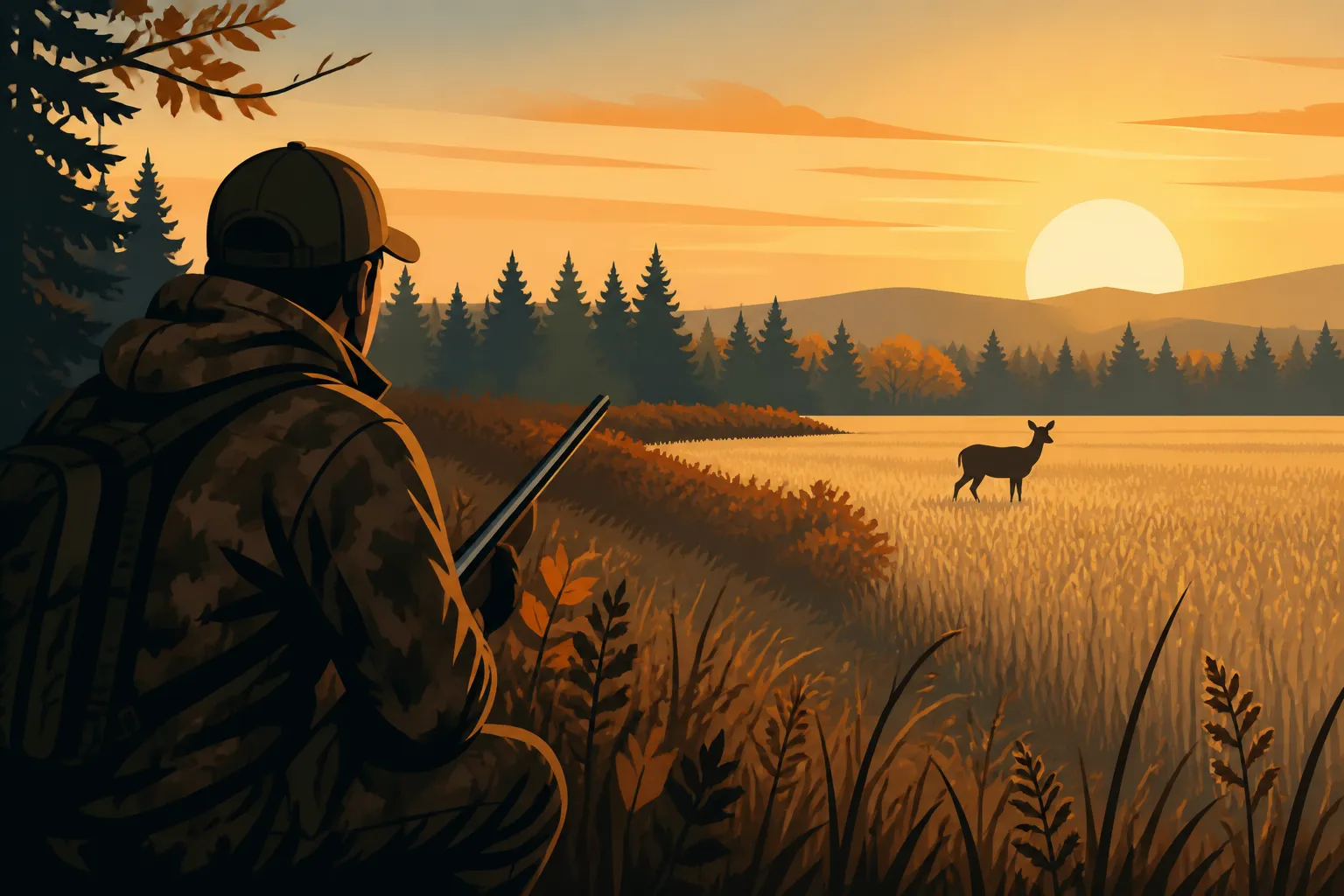
Hunting CRP field edges at first light is a strategy born from understanding exactly what these habitats offer and how deer naturally use them as the sun begins to kiss the horizon. It’s not just about finding a spot; it’s about reading the landscape and predicting movement.
What Makes CRP Fields Attractive to Deer?
CRP fields are fascinating habitats. Unlike a freshly cut cornfield or an alfalfa plot that’s primarily a food source, CRP land is often dense, tall native grasses and wildflowers, left undisturbed for years. This makes it a security blanket for deer. Imagine a thick, tangled fortress offering incredible cover from predators and the elements. Deer use CRP for bedding, especially during the day, where they can escape the sun or find shelter from harsh winds. The dense vegetation also provides thermal protection, which is a huge benefit when those crisp Maine mornings arrive.
Beyond bedding, these fields are also prime fawning cover in the spring, protecting vulnerable young from coyotes and other threats. Throughout the year, the insect life within CRP provides a subtle but consistent food source, attracting smaller game which, in turn, can attract predators, making deer even more cautious around the edges. This isn't a food plot, per se, but it's a critical part of a deer's home range, acting as a crucial sanctuary and a low-impact travel corridor. Deer will often skirt the very edges of these fields, using the available cover for security before either melting back into heavier timber or venturing out into more open areas to feed briefly before daylight breaks.
Early Morning Movement Patterns
As twilight begins to recede and first light streaks across the eastern sky, deer that have been feeding under the cover of darkness start to make their way back towards their bedding areas. A CRP field edge is a classic transition zone for this movement. Bucks, particularly during the rut, will often use the thick cover of CRP to cruise for does, feeling more secure hugging the dense vegetation than exposing themselves in open hardwoods or larger agricultural fields. They know that this thick cover offers a quick escape if danger arises.
The "golden hour" – that magical first hour of legal shooting light – is often your best window of opportunity along these edges. Deer are wrapping up their nocturnal activities and are in motion. They might linger along the edge, nibbling on tender shoots, checking for danger, or just pausing before slipping into the heart of the CRP. Light levels play a huge role here; as the sun climbs higher, and visibility increases, deer generally become more wary and will seek out the densest cover. Your job is to intercept them during this brief window when they’re still moving, but before they’ve fully retreated for the day. Being able to anticipate where they'll emerge or disappear is key, and often, that's right along the edge of that dense CRP.
Scouting and Stand Placement for First Light Success
You can’t just blindly walk into a CRP edge and expect success. The secret sauce for early morning hunts lies in thorough pre-season scouting and intelligent stand placement, making sure you’re exactly where deer want to be as the world wakes up.
Pre-Season Scouting: Reading the Edge
Effective scouting is your foundation. Start long before the season by meticulously inspecting the perimeter of CRP fields. Look for the tell-tale signs: fresh deer tracks leading in and out, piles of droppings indicating feeding or staging areas, and during the pre-rut and rut, pay close attention to rub lines and scrape lines that parallel the edge. These scrapes, often under a low-hanging branch, are like deer calling cards, indicating regular buck traffic. Trail cameras are an absolute game-changer here. Place them along the most promising sections of the CRP edge to identify specific travel routes and, critically, the timing of deer movement. You might find deer are consistently exiting the field at one specific corner or entering another. Using a service like GoHunt can help you visualize these patterns on aerial maps, allowing you to log camera data and observations for a more comprehensive understanding.
It’s crucial to identify distinct entry and exit points. Deer are creatures of habit and will often use the path of least resistance or the most secure route. Look for subtle funnels, pinch points, or even breaks in the CRP that create natural crossings. This is where they’ll actually cross into or out of the dense cover. Don't forget about wind and thermals, which are incredibly critical, especially near open fields. At dawn, thermals often drop as the ground cools, pulling your scent downwards into valleys or low spots. As the sun rises and the air warms, thermals will begin to lift. Understanding this diurnal shift is paramount to setting up without blowing your cover. For more detailed insights on predicting movement, check out "Reading Maine Mud for Fresh Deer Movement" or "Reading Aerial Photos for North Woods Deer".
Optimal Stand/Blind Setup for Dawn
Once you’ve done your scouting homework, it’s time to pick your stand location. For first light, elevated stands like hang-ons or ladder stands offer several advantages. They provide a much better vantage point over the often-tall CRP grasses, allowing you to spot deer that might otherwise be hidden. Critically, being elevated helps with scent dispersal, lifting your scent stream above the primary deer travel lanes, especially if you’re positioned on the prevailing wind side. The downside, of course, is that they offer less concealment than a ground blind and require a careful, quiet approach in the dark.
Alternatively, ground blinds can be incredibly effective, especially if you need maximum concealment or want to avoid climbing in the dark. They provide warmth on chilly mornings and can hide movement. However, visibility can be limited by the height of the CRP, and scent can pool around the blind if the thermals are dropping. If you opt for a ground blind, make sure to read up on "Brushing In a Blind on a Field Edge" to ensure it blends seamlessly into the environment. Regardless of your choice, your position relative to the rising sun is vital. You absolutely do not want to be backlit, making you an easy silhouette against the dawn sky. Position yourself so the rising sun is either behind you or to your side, illuminating the area where you expect deer to appear. And always, always, set up near those likely travel corridors or funnels you identified during scouting, where deer are most likely to intersect your shooting lane.
Here's a quick comparison of stand types for CRP edge hunting:
| Feature | Elevated Stand (Hang-on/Ladder) | Ground Blind |
|---|---|---|
| Visibility | Excellent, especially over tall CRP; wider field of view. | Limited, often restricted by tall grasses and blind windows. |
| Scent Control | Better due to elevation, wind can carry scent over deer. | Challenging, scent can pool; requires meticulous control. |
| Concealment | Good with natural backdrop; more exposed to distant eyes. | Excellent, especially when brushed in; hides movement well. |
| Comfort/Warmth | Exposed to elements; less inherent warmth. | Can be warmer, more comfortable in adverse weather. |
| Mobility | Moderate; takes time to set up/move. | High if pop-up; low if semi-permanent brushed-in setup. |
| Approach | Requires careful, quiet ascent in dark; potential for noise. | Easier, quieter entry; blends with terrain. |
| Best Use | Scouting a new spot, open CRP edges, long shots. | Established patterns, tight funnels, close-range encounters. |
First Light Hunting Strategies and Tactics
Once your stand is set and your scouting is complete, the actual hunt requires a blend of disciplined approach, keen observation, and knowing when (and how) to communicate with the deer.
The Approach and Entry
The moments leading up to your sit are just as critical as the sit itself. Your approach to a CRP field edge at first light must be as silent and stealthy as possible. Deer are hyper-alert in the dim pre-dawn hours, and even the slightest crunch of leaves or misplaced step can ruin your hunt before it begins. Assume deer are already along the edge or in the field; you’re not trying to get to your stand unnoticed, you’re trying to get there without them knowing you’re there. Utilize any natural terrain features – a slight rise, a line of thicker brush, a ditch – to break up your silhouette and muffle your footsteps. This is where excellent planning really pays off.
Scent control is not just important; it’s an absolute must. Shower with scent-eliminating soap, wear clean hunting clothes stored in a scent-free bag, and use scent-eliminating sprays on yourself and your gear. The combination of early morning thermals and keen deer noses means any foreign odor will stick out like a sore thumb. Remember, you want to arrive well before legal shooting light – ideally, an hour or more beforehand. This gives the woods time to settle down after your disturbance and allows any deer that might have been momentarily spooked to return to their routine. Patience in your approach often dictates the success of your entire hunt.
The Hunt: Patience and Observation
Once you're settled in your stand or blind, the real work begins. The first moments of legal light are often the most crucial. Instead of fixating on one spot, constantly scan the entire CRP edge. Deer can appear from anywhere, and their movements can be incredibly subtle – a flick of an ear, the outline of a back, or the glint of an antler might be your first clue. Your eyes should be working the shadows, looking for patterns that don't belong, or movement against the stationary backdrop of the tall grasses.
Calling tactics can sometimes be effective, particularly during the rut. A soft grunt call might pique the curiosity of a buck cruising the edge, especially if you're in an area where "Grunt Calls in Mature Maine Hardwoods" are commonly used. A quiet bleat can sometimes bring in a curious doe or even a buck searching for company. However, be judicious; overuse of calls can be detrimental, especially on pressured deer. The primary window for movement is often within the first 30-60 minutes of legal light, but don't give up too early. Some deer might be late stragglers, or a buck might make a final pass. You'll also need to constantly adapt to changing light conditions. As the sun rises, the shadows shift, and what was once perfectly concealed might suddenly be exposed. Adjust your gaze and focus as the light changes.
Adaptability and Post-Hunt Analysis
No two hunts are exactly alike, and being able to adapt is a hallmark of a successful deer hunter. Wind shifts are notorious for changing your carefully laid plans. If the wind suddenly swirls and carries your scent directly into a prime travel lane, you might need to quietly reassess your situation. Similarly, a sudden change in weather – a cold front moving in, or an unexpected fog – can alter deer behavior. Knowing when to move and when to stay put is a delicate balance. Sometimes, sticking it out through an adverse condition can pay off, while other times, a strategic repositioning is the smarter play.
After each hunt, take the time to analyze what happened. Did deer move where you expected? What time did they show up, and from what direction? Was your wind correct? Even if you don't punch a tag, every sit is a learning opportunity. This is where tools like GoHunt can really shine, allowing you to log detailed observations, weather conditions, and deer sightings. Over time, this data can help you refine your strategies and predict future movements with greater accuracy. This ongoing analysis is crucial for improving your odds season after season. For more insights on camera placement, even if not directly on a CRP edge, the principles in "Where to Hang a Camera on a Logging Road" can be adapted to scout these areas.
Navigating Maine-Specific Challenges and Regulations
Maine offers some truly unique hunting experiences, but it also comes with its own set of rules and environmental considerations that are vital to understand, especially when targeting those CRP field edges.
Public vs. Private CRP Edges
One of the beautiful things about hunting in Maine is its long-standing tradition of implied permission on private land, which means you can often hunt undeveloped private land unless it is conspicuously posted with "No Trespassing" signs. This can be a huge benefit when hunting CRP edges, as many of these fields are on private agricultural or timber land. However, it's absolutely crucial to understand "Maine's Private Land Access Tradition" fully and respect landowner wishes. Never assume; if in doubt, ask for permission. A friendly knock on the door can open up incredible hunting opportunities and build lasting relationships.
On the flip side, what constitutes "What Posted Land Means in Maine" is equally important. Land that is clearly marked with "No Trespassing" signs, or painted with purple marks on trees, is off-limits without explicit permission. Always check land boundaries, either with a GPS unit using landowner maps (many apps like GoHunt provide property line overlays) or by physically scouting for boundary markers. Maine also has a network of Wildlife Management Areas (WMAs) and Public Reserved Lands that may contain CRP-like habitats. These public lands offer guaranteed access, but they often see more hunting pressure. Being able to identify and effectively hunt both public and private CRP edges expands your opportunities significantly.
Weather and Environmental Considerations
Maine's weather is famously unpredictable, and those pre-dawn CRP field edge hunts can present some real challenges. Cold mornings are a given as the season progresses, making proper layering and warm gear non-negotiable. Hand warmers, insulated boots, and a quality outer shell are essential for staying comfortable and focused. For comprehensive advice on keeping warm, be sure to check out "Cold-Weather Sitting Strategy in Maine". Fog and heavy dew are common in the early mornings, especially near fields and low-lying areas. While fog can provide excellent concealment for your entry, it can also severely limit visibility once you're on stand, making it tough to spot deer or take a safe shot. Dew, on the other hand, can make tracking difficult if a shot is taken, washing away blood trails quickly.
Speaking of tracking, if you do take a shot, understanding how to proceed is critical. Maine's dense cover and often rugged terrain make blood trailing challenging, and doing it effectively, even after dark, is a skill. The information in "Blood Trailing After Dark in Maine" can be invaluable in a crunch. Finally, consider the seasonality. Deer behavior around CRP changes throughout the season. In early archery, they might be more focused on specific food sources, while during the expanded archery season into December, they're looking for thermal cover and quick access to remaining food. Adapting your strategy to the time of year and specific deer needs will make you a more successful hunter.
Disclaimer
Please remember that hunting regulations, seasons, and licensing requirements can change. Always consult the most current Maine Department of Inland Fisheries and Wildlife (MDIFW) regulations before heading afield. Safety should always be your top priority.