What a Drawn Moose Zone Assignment Means
Drawing a moose permit in Maine is an exhilarating moment, a true cause for celebration after years, sometimes decades, of putting in for the lottery. But for many, that initial rush of excitement quickly gives way to a new feeling: a little bit of bewilderment. You've got your permit, congratulations! But what exactly does that "Zone Assignment" or "WMD" listed on it actually mean for your hunt? This comprehensive guide will break down the intricacies of your Maine moose zone assignment, helping you understand its implications and giving you a clear path forward for planning your dream hunt.
Understanding Your Moose Permit and WMD Assignment
So you’ve got that coveted permit in hand, perhaps after applying through the Maine Moose Lottery Application Process. The first thing you'll notice, beyond your name and permit number, is a specific Wildlife Management District (WMD) or "zone" assigned to you. This isn't just a random number; it's the core of where and when you can legally pursue a moose in the vast landscapes of Maine. Ignoring what this means is like planning a cross-country road trip without knowing which state you're supposed to end up in! It dictates everything from the type of terrain you'll encounter to the density of moose in your area, and even the available hunting methods.
What is a Wildlife Management District (WMD)?
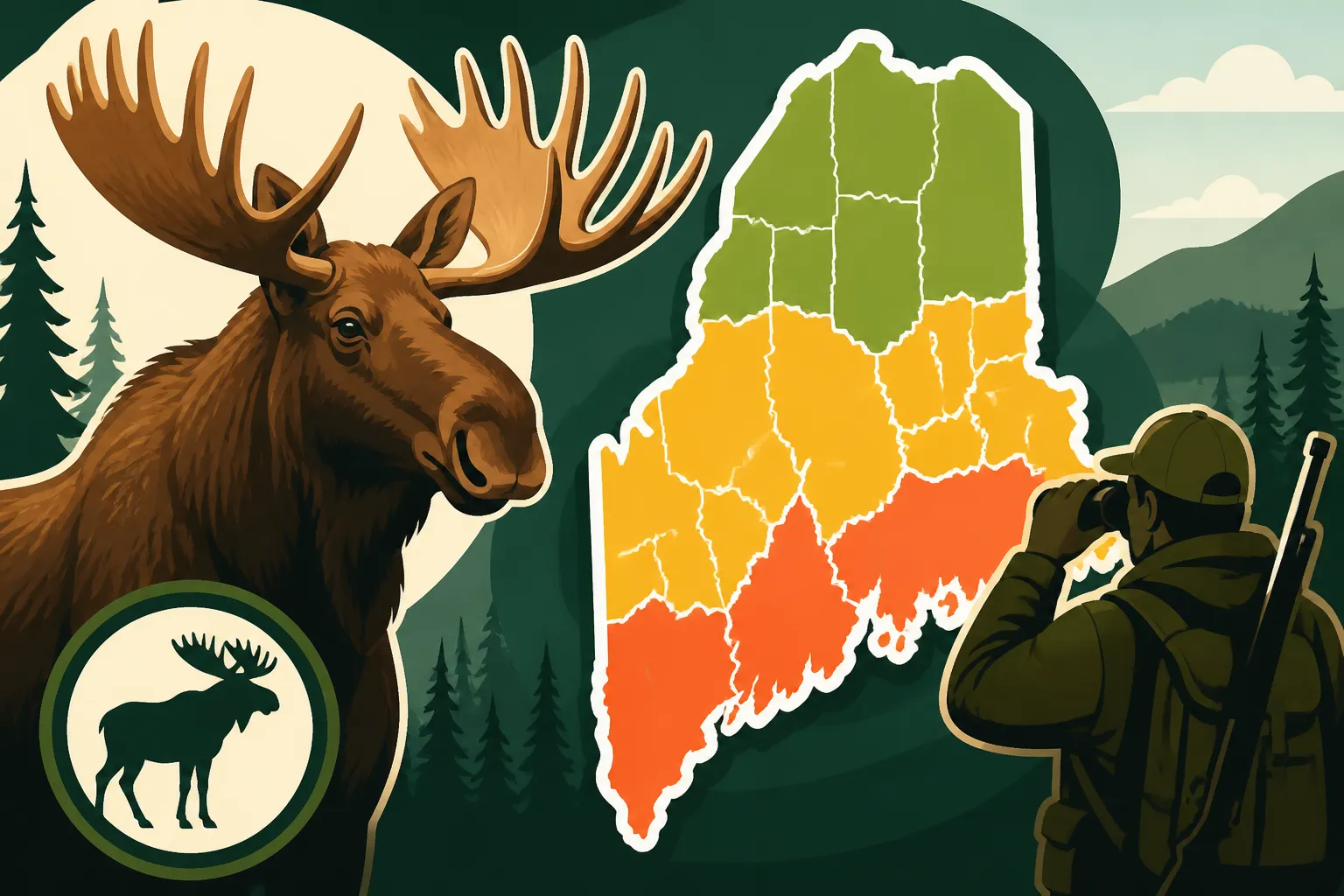
Maine is divided into a series of distinct Wildlife Management Districts, often just called WMDs. Think of these as large, geographically defined areas, each with its own unique characteristics in terms of habitat, land use, and, crucially, wildlife populations. The Maine Department of Inland Fisheries and Wildlife (MDIFW) uses these WMDs to manage game species, including moose, on a localized basis. This allows them to set specific harvest goals, season dates, and permit allocations that best suit the ecological conditions and moose populations within each individual district.
For instance, a WMD in the deep woods of Aroostook County might be predominantly industrial timberland with vast clear-cuts and replanted growth, offering excellent moose browse. Another WMD in central Maine might feature a mix of smaller woodlots, agricultural fields, and more fragmented habitat. The management objectives for these two WMDs, and thus the number of permits issued for each, will be wildly different. Your assigned WMD isn't just a boundary line on a map; it's a living, breathing ecosystem with its own set of challenges and opportunities that you'll need to understand deeply.
Decoding Your Permit Details
Beyond the WMD number, your permit will also specify other critical details. This includes the legal sex of the moose you can harvest (bull-only, cow-only, or any-moose) and the specific week during which your permit is valid. Maine's moose season is typically broken down into multiple weeks, usually in September and October, and you can only hunt during your assigned week within your assigned WMD.
This level of detail is paramount. You can't just take your permit and go hunt any moose, any time, anywhere in Maine. You are restricted to that specific WMD and that particular week. It’s also worth noting whether your permit is an "any-moose" permit or restricted to "bull only" or "cow only." Bull-only permits are the most common, especially for non-residents and those drawn through the Maine's Once-in-a-Lifetime Moose Lottery, but cow permits are sometimes issued in specific WMDs to help manage population growth or reduce localized deer tick burdens on moose. Always double-check these critical details as soon as you receive your permit to avoid any misunderstanding that could jeopardize your hunt.
The Strategic Implications of Your WMD
Once you understand what your WMD is, the next step is to truly grasp what it means for your hunting strategy. This isn't just about reading maps; it's about understanding the land, the moose behavior, and the logistics that will define your experience. Every WMD tells a different story about the hunting adventure that awaits you.
Habitat and Terrain Variations by WMD
Maine's landscape is incredibly diverse, and your WMD assignment will directly dictate the type of habitat and terrain you’ll be hunting. This is where the rubber meets the road in terms of planning. Are you heading into the dense, sprawling industrial forests of the North Maine Woods, or a more mosaic landscape of smaller woodlots, clearings, and bogs further south? Knowing this will inform your choice of clothing, footwear, navigation tools, and even your physical conditioning.
For example, WMDs in northern Maine, like 1, 2, 3, or 4, are often characterized by vast tracts of timber company land, extensive logging road networks, and remote wilderness. Here, you might find yourself glassing massive clear-cuts, still-hunting through thick spruce-fir stands, or calling moose in alder swamps. Moose in these areas often depend heavily on early successional growth found in recent cuts for browse. If your permit is for a more central or southern WMD, say 17 or 22, you might be dealing with more fragmented land ownership, smaller patches of woods, and an agricultural interface. Moose in these areas might be found in beaver flowages adjacent to cornfields or in dense cedar swamps. Understanding these subtle but significant differences in Moose Habitat in the North Woods and other regions is crucial for successful scouting and hunting.
Moose Densities and Success Rates Across Zones
The number of moose and, consequently, your odds of success, can vary significantly from one WMD to another. MDIFW carefully allocates permits based on population estimates and management goals for each district. Generally, WMDs in northern Maine, particularly those in the deep woods, tend to have higher moose densities and historically higher success rates due to vast tracts of suitable habitat and lower human population density.
However, a WMD with a "lower" success rate isn't necessarily a death sentence for your hunt. It simply means you might need to adjust your expectations, put in more effort, and hone your skills. A successful hunter knows that a lower density can sometimes translate into less hunting pressure, making the moose you do find less wary. It also means you need to be extremely diligent in your scouting and really understand how moose use the specific features of your WMD. Tools like GoHunt's mapping and data layers can be invaluable here, helping you visualize moose densities and past harvest locations to better understand your WMD's potential.
Access Considerations: Public vs. Private Land
Maine is unique in its approach to private land access for hunting. Much of the state, especially the prime moose habitat, is owned by large timber companies. While many of these lands are open to the public for recreational use, some require fees or have specific regulations, especially within The North Maine Woods Gate System. Other WMDs, particularly in central and southern Maine, are a patchwork of smaller private land parcels.
Your WMD will largely determine your access strategy. In the North Woods, you'll primarily navigate an extensive network of private logging roads, often maintained by the landowner and accessible for a fee at designated checkpoints. Knowing which gate to use, understanding their operating hours, and budgeting for access fees will be critical. If you're hunting a WMD with more private, non-industrial land, your strategy will shift towards obtaining landowner permission, which means knocking on doors and building relationships. This aspect of planning is often overlooked but can make or break a hunt, as restricted access means you can't get to the moose.
Planning Your Hunt Based on Your Zone
Once you’ve deciphered the details of your WMD and understand its general characteristics, it's time to translate that knowledge into a concrete hunt plan. This phase is where all the research and preparation truly begin to pay off. It’s not just about showing up; it’s about strategic execution.
Essential Pre-Hunt Scouting and Research
This is arguably the most critical step after drawing your permit. With your WMD in hand, you can begin to pinpoint potential hunting areas. Start with a deep dive into maps – topographic maps, aerial imagery, and land ownership maps. Modern digital mapping platforms like those offered by GoHunt are incredible for this, allowing you to layer different data, mark potential travel corridors, feeding areas, and bedding sites, and identify access points. Look for:
- Recent Timber Harvests: Moose are browsers, and recent clear-cuts or thinnings provide abundant young growth, which is prime moose food.
- Water Sources: Ponds, swamps, and beaver flowages are attractive to moose, especially during the warmer early season weeks. They offer forage and a place to cool down.
- Terrain Features: Ridges, saddles, and creek bottoms can funnel moose movement.
- Road Networks: Understand legal access, gate locations, and whether certain roads are seasonal or private.
Beyond maps, reach out to local biologists (MDIFW), wardens, or registered Maine guides who are familiar with your specific WMD. They often have invaluable insights into moose movement patterns, current habitat conditions, and historical harvest data. If possible, a physical scouting trip to your WMD before the season opens is highly recommended. This allows you to confirm map findings, identify fresh sign, and get a feel for the scale and density of the cover. Don't underestimate the power of "boots on the ground" scouting; it's the best way to develop an intuitive understanding of your hunting grounds. Using tools like the Scouting With the Maine Hunting App can also give you real-time data and access information.
Deciding on a Self-Guided vs. Guided Hunt
The decision to go solo or hire a guide often hinges on your experience level, budget, and, significantly, your assigned WMD. If your permit is for a remote, vast North Woods WMD that you're unfamiliar with, Hiring a Registered Maine Guide can be a game-changer. Guides possess intimate knowledge of the area, know where the moose are likely to be, handle logistics, and can significantly increase your odds of success. They also bring years of experience in tracking, calling, and recovery, which are all vital skills when hunting a moose. Many guides offer Booking a Guided Maine Moose Hunt packages that include lodging, food, and expert assistance.
However, if you're an experienced woodsman, have successfully hunted moose before, or drew a permit for a WMD closer to home that you know well, a self-guided hunt is certainly achievable. This option requires meticulous planning, a robust support team, and often more physical effort. You'll need to arrange your own lodging, food, transportation, and most importantly, have a solid plan for Getting a Moose Out of the North Woods after the harvest, which is no small feat. Consider your comfort level with wilderness navigation, field dressing a large animal, and the physical demands of deep woods hunting before committing to a self-guided adventure.
Here's a quick comparison to help you weigh your options:
| Feature | Self-Guided Hunt | Guided Hunt |
|---|---|---|
| Cost | Generally lower initial cost | Higher initial cost, but often all-inclusive |
| Experience | Requires high level of personal experience/prep | Guide's experience provides significant advantage |
| Logistics | You manage all transportation, food, lodging, recovery | Guide often handles most logistics, including recovery |
| Local Knowledge | Relies on personal scouting and research | Benefits from guide's intimate, real-time knowledge |
| Success Rate | Dependent on your skill and preparation | Often higher due to guide's expertise and resources |
| Flexibility | More freedom to adapt plans on the fly | Schedule dictated by guide and package |
| Support Team | Absolutely essential to have capable helpers | Guide often provides or coordinates support team |
Gear and Logistics Tailored to Your WMD
Your WMD assignment will also influence the specific gear you need. Are you anticipating long hikes through swamps, or mostly driving logging roads and glassing cuts? This will impact your choice of boots, rain gear, and even your vehicle. If you’re hunting in a remote WMD, you'll need robust navigation tools (GPS, compass, maps, and backup), emergency communication devices, and a well-stocked first-aid kit. For early season hunts in September, expect mild temperatures with significant insect pressure, meaning good bug spray and head nets are crucial. Later October hunts will demand serious cold-weather layering.
Consider also the specifics of your chosen hunting week. Early season (late September) means warmer weather, more foliage, and moose potentially still in summer patterns, perhaps more active around water sources. Later season (mid-October) often brings colder temperatures, less foliage, and moose more focused on feeding and rutting activities. Packing for a North Woods Moose Hunt isn't just about throwing things in a duffel; it's a strategic process. Always pack for unexpected weather, bring plenty of water, and ensure all your gear is reliable and tested. The remoteness of many WMDs means you can't just pop into a store for forgotten items.
Maximizing Your Chances in Your Assigned Zone
Once you understand your WMD and have planned your logistics, the actual hunting strategy comes into play. It's about adapting to the moose, the terrain, and the conditions to make the most of your once-in-a-lifetime opportunity.
Timing Your Hunt Within the Season
Your permit specifies a particular week you can hunt. Within that week, understanding moose behavior in your WMD at that specific time of year is key.
- Early September Weeks: Moose are often still in summer patterns, frequenting wetlands, bogs, and areas with lush browse. Calling can be effective, especially cow calls, but the bulls might not be as aggressive as during the peak rut. Watch for moose cooling off in water during warmer days.
- Late September/Early October Weeks: This is often the peak of the moose rut. Bulls are highly active, vocal, and receptive to calling. Aggressive bull calls, raking, and grunt tubes can be incredibly effective. This is a prime time for calling a bull moose in late September. Moose will be on the move, searching for cows.
- Mid to Late October Weeks: The rut winds down, and moose shift their focus more heavily to feeding, building up fat reserves for winter. They might be found in clear-cuts or areas with abundant hardwood browse. Still-hunting and spotting and stalking become more prevalent tactics, as calling may be less effective.
Always check the long-range weather forecast for your WMD and adjust your daily strategy accordingly. Cold, clear mornings are often excellent for moose activity, while hot, sunny days might push them into dense cover.
Adapting Tactics to Your Specific WMD
No two WMDs are exactly alike, and neither are their moose.
If you're in a heavily timbered North Woods WMD, a key tactic might involve utilizing logging roads. Drive slowly, stop frequently, and glass recent cuts, especially at dawn and dusk. This is where you might catch a bull feeding or moving between bedding and feeding areas. Calling from strategic vantage points, especially near cuts or swamps, can draw a curious bull. On the other hand, a WMD with more mixed forest and agricultural lands might require more still-hunting through woodlots or setting up on field edges where moose might browse after dark.
Understanding the typical wind and thermals in your WMD's topography is also critical. Moose have an incredible sense of smell, so always try to keep the wind in your favor. In mountainous or hilly terrain, thermals will rise in the morning and fall in the evening, carrying your scent up or down the slope. Use Maine Moose Hunt Success Rates data, if available for your specific WMD, to gauge the average outcomes and adjust your effort and expectations, but remember, every hunt is unique. Focus on what you can control: preparation, effort, and ethical hunting practices.
Post-Harvest Logistics and Planning
Let's be realistic: harvesting a moose is a massive undertaking. These animals are huge, often weighing over 1,000 pounds. Your WMD will profoundly influence how you handle the post-harvest logistics. If you're deep in the North Woods, far from paved roads, you'll need a robust plan for Field Dressing a Moose in the North Woods and getting that meat out quickly to prevent spoilage. This might involve ATVs, game carts, or even hiring a specialized retrieval service if you're really remote. Many guides offer retrieval services as part of their Booking a Guided Maine Moose Hunt package.
Consider also where you'll process the meat. Some sporting camps or guides have facilities to hang and quarter a moose, while others might direct you to local butchers. Having coolers, tarps, and plenty of ice ready is non-negotiable. The WMD's proximity to towns and services will impact how quickly you can get your moose to a processor or packed in ice. This is not a detail to overlook; it can be the most challenging part of the hunt, especially if you're not prepared for the sheer scale of the animal.
Disclaimer
Please remember that hunting regulations in Maine can change. Always consult the most current Maine Department of Inland Fisheries and Wildlife (MDIFW) hunting law book or their official website before planning any hunting trip. This guide provides general information and recommendations but is not a substitute for official regulations.