Choosing a Guide by Region Versus by Species
It's a familiar quandary for many hunters looking to book that special trip to Maine: you're ready to put your trust and hard-earned money into a guided experience, but how do you even begin to narrow down the right expert? The truth is, the search often boils down to a fundamental choice: do you seek out a guide renowned for their intimate knowledge of a particular region, or do you prioritize a guide who is an absolute master of a single species, regardless of where they operate? This guide will help you unpack that decision and choose the right path for your next Maine hunting adventure.
Understanding the Regional Guide: A Master of the Maine Landscape
When you hear about a "regional guide" in Maine, you're usually talking about someone who lives and breathes a specific corner of our vast state. Their expertise isn't just about one type of animal; it's about the very land itself—the timber cuts, the hidden bogs, the ancient game trails, the prevailing winds, and the subtle shifts in local game patterns. These guides are often pillars of their local communities, with generations of knowledge embedded in their very being.
The Deep Local Knowledge Advantage
A regional guide’s greatest asset is their unparalleled understanding of their home turf. Imagine a guide in Aroostook County who knows every potato field edge, every cedar swamp, and every transition zone a deer might use. They understand how snow depth affects deer movement in November, where moose typically yard up in late fall, and which logging roads offer the best access to grouse coverts. They've likely witnessed decades of changes to the landscape, from new clear-cuts to beaver flowages, and they know how game reacts to these shifts. This isn't just theory; it's practical, boots-on-the-ground wisdom. They might have grown up hunting the very same ridgelines and creek bottoms they’ll take you to.
This deep local knowledge also extends to weather patterns and seasonal variations. They know that a certain ridge in the Western Mountains might be prime for ruffed grouse after an early frost, or that a specific set of downeast islands will hold the most eiders during a nor'easter. They can tell you why Hunting a Ridge-Top Saddle for Rutting Bucks works better in their area, or when to expect peak activity for certain species based on the local acorn crop or apple production. They're tuned into the rhythm of their specific piece of Maine.
Ideal Scenarios for Hiring a Regional Guide
Hiring a regional guide often makes the most sense if your primary goal is to experience a specific part of Maine and you're open to hunting whatever game is thriving there. For instance, if your dream is to hunt the legendary North Maine Woods, a regional guide will be invaluable. They can navigate the intricate The North Maine Woods Gate System, understand the fees and regulations, and know the best remote sporting camps. They might specialize in calling a bull during Moose Hunting Maine's North Woods, but they’ll also know where to find bear sign, or where to run dogs for snowshoe hare.
Another ideal scenario is when you're interested in a multi-species hunt. Perhaps you want a combination of deer and upland birds in the same trip. A guide specializing in, say, Somerset County will know the deer movements in the lowlands and the grouse cover in the higher elevations, maximizing your chances for diverse opportunities. They can adjust your hunt plan daily based on conditions, game sightings, and your preferences, all within their intimate knowledge of that particular area. Platforms like BookYourHunt often allow you to search for guides by region, which can be a great starting point if you have a specific geographic destination in mind.
Exploring the Species-Focused Guide: A Specialist in Their Craft
In contrast to the regional expert, a species-focused guide is someone who has dedicated their entire hunting career, or a significant portion of it, to mastering the pursuit of one particular game animal. These guides are typically less constrained by geography, often traveling across different regions of Maine to find the best populations or prime conditions for their chosen quarry. Their knowledge runs incredibly deep, sometimes to the exclusion of other species.
Unrivaled Expertise in One Game Animal
A species-focused guide is like a walking encyclopedia for their chosen animal. They know every nuance of its behavior, communication, habitat preferences, and seasonal patterns. For example, a guide specializing in black bears might know everything about Baiting Black Bears Legally in Maine, the intricacies of Running Hounds on an October Bear, and how to read bear sign in various types of cover, whether it's in the deep woods of the North or closer to agricultural areas. They understand bear biology, diet, and how to effectively set up a bait site or track a bear with hounds.
Similarly, a spring turkey guide will be an expert in Calling an Early May Gobbler Off the Roost, understanding gobbler vocalizations, and setting up decoys for Decoy Placement for Pressured Maine Birds in any WMD, from a two-bird zone to a one-bird district. Their focus is solely on putting you on that specific animal, and they've honed their methods over countless seasons. They may use specialized equipment, calling techniques, or tracking methods that are unique to their target species, and they often stay up-to-date on the latest research and tactics for that animal.
When a Species Specialist Shines Brightest
If you have a singular, driving passion to harvest a specific animal, a species-focused guide is often your best bet. Maybe you've always dreamed of taking a trophy moose, and you want to ensure your odds are as high as possible. A guide whose entire business revolves around Booking a Guided Maine Moose Hunt will know the best times to apply for a permit, how to Calling a Bull Moose in Late September, and the most effective ways to Glassing a Cut for a Bull Moose in prime moose habitat, regardless of the specific zone you draw.
Another excellent example is sea duck hunting. The methods for Decoying Eiders On a Falling Tide or Hunting Scoters From a Sea Duck Boat require specialized boats, gear, and an understanding of coastal tides and bird movements that is far different from a deer hunt. A guide running a Booking a Maine Sea Duck Charter will live and breathe these coastal waters, ensuring you're in the right place at the right time for these challenging birds. Websites like GoHunt, which often have detailed species profiles and guide listings, can be incredibly useful for finding guides with this kind of specialized focus.
Deciding Your Approach: Regional Riches or Species Specificity
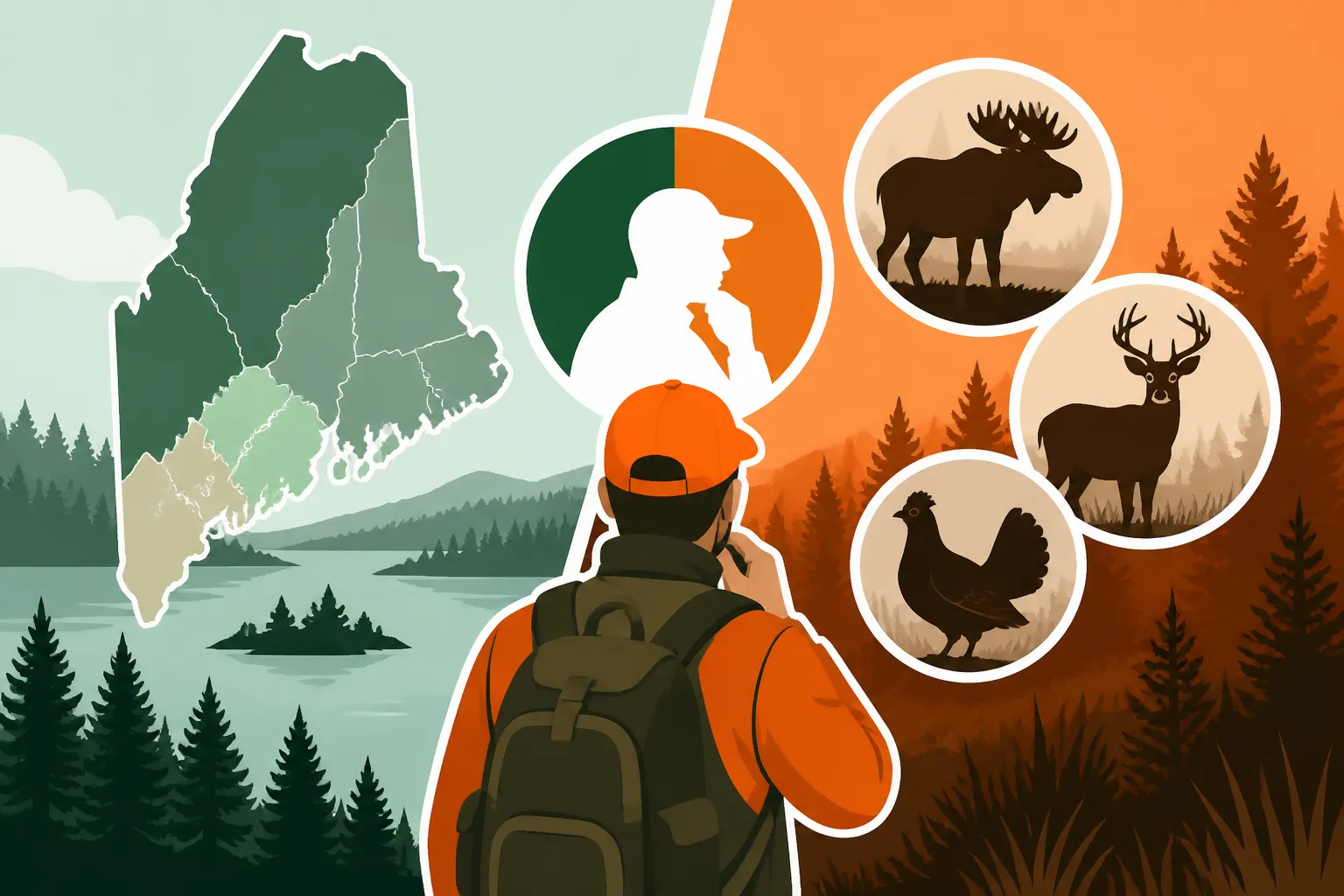
The choice between a regional and a species-focused guide truly comes down to your personal hunting goals and priorities. Neither approach is inherently better; they simply cater to different aspirations.
Weighing Your Options
Consider what you truly want out of your Maine hunting experience. Is it about soaking in the atmosphere of a particular part of the state, with the thrill of pursuing whatever game it offers? Or is it a laser-focused quest for a specific animal, where success with that species is paramount?
| Factor | Choose a Regional Guide If… | Choose a Species-Focused Guide If… |
|---|---|---|
| Primary Goal | You want to explore a specific area and hunt what's available. | You are fixated on harvesting a particular game animal. |
| Experience Desired | Immersive, varied hunt in a specific Maine landscape. | Highly specialized, dedicated pursuit of one species. |
| Knowledge Base | Broad understanding of local ecology, multiple species in an area. | Deep, almost obsessive knowledge of one animal's behavior. |
| Flexibility | High; can adapt to conditions and switch target species as needed. | Lower; their methods and gear are tailored to one species. |
| Budget Consideration | Often a good value for a comprehensive, multi-faceted experience. | Can be higher for highly specialized, high-demand species. |
| Example Scenario | "I want to hunt the North Woods and see what happens with deer, bear, or grouse." | "I must get a spring gobbler this year, no matter where it is." |
If you're still on the fence, ask yourself: What's the core memory you want to create? Is it the feeling of being deep in the Maine wilderness, guided by someone who knows its every secret? Or is it the moment you finally connect with that specific animal you've been dreaming of, orchestrated by a master of that hunt?
The Hybrid Approach: When Worlds Collide
Sometimes, the best guide might possess elements of both. For example, a guide in Washington County might be known as the premier sea duck outfitter (species focus), but also have an incredible grasp of the Downeast coastal environment (regional focus). In these cases, you're getting the best of both worlds. They are truly dedicated to one species but have unparalleled local knowledge that enhances that specific hunt. When you're looking for a Booking a Guided Maine Deer Hunt you might find a guide specializing in big woods bucks in northern Maine, offering both the species-specific knowledge of mature whitetails and the regional expertise of navigating remote logging areas.
When you're vetting potential guides, don't be afraid to ask about their specific areas of expertise. Do they focus on one animal, or do they know a particular WMD inside and out? You might find a guide who is excellent at Hunting the Rut in Early November for deer, and also happens to be deeply knowledgeable about the particular habitats in Franklin County. This information is crucial for ensuring their strengths align with your hunting aspirations. You'll want to review Vetting a Maine Hunting Outfitter and consider Questions to Ask a Maine Outfitter to make sure you're getting a clear picture of their specialties.
Vetting Your Maine Hunting Guide
Regardless of whether you lean towards a regional or species-focused guide, proper vetting is absolutely essential. A guide is an investment, both financially and in your valuable hunting time.
Checking Credentials and Experience
First and foremost, ensure your potential guide is a Hiring a Registered Maine Guide. Maine has strict requirements, and a registered guide means they've met certain standards for safety, first aid, and outdoor experience. Don't be shy about asking for their guide license number.
Beyond the license, inquire about their experience. How long have they been guiding? How many successful hunts have they led for the species (or in the region) you're interested in? While success rates are important, remember they aren't everything. A guide who offers an honest assessment of challenging conditions and realistic expectations is often more valuable than one who promises the moon.
References and Reputation
Ask for references from past clients. A reputable guide will be happy to provide contact information for hunters they've guided in the past. Take the time to call these references and ask specific questions about their experience, the guide's demeanor, their knowledge, and how well the hunt was organized.
Online reviews and testimonials can also provide insights, but always take them with a grain of salt. Look for consistent themes and detailed accounts rather than just star ratings. Sites like BookYourHunt and GoHunt often feature client reviews that can be a good starting point for your research. Don't overlook the value of word-of-mouth recommendations within the hunting community.
Communication and Compatibility
Ultimately, you'll be spending a significant amount of time with your guide. Their communication style and personality should align with yours. Do they answer your questions thoroughly and promptly? Do you feel comfortable asking them anything? A guide's job is not just to put you on game, but to ensure you have a safe, enjoyable, and educational experience. A good guide will explain the terrain, the game's behavior, and why certain tactics are being employed. They should be transparent about what to expect, from the type of accommodations to the gear you'll need. This is especially true if you are doing a Self-Guided Versus Outfitted Maine Hunts comparison, as the guide is a significant part of the "outfitted" experience. Many guides also operate out of Maine Sporting Camps Explained, which can offer a complete package experience.
Taking the time to choose between a regional expert and a species specialist, and then thoroughly vetting your chosen professional, will undoubtedly lead to a more successful and memorable Maine hunting adventure.
Disclaimer
This article is for general informational purposes only and does not constitute professional advice. Laws, prices and regulations vary by location and change over time. Consult a qualified professional for guidance on your specific situation.