Hunting Aroostook County Potato Country
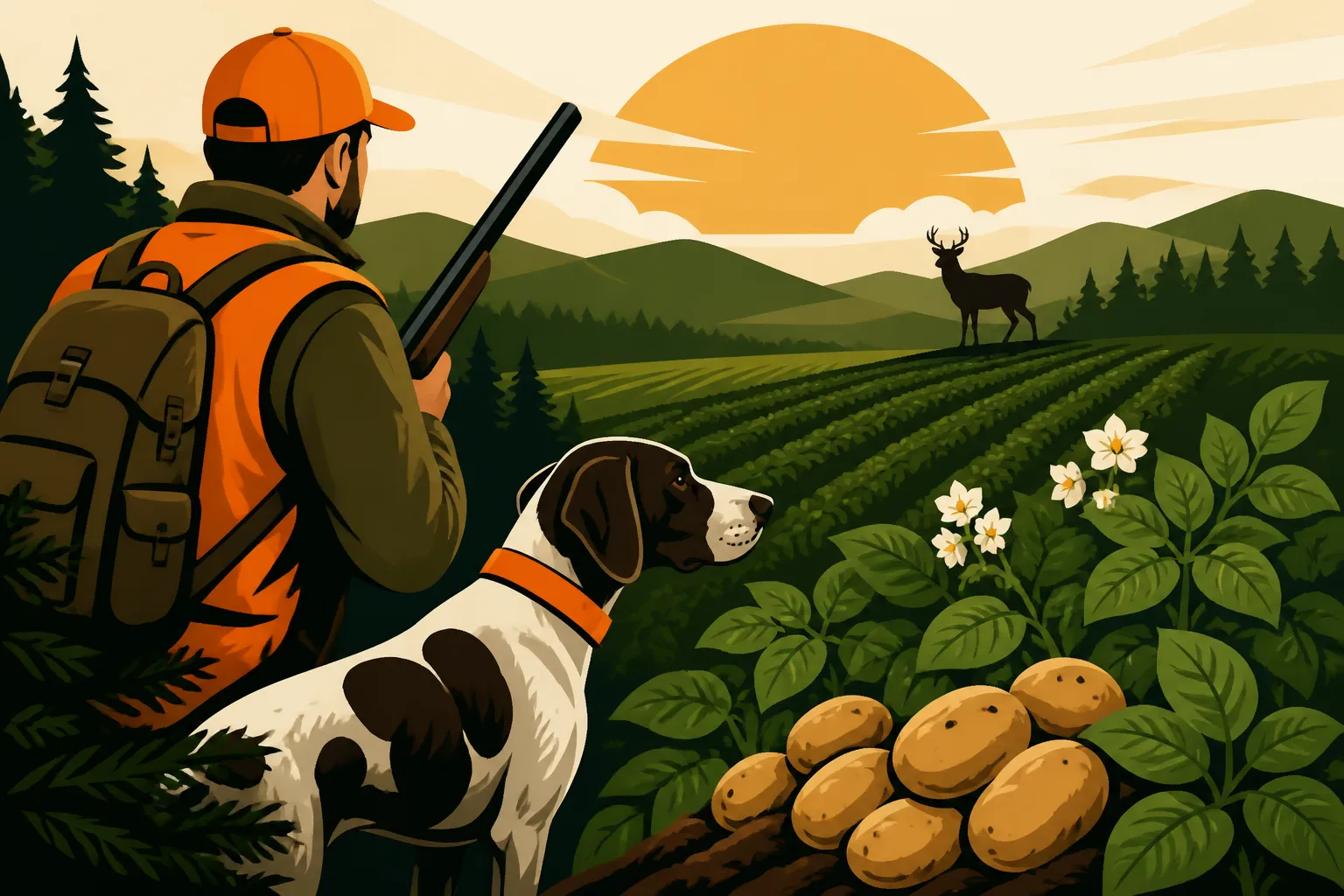
Hunting Aroostook County's vast potato fields for deer can feel like staring at an endless green (or brown, depending on the season) ocean, wondering where on earth a whitetail could possibly hide. It's a landscape that intimidates many hunters accustomed to big timber or dense swamps, but let me tell you, Aroostook's potato country holds some incredible opportunities for those willing to learn its unique rhythms and respectful approach. This guide will help you decipher the secrets of hunting these productive agricultural lands, turning frustration into successful strategy.
Understanding the Aroostook Potato Landscape
Aroostook County is Maine's agricultural heartland, famous for its potatoes. This isn't your typical Maine big woods hunting experience; instead, you're looking at mile after mile of open fields interspersed with pockets of woods, brushy fencerows, and small, winding streams. The sheer scale can be daunting, but understanding how deer interact with this environment is your first step to success.
The Rhythms of Farming and Deer Movement
Deer in potato country are highly attuned to the agricultural cycles. When the fields are barren in early spring, they hug the wood lines and thicker cover. As the potato plants grow, forming dense, waist-high greenery, these fields become incredible daytime bedding cover. Think about it: a deer can disappear into a sea of green, hidden from prying eyes and often benefiting from cooler temperatures within the canopy. This makes early season hunting a real challenge in the middle of these fields.
However, once the harvest begins, usually late September into October, everything changes. The large potato harvesters roll through, stripping the fields bare. This act of harvesting is a massive disturbance, pushing deer out of their daytime bedding and into adjacent cover. But it also exposes a crucial food source: dropped potatoes. Whitetails, being opportunistic feeders, will quickly move into these freshly harvested fields, especially under the cover of darkness, to gorge on the carbohydrate-rich tubers. Understanding this ebb and flow is paramount. During the peak of Maine's Four-Week Firearms Deer Season, you'll find deer shifting their patterns weekly, sometimes daily, based on which fields have been harvested and which still offer cover.
Identifying Key Habitat Features
Even in a seemingly homogenous landscape, certain features stand out as deer magnets. These are the arteries and safe havens for whitetails navigating open country.
- Woodlots and Timber Pockets: These are the most obvious cover sources. Deer will bed in these small woodlots during the day, especially once the crops are down. The edges where these woodlots meet the fields are prime travel routes and feeding areas. Often, these aren't vast forests, but rather 5- to 50-acre islands of spruce, cedar, or mixed hardwoods.
- Fencerows and Hedgerows: These narrow bands of brush, trees, and tall grasses connect woodlots, offer linear cover for movement between fields, and serve as temporary bedding. Deer use them like highways, moving from one cover patch to another without exposing themselves too much. A thick fencerow can be as productive as a small woodlot for intercepting deer. Keep an eye out for Scrape Lines Along a Logging Road or fencerow.
- Stream Bottoms and Wetlands: Even small trickles or low-lying areas that hold moisture can provide dense, brushy cover that deer will utilize, especially in dryer periods. These natural depressions offer a sense of security and often contain different vegetation than the surrounding agricultural land.
- Field Edges: This is the interface where the open field meets any form of cover. It's where deer step out to feed, where bucks will often scent-check does, and where you'll find the most consistent sign. Learning to read these edges is crucial. Setting Up on an Aroostook Farmland Edge effectively is a skill that takes practice.
Scouting Strategies for Aroostook Potato Fields
You can't just drive up to Aroostook potato country on opening morning and expect to find deer. This is a landscape that demands meticulous scouting, both from your couch and on the ground.
Pre-Season Digital Reconnaissance
Before you even pack your truck, modern mapping tools are your best friend. They allow you to "see" the landscape from above and identify promising areas without setting foot on private land.
- Satellite Imagery: Tools like GoHunt offer invaluable satellite imagery that lets you zoom in on potential hunting spots. Look for those small woodlots, dense fencerows connecting larger blocks of cover, and the edges of larger timber stands adjacent to fields. Identify potential travel corridors and pinch points where deer would naturally funnel. Don't just look at the current year's imagery; sometimes older images show clearer field patterns or past timber cuts.
- Topographical Maps: While Aroostook isn't known for dramatic elevation changes, even subtle dips and rises can be significant to deer. Contour lines can reveal natural funnels, elevated bedding areas, or low-lying swales where deer might travel out of sight. Pay attention to how these contours interact with the field edges and woodlots. GoHunt's mapping layers can help you overlay topography with satellite views, giving you a comprehensive understanding.
- Property Boundaries: Knowing property lines is paramount, especially when dealing with multiple landowners. Use your mapping app to clearly delineate public and private land, and where different landowners' property begins and ends. This is critical for getting permission, which we'll discuss shortly.
On-the-Ground Scouting Techniques
Digital scouting is a great start, but nothing beats boots on the ground. This is where you confirm your theories and find fresh sign.
- Walking Field Edges: Once you've identified promising areas digitally, hit the ground. Focus on walking the perimeter of woodlots and fencerows where they meet the fields. Look for tracks entering and exiting the cover, fresh droppings, rub lines on small trees, and active Scrape Lines Along a Logging Road or fencerow. These edges are where deer often stage before entering a field to feed or where they linger before returning to bed.
- Identifying Funnels and Crossings: Pay special attention to narrow strips of cover, low spots, or natural breaks in terrain that funnel deer movement. A small drainage ditch or a gap in a fencerow can be a significant crossing point. Find where deer are naturally compelled to travel through a smaller area. You might be surprised to find a strong deer trail using Hunting a Funnel Between Two Woodlots.
- Seeking Permission: As you scout, you'll inevitably encounter private land. This is your opportunity to seek permission before the season. It’s a good idea to scout early enough that you can Knocking on Doors in Aroostook Farm Country and build rapport. Farmers are often busy, so be respectful of their time. A simple, polite request, perhaps offering to share game meat, can go a long way. Always carry a pen and paper to write down contact information or specific instructions.
Effective Hunting Tactics in Potato Country
Once you've done your homework, it's time to put a plan into action. Hunting Aroostook potato country requires patience, adaptability, and an understanding of deer behavior in this unique environment.
Setting Up on Field Edges and Woodlot Transitions
For much of the season, especially during daylight hours, deer will be found in or very near cover. Your best bet is to set up where they transition from cover to food.
- Stand Placement: Your treestand or ground blind placement should be within 20-30 yards of a strong travel corridor or fresh sign along a field edge. Consider where the deer will likely enter the field and set up downwind of that spot. Look for mature trees along the edge of a woodlot that offer good concealment and a clear shot lane into the field. If you’re considering a ground blind, remember to Brushing In a Blind on a Field Edge thoroughly to break up its outline.
- Wind and Thermals: Even in flat country, wind direction is paramount. Deer will almost always try to use the wind to their advantage, circling downwind of a feeding area before entering. Always hunt with the wind in your favor. Thermals, while less pronounced than in mountainous terrain, still play a role, especially in the early morning and late evening as temperatures change and air masses shift.
- Morning vs. Evening Hunts: In the mornings, deer are typically returning from feeding in the open fields to bed in the woodlots or dense fencerows. Set up on trails leading into the cover. In the evenings, they're doing the opposite – emerging from cover to feed. Set up on trails leading out of cover and into the field. Be prepared for them to pop out anywhere along a long field edge when Hunting a Potato Field Edge in Aroostook.
Still-Hunting and Drives in Smaller Woodlots
While stand hunting is effective, don't underestimate the power of still-hunting or carefully planned small drives, particularly in the isolated woodlots.
- Still-Hunting: This involves moving incredibly slowly and deliberately through a woodlot, stopping frequently to observe and listen. In these smaller patches of cover, deer can be surprisingly close. Move into the wind, paying attention to every rustle and snap. This tactic is especially good in areas where you've seen fresh sign but the deer aren't consistently using one specific trail. Patience is the key to Still-Hunting Aroostook County Farmland effectively.
- Small Drives: If you have a few hunting partners, drives can be very productive in these manageable woodlots. With three or four hunters, one or two can act as "pushers" moving slowly and loudly through a woodlot, while the others set up as "blockers" or "standers" on the downwind side, anticipating where deer will exit. Clear communication and a precise plan are crucial for safety and success with Deer Drives With Three or Four Hunters. Always know where your fellow hunters are.
Utilizing Late-Season Food Sources
As the season progresses and temperatures drop, food becomes the ultimate magnet. Aroostook County's agricultural bounty offers unique late-season opportunities.
- Leftover Potatoes: These are gold. After the harvest, countless potatoes are left behind in the fields, either missed by the machines or deemed too small. Deer absolutely crave these. Once snow covers the ground, deer will paw through it to get to them. Finding fields with a significant amount of waste potatoes can be incredibly productive, especially during the colder, late-season hunts when Late-Season Food Sources for Maine Whitetails become scarce elsewhere.
- Other Crops: Farmers might also plant brassicas (like turnips or kale) or winter wheat as cover crops. These green plants remain viable even under snow and provide crucial forage. Identify these fields during your scouting, as deer will often travel considerable distances to feed on them when other natural foods are buried or depleted.
- Timing is Key: Deer will often hit these late-season food sources heavily under the cover of darkness. Your best bet for daylight activity is during cold snaps, after fresh snow, or on overcast, dreary days when they might extend their feeding hours.
Navigating Access and Landowner Relations
Maine has a long-standing tradition of implied permission for hunting on private land, but this unspoken rule doesn't apply equally everywhere, especially in active agricultural zones like Aroostook County. Respectful landowner relations are not just about legality; they're about maintaining access for everyone.
The Importance of Asking Permission
While you might hear that hunting on unposted private land is generally allowed in Maine, active farmlands are a different beast. Farmers are running businesses, and hunters can inadvertently cause damage to crops, equipment, or interfere with operations.
- Go Directly to the Source: Always, always, ask for permission from the landowner or tenant farmer before hunting their potato fields. This isn't just a courtesy; it's often a necessity to avoid conflicts and potential trespassing charges. The implied permission rule largely applies to forested, undeveloped land, not active agricultural fields.
- Be Polite and Respectful: Approach farmers at a reasonable time, not during peak planting or harvest. Introduce yourself, state your intentions clearly, and assure them you will respect their property. Many farmers are hunters themselves and appreciate the direct approach. Offering to help with a small chore or sharing your harvest can build good will.
- Get Specifics: If granted permission, clarify exactly where you can hunt, when, and any specific rules they might have (e.g., no driving on certain roads, don't walk across planted fields, park only in designated spots). Some farmers might grant permission for specific woodlots but not for field edges.
Respecting Property and Crops
Your actions directly impact the landowner's willingness to allow future access, not just for you, but for all hunters. This is where the Maine hunting ethic really shines.
- Avoid Damaging Crops: Never walk, drive, or set up stands in planted fields. Even after harvest, driving heavy vehicles on certain fields can cause compaction. Stick to field edges, roads, or designated access points.
- Be Mindful of Equipment: Farmers leave expensive equipment in and around fields. Be aware of your surroundings, avoid disturbing it, and certainly don't use anything for cover or a rest.
- Clean Up After Yourself: Leave no trace. Pack out all your trash, including spent shell casings, food wrappers, and anything else you brought in.
- Follow All Instructions: If a farmer asks you to park in a certain spot, hunt only a specific area, or stay out of certain fields, follow those instructions precisely. Breaking trust is the fastest way to lose access.
| Season Phase | Typical Deer Behavior | Key Food Sources | Recommended Tactics | Access Considerations |
|---|---|---|---|---|
| Early Season | Bedding in tall crops, moving at low light | Growing crops, natural browse | Field edges, pinch points between cover | Respect crops, ask permission early |
| Mid-Season (Rut) | Bucks actively cruising for does, increased movement | Natural browse, early harvested fields | Transition areas, dense fencerows, woodlots | High activity, but deer still seeking cover for security |
| Late Season | Concentrating on remaining food, thermal cover | Leftover potatoes, winter wheat, brassicas | Fields with waste potatoes, thick woodlots for bedding | Focus on specific food sources, persistence is key |
| Firearms Season | Varying, often pushed by pressure | Depends on harvest stage, natural browse | Field edges, woodlots, small drives | Increased hunter presence, always ask explicit permission |
Disclaimer
Always consult the latest regulations from the Maine Department of Inland Fisheries and Wildlife (MDIFW) before planning any hunting trip, as rules and seasons can change.