Comparing Maine Package Prices by Region
It’s easy to feel overwhelmed when you start looking into booking a guided hunting trip in Maine. You see prices plastered all over the place, but what do they really include? And why does a bear hunt in one part of the state seem wildly different in cost from another? This guide aims to pull back the curtain on Maine hunting package prices, helping you understand the regional variations and what you're truly paying for.
Understanding the Landscape of Maine Hunting Costs
Maine is a vast state, and the experience of hunting here, along with its associated costs, can vary dramatically depending on where you cast your line – or rather, where you set your sights. From the deep, remote woods of the North to the more populated central regions and the unique coastal hunting opportunities, each area presents its own set of challenges and, consequently, its own pricing structure for guided services.
The Core Drivers of Price Variation
Several key factors heavily influence the price you’ll see for a guided hunt in Maine. It’s not just about the animal you’re pursuing; it's a complex equation that includes logistics, demand, and the overall experience offered.
First and foremost is the species you're targeting. A moose hunt, which is often considered a once-in-a-lifetime tag and involves significant effort to locate and retrieve such a large animal, will naturally be a substantial investment compared to, say, a spring turkey hunt. Bear hunts, especially those involving baiting or hounds, also fall into a higher price bracket due to the specialized equipment, time commitment, and often the need for multiple guides and dogs. Deer hunts can vary widely, from trophy buck pursuits in specific regions to more general doe or any-deer opportunities. Upland bird hunting or sea duck charters, while still requiring expert guidance, generally have a different scale of pricing.
Next, consider the duration and type of hunt. A day-long sea duck charter is going to be priced very differently from a six-day, fully outfitted bear or moose camp experience. Longer hunts typically include more amenities like lodging, meals, and extended guide services, all of which contribute to a higher overall cost. Booking a Guided Maine Moose Hunt or Booking a Guided Maine Bear Hunt often involves multiple days and nights in remote camps, adding significantly to the overhead.
Remoteness and logistics play an enormous role. Getting into the heart of the North Maine Woods, for example, often means traveling long distances on private logging roads, paying gate fees, and operating far from readily available services. This adds costs for fuel, vehicle maintenance, and the simple fact that everything, from food to equipment, has to be hauled in. Guides operating in these areas have higher operating expenses, which are reflected in their package prices.
Finally, the reputation and experience of the guide or outfitter matter. Highly experienced Registered Maine Guides with a proven track record of success, especially those specializing in trophy animals or challenging conditions, can command premium rates. You're not just paying for their time, but for their extensive knowledge of the land, animal behavior, and years of honed hunting skills.
Regional Differences in Game Density and Access
Maine’s diverse geography means different hunting experiences and cost structures across its various regions. What you hunt, and what you pay for it, will look distinct whether you’re deep in Aroostook County or near the Downeast coast.
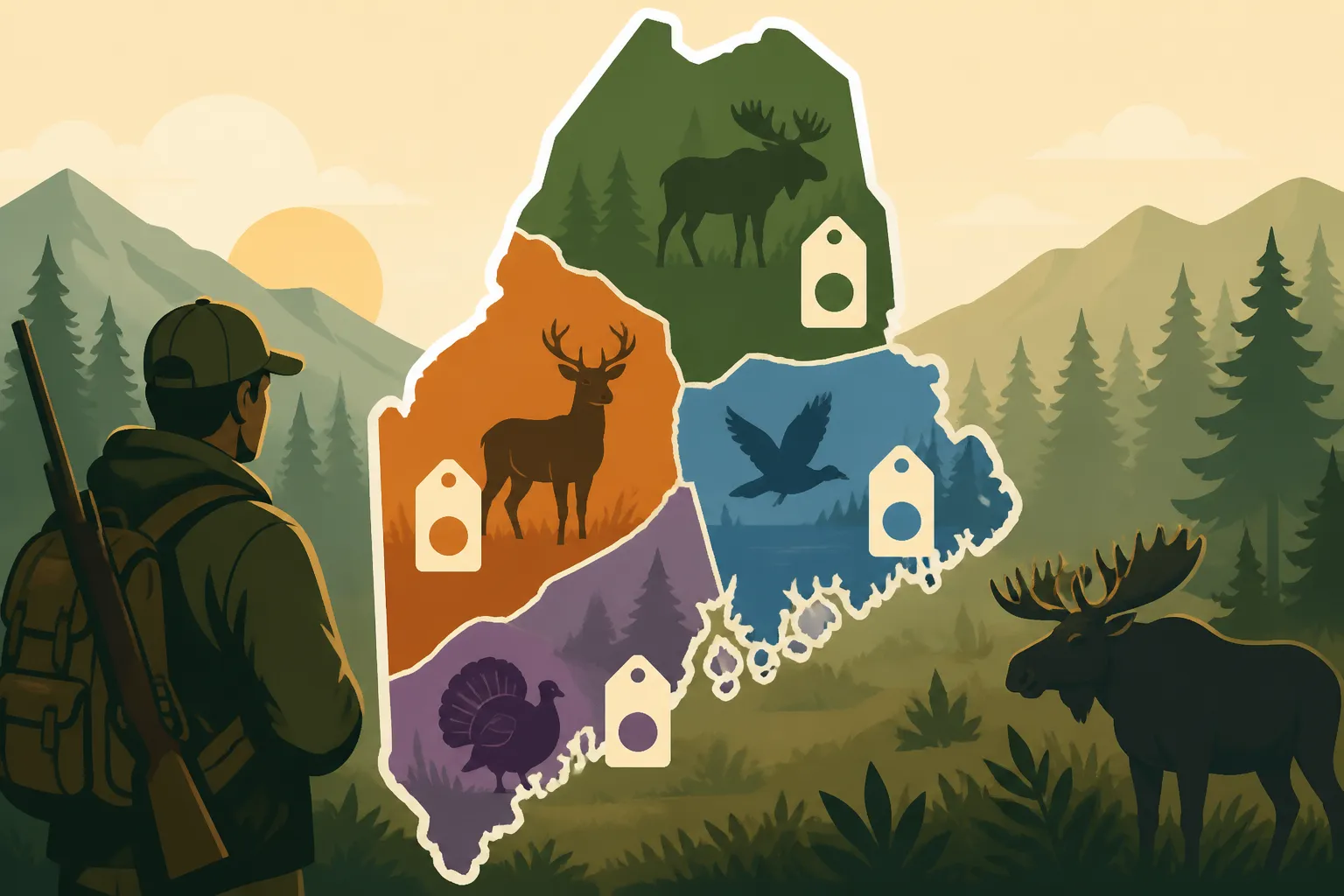
The North Maine Woods, encompassing vast tracts of unorganized territory, is the quintessential Maine big game country. This is where you'll find the highest densities of moose and black bear, and some truly immense whitetail bucks, though deer densities here are generally lower than in southern parts of the state. Access typically involves navigating a private gate system, often with day-use or multi-day fees, and lodging usually means staying in remote sporting camps or primitive cabins. Because of the remoteness and the logistics involved, guided hunts here—especially for moose and bear—tend to be at the higher end of the price spectrum. Guides operate in a more challenging environment, often covering immense areas, which drives up their operational costs. Hunting a North Maine Woods Checkpoint Tract is a whole different ballgame than hunting near a town.
Central and Western Maine offer a more mixed bag. Here, you'll find excellent deer hunting, good bear populations, and strong numbers of wild turkeys and upland birds like grouse and woodcock. This region includes areas that are more accessible, with a blend of private and public lands, including several Wildlife Management Areas. Guided hunts in these areas often present a more mid-range price point, balancing quality hunting with less extreme logistical challenges. You might find more options for day hunts or shorter packages, making them potentially more budget-friendly. Upland Bird and Small Game Hunting in Maine can be a fantastic and more affordable option here.
Southern Maine, while more populated, still offers significant hunting opportunities, particularly for whitetail deer in expanded archery zones and for wild turkeys. Due to proximity to population centers, guides might have lower travel costs, but they also often deal with more fragmented land parcels and the necessity of securing extensive private land access. This can sometimes make guided deer hunts here more specialized and focused on specific properties. Hunting Maine's Expanded Archery Zones can be a unique experience with its own cost considerations.
The Maine Coast is in a league of its own, primarily famous for its sea duck hunting. Here, guided trips are almost exclusively boat-based charters targeting eiders, scoters, and long-tailed ducks. The cost is driven by specialized equipment like boats and decoys, fuel for coastal travel, and the expertise of guides who know these challenging waters and the birds' movements intimately. While it’s not a "big game" hunt, Sea Duck Hunting the Maine Coast represents a specialized niche with its own premium price tag due to its unique demands.
Breaking Down Package Inclusions and Exclusions
When you see a price for a hunting package, it’s crucial to understand what that number actually covers. Misunderstandings about inclusions can lead to unexpected costs and frustration down the line.
What to Expect in a "Standard" Package
A typical fully guided hunting package in Maine aims to provide a comprehensive experience, covering the major elements of your trip from arrival to departure, minus your personal gear and travel to Maine.
Most packages will include guide services, which means you'll have an experienced Registered Maine Guide leading your hunt, offering their expertise in tracking, calling, stand placement, and game recovery. For big game, this often means 1:1 or 2:1 hunter-to-guide ratios, ensuring personalized attention.
Accommodations are almost always a part of multi-day packages. This could range from rustic, comfortable sporting camps in the North Woods to cabins, lodges, or even basic motel rooms in more accessible areas. It’s worth asking about the specifics: is it private or shared lodging? Are there amenities like electricity and running water, or is it more off-grid? Many Maine Sporting Camps Explained offer a unique, traditional experience.
Meals are frequently included, especially in remote camp settings. Expect hearty, home-cooked fare that fuels you for long days in the woods. Breakfast, a packed lunch for the field, and dinner are standard. However, some outfitters might only provide lodging and guide services, leaving meals up to you, which can be a way to lower the package price.
Field dressing and initial game recovery are generally covered. This means your guide will assist with gutting and dragging your animal back to camp or an accessible road. From there, initial transportation to a local check station or meat processor is often included. This is a huge benefit, especially for large animals like moose and bear.
Common Add-Ons That Increase the Bill
While packages cover a lot, there are almost always additional costs you need to budget for. Being aware of these upfront will save you from sticker shock.
Hunting licenses and permits are almost universally not included in package prices. You will need to purchase your base Maine hunting license, as well as any specific permits for the game you're after, such as a moose permit (if you’re one of the lucky few to draw one!), a bear permit, or a turkey permit. These costs are separate and vary for residents and nonresidents. Make sure to check Maine Hunting Licenses and What They Cost well in advance.
Meat processing and taxidermy are almost always extra. While the guide will help with field dressing, taking your deer, bear, or moose to a professional processor for cutting, wrapping, and freezing, or to a taxidermist for a mount, will be an additional expense. These services can add hundreds, if not thousands, of dollars to your overall trip cost, especially for a large animal like a moose.
Trophy fees are less common in Maine but can sometimes apply to specific types of hunts or if you harvest a second animal beyond a certain limit. For instance, if you’re on a bear hunt with a two-bear limit, but the package only covers one, there might be a fee for the second. Always clarify these potential fees.
Gratuities for your guide and camp staff are a significant, yet often overlooked, part of the budget. Tipping a Maine hunting guide is customary and a direct way to show appreciation for their hard work, long hours, and expertise. The standard tip can vary, but it's usually a percentage of your total hunt cost.
Finally, consider personal gear, travel to and from Maine, and any extra days you might want to spend exploring. Fuel for your vehicle, specialized hunting clothing, optics, and ammunition are all your responsibility. If you arrive early or stay late, those additional nights of lodging and meals will be out-of-pocket.
Regional Price Analysis for Popular Hunts
To give you a clearer picture, let’s look at how package prices might shape up in different regions for common Maine hunts. Remember, these are general ranges, and actual prices will depend heavily on the outfitter, specific inclusions, and current demand.
North Maine Woods: Remote Wilderness, Premium Price
Hunting in the vast, remote North Maine Woods is an iconic experience, but it comes at a premium. This region is known for its excellent moose and bear hunting, and trophy deer are certainly present, though not in the densities found further south.
Moose Hunts: A fully guided, six-day moose hunt in the North Maine Woods is often one of the most expensive packages available. These typically include expert guiding, comfortable camp lodging (often with traditional sporting camp amenities), and all meals. The higher cost reflects the difficulty of drawing a permit, the specialized knowledge required, the sheer size of the animal, and the logistical challenges of operating deep in the wilderness. You're paying for an immersive, once-in-a-lifetime adventure. Outfitters here spend extensive time scouting and preparing, which factors into the cost. Applying for a Maine Moose Permit is the first step, then comes budgeting for the hunt itself.
Bear Hunts (Bait or Hounds): Guided bear hunts, whether over bait or with hounds, also command a significant price, though generally less than a moose hunt. A five- to six-day package typically includes bait site preparation (if baiting), stands, lodging, and meals. Hound hunts can sometimes be even more expensive due to the specialized dog teams and additional guides required. The effort involved in maintaining bait sites for months or training and running a hound pack is substantial, pushing prices higher in this remote region. Baiting Black Bears Legally in Maine or Hunting Bear With Hounds in Maine are intensive operations.
Deer Hunts: While less common for guided packages than moose or bear, some outfitters in the North Woods offer guided whitetail hunts, especially for those seeking a true big-woods buck experience. These often focus on still-hunting or tracking in vast timberland. Prices will still reflect the remoteness and extensive guide effort, though they might be less than for moose or bear.
Many hunters use platforms like BookYourHunt or GoHunt to compare these high-end North Woods packages, giving them a broad overview of what different outfitters offer and what the investment will look like.
Central and Western Maine: Diverse Opportunities, Mid-Range Costs
This region provides a great balance of accessibility and quality hunting for several species, leading to more varied and often more approachable package pricing.
Deer Hunts: Guided deer hunts in Central and Western Maine are popular, especially during the firearms season. A three- to five-day package might include lodging in a local cabin or lodge, meals, and guided still-hunting or stand placement services. The pricing here often reflects less extreme remoteness compared to the deep North Woods, but still accounts for quality private land access or expert knowledge of public lands. Hunting Maine's November Firearms Deer Season is a popular time.
Bear Hunts (Bait): Baiting is also a common method for bear hunting in this region. Packages are generally similar to those in the North Woods but might be slightly less expensive due to reduced logistical overhead. Many outfitters here focus solely on bait hunts rather than hound operations.
Turkey Hunts (Spring/Fall): Guided turkey hunts are typically shorter, often one to three days, and consequently more budget-friendly. These might include calling services, blind setups, and assistance with bird recovery. Lodging and meals may be optional or simpler. Spring Turkey Hunting in Maine is a thrilling pursuit that can be done economically with a guide.
Upland Bird Hunts: For grouse and woodcock, guided packages are often sold as day hunts or two- to three-day excursions, frequently including a bird dog and handler. These are generally at the lower end of the package price spectrum, making them accessible to many hunters. Grouse Hunting Maine Alder Runs is a classic pursuit.
Southern and Coastal Maine: Specific Hunts, Unique Pricing
These regions cater to specific hunting interests, and their pricing reflects the unique resources and expertise required.
Expanded Archery Deer Hunts: Given the proximity to population centers, guides offering expanded archery deer hunts often specialize in securing prime private land access. Packages might be day hunts or shorter, two- to three-day options, with or without lodging, reflecting the more localized nature of these hunts. Hunting the Expanded Archery Season Into December requires specific strategies.
Sea Duck Charters: These are almost exclusively day trips, though you can book multiple consecutive days. The price for a sea duck charter is typically per boat or per person for a full day of hunting. It covers the boat, fuel, decoys, and the guide's expertise in navigating coastal waters and setting up for specific species like eiders and scoters. Decoying Eiders Off the Maine Coast is a challenging but rewarding hunt, and the cost reflects the specialized equipment and knowledge.
Strategies for Managing Your Budget and Finding Value
Navigating the world of guided hunts doesn't have to break the bank, but it does require careful planning and understanding how to get the most bang for your buck.
Asking the Right Questions Before Booking
Before you commit to any outfitter, have a thorough conversation and get everything in writing. This is your best defense against unexpected costs.
- Request a detailed breakdown of what's included and excluded. Don't assume anything. Specifically ask about licenses, permits, meat processing, taxidermy, transportation from local airports, and gratuities.
- Clarify the guide-to-hunter ratio. This impacts the level of personalized attention you’ll receive.
- Inquire about lodging and meal specifics. Is it private or shared? What kind of food is served? Are there any dietary restrictions they can accommodate?
- Ask about success rates, but interpret them wisely. A 100% success rate on bear bait might mean 100% of hunters saw a bear, but not necessarily harvested one. Dig deeper into harvest rates.
- Understand payment terms, deposit requirements, and cancellation policies. Life happens, and you need to know what your options are if you have to cancel or reschedule. Maine Outfitter Cancellation and Weather Policies can be a critical point of discussion.
The Value of Self-Guided or Semi-Guided Options
For the more adventurous or budget-conscious hunter, self-guided or semi-guided options can provide a fantastic experience at a fraction of the cost of a fully outfitted trip.
Self-guided hunts mean you handle everything yourself: scouting, navigating, setting up camp, and hunting independently. You might still pay for gate fees in the North Maine Woods or for access to certain private lands, but you save significantly on guide fees and often on lodging/meal packages by camping or bringing your own provisions. This requires extensive research and a good understanding of Maine's hunting regulations and land access rules, such as Maine's Private Land Access Tradition and What Posted Land Means in Maine.
Semi-guided hunts offer a middle ground. An outfitter might provide a pre-scouted area, lodging, and perhaps some meals, but you do the actual hunting on your own. They might offer advice, map out areas, and help with game recovery. This reduces costs while still offering some support, especially beneficial if you're new to a particular area. It’s a great way to save money while still having some local knowledge to lean on.
Leveraging Online Resources for Price Comparison
In today's digital age, you have powerful tools at your fingertips to help compare prices and packages before you even pick up the phone.
Platforms like BookYourHunt and GoHunt are designed to connect hunters with outfitters and guides worldwide, including in Maine. You can filter by species, region, duration, and price range, allowing you to see multiple offerings side-by-side. This gives you an excellent baseline for what different types of hunts cost in various parts of Maine. You can read reviews, compare inclusions, and get a feel for the market before contacting specific outfitters. These sites can be invaluable for finding both premium packages and more budget-friendly options, helping you strategize your next Maine hunting adventure.
Here’s a general overview of package price ranges by region and species. Keep in mind these are very broad estimates and can fluctuate significantly.
| Hunt Type | Primary Region(s) | Typical Inclusions (General) | Estimated Price Range (Shape of Cost) |
|---|---|---|---|
| Moose Hunt | North Maine Woods | Guide, lodging, meals, initial game recovery | Significant investment, often the highest tier |
| Bear Hunt (Bait) | North, Central, Western Maine | Guide, lodging, meals, bait site, stands, recovery | Moderate to high investment |
| Bear Hunt (Hounds) | North, Central, Western Maine | Guide, dog team, lodging, meals, recovery | High investment, potentially higher than bait |
| Whitetail Deer Hunt | Central, Western, Southern Maine | Guide, lodging (often optional), meals (optional) | Moderate investment, can vary widely |
| Spring Turkey Hunt | Central, Western, Southern Maine | Guide, calling, blind setup, bird recovery | More budget-friendly, typically lower |
| Fall Turkey Hunt | Central, Western, Southern Maine | Guide, calling, flock break, bird recovery | More budget-friendly, similar to spring |
| Upland Bird Hunt | Central, Western Maine | Guide, bird dog, bird cleaning (optional) | Per-day cost, generally very accessible |
| Sea Duck Charter | Maine Coast | Boat, guide, decoys, fuel for day trip | Per-boat or per-person day rate, specialized |
Navigating the costs of a Maine hunting trip might seem daunting at first glance, but by understanding the regional differences, scrutinizing package inclusions, and wisely using available resources, you can find an experience that fits both your hunting aspirations and your budget. Happy hunting, and may your next Maine adventure be everything you hope for!
Disclaimer
This article is for general informational purposes only and does not constitute professional advice. Laws, prices and regulations vary by location and change over time. Consult a qualified professional for guidance on your specific situation.