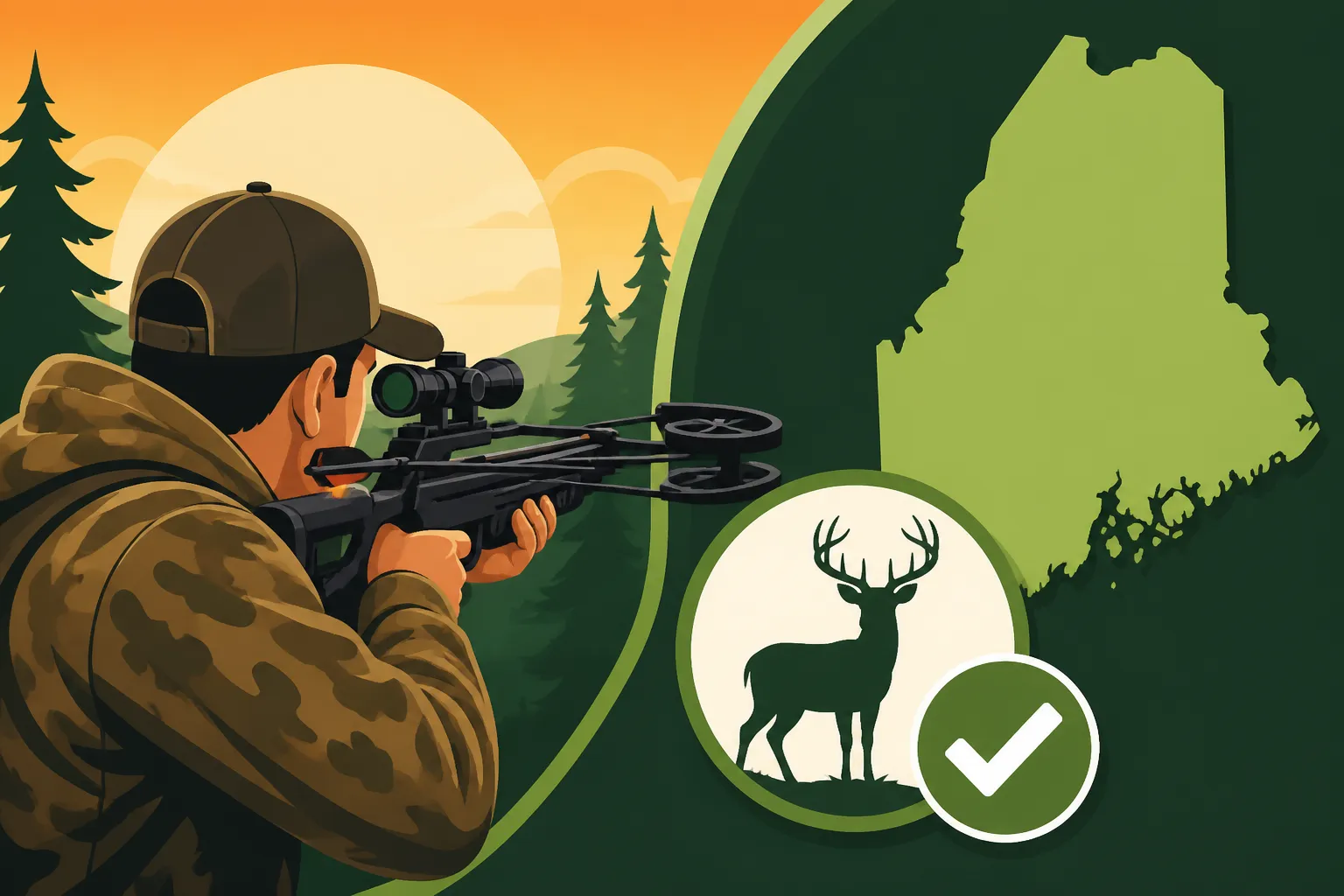
Maine Crossbow Season Eligibility
Many hunters in Maine, especially those who might be new to the sport, returning after a long break, or even seasoned veterans from other states, often find themselves scratching their heads when it comes to crossbow regulations. It's not always clear-cut who can use one, when, or even what constitutes a legal crossbow for hunting. This often leads to frustration and missed opportunities in the field. This comprehensive guide aims to untangle all the complexities surrounding Maine's crossbow season eligibility, outlining precisely who can use one, when, and under what conditions, helping you confidently plan your next hunting adventure.
The Evolving Landscape of Crossbow Hunting in Maine
For a long time, the image of a "bowhunter" in Maine was inextricably linked to traditional recurves and compound bows, demanding incredible skill, practice, and a specific dedication to the art of archery. Crossbows, while certainly a form of archery, were seen by some as a significant departure from this tradition, often sparking lively debates among the hunting community.
From Traditional Archery Stronghold to Modern Integration
Historically, Maine's archery seasons were strictly for vertical bows—recurves, longbows, and compounds. The idea of introducing crossbows into these seasons was met with a mix of enthusiasm and strong opposition. Proponents argued for increased participation, especially for hunters with physical limitations or those who simply found vertical bows challenging due to age or injury. They highlighted the crossbow's ability to hold at full draw, its mechanical accuracy, and its potential to introduce new hunters to the sport. On the other hand, many traditional archers feared that crossbows would erode the "challenge" of archery hunting, lead to increased harvest pressure, and potentially overcrowd prime hunting spots, impacting the very nature of Maine's revered Bowhunting Maine's Long Archery Season.
This debate wasn't unique to Maine; it echoed across many states. However, slowly but surely, the Maine Department of Inland Fisheries and Wildlife (MDIFW) began to acknowledge the changing demographics of hunters and the need for inclusivity. Regulations started to shift, first with provisions for physically challenged hunters, and then, eventually, for all hunters. This incremental approach allowed the state to monitor impacts on deer herds and hunter participation, ensuring a measured transition rather than a sudden overhaul. It was a careful balancing act, attempting to preserve tradition while embracing modern advancements and making hunting more accessible.
The Rationale Behind Expanding Crossbow Access
The primary drivers behind Maine's expansion of crossbow access were multi-faceted. One significant factor was hunter recruitment and retention. Many potential hunters, or those looking to return to the woods, found the steep learning curve and physical demands of traditional archery a barrier. Crossbows offered a more immediate path to proficiency, requiring less specialized upper body strength and allowing for a stable aim, which in turn could lead to more ethical shots for novice users. The MDIFW recognized that making archery hunting more accessible could help combat declining hunter numbers, a trend seen nationwide.
Furthermore, crossbows provided an excellent option for hunters facing temporary or permanent physical disabilities, including those recovering from injuries or experiencing age-related limitations that made drawing a vertical bow impossible. Before general eligibility, these hunters often had to apply for special permits, which could be cumbersome. The expansion streamlined this process, ensuring that more hunters could enjoy the woods during the popular archery seasons. It also offered experienced rifle hunters a new way to extend their season and challenge themselves with a different type of weapon system, expanding opportunities to engage with the Maine Deer Herd Size during earlier parts of the fall. The underlying goal was to maintain a healthy hunting culture by removing unnecessary barriers while still upholding the principles of fair chase and responsible wildlife management.
Navigating Current Maine Crossbow Eligibility Rules
One of the biggest sources of confusion for hunters revolves around who can use a crossbow and when it's actually legal. Maine has adopted a relatively straightforward approach, but understanding the nuances for different seasons is key.
Standard Archery Season Access for All Hunters
This is where Maine truly made a significant shift. As of recent regulations, any hunter who possesses a valid Maine archery license is now eligible to use a crossbow during the state's regular open archery season for deer, bear, and turkey. This is a huge change from years past, where crossbows were restricted to hunters with physical disabilities who obtained a special permit. Now, if you have your archery license and valid tags for the species you're pursuing, you can legally take to the woods with your crossbow.
This general eligibility has opened doors for many. Imagine a hunter like Sarah, who's always loved the idea of bowhunting but developed a shoulder injury that made pulling a 60-pound compound bow impossible. Now, she can pick up a crossbow, practice confidently at her local range, and participate in the Bowhunting Maine's Long Archery Season right alongside her friends using traditional bows. It's about participation and opportunity. Just be sure to double-check the specific season dates for your chosen species, as they can vary slightly. For instance, while deer archery season is extensive, bear and turkey archery seasons have their own distinct calendars.
Crossbow Use During Maine's Expanded Archery Seasons
Maine offers an incredible opportunity in its Hunting Maine's Expanded Archery Zones. These zones, often located around more populated areas or specific deer management districts, typically have longer seasons, sometimes even running into December, offering hunters more flexibility and a chance to hunt closer to home. The good news for crossbow enthusiasts is that if you're eligible to use a crossbow during the general archery season, you're also eligible to use one in these expanded zones.
These expanded zones were specifically designed to help manage deer populations in areas where traditional firearms hunting might be restricted or less effective due to proximity to human habitation. Allowing crossbows here provides another tool for management and gives hunters a chance to extend their time in the woods when rifle hunting isn't an option. It's important to remember that these zones often have specific rules regarding antlerless deer permits, so always consult the most current MDIFW hunting law book or check resources like GoHunt for up-to-date WMD-specific regulations. These details are crucial for successful and legal hunting, especially when hunting close to residential areas where Scouting Maine Private Land Before Season takes on an even greater importance for identifying safe shot angles and knowing property boundaries.
Crossbow Use During Firearms and Muzzleloader Seasons
Here's another point of clarity: if you hold a valid Maine Hunting Licenses and What They Cost for the general firearms season, you can use a crossbow during the Maine's Four-Week Firearms Deer Season. The same applies to the Maine Muzzleloader Season Dates by WMD — if you have a muzzleloader permit, a crossbow is a legal weapon choice during that season. This means that hunters are not restricted to just firearms during the firearms season or just muzzleloaders during the muzzleloader season; crossbows offer an alternative weapon system if you prefer.
This flexibility is particularly beneficial for hunters who might own a crossbow but not a firearm, or who simply prefer the challenge and quiet of a crossbow even when other options are available. For example, a hunter might prefer using their crossbow in a dense cedar swamp during the late muzzleloader season when tracking snow is present, finding it easier to navigate thick cover than with a long rifle. This broad eligibility ensures that crossbows are truly integrated into Maine's hunting landscape, not just as a niche weapon for a specific segment of hunters, but as a viable option across multiple seasons.
Essential Crossbow Equipment and Safety Regulations
Just because you can hunt with a crossbow doesn't mean any crossbow will do. Maine has specific regulations governing the physical characteristics of the crossbow itself, as well as the bolts (arrows) and broadheads you use. Understanding these is vital for legal and ethical hunting.
Legal Crossbow Specifications and Draw Weight Minimums
Maine's regulations are pretty clear when it comes to what constitutes a legal hunting crossbow. First and foremost, the crossbow must have a minimum draw weight of 100 pounds. This isn't just an arbitrary number; it's designed to ensure sufficient kinetic energy for a clean, ethical harvest on game animals like deer. A crossbow with less than 100 pounds of draw weight might not generate enough power to penetrate effectively, leading to wounded animals and difficult Blood Trailing After Dark in Maine scenarios.
Secondly, the crossbow must be equipped with a safety mechanism. This is standard on virtually all modern crossbows, but it's a critical safety feature that ensures the bow can only be fired intentionally. Finally, a legal crossbow must have a stock that can be shouldered and a fore-end grip. This distinguishes it from pistol-grip crossbows or other devices that might not provide the stability needed for accurate shooting. Scopes are generally allowed, and in fact, most crossbows are sold with optical sights as a standard feature, which greatly aids in precision. Always make sure your equipment meets these specifications before heading into the field. Think of it like ensuring your rifle meets minimum caliber requirements – it's about efficacy and ethics.
Approved Arrow, Bolt, and Broadhead Requirements
The projectile you launch from your crossbow is just as important as the crossbow itself. Maine law specifies that crossbow hunters must use bolts (often called arrows) with a minimum length of 18 inches. This length ensures proper arrow flight and stability, which is crucial for accuracy. As for broadheads, only specific types are allowed for hunting big game and turkey. Mechanical broadheads are permitted, but they must have a minimum cutting diameter of 7/8 inch when open. Fixed-blade broadheads must have a minimum cutting diameter of 7/8 inch. Barbed broadheads, those with an inverted barb or devices designed to keep the broadhead from pulling out, are strictly prohibited.
These broadhead regulations are in place to ensure a quick, humane kill. The cutting diameter ensures a wide enough wound channel to cause rapid blood loss and incapacitation. Prohibiting barbed broadheads is an ethical consideration, as they can cause unnecessary suffering and make tracking and recovery much more difficult if the animal is not hit cleanly. When purchasing your broadheads, always check the packaging for these specifications. Companies like GoHunt often provide detailed product descriptions that include these critical measurements, making it easier to select legal and effective gear. Remember, a legal broadhead is not just about compliance; it's about respecting the animal you're pursuing.
Understanding Blaze Orange and Other Safety Gear
Safety is paramount in any hunting pursuit, and crossbow hunting is no exception. During any open firearms season, even if you are hunting with a crossbow, you must adhere to Maine Blaze Orange Requirements. This means wearing an article of solid blaze orange clothing (like a vest, jacket, or hat) that is visible from all sides. The requirement is not waived just because you are using a "quieter" weapon; it's about overall visibility to other hunters in the field. This also applies if you are crossbow hunting during Maine's expanded archery season that overlaps with firearms or muzzleloader seasons.
Beyond blaze orange, other safety practices are essential. Always treat your crossbow as if it were loaded. Keep your fingers away from the string path when cocking or firing, as "thumb over the rail" injuries are a common and painful mistake. When moving through thick cover, always use your safety. Invest in a good quality sling to carry your crossbow securely and prevent accidental discharges. If you're a new crossbow hunter, consider taking a Maine Hunter Education Requirements course, even if not strictly required for crossbow-only hunting, as these courses cover vital safety principles that apply universally across hunting methods. Ethical and legal hunting goes hand-in-hand with safe hunting practices.
When and Where You Can Legally Hunt with a Crossbow
Knowing the equipment is one thing, but understanding the specific calendar dates and geographical boundaries for crossbow hunting in Maine is another critical piece of the puzzle. Maine's seasons are carefully structured, and your crossbow fits into several of them.
Crossbow Hunting in General Archery and Deer Management Districts
As we've discussed, if you possess a valid archery license, you can utilize your crossbow during the general statewide archery seasons for deer, bear, and turkey. This typically includes the month of October for deer, offering a fantastic opportunity to hunt before the main rush of the firearms season. For bear, the archery season runs alongside baiting and hound seasons, giving you options. Turkey archery seasons usually overlap with the firearms seasons for spring and fall birds.
Beyond the statewide general archery season, Maine utilizes a system of Wildlife Management Districts (WMDs), and some of these have specific rules or antlerless permit allocations. When planning your hunt, use a mapping tool like GoHunt to overlay WMD boundaries with land ownership and specific regulations for that district. This is especially helpful if you're targeting areas where Maine Wildlife Management Areas are managed for specific deer densities or hunting pressure. You'll want to confirm if the WMD you plan to hunt has any unique restrictions or opportunities that might impact your crossbow hunt, such as areas with specific antler point restrictions or bonus antlerless tags. Always make sure your Maine Deer Registration Requirements are understood for any WMD you hunt in.
Specific Dates and Zones for Crossbow Use
The beauty of crossbow eligibility in Maine is its flexibility across multiple seasons.
- Archery Deer Season: The primary opportunity for crossbow hunters to pursue deer is during the traditional archery-only season, which generally runs through October. This season offers a quieter, more intimate hunting experience before the woods become bustling with firearms hunters.
- Expanded Archery Season: Don't forget the expanded archery zones! These often begin earlier than the general archery season and extend later, sometimes through mid-December, providing a significantly longer window. These zones are often in WMDs closer to population centers and offer excellent opportunities, but hunters must still possess an archery license. If you're looking to fill an antlerless tag, these zones can be prime locations, often requiring specific Maine Antlerless Permit Districts permits depending on the WMD.
- Firearms Deer Season: While you'll be competing with rifle hunters, you are legally permitted to use a crossbow during the Maine's Four-Week Firearms Deer Season. This might be a good option if you prefer the crossbow but don't have a rifle or want to switch things up. However, remember the blaze orange requirement is strictly enforced during this period.
- Muzzleloader Deer Season: Similarly, if you have a muzzleloader permit, your crossbow is a legal weapon during the Maine Muzzleloader Season Dates by WMD. This season, often in early December, can offer some of the best hunting, especially if fresh snow has fallen, making Tracking a Deer in Fresh Maine Snow much more productive.
- Bear Season: Crossbows are legal during Maine's three-method bear season, which includes hunting over bait, with hounds, or still-hunting. The bear season structure allows for early archery opportunities.
- Turkey Season: Crossbows are permitted during both the spring and fall wild turkey seasons, provided you have the appropriate turkey permit for the season and WMD.
It’s crucial to refer to the official MDIFW hunting law book for the exact opening and closing dates for each season and WMD, as these can change annually. Consulting the official state regulations is your ultimate source of truth, but reputable hunting platforms like GoHunt often consolidate this information into user-friendly calendars and maps, helping you stay current and compliant.
| Season Type | Primary Game Species | Crossbow Eligibility (Archery License Required if Archery-Only) | Blaze Orange Required | General Season Dates (Approximate) |
|---|---|---|---|---|
| General Archery Season | Deer, Bear, Turkey | Yes, for all hunters with an archery license | No | Early Oct – Late Oct |
| Expanded Archery Season | Deer, Bear, Turkey | Yes, for all hunters with an archery license | No (unless firearms overlap) | Early Sept – Mid-Dec (zone-dependent) |
| Firearms Season | Deer, Bear, Turkey | Yes, for all hunters with a general hunting license | Yes | Early Nov – Late Nov |
| Muzzleloader Season | Deer, Bear | Yes, for all hunters with a muzzleloader permit | Yes | Early Dec – Mid-Dec (WMD-dependent) |
| Fall Turkey Archery/Firearms | Turkey | Yes, with appropriate permit | Yes | Sept – Nov |
| Spring Turkey Archery/Firearms | Turkey | Yes, with appropriate permit | No | May |
Note: Always consult the current Maine hunting law book for precise dates, WMD-specific regulations, and any changes to the rules.
Practical Considerations and Best Practices for Maine Crossbow Hunters
Beyond legality, successful and ethical crossbow hunting in Maine requires preparation, practice, and a commitment to responsible hunting practices. It's more than just pulling a trigger; it's about precision, respect, and continuous learning.
Pre-Season Preparation and Range Practice
Just like with any hunting weapon, proficiency with a crossbow doesn't happen overnight. It requires dedication during the off-season. Don't just pull your crossbow out of the case a week before the season opener and expect to make a perfect shot. Regular practice at a shooting range is crucial. Start close, ensuring your scope is sighted in perfectly at 20 yards, then work your way out to 30, 40, and even 50 yards if your crossbow and skill level allow for consistent accuracy. Remember, modern crossbows are capable of incredible accuracy, but that accuracy depends on the shooter.
Practice from hunting positions you'll actually encounter. If you plan to hunt from a treestand, practice shooting from an elevated position. If you'll be using a ground blind, practice shooting from a seated or kneeling position through a mesh window. Pay attention to how your clothing might interfere with the string, and how different angles affect your point of impact. Many hunters find that setting up a Hanging a Stand on a Private Land Field Edge or brushing in a blind takes careful planning, and practicing from those specific scenarios is invaluable. The goal isn't just to hit the target, but to consistently hit a vital zone with precision under varying conditions.
Ethical Hunting with a Crossbow
Ethical hunting transcends legal requirements. It's about minimizing suffering and maximizing the chance of a quick, humane kill. For crossbow hunters, this means:
- Shot Placement is Paramount: Understand deer anatomy. Aim for the "vitals" – the heart and lungs – which are typically located behind the shoulder. Avoid marginal shots like those at the rear quarter or straight on into the chest, which dramatically reduce the chance of a quick kill.
- Range Discipline: Know your effective range. Just because your crossbow can launch a bolt 80 yards doesn't mean you should take a shot at that distance while hunting. Factors like adrenaline, wind, animal movement, and unforeseen obstacles can greatly impact accuracy in the field. Stick to distances where you can consistently place all your practice shots into a target the size of a dinner plate. For most hunters, this is often between 20-40 yards.
- Waiting Game: After taking a shot, resist the urge to immediately pursue the animal. Give the deer time. If you suspect a vital hit, waiting 30-60 minutes for a lung hit, or several hours for a liver or gut shot, significantly increases your chances of a successful Recovering a Deer From a Cedar Swamp or any other terrain. Premature tracking can push a wounded animal further, making recovery much harder.
- Blood Trailing Skills: Develop your blood trailing skills. Learn to identify different types of blood, track subtle disturbed vegetation, and use tools like flagging tape. Blood Trailing After Dark in Maine can be challenging, so having a good headlamp and possibly even bringing a friend to help grid search can make all the difference.
Ethical hunting ensures we maintain the highest standards of respect for the animals we pursue and uphold the integrity of our hunting heritage.
Staying Informed About Regulation Changes
Maine's hunting regulations, while generally stable, can undergo changes from year to year. New WMD boundaries, adjusted season dates, or even specific equipment modifications might be introduced. Relying on outdated information can lead to unintentional violations, fines, or even losing your hunting privileges.
The most reliable source for current regulations is always the official Maine Department of Inland Fisheries and Wildlife (MDIFW) website and their annually published hunting law book. Make it a habit to download the latest PDF or pick up a physical copy every season before you head into the woods. Many hunters also find value in online platforms and communities that aggregate and interpret these regulations, offering discussions and insights. Regularly checking the MDIFW news releases or subscribing to their email updates can also keep you ahead of any changes. Some advanced hunting apps and platforms, like GoHunt, are designed to dynamically update regulations, providing a convenient way to access current information on your phone while in the field. Being an informed hunter is a responsible hunter.
Disclaimer
Please remember that hunting regulations can change. The information provided in this guide is intended for general informational purposes only and does not constitute legal advice. Always consult the most current official Maine Department of Inland Fisheries and Wildlife (MDIFW) hunting law book and regulations prior to any hunting activity to ensure full compliance.