Applying for a Maine Moose Permit
Dreaming of chasing a majestic bull moose through the rugged Maine woods? You're not alone. For many hunters, drawing a Maine moose permit isn't just about the hunt; it's about connecting with a truly wild, iconic part of our state. The sheer scale of these animals, the challenge of the hunt, and the vast wilderness they call home make it an unparalleled experience. But let's be honest, the application process itself can feel like a labyrinth, and the low draw odds can be disheartening. This guide is here to untangle all the complexities, validate your frustrations, and arm you with the knowledge to navigate the Maine moose lottery with confidence and a clear strategy.
The Maine Moose Lottery Dream and Reality
There’s nothing quite like the thought of a Maine moose. Their sheer size, their presence in the deep woods – it's something that captures the imagination. For many of us, it’s a lifelong dream to draw one of those coveted tags, to venture into the vast northern forests, and try to outwit one of North America's largest game animals. This isn't just another hunting trip; it's an immersive experience that speaks to the wild spirit within us.
The Allure of a Maine Moose Tag
Let's talk about what makes a Maine moose tag so special. First off, Maine is home to the largest moose population in the lower 48 states, estimated at around 60,000-70,000 animals. While the population has seen some fluctuations, especially with concerns about winter ticks in certain areas, the sheer number of moose here offers a genuine opportunity. When you pull a Maine permit, you're not just getting a chance at a moose; you're getting a chance at a true North Woods giant. These animals can weigh well over a thousand pounds, with bulls sporting impressive antlers that are the envy of any big game hunter.
Beyond the numbers, it's the experience of Moose Hunting Maine's North Woods itself. It’s often a deep woods adventure, requiring serious planning, navigation, and a healthy dose of grit. Whether you're calling a bull from a remote clear-cut or still-hunting through a cedar swamp, the challenge is immense, and the reward, should you be successful, is unforgettable. It’s a hunt steeped in tradition, often involving friends or family, and creating memories that last a lifetime. That's why so many of us anxiously await the lottery results each year, hoping to be one of the lucky few.
Dispelling Myths About the Lottery
Now, let's address some of the common rumors and frustrations surrounding the Maine moose lottery. You hear it all the time: "Only guides get drawn," or "Non-residents never stand a chance," or "It's impossible unless you have a ton of points." While the odds are definitely stacked against you, especially for non-residents and those with fewer points, these statements aren't entirely true. The system is designed to be fair, operating on a random draw weighted by accumulated bonus points. It's not a lottery where you must have hundreds of points to win; people with zero points get drawn every single year.
The perception often comes from the sheer number of applicants. Thousands upon thousands of hunters apply annually, all vying for a limited number of permits. This naturally makes the odds low for everyone. However, understanding the system and making smart choices in your application can slightly tilt those odds in your favor. It's not about being lucky enough to be an insider; it's about persistently playing the game, accumulating points, and making informed decisions about your chosen Wildlife Management Districts (WMDs) and hunt types. This guide aims to clear up that confusion and show you how to truly maximize your chances within the system.
Understanding the Maine Moose Permit System
The heart of the Maine moose lottery lies in its weighted point system. This isn't just a simple draw; it's a carefully designed process that aims to reward persistence while still offering a chance for every applicant. Knowing how this system functions is your first step toward building a winning strategy.
How the Point System Works
The Maine Department of Inland Fisheries and Wildlife (MDIFW) uses a bonus point system for the moose lottery. For every consecutive year you apply and don't get drawn, you earn one bonus point. When the actual lottery draw occurs, your name is entered into the drawing once for each bonus point you've accumulated, plus one for your current year's application. So, if you have 10 bonus points, your name is effectively entered 11 times. This significantly increases your individual odds compared to someone with fewer points.
It’s a system designed to give long-term applicants a better chance, which is why you hear folks talk about waiting years, sometimes decades, to draw. However, it's crucial to remember that new applicants or those with only a few points do still get drawn. The lottery is truly random among the entries generated by the point system. The key takeaway here is simple: apply every single year, even if you think your chances are slim. Those points add up, and they are your most valuable asset in this long-term game. There’s no magic number of points that guarantees a permit, but the more you have, the better your statistical probability.
WMDs and Permit Allocation
Maine is divided into numerous Wildlife Management Districts (WMDs), and the moose permits are allocated specifically to these districts. The MDIFW uses extensive data from aerial surveys, harvest reports, and population modeling to determine how many moose permits can be issued in each WMD to maintain a healthy and sustainable moose population. This means the number of permits can vary significantly from one WMD to another, and even from year to year, based on population objectives and moose health concerns, like those related to Why Winter Ticks Are Killing Maine Moose Calves.
When you apply, you'll be asked to rank your preferred WMDs. Some WMDs, typically those in the remote northern parts of the state, might have higher moose densities and therefore more permits or higher success rates. Others, in more settled areas, might have fewer permits. You'll also specify your preferred hunting season (there are usually several distinct weeks, often broken into September, October, and November hunts) and whether you're applying for an antlered moose (bull) or any-moose (antlered or antlerless). The choice of WMD and hunt type can dramatically influence your draw odds. For example, a WMD with fewer permits but also fewer applicants might offer better odds than a high-permit WMD that sees an overwhelming number of applications. This strategic thinking is where your research really pays off, helping you understand where How Many Moose Live in Maine and what the density is like.
Eligibility and Application Specifics
Before you even think about which WMD to choose, you need to make sure you're eligible to apply and understand the financial commitments involved. Maine has clear rules for residents and non-residents, as well as specific costs associated with the lottery.
Resident vs. Non-Resident Requirements
The rules for residents and non-residents are pretty straightforward, but the costs and the draw odds are where you'll see the biggest difference. To qualify as a Maine resident, you must have resided in the state for at least three months immediately prior to applying. This means having a Maine driver's license, registering vehicles here, and generally establishing residency. Non-residents, of course, are anyone who doesn't meet these criteria.
The cost for Maine Moose Permit Cost for Residents is significantly lower than for non-residents. While the application fee itself is the same for both, the actual permit fee, if drawn, is where the difference becomes stark. Currently, the Maine Moose Permit Cost for Residents is typically around $52, while Maine Moose Permit Cost for Nonresidents is generally $585. This difference reflects the state's interest in managing its resources primarily for its residents, while still allowing non-residents to participate in this unique hunting opportunity. It’s a common practice across many states for big game permits. Non-residents also have their own specific quota of permits, meaning they're not directly competing with the resident pool for all tags.
Youth and Apprentice Hunter Rules
Maine is big on encouraging the next generation of hunters, and the moose lottery does have some provisions for younger participants, though they still need to meet certain requirements. There isn't a separate youth-only moose lottery, but a minor (under 18) can apply for the regular lottery. However, they must be at least 10 years old to purchase a hunting license and participate in the lottery. If drawn, the minor must be at least 10 years old to hunt moose and must be accompanied by a licensed hunter who is 18 years of age or older and possesses a valid hunting license.
For those interested in the apprentice hunter program, it’s primarily for general hunting licenses and allows individuals to hunt under the direct supervision of an experienced hunter before completing a hunter education course. However, for something as significant as a moose permit, the drawn hunter, regardless of age, must still possess the appropriate valid hunting license and any necessary certifications for moose hunting. The key here is ensuring that any young person applying is ready for the immense responsibility and physical demands of a moose hunt, should they be lucky enough to draw a tag.
The Application Fee vs. Permit Fee
This is a point of confusion for many first-time applicants, and it's essential to understand the distinction. When you submit your application, you pay a small, non-refundable Maine Moose Application Fee. This fee is typically around $15 for residents and $25 for non-residents, and it covers the administrative costs of running the lottery. This fee does not guarantee you a permit; it merely enters you into the drawing and adds to your bonus point tally if you don't draw.
If, and only if, you are successfully drawn in the lottery, then you will be required to pay the larger, full permit fee. As mentioned, this is approximately $52 for residents and $585 for non-residents. This permit fee is what grants you the legal right to hunt a moose in your assigned WMD during your specific season. It’s crucial to be financially prepared for this second, larger payment if your name is pulled. The MDIFW will provide a deadline for paying this fee, and if you miss it, your permit will be forfeited, and often awarded to an alternate applicant. So, keep an eye on your emails and the MDIFW website if you're waiting on results!
Step-by-Step: Navigating the Online Application
Gone are the days of sending in paper applications and hoping they don't get lost in the mail. Today, the process is streamlined and primarily online, making it easier for everyone. Still, a methodical approach ensures you don't miss any critical steps.
Pre-Application Checklist
Before you even log onto the MDIFW website, take a few minutes to gather everything you'll need. This preparation can save you headaches and ensure a smooth process.
- Hunter ID/License Number: You'll need your current or most recent Maine hunting license number. If you're a first-time applicant from out of state, you might need to create an account first.
- WMD Choices: Research your preferred Wildlife Management Districts thoroughly. Have your top 5-10 choices ranked in order of preference. Consider both your desired hunting experience and your draw odds. Tools like GoHunt's Insider platform, for example, often provide detailed draw odds and harvest data by WMD, which can be incredibly helpful in making informed decisions.
- Hunt Type & Season Choice: Decide if you're applying for an antlered bull or an any-moose permit. Also, have your preferred hunting week/season selected. Some WMDs only offer specific weeks or permit types.
- Group Application Information (if applicable): If you're applying as a group, you'll need the names, birthdates, and residency status of your group members. Remember, only one person from a group needs to draw, and if they do, everyone in the group gets a permit. However, everyone in the group forfeits their accumulated bonus points if one person draws.
- Payment Method: Have your credit card or debit card ready for the application fee.
Having this information at your fingertips will make the online application quick and stress-free. There's nothing worse than getting halfway through and realizing you need to go dig up a license number or research WMDs.
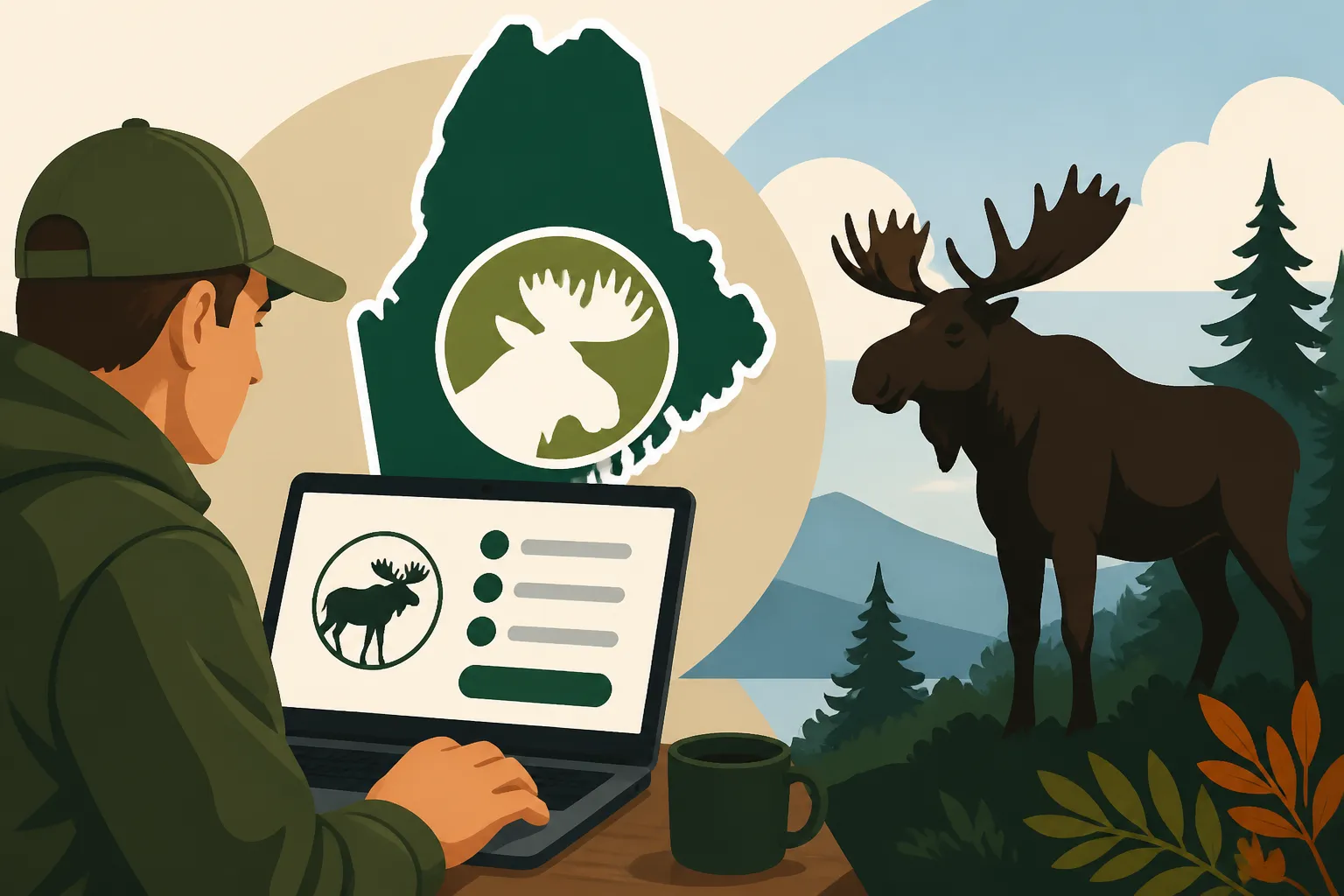
The Online Portal Walkthrough
Once you have your checklist squared away, head over to the Maine Department of Inland Fisheries and Wildlife (MDIFW) website. Look for the "Moose Lottery" or "Permit Applications" section.
- Log In or Create Account: If you have an existing MDIFW account from previous license purchases or lottery applications, log in. If not, you'll need to create one. This usually involves providing your basic personal information, including residency.
- Select Moose Lottery Application: Navigate to the moose lottery application link. It’s usually prominently displayed when the application period is open.
- Enter Personal Information: Confirm your name, address, birthdate, and residency status. The system will typically pre-fill much of this if you have an existing account.
- Choose WMDs and Hunt Types: This is the critical step. You'll be presented with options to select your preferred WMDs, ranked from 1st choice to your last. Carefully enter your choices based on your research. For each WMD, you'll usually select your desired hunt week and whether you're applying for an antlered moose or any-moose permit. Double-check these selections before proceeding! Remember, the Maine Moose Lottery Application Deadline is firm, so don't wait until the last minute.
- Group Application (Optional): If you're applying as a group, this is where you'll add your group members' details. Ensure everyone in your group is eligible and understands the implications of a group draw.
- Review and Submit: Before finalizing, review all your entries. Make sure your WMD rankings are correct, your personal information is accurate, and your hunt choices are exactly what you intend.
- Pay Application Fee: You'll be prompted to pay the non-refundable application fee. Once processed, you'll typically receive a confirmation email. Keep this for your records! This email usually serves as proof of your application and your bonus point accumulation for that year.
Strategizing Your Application for Better Odds
Simply applying is one thing; applying smartly is another. While it's still a lottery, there are strategies you can employ to slightly tip the scales in your favor. This involves a bit of research and understanding the nuances of the permit allocation.
Analyzing WMD Choices
This is arguably the most crucial part of your application strategy. Don't just pick WMDs based on a general idea of where moose live. Instead, dive into the data. The MDIFW publishes annual moose harvest reports and draw odds, breaking down success rates by WMD and even by hunt week. Look for trends.
Some WMDs, often in the deep North Woods, consistently have high moose densities and therefore high permit numbers, but they also tend to attract the most applicants, making individual odds still challenging. Other WMDs, perhaps in more accessible or less traditional moose habitat, might have fewer permits but also significantly fewer applicants, potentially yielding better odds. For instance, you might see WMDs like 3, 4, 5, or 6 as having a high Maine Moose Population Estimate and higher overall permits, but the competition can be fierce. Conversely, a WMD like 27 in southern Maine might have very few permits, but fewer people apply there, especially if they are unfamiliar with Maine's Deer and Moose Disease Monitoring efforts.
Consider your personal hunting style and logistics too. Are you prepared for a remote, fly-in hunt in the vast unorganized territories, or would you prefer a WMD with better road access closer to services? Do you want to hunt during the early September rut when calling is effective, or a later October/November hunt when snow might help tracking? Every one of these factors plays into which WMD and hunt week will give you the best chance and the most enjoyable experience. Utilizing resources like GoHunt's draw odds data and WMD breakdowns can be invaluable here. They aggregate historical data, allowing you to quickly compare draw odds and success rates across different choices, helping you make a truly data-driven decision.
The Antlered vs. Antlerless Decision
Maine offers two general types of moose permits: antlered-only (bull) and any-moose (antlered or antlerless cow). Your choice here has a direct impact on your draw odds and your hunting experience.
- Antlered-only (Bull) Permits: These are generally more coveted, especially by hunters looking for a trophy bull. Consequently, there are often fewer antlered-only permits issued, and the competition for them is much higher. If your primary goal is to harvest a large bull, you'll typically apply for this type, knowing your odds will be lower.
- Any-Moose Permits: These permits allow you to harvest either a bull or a cow. The MDIFW issues these permits in certain WMDs, often as a management tool to control cow populations and improve the health of the herd (for example, in areas with high tick prevalence). Because they offer more flexibility and often target specific management goals, there are sometimes more any-moose permits available in certain WMDs, and the competition for them can be lower than for bull-only tags.
If your ultimate goal is simply to experience a Maine moose hunt and bring home some incredible wild game meat, selecting an any-moose permit in a less popular WMD might significantly boost your draw odds. It’s a pragmatic approach for those prioritizing the hunt itself over a specific trophy. It’s a similar concept to Maine's Antlerless Permit System for deer, where different tags are used for specific management goals.
Group Applications
Applying as a group can be a smart strategy, but it comes with its own set of considerations. When you apply as a group, one person is designated as the primary applicant, and other members are listed on their application. If that primary applicant is drawn, everyone in the group receives a permit. This means you're essentially pooling your collective bonus points, and if any member of the group is drawn (based on the primary applicant's points), the whole group wins. This can be great for families or friends who want to hunt together.
However, there's a significant drawback: if anyone in your group is drawn, every member of that group loses all of their accumulated bonus points. This resets everyone back to zero for future lotteries. This "all or nothing" aspect is why some seasoned hunters with a high number of bonus points choose to apply individually, guarding their precious points. For others, especially those with fewer points, applying as a group can increase the immediate odds of someone in the group drawing, even if it means sacrificing future point accumulation. Carefully discuss this trade-off with your potential group members before committing.
The Waiting Game: Checking Results and What's Next
Once you've submitted your application, the hardest part begins: waiting. The anticipation can be nerve-wracking, but knowing when and how to check the results, and what to do if you're lucky enough to draw, can ease some of that stress.
When and How Results are Announced
The Maine moose lottery results are typically announced in mid-June each year. While the exact date can shift slightly, the MDIFW is usually pretty good about sticking to a general timeframe. The announcement is often a public event, sometimes live-streamed, where names are read out, adding to the excitement.
You won't have to rely on hearing your name called on a livestream though. The most common way to check your results is online through the MDIFW website. After the public announcement, they will post a comprehensive list of all drawn applicants. You can usually search by your name or application ID. Many applicants also receive an email notification if they are successful, so be sure to check your spam folder! It’s a moment of truth that many of us mark on our calendars, right after the Maine Moose Lottery Application Deadline.
If You Draw a Permit
Congratulations! Drawing a Maine moose permit is a truly special achievement, and the real work (and fun) begins now.
- Pay the Permit Fee: This is the immediate, crucial step. You'll be given a deadline, usually a few weeks after the draw, to pay the full permit fee. If you miss this deadline, your permit will be forfeited, and it will go to an alternate. Don't let your dream slip away because of an oversight!
- Understand Your Assignment: Your permit will specify your WMD, the type of moose (antlered or any-moose), and your hunt week. This is What a Drawn Moose Zone Assignment Means. Review these details carefully.
- Start Planning Your Hunt: This is where it gets exciting! If you haven't already, start mapping out your chosen WMD. Research terrain, access points, and potential moose habitat. This might involve looking at topo maps, aerial photos, and using mapping apps like onX Hunt. Consider the logistics: where will you stay? How will you get your moose out if you're successful (which is a huge consideration given their size)?
- Consider a Registered Maine Guide: For many, especially non-residents or first-time moose hunters, Hiring a Registered Maine Guide is an invaluable investment. A guide can provide expertise in tracking, calling, field dressing, and extraction. They know the territory, the regulations, and how to increase your odds significantly. If you drew, specifically look for Hiring a Guide for a Drawn Moose Permit services. While it's an added cost, it can make the difference between a successful, well-managed hunt and a frustrating, overwhelming experience.
- Gather Gear: Start thinking about your rifle, ammunition, optics, cold-weather gear, game processing tools, and heavy-duty recovery equipment. A moose hunt is not like a deer hunt; you need serious equipment for handling such a large animal. Planning your Packing for a North Woods Moose Hunt well in advance is critical.
Beyond the Draw: Alternatives and Next Steps
So, you applied, you waited, and your name wasn't called. It's a disappointment, for sure, but it's not the end of your Maine moose dream. There are still pathways to pursuing a moose in Maine, and importantly, you need to keep playing the lottery game.
Accumulating Points for Next Year
First and foremost, don't let the disappointment deter you from applying again next year. Remember, every year you apply and don't get drawn, you earn another bonus point. These points are your most valuable asset in the long game of the Maine moose lottery. Your Maine's Once-in-a-Lifetime Moose Lottery permit means you can only harvest one moose in your lifetime via the lottery, but you can keep accruing points year after year until you draw.
Think of it as an investment. Each bonus point significantly increases your statistical chance of drawing in subsequent years. While it might feel frustrating to keep paying the Maine Moose Application Fee for an uncertain outcome, it’s the only way to build that crucial point bank. Many successful applicants will tell you their permit was the result of years, sometimes decades, of persistent application. So, dust yourself off, re-evaluate your WMD choices, and get ready to apply again when the next season opens.
Exploring Other Moose Hunting Avenues
Even if you don't draw a regular permit, there are a few other ways you might be able to hunt moose in Maine:
- The Maine Moose Permit Auction: This is a unique opportunity for hunters who weren't successful in the general lottery, or who want to bypass the points system entirely. Each year, Maine offers a small number of moose permits (typically around 10) through a competitive auction process. These permits often go for significant sums of money, usually starting in the thousands of dollars, making them an option for those with the financial means. The funds raised from this auction directly benefit conservation efforts in Maine. You can learn more about the specific Maine Moose Permit Auction Rules if this is an avenue you'd like to explore. It's not for everyone, but it's a legitimate pathway.
- Landowner Permits: In some very specific situations, landowners with significant property experiencing moose damage might be eligible for a landowner permit. These are rare and usually tied to specific, measurable damage. This isn't something a general hunter can apply for, but it's worth noting as another category of permit.
- Junior Hunter Mentored Hunts: While not a separate draw, a junior hunter who draws a permit (as discussed earlier) must be accompanied by an adult licensed hunter. This allows an adult to participate in the hunt as a mentor, even if they didn't draw the permit themselves. It's a fantastic way to experience a moose hunt and pass on hunting heritage, even if you aren't the primary tag holder.
Common Questions and Expert Advice
The Maine moose lottery is a topic that always sparks questions, and for good reason. It's a unique system, and clarity is key.
Understanding the "Once-in-a-Lifetime" Aspect
One of the most frequently asked questions is about the "once-in-a-lifetime" rule. This rule, outlined in Maine's Once-in-a-Lifetime Moose Lottery, states that once you successfully draw and harvest a moose through the regular lottery system, you are no longer eligible to apply for future regular lottery permits. Your name is removed from the pool.
However, there are important exceptions:
- Non-Harvest: If you draw a permit but are unsuccessful in harvesting a moose during your season, you do not lose your eligibility. You can re-apply in subsequent years and continue to accumulate points. This is a critical distinction!
- Auction Permits: Permits acquired through the
Maine Moose Permit Auctiondo not count against your "once-in-a-lifetime" status for the regular lottery. You could theoretically win an auction permit, harvest a moose, and still apply (and eventually draw) a regular lottery permit years later. - Sub-Permits/Companion Hunts: If you are part of a group application and another member draws the permit (and you harvest a moose as part of that group), you have fulfilled your once-in-a-lifetime tag. Similarly, if you hunt as a sub-permittee on someone else's drawn tag, you have fulfilled your lifetime tag.
So, the rule is specifically tied to successfully harvesting a moose under a lottery-drawn permit (either yours or as a group member/sub-permittee).
Best Practices for Future Applications
To give yourself the best possible chance in the long run, here are some final pieces of advice:
- Apply Every Year, No Matter What: This cannot be stressed enough. Consistently applying is the only way to build those bonus points. Even if you have zero points and feel the odds are astronomical, submit that application. Every year you skip is a year of lost points.
- Do Your Homework on WMDs: Don't just pick random districts. Study the Maine Moose Population Estimate, past draw odds, and success rates. Look for WMDs that align with your hunting style and logistical capabilities. Use mapping tools and resources like GoHunt to analyze the data.
- Consider "Any-Moose" Permits: If your primary goal is to simply hunt a moose, and a trophy bull isn't your sole focus, consider selecting "any-moose" as your preferred type in certain WMDs. This can sometimes provide better draw odds.
- Understand the Group Application Trade-off: If applying with friends or family, weigh the immediate benefit of increased odds against the long-term cost of losing everyone's accumulated bonus points. It's a personal decision for each group.
- Be Prepared for the Permit Fee: If you draw, the permit fee is substantial, especially for non-residents. Make sure you have those funds earmarked and are ready to pay promptly. Don't let your dream draw slip away because of a missed payment.
- Don't Give Up: The Maine moose lottery is a game of patience and persistence. It might take years, but for those who stick with it, the reward of a Maine moose hunt is truly worth the wait.
| Application Process Step | Key Action | Resident Fee (Approx.) | Non-Resident Fee (Approx.) | Important Dates |
|---|---|---|---|---|
| Pre-Application | Research WMDs, seasons, hunt types; gather info. | N/A | N/A | Ongoing |
| Application Submission | Fill out online form, select WMDs, hunt choices. | $15 (App Fee) | $25 (App Fee) | Maine Moose Lottery Application Deadline (May 15th-ish) |
| Wait Period | Patiently await draw results. | N/A | N/A | May 16th – Mid-June |
| Result Announcement | Check MDIFW website for draw results. | N/A | N/A | Mid-June |
| Permit Payment | If drawn, pay full permit fee. | $52 (Permit Fee) | $585 (Permit Fee) | Approx. 2-3 weeks post-draw |
| Hunt Planning | Logistics, gear, guide (e.g., Hunting a Drawn Moose Zone in the North Woods). | N/A | N/A | Post-payment, pre-hunt |
Good luck, fellow hunter. May your points accumulate and your name be drawn for a truly memorable Maine moose hunt!
Disclaimer
The information provided in this article is for general guidance and informational purposes only. Hunting regulations, fees, and lottery rules in Maine can change. Always consult the official Maine Department of Inland Fisheries and Wildlife (MDIFW) website and their most current hunting law book before applying for any permits or heading into the field.