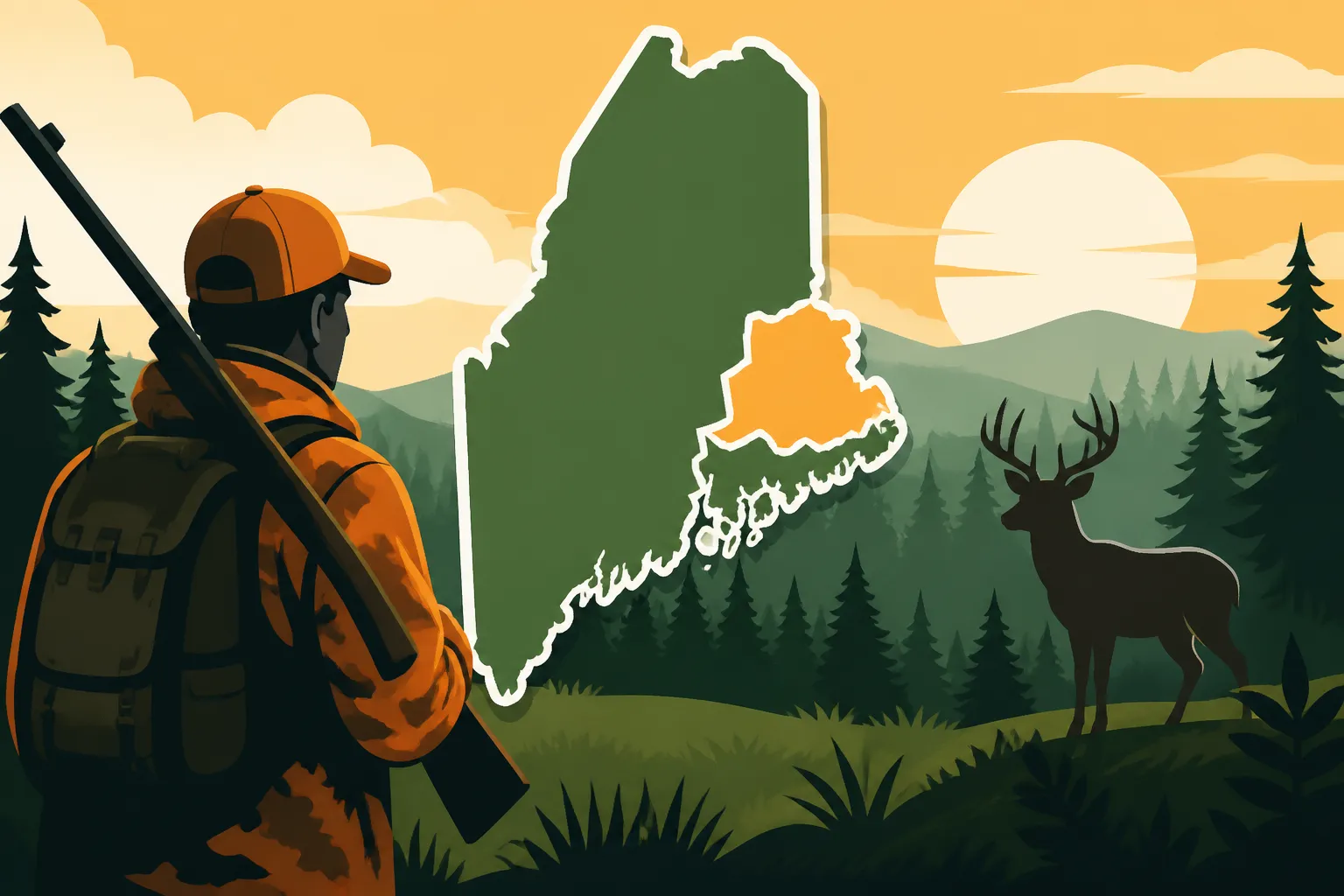
Lincoln County Public Hunting Ground
A real-world problem many hunters face in Maine, especially in the more populated and developed southern and coastal regions, is figuring out where they can actually hunt. The vast, seemingly endless timberlands of the North Woods feel a world away when you're looking for open ground closer to home. This guide is dedicated to helping you unravel the complexities of finding and utilizing public hunting ground in Lincoln County, ensuring you understand the unique landscape and how to effectively chase game there.
Understanding Public Land in Lincoln County
The Challenge of Finding Public Access in Coastal Maine
It's no secret that when most people picture "hunting Maine," they envision endless tracts of forest, moose, and remote logging roads up north. And while that's certainly a huge part of our state's hunting heritage, the reality in coastal counties like Lincoln is quite different. You're not going to find vast, unbroken stretches of public land spanning tens of thousands of acres here. Instead, what you'll encounter is a mosaic of smaller parcels, often interspersed with private ownership, residential areas, and conserved lands that may or may not permit hunting. It can be incredibly frustrating to drive around, seeing beautiful woods and marshes, only to realize much of it is posted, developed, or owned by folks who prefer to keep it undisturbed. This isn't the North Maine Woods Gate System, where implied permission reigns supreme; here, every boundary line matters, and knowing your specific regulations is paramount. The density of homes and the prevalence of agriculture and smaller woodlots mean the landscape feels much more intimate and, frankly, more challenging to navigate for a hunter looking for elbow room. You might be accustomed to simply parking and walking in many parts of the state, but in Lincoln County, that approach could quickly lead to an uncomfortable conversation with a landowner.
Lincoln County's Unique Landscape and Habitat
Lincoln County itself is a beautiful blend of rocky coastline, tidal rivers, sprawling salt marshes, working agricultural fields, and rolling mixed forests. This diverse habitat, while often fragmented, offers a surprising array of hunting opportunities if you know where to look and what to expect. Deer here might not grow to the same colossal sizes as their Aroostook County Versus Southern Maine Deer cousins, but they certainly exist, adapting to suburban edges and dense coastal thickets. You'll find pockets of hardwoods, crucial for mast crops, alongside softwood stands that offer thermal cover in winter. The proximity to the ocean means different waterfowl opportunities, and the old fields and alder runs can hold upland birds. Understanding this mosaic is key to successful hunting. Deer often gravitate towards the edges of fields or the protective cover of cedar swamps and spruce thickets, particularly when pressured. Woodcock and grouse, while less abundant than in the truly wilder parts of the state, can still be found in specific coverts—think young regeneration, old apple orchards that produce fruit, and wetland edges. This isn't about covering miles of wilderness; it's about dissecting smaller pieces of cover and understanding how game uses them throughout the day and across the seasons.
Specific Public Land Categories in Lincoln County
State Parks and Public Reserved Lands with Hunting Opportunities
While most people think of state parks as recreational areas for picnics and hiking, some actually allow hunting within designated zones and seasons. It's crucial, however, to never assume. You must check the specific rules for each individual property. For example, a place like Damariscotta Lake State Park might have seasonal restrictions or specific zones where hunting is permitted, while other parts are off-limits for public safety or other recreational uses. Always consult the MDIFW or Bureau of Parks and Lands websites for the most current information on Maine State Park Hunting Rules. Maine's Public Reserved Lands are another excellent resource. These are state-owned lands managed for multiple uses, including timber, recreation, and wildlife habitat. They often offer more expansive hunting opportunities than state parks, but they, too, can be smaller parcels in coastal regions. While Lincoln County might not boast large Public Reserved Land tracts, there could be smaller parcels worth investigating. The key takeaway here is specificity: don't just see "state land" on a map and assume. Dig into the Maine Department of Inland Fisheries and Wildlife (MDIFW) website or call the regional office to get the precise regulations for any piece of land you're eyeing.
Maine Wildlife Management Areas WMAs in Lincoln County
Wildlife Management Areas (WMAs) are arguably some of the best bets for dedicated public hunting ground. These lands are specifically acquired and managed by the state for wildlife habitat and public recreation, with hunting often being a primary focus. While Lincoln County isn't home to the massive WMAs you might find elsewhere in the state, there are still crucial pieces. For instance, parts of the Frye Mountain WMA may extend into the northern reaches of Lincoln County, offering managed forest and fields ideal for deer, grouse, and woodcock. These areas are usually well-marked, and their purpose is clearly defined for wildlife. Often, you'll find signs of active habitat management, like clear-cuts for deer browse, regenerating aspen stands for grouse, or wetland restoration for waterfowl. WMAs are typically open to hunting throughout the regular seasons, but always, always, double-check specific area rules. They might have special parking instructions, limited vehicle access, or other nuances you'll need to know. Remember, WMAs are designed to benefit game, so they often provide better habitat and more predictable hunting opportunities than unmanaged public lands.
Other State-Managed and Federal Lands in the Region
Beyond the official WMAs and Public Reserved Lands, there are other categories of state-managed lands, and occasionally, federal lands that might offer hunting in or near Lincoln County. These could include smaller state-owned forest plots, lands managed by the Bureau of Parks and Lands, or even certain conservation easements held by non-profit organizations that allow public access for hunting. Sometimes, the federal government might own small tracts, though these are less common for large-scale hunting in this region. You might also find local town-owned forest lands that permit hunting—these often require checking town ordinances. The trick here is that these parcels can be very small, isolated, and require significant legwork to identify and confirm hunting access. They often don't show up on generalized public land maps, making tools that delineate property ownership even more valuable. For example, local land trusts might own significant acreage that allows hunting, but their policies can vary wildly from one trust to another, and even from one property to the next. Always check with the managing entity directly. A quick call to a local land trust or town office can save you a lot of time and potential frustration.
Accessing and Navigating Public Lands in Lincoln County
Tools for Identifying Public Hunting Ground
Navigating the fragmented land ownership in Lincoln County is where modern technology truly shines. Gone are the days of relying solely on paper maps and vague descriptions. Apps like onX Hunt and GoHunt are absolute game-changers for any hunter in Maine, especially in areas with complex land ownership patterns. These tools overlay property lines, landowner names, and public land boundaries directly onto aerial and topographic maps on your phone or GPS device. This is indispensable when you're scouting a new area or trying to confirm if a promising piece of cover is indeed public, or if it's private land right up to the edge of the road. With onX Hunt, for instance, you can literally see where the public land ends and private land begins, helping you avoid accidental trespass and giving you the confidence to hunt legally. These apps often include layers for different types of public land, such as state forests, WMAs, and federal lands, making it much easier to identify huntable ground even in smaller parcels. Scouting With the Maine Hunting App is an article that further details the benefits of these modern mapping tools, which are essential for staying compliant in areas with intricate boundaries.
Respecting Boundaries and Posted Land in Maine
Maine has a unique tradition of "implied permission" on unposted private land, meaning you can generally hunt or fish on private land unless it's explicitly posted against it. However, this tradition comes with huge responsibilities, especially in more populated areas like Lincoln County. "Posted" land means just that—signs indicating "No Trespassing," "Private Property," or "No Hunting" are legally binding. Ignoring these signs is not only illegal but also damages the relationship between landowners and hunters, jeopardizing future access for everyone. In Lincoln County, where residential development and smaller landholdings are common, you'll see far more posted land than in the remote North Woods. Always assume private land is off-limits until you've verified otherwise or received direct permission. Even if you're on public land, be mindful of where the boundaries lie to avoid straying onto private ground. Using an app like onX Hunt becomes critical here; it allows you to identify property lines with precision and stay on the right side of the law, building trust and maintaining Maine's cherished access traditions. For more details on Maine's specific posting requirements and implied permission, refer to Maine Posted Land Rules.
Hunting Opportunities and Key Species in Lincoln County
Deer Hunting in Lincoln County's Public Tracts
While you might not harvest a Boone and Crockett buck every season, Lincoln County offers legitimate opportunities for White-Tailed Deer Across Maine. The deer population here has adapted to the mixed habitat, often utilizing dense coastal thickets, small woodlots, and the edges of agricultural fields for forage and cover. Public land hunting for deer in Lincoln County often involves a lot more scouting and "micro-hunting" smaller parcels of cover. You're not still-hunting through miles of big timber; instead, you're focusing on pinch points between woodlots, creek bottoms, beaver flowages, and transition zones between different habitat types. Look for areas with good cover near food sources, such as acorn-producing oaks or old apple orchards on the fringes of public land. The deer here are often accustomed to human activity, so stealth and careful entry/exit routes are paramount. Don't overlook small, overlooked parcels that other hunters might pass by because they seem "too small" or "too close to houses." These can often hold mature bucks seeking refuge. The principles of Hunting a Funnel Between Two Woodlots or Still-Hunting Western Maine Mountain Slopes can be adapted to the more modest terrain of Lincoln County, focusing on smaller-scale natural corridors and cover.
Upland Birds and Waterfowl in the Coastal Region
Lincoln County's diverse landscape means it's not just about deer. For those who enjoy chasing upland birds, you can find pockets of Ruffed Grouse in Maine and American Woodcock in Maine. Grouse will gravitate towards younger forest regeneration, old logging cuts, and dense alder thickets, especially areas with a mix of softwoods and hardwoods. Woodcock are often found in moist, young deciduous cover, particularly along stream bottoms or in regenerating fields that have gone to brush. Again, these aren't vast areas, but concentrated coverts. If you have a good bird dog, these smaller public parcels can provide rewarding hunts. To get a better sense of where to find these birds, consider reading Grouse Hunting Maine Alder Runs and Woodcock Hunting Maine Covert Country, as the habitat descriptions will directly apply to finding similar pockets in Lincoln County.
For waterfowl enthusiasts, Lincoln County truly shines with its extensive coastline, tidal rivers, and inland ponds. You'll find opportunities for various duck species, particularly along the marshes and estuaries. Eiders on the Maine Coast, Scoters on the Maine Coast, and Long-Tailed Ducks Wintering Off Maine are common sea duck species during the appropriate seasons along the coast. Inland, you might find mallards, black ducks, and wood ducks on freshwater ponds and rivers. Accessing these areas often means having a boat or being willing to walk into less accessible spots and setting up decoys strategically. Always be mindful of tide charts for coastal hunting, as tides can drastically change access and hunting conditions, making or breaking a hunt. For deeper dives into coastal hunting, check out Sea Duck Hunting the Maine Coast and Decoying Eiders Off the Maine Coast.
Table: Public Hunting Land Types in Lincoln County
| Land Type | Typical Size (Lincoln Co.) | Primary Purpose | General Hunting Access | Key Species | Notes |
|---|---|---|---|---|---|
| State Parks | Small to Medium (100-500 acres) | Recreation, conservation | Limited/Designated | Deer, small game (check specific rules) | Always confirm specific park regulations; often restricted areas. |
| Public Reserved Lands | Small to Medium (50-1000 acres) | Multiple use (timber, recreation, wildlife) | Generally Open | Deer, bear, small game, upland birds | Good potential, but often fragmented parcels. |
| Wildlife Management Areas (WMAs) | Small to Medium (100-2000 acres) | Wildlife habitat management, public hunting | Generally Open | Deer, bear, upland birds, waterfowl | Managed for game, often best bet for consistent public access. |
| Conservation Lands (Land Trusts) | Highly Variable (20-500+ acres) | Conservation, public access (varies) | Varies (check specific trust/property) | Deer, small game, birds (if permitted) | Permission highly variable; some allow, some restrict. |
| Town-Owned Lands | Small (10-200 acres) | Municipal use, recreation | Varies (check town ordinances) | Small game, deer (if permitted) | Requires research into local town rules; often very small parcels. |
Remember, Lincoln County might not offer the vast, untouched wilderness of Maine's northern reaches, but it presents a unique challenge and rewarding opportunities for those willing to do their homework, respect property boundaries, and adapt their hunting strategies to a more fragmented, yet equally beautiful, landscape. With the right tools and a persistent attitude, you can find success in its diverse woods and waters.
Disclaimer
This article is for general informational purposes only and does not constitute professional advice. Laws, prices and regulations vary by location and change over time. Consult a qualified professional for guidance on your specific situation.